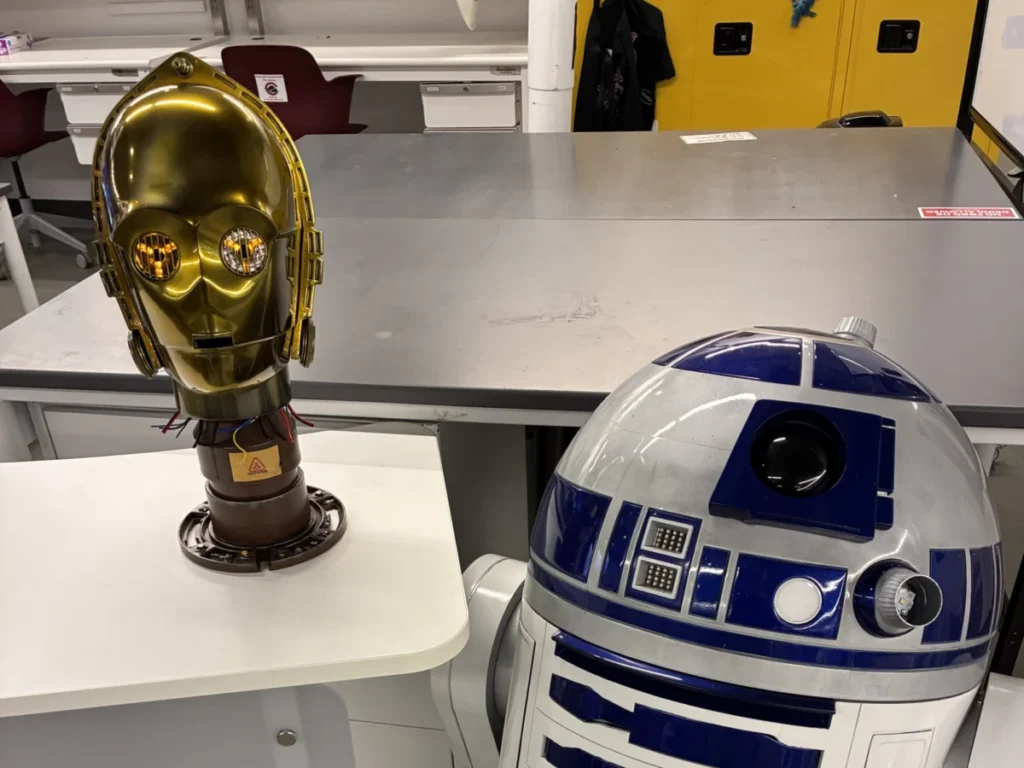
The realm of artificial intelligence, often confined to digital screens and abstract algorithms, has taken a significant step towards tangible embodiment with the unveiling of Sam Potozkin’s "Threepio" project. This ambitious endeavor meticulously recreates the iconic Star Wars protocol droid, C-3PO, not merely as a prop but as a fully functional, conversational AI system designed to deepen our understanding of human-AI interaction. Developed by Potozkin, a student at Chapman University, the project goes far beyond a typical chatbot, integrating sophisticated hardware, intricate craftsmanship, and advanced local AI processing to deliver an experience as faithful to the beloved fictional character as possible. The initiative highlights a growing trend in AI research: the exploration of how physical presence, personality, and familiar archetypes influence human perception and engagement with intelligent machines.
The Genesis of an Embodied Intelligence: From Film to Functionality
The inspiration for the Threepio project stems directly from George Lucas’s original 1977 film, Star Wars: Episode IV – A New Hope, which introduced audiences to C-3PO, a polite yet perpetually anxious humanoid robot fluent in "six million forms of communication." For decades, C-3PO has served as a cultural touchstone, representing a form of artificial intelligence that is both sophisticated in its linguistic capabilities and endearing in its human-like quirks and vulnerabilities. Potozkin’s vision was to translate this cinematic archetype into a real-world, interactive system, exploring the profound differences in human reaction to an embodied AI versus a purely digital interface.
The project began as an academic pursuit at Chapman University, aiming to bridge theoretical concepts in AI and communication theory with practical engineering and design challenges. Potozkin recognized that while AI chatbots are increasingly ubiquitous, their impact on human interaction remains largely confined to text-based or disembodied voice interfaces. The Threepio project sought to challenge this paradigm by giving AI a physical form, a distinct voice, and a recognizable personality, thereby shifting the interaction from a purely cognitive exchange to one that engages sensory and emotional faculties. This exploration is crucial as society increasingly integrates AI into daily life, from virtual assistants to autonomous vehicles and companion robots.
Engineering a Sci-Fi Icon: The Technical and Aesthetic Hurdles
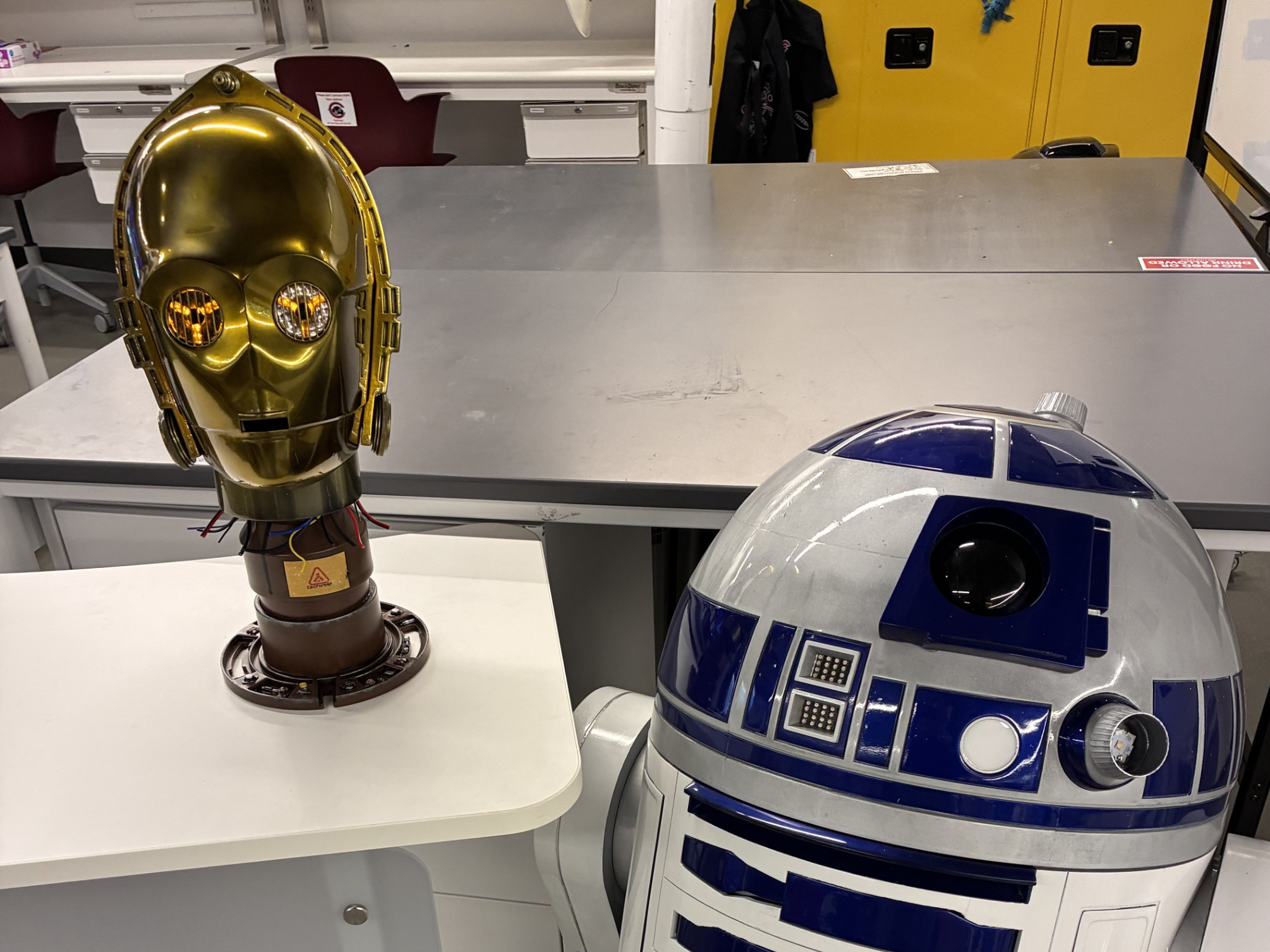
Bringing C-3PO to life required a meticulous blend of advanced technology and traditional crafting skills. The physical manifestation of the droid’s head is a testament to Potozkin’s dedication, starting with a 3D-printed case that required extensive post-processing. Achieving C-3PO’s signature smooth, reflective gold finish was no small feat. This involved countless hours of sanding to eliminate layer lines inherent in 3D printing, followed by priming, painting, and polishing to achieve a flawless, metallic sheen. Potozkin also added "greeblies"—small, intricate details—to the display stand, a common practice in prop design to enhance realism and visual interest, further selling the illusion of a complex, functional machine. These aesthetic details are not mere ornamentation; they contribute significantly to the project’s core objective of replicating the familiarity and presence of the fictional droid.
Beyond the visual fidelity, the core intelligence of the Threepio project resides in its local AI chat stack, powered by a Raspberry Pi 5. The choice of a Raspberry Pi 5 is significant, representing a powerful leap in single-board computing capabilities, making it increasingly viable for on-device AI processing. This approach contrasts sharply with most contemporary chatbots that rely heavily on cloud-based servers, offering advantages in terms of privacy, reduced latency, and operational independence. Running an AI chat stack locally on such a compact device presents considerable challenges, requiring optimized models and efficient code, but it underscores the project’s commitment to creating a self-contained, embodied system.
One of the most innovative aspects of the Threepio project is its audio output. Instead of a conventional speaker, Potozkin employed an exciter to generate C-3PO’s voice. Exciters are transducers that vibrate a surface to produce sound, effectively turning the entire head of the droid into a speaker. This technique creates a diffuse, resonant sound that truly appears to emanate from within the robot’s head, lending an uncanny realism to the interaction. The refinement of these audio effects, including filtering, modulation, and reverb to match C-3PO’s distinctive metallic and slightly strained timbre, was a complex and time-consuming process, crucial for capturing the droid’s personality. Potozkin recounted overcoming numerous practical challenges, from learning to solder complex electronics and dealing with persistent "orange peel" textures in the paint job to recovering from an accidental drop of the head during construction – all indicative of the ambitious scope of the endeavor.
The Scholarly Dimension: Unpacking Human-AI Dynamics
The Threepio project is not merely a technical showcase or a fan tribute; it serves as a robust platform for academic inquiry. Sam Potozkin authored a comprehensive paper exploring human-AI interaction, delving into the fascinating question of why individuals react differently to cutting-edge modern AI systems compared to a familiar, five-decade-old fictional android. This research posits that embodiment plays a critical role in shaping human perception, trust, and engagement with artificial intelligence.

In his paper, Potozkin articulates the project’s central thesis: "This project explores the translation of a fictional character into a real-world, embodied AI system. Developing this system required translating and combining abstract concepts from both AI and communication theory into a functional, working architecture." He further emphasizes, "The goal of the project was to explore what happens when conversational AI moves off the screen and into a physical, interactive system. Rather than treating AI as something purely digital, this build focuses on embodiment, giving the system a presence, voice, and personality that can be experienced in the real world."
This work taps into several key concepts within human-computer interaction (HCI) and AI ethics:
- Anthropomorphism and the Uncanny Valley: C-3PO is a highly anthropomorphic character, designed with human-like features and expressions. Potozkin’s project tests how this inherent anthropomorphism, combined with physical embodiment, influences user perception. It implicitly navigates the "uncanny valley" – a hypothesis that suggests robots or AI that are almost human-like but not quite, can evoke feelings of unease or revulsion. By leveraging a beloved, established character, Potozkin may bypass some of these negative reactions, capitalizing on pre-existing familiarity and affection.
- Trust and Familiarity: The project highlights that pre-existing cultural familiarity with a character like C-3PO can foster a unique level of trust and comfort that generic, disembodied chatbots struggle to achieve. Users approach C-3PO with a lifetime of narrative context, imbuing the interaction with a depth that a novel AI system lacks. This has significant implications for designing future companion AI and social robots, suggesting that leveraging established archetypes or developing relatable personalities could enhance user acceptance and long-term engagement.
- Embodied Cognition: The theory of embodied cognition suggests that intelligence is not purely an abstract process but is deeply intertwined with a physical body and its interactions with the environment. By giving AI a physical form, the Threepio project allows for a more natural, multi-modal interaction. The robot’s gaze, subtle head movements, and the directionality of its voice can convey non-verbal cues that enrich communication, making the AI feel more "present" and responsive.
Chronology of Innovation: From Concept to Community
The development of the Threepio project unfolded over a significant period, reflecting the iterative nature of such ambitious undertakings:
- 1977: The original Star Wars film introduces C-3PO, laying the cultural foundation for the project.
- Early 2020s (Inferred): Sam Potozkin, as a student at Chapman University, conceives the idea of an embodied C-3PO AI as a research project, driven by an interest in human-AI interaction.
- Initial Design and Prototyping: Potozkin embarks on 3D modeling the droid’s head, designing internal component layouts, and experimenting with materials for the physical shell.
- Fabrication Phase: Extensive 3D printing begins, followed by the challenging post-processing work of sanding, filling, and painting to achieve the iconic gold finish.
- Electronics and AI Integration: The Raspberry Pi 5 is integrated, along with custom circuitry for power management and audio output. The local AI chat stack is developed and optimized to run efficiently on the embedded hardware.
- Audio Engineering: Significant time is dedicated to refining the exciter speaker system and tuning the audio effects to perfectly mimic C-3PO’s voice.
- Research and Documentation: Concurrently with the physical build, Potozkin conducts his research on human-AI interaction, documenting findings and theories in his academic paper.
- Project Completion and Open-Sourcing: The Threepio project reaches completion, with Potozkin making the design files, code, and research paper publicly available on GitHub. This act of open-sourcing allows other makers, researchers, and enthusiasts to customize, extend, and build upon his work.
- Public Unveiling and Recognition: The project gains traction within the maker community and academic circles, drawing attention to its innovative blend of engineering, art, and scientific inquiry.
Reactions and Broader Implications for AI’s Future

The Threepio project has garnered significant interest, particularly within the maker and robotics communities, but its implications extend far beyond hobbyist circles. From Chapman University, faculty members in the engineering and computer science departments would likely commend Potozkin’s interdisciplinary approach, noting how his work exemplifies the practical application of theoretical AI concepts. "Mr. Potozkin’s Threepio project stands as a remarkable testament to student innovation, seamlessly blending advanced robotics, AI research, and artistic craftsmanship," a hypothetical university statement might read. "It offers invaluable insights into the burgeoning field of embodied AI, demonstrating how familiar cultural archetypes can significantly influence human engagement with intelligent systems."
Within the broader AI development landscape, the Threepio project provides a compelling case study for the future of embodied AI. As AI systems become more sophisticated, the question of their physical manifestation—how they appear, sound, and interact in the physical world—will become increasingly paramount. Companies developing social robots, personal assistants, and educational tools could learn from Potozkin’s emphasis on personality and physical presence to create more engaging and trusted interactions. The project suggests that for AI to truly integrate into human society, it may need to move beyond abstract interfaces and adopt forms that are either functionally intuitive or culturally resonant.
The open-source nature of the Threepio project is another critical aspect. By sharing his designs and code on GitHub, Potozkin has enabled a global community of makers and developers to explore, modify, and expand upon his creation. This collaborative spirit is vital for accelerating innovation in the AI and robotics fields. It allows enthusiasts to add their own "spin" on the project, perhaps even tackling the challenge of implementing C-3PO’s full "six million forms of communication" capability, which would involve integrating advanced multilingual AI models.
While the Threepio project offers exciting possibilities, it also subtly raises ethical considerations inherent in creating highly anthropomorphic AI. The potential for emotional attachment, the nuances of consent in human-robot interaction, and the responsibility of developers to design AI that respects user autonomy are all areas that warrant continued discussion as embodied AI becomes more prevalent. Potozkin’s focus on understanding human reactions is a crucial first step in navigating these complex ethical landscapes.
The Threepio project joins a distinguished lineage of Star Wars-inspired droid builds, from the meticulously crafted R2-D2s of the Astromech Builders Club to various custom creations. However, it distinguishes itself by placing the conversational AI and the study of human interaction at its core, rather than solely focusing on mechanical replication. As experienced R2-D2 builders often advise beginners to start with the dome due to its complexity, Potozkin’s decision to focus on C-3PO’s head—the locus of his personality and communication—proves equally strategic. It underscores a fundamental truth: if one is to invest significant time and effort in building a robot, its ability to communicate meaningfully and engagingly is paramount. Sam Potozkin’s Threepio is not just a remarkable piece of engineering and art; it is a profound commentary on the evolving relationship between humans and the intelligent machines we create.