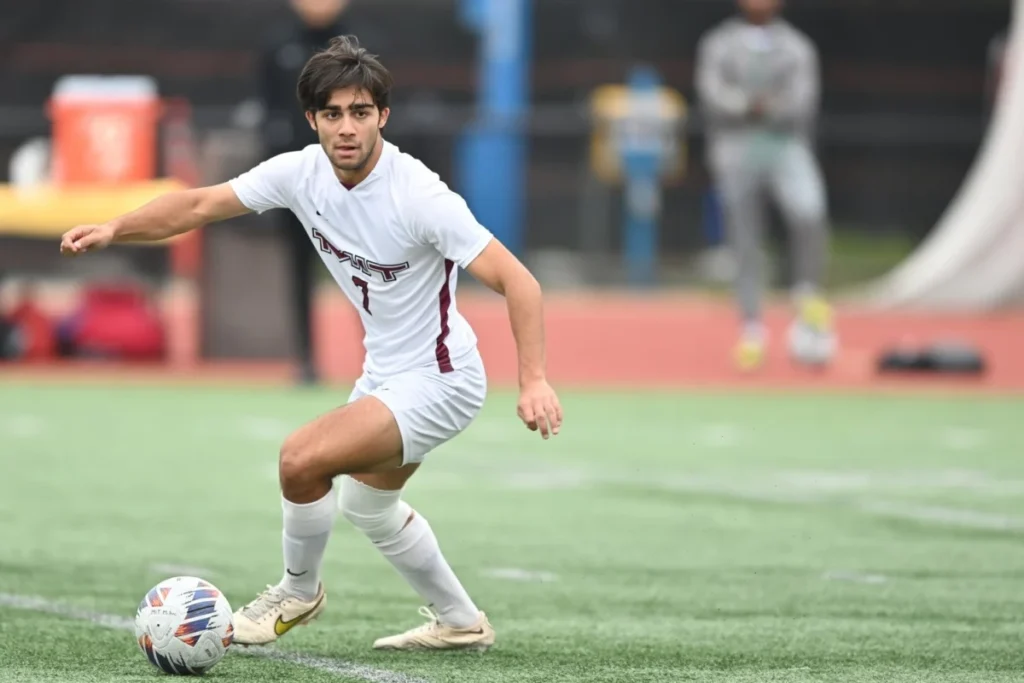
The intersection of high-level collegiate athletics and rigorous scientific research is a space occupied by few, yet Dilin Meloni, a rising senior at the Massachusetts Institute of Technology (MIT), has navigated this dual existence with remarkable precision. As an attacking midfielder for the MIT Engineers soccer team and a double major in Nuclear Science and Engineering (Course 22) and Physics (Course 8), Meloni represents the archetype of the modern student-athlete at one of the world’s most demanding academic institutions. His journey from an All-American high school standout in Needham, Massachusetts, to a leader in student government and a researcher in the field of nuclear fusion provides a comprehensive look at the unique culture of MIT, where the pursuit of excellence on the field is matched only by the pursuit of breakthroughs in the laboratory.
From Needham High to the Plasma Science and Fusion Center
Meloni’s trajectory toward MIT began long before he donned the Engineers’ jersey. As a student at Needham High School, he was recognized as the Massachusetts Boys Soccer Player of the Year and earned All-American honors, accolades that typically open doors to Division I athletic programs across the country. However, Meloni’s decision-making process was guided by a specific academic curiosity that surfaced during his junior year. After reading a research paper from MIT’s Plasma Science and Fusion Center (PSFC), he realized that his future lay in the development of sustainable energy through nuclear fusion.
The decision to attend MIT allowed Meloni to remain an "Engineer" in both the athletic and professional sense. While many elite high school athletes prioritize sports when selecting a college, Meloni sought an environment where his intellectual interests would not be sidelined. MIT’s Division III status provided the necessary balance, offering a competitive athletic environment within the New England Women’s and Men’s Athletic Conference (NEWMAC) while maintaining the institute’s legendary academic standards.
The Social Fabric of MIT Athletics
One of the most significant misconceptions about MIT is that its students are siloed in laboratories, disconnected from the traditional social experiences of college life. Meloni challenges this narrative, pointing to the athletic community as a primary driver of social cohesion on campus. For many student-athletes, the transition to college begins weeks before the general student body arrives, as preseason training for fall sports creates an immediate and intense support network.
Meloni notes that the athletic community at MIT is composed of individuals who have dedicated significant portions of their lives to their respective sports. This shared history of discipline and competition creates an instant common ground. In Meloni’s case, this community extends into his residential life; his fraternity is largely composed of members from the soccer, football, swimming, and track teams. This integration provides a social "home base" that balances the solitary nature of high-level academic study.
However, Meloni emphasizes that being an athlete at MIT does not define a student’s entire identity. The "student" portion of the "student-athlete" moniker is omnipresent. Because every student at the institute is grappling with a demanding workload, there is a mutual understanding of the pressures involved. This allows for a unique environment where a student can transition from a tactical soccer practice to a quantum physics lecture without the social friction often found at schools where athletics and academics exist in separate spheres.
Bridging the Gap: The Double Major in Course 22 and Course 8
While the athletic community is broad, Meloni occupies a rarified space within his academic departments. As a double major in Nuclear Science and Engineering and Physics, he finds himself in a field where varsity athletes are statistically rare. He describes his two worlds—the soccer field and the nuclear lab—as largely separate ecosystems. In the lab, he collaborates with researchers from diverse global backgrounds who may have never engaged with organized sports. On the field, he competes with teammates who, while academically brilliant, often pursue different majors such as Computer Science or Mechanical Engineering.
Meloni has taken it upon himself to act as an ambassador for the "hard sciences" within the athletic department. He frequently encourages incoming soccer players to consider the nuclear and physics tracks, arguing that the analytical skills honed in these disciplines are highly compatible with the strategic thinking required on the soccer pitch. His ability to move between these groups—from the highly specialized environment of the PSFC to the camaraderie of the locker room—prevents the "siloing" that can often occur in high-pressure academic environments.
Leadership and Advocacy: The Student-Athlete Advisory Committee
Beyond his roles as a player and a student, Meloni has emerged as a significant voice in campus governance. He currently serves as the co-president of the Student-Athlete Advisory Committee (SAAC), a body responsible for representing the interests of MIT’s 33 varsity sports teams. With one of the largest athletic programs in the country by number of teams, representing the diverse needs of approximately 800 student-athletes is a complex logistical challenge.
Meloni’s involvement in student governance dates back to his high school years, where he served on local and state-level school committees. At MIT, he has applied this experience to tackle "pain points" within the athletic department. Over the past year, Meloni and the SAAC leadership conducted extensive outreach to coaches and players to identify areas for improvement. The resulting agenda focused on three primary pillars: facilities, nutrition, and scheduling.
1. Facility Allocation and the Sports Performance Facility
With 33 teams vying for limited space, the allocation of field time and gym access is a perennial issue. Meloni highlighted the challenges faced by the seven teams that utilize the major turf fields, as well as the shared usage of the pool by the swimming and water polo teams. A central focus of his tenure has been the new Sports Performance Facility, ensuring that all varsity athletes have equitable access to the equipment and training space necessary for peak performance.
2. Nutrition and Food Quality
For student-athletes, caloric intake and nutritional balance are critical components of performance. Meloni has been a vocal advocate for improving the quality and availability of food on campus, particularly for athletes whose practice schedules often conflict with standard dining hall hours. By gathering direct feedback from his peers, he has worked with administrators to ensure that the nutritional needs of high-performance athletes are being met.
3. Administrative Communication and Compromise
Perhaps the most difficult aspect of Meloni’s role is managing expectations. He acknowledges that students often ask for more than the administration can logistically or financially provide. His role involves explaining the "cost of doing business" to his peers—detailing why certain facility upgrades take time or why field schedules must be shared with non-varsity student clubs. This "middle ground" approach has fostered a more collaborative relationship between the Department of Athletics, Physical Education, and Recreation (DAPER) and the student body.
Professional Application: Commonwealth Fusion Systems
Meloni’s academic interests are currently being applied in a professional setting through his summer internship at Commonwealth Fusion Systems (CFS). A spin-off from MIT’s Plasma Science and Fusion Center, CFS is at the forefront of the global race to develop commercial fusion energy. The company is working on the SPARC project, a compact, high-field fusion device designed to produce net energy—a milestone that would revolutionize the global energy landscape.
Working at CFS allows Meloni to see the real-world implications of his Course 22 and Course 8 studies. His internship involves navigating the complexities of fusion technology, which requires a deep understanding of plasma physics and materials science. This professional experience reinforces his belief that the discipline required for varsity athletics—time management, teamwork, and resilience—is directly transferable to the high-stakes world of cutting-edge scientific research.
Broader Impact and the Future of MIT Athletics
As Meloni enters his senior year, he reflects on what he describes as a "tipping point" for student-athlete relations at MIT. The willingness of the DAPER and Student Life staff to listen to and implement changes suggested by the SAAC has led to a more integrated campus culture. Meloni believes that the open channels of communication established during his tenure will lead to long-term improvements in the student-athlete experience.
The implications of Meloni’s work extend beyond the soccer field. By successfully balancing a double major in two of the institute’s most difficult subjects with a leadership role in athletics and a high-level internship, he serves as a proof of concept for the MIT "polymath" ideal. His story highlights the importance of student voices in institutional governance and the value of maintaining a diverse range of interests in the pursuit of a well-rounded education.
In the broader context of collegiate sports, Meloni’s experience at MIT offers a model for how institutions can support elite athletes without compromising academic integrity. As the landscape of college athletics continues to shift with changes in NCAA legislation and the professionalization of DI sports, the MIT model—focused on community, advocacy, and academic rigor—remains a steadfast example of the original "student-athlete" philosophy. For Dilin Meloni, the goal remains clear: whether he is directing play as an attacking midfielder or analyzing data for a fusion reactor, he is driven by the same engineering mindset—identifying a problem, analyzing the variables, and executing a solution.