Rice, a cornerstone of global nutrition and sustenance, is now emerging from the realm of agriculture into the cutting-edge domain of material science, with scientists demonstrating its potential to inspire a novel class of smart materials. Researchers have uncovered a remarkable property within tightly packed rice grains: an unusual response to pressure that could pave the way for self-adjusting soft robots and dynamically adaptive protective equipment. This discovery, spearheaded by an international team led by the University of Birmingham, challenges conventional understandings of granular mechanics and was recently detailed in the esteemed journal Matter.
Unveiling Rice’s Peculiar Mechanical Signature
At the heart of this groundbreaking research lies the phenomenon of "rate softening." Most common materials exhibit "rate hardening," meaning they become stiffer and stronger when subjected to forces applied more quickly. Consider, for instance, a non-Newtonian fluid like cornstarch and water: it feels liquid when disturbed slowly but becomes rigid under a rapid impact. Granular materials, a category that includes sand, powders, and indeed, rice, are complex systems, and their mechanical behavior is often counterintuitive. The Birmingham-led team’s experiments revealed that tightly packed rice grains behave in precisely the opposite manner to rate hardening materials. When compressed slowly, the granular assembly of rice remains relatively robust and stiff. However, when the same material is squeezed rapidly, its strength surprisingly diminishes significantly, becoming weaker and more yielding.
This unusual response is attributed to a critical factor: friction. The scientists discovered that the friction between individual rice grains drops sharply when forces are applied at high speeds. This reduction in inter-grain friction disrupts the intricate internal networks of forces that typically distribute and support external loads within the granular structure. Consequently, the entire material weakens, unable to efficiently transfer and resist the rapid stress. This finding is particularly significant because granular physics, while a mature field, continues to present complex challenges due to the sheer number of interacting particles and the diverse ways they can pack and move. Understanding and harnessing such counter-intuitive behaviors can unlock entirely new material functionalities.
The Historical Context of Granular Materials and Metamaterials
Granular materials have captivated scientists and engineers for centuries due to their dual nature, exhibiting properties of both solids and fluids. From ancient civilizations using sand in construction to modern industries handling powders in pharmaceuticals and food processing, the behavior of these materials is crucial. Despite their ubiquity, predicting and controlling their behavior, especially under dynamic conditions, remains a formidable challenge. Phenomena like landslides, avalanches, and silo blockages underscore the complex physics at play. This research adds a crucial layer to this understanding, moving beyond mere observation to active manipulation of granular properties for engineered applications.
The concept of "metamaterials" itself has seen a surge in interest over the past two decades. Metamaterials are engineered composite structures designed to exhibit properties not found in naturally occurring materials. They achieve their extraordinary characteristics not from their chemical composition, but from their intricate, often periodic, structural designs at scales smaller than the wavelength of the phenomena they influence. Early examples included materials designed to manipulate light (optical metamaterials) or sound (acoustic metamaterials), leading to concepts like invisibility cloaks or perfect lenses. The innovation with rice grains extends the metamaterial paradigm into the realm of mechanical properties, creating materials that can dynamically adjust their physical response based on external stimuli without active control systems.
From Curiosity to Engineered Design Principle
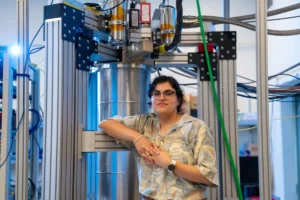
The journey from observing a scientific curiosity to developing a functional material involved a crucial conceptual leap. Instead of merely noting the rate-softening effect, the research team, spearheaded by Dr. Mingchao Liu from the University of Birmingham’s School of Engineering, recognized it as a potential design principle. This shift in perspective allowed them to leverage this unusual property to construct a new type of metamaterial.
To achieve this, the researchers ingeniously combined the rice-based granular units with other materials exhibiting different mechanical responses. Specifically, they integrated materials such as sand, which typically become stronger, or "rate harden," when subjected to rapid loading. This strategic combination resulted in a hybrid granular metamaterial capable of displaying a diverse range of responses: it could bend, buckle, or stiffen in different ways, depending on whether it was experiencing slow, deliberate movements or sudden, forceful impacts. Crucially, this dynamic adaptation occurs entirely passively, driven by the intrinsic mechanical properties of the combined granular system, eliminating the need for complex electronics, sensors, or active control mechanisms.
Dr. Liu articulated this paradigm shift, stating, "Rice might be best known as a staple food globally, but it’s rarely associated with advanced engineering. Our research shows that it can form the basis of a new class of functional materials. Rather than treating this phenomenon as curiosity, we turned it into a design principle. This approach enabled us to create a material that can bend, buckle, or stiffen differently under slow movements versus sudden impacts – without electronics, sensors, or active control. Instead of telling a structure how to respond, we let physics decide: fast loads trigger one behavior, slow loads another." This philosophy represents a significant departure from traditional engineering, where control systems are often external additions, moving towards materials that are inherently "smart."
The Global Significance of Rice: Beyond the Dinner Plate
The choice of rice as the foundational element for this research carries additional layers of significance. Rice (Oryza sativa) is not merely a common grain; it is a global agricultural powerhouse, serving as a staple food for over half of the world’s population. Annually, over 750 million metric tons of rice are produced worldwide, primarily in Asia, Africa, and Latin America. Its abundance, low cost, and biodegradability make it an attractive candidate for sustainable material innovation. To harness such a ubiquitous, natural resource for high-tech applications underscores a growing trend in material science towards environmentally conscious and resource-efficient solutions. This research not only expands the functional utility of rice but also highlights the untapped potential of other common, naturally occurring granular materials.
The international collaboration that underpinned this discovery further exemplifies the global nature of scientific progress. While led by the University of Birmingham, such complex research typically involves a consortium of experts from various disciplines—materials science, mechanical engineering, physics, and even computational modeling—from institutions across different countries. This multidisciplinary and international approach ensures a robust methodology and diverse perspectives, crucial for tackling such intricate scientific problems. The culmination of this research, spanning several years of experimental design, data analysis, and theoretical modeling, marks a pivotal moment in understanding and manipulating granular matter.
Transformative Applications in Robotics and Safety Gear
The implications of this speed-sensitive metamaterial are profound, particularly for two rapidly evolving fields: soft robotics and protective equipment.
Soft Robotics: Traditional robots, typically constructed from rigid metals and plastics, excel in precision and strength but often lack adaptability and safety when interacting with humans or navigating unstructured environments. Soft robotics aims to create robots that are compliant, flexible, and intrinsically safe, often mimicking biological systems. However, controlling the stiffness and shape of soft robots has been a persistent challenge, usually requiring complex pneumatic, hydraulic, or electro-active systems. This new granular metamaterial offers an elegant, passive solution.
Imagine a soft robot designed for delicate surgical procedures or assisting the elderly. With this material, its grippers could be soft and compliant for gentle interaction during slow movements, but automatically stiffen under sudden, rapid forces to provide stability or exert necessary force for a specific task. Such robots could be lighter, more energy-efficient, and inherently safer for human interaction, opening doors for broader adoption in healthcare, logistics, and exploration in hazardous or confined spaces. The material’s ability to self-adapt without external power sources simplifies design, reduces failure points, and enhances operational autonomy, moving soft robotics closer to mimicking the adaptive capabilities of biological organisms.
Protective Equipment: The design of protective gear, such as helmets, body armor, and sports padding, has always been a balance between comfort, weight, and impact absorption. Most current materials are optimized for a specific type of impact. For example, a bicycle helmet is designed to absorb the energy of a single, severe impact, often at the expense of ventilation or flexibility. The rice-inspired metamaterial, with its dynamic response, offers a revolutionary alternative.
During a slow, sustained pressure, the material could deform predictably, perhaps offering cushioning. However, upon a sudden, high-speed impact—such as during a fall or collision—it could instantly become stiffer, absorbing energy more effectively or deforming in a controlled manner to dissipate force away from critical areas. This adaptive capability could lead to significantly improved protective equipment across various domains, from military and law enforcement applications to sports and industrial safety. The material could reduce the risk of injury by providing tailored protection based on the force and speed of an impact, all without the need for active sensors or power sources that could fail or add bulk. This passive intelligence represents a significant leap forward in personal safety technology.
Future Outlook and Broader Impact
The research highlights a fundamental principle: common granular materials, often overlooked for advanced applications, can be transformed into intelligent engineered systems through a deep understanding of their mechanical properties. The next steps for the research team will likely involve scaling up the production of these metamaterials, fine-tuning their properties through different granular combinations and packing densities, and developing prototypes for real-world testing. Exploring other granular materials with unique rate-dependent behaviors could also expand the repertoire of such passively adaptive systems.
Beyond robotics and protective gear, the principles demonstrated by this research could have far-reaching implications. Consider civil engineering applications, where structures could dynamically stiffen to resist earthquake forces or dampen vibrations. Or biomedical applications, where implants could adjust their rigidity based on physiological loads. The concept of "physics deciding" the material’s response could lead to a paradigm shift in how we design everything from consumer products to critical infrastructure. This innovative utilization of an everyday staple like rice not only underscores the boundless potential of material science but also paves the way for a new era of autonomously adaptive and sustainable engineering solutions, promising safer and more versatile technologies for the future.