Artificial intelligence is rapidly becoming an indispensable tool across the scientific landscape, and its role in helping cosmologists decode the universe’s most profound mysteries is expanding at an unprecedented pace. New research, published in the Journal of Statistical Mechanics: Theory and Experiment (JSTAT), highlights a machine learning technique known as transfer learning as a powerful accelerator for the search for new physics, promising to make this complex endeavor significantly faster and less expensive. However, the study also casts a cautionary shadow, revealing a surprising downside: AI, when over-reliant on its prior knowledge, can struggle to recognize phenomena that truly deviate from established patterns, potentially overlooking genuinely novel discoveries.
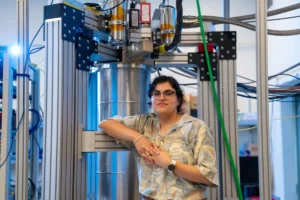
This groundbreaking work, spearheaded by a team including Veena Krishnaraj, an undergraduate student at Princeton University, and Adrian Bayer, a cosmologist at the Flatiron Institute and Princeton University, delves into how transfer learning can revolutionize the investigation of theories extending beyond the prevailing standard cosmological model. Their findings present a compelling vision of AI’s potential while simultaneously underscoring the critical need for careful design and interpretation when deploying such powerful tools in fundamental research.
Unraveling the Universe: The Standard Model and Its Frontiers
For decades, the standard model of cosmology, known as Lambda-CDM (ΛCDM), has served as the bedrock of our understanding of the universe. ΛCDM posits a universe composed of approximately 5% ordinary baryonic matter (the stuff of stars, planets, and ourselves), about 27% mysterious cold dark matter (which provides gravitational scaffolding for galaxies but doesn’t interact with light), and a dominant 68% of even more enigmatic dark energy (responsible for the universe’s accelerating expansion). This model has enjoyed remarkable success, accurately explaining a vast array of cosmological observations, from the intricate patterns in the cosmic microwave background (CMB) radiation – the afterglow of the Big Bang – to the large-scale distribution of galaxies across billions of light-years. It has provided a robust framework for comprehending the universe’s evolution from its infancy to its current state.
Despite its triumphs, ΛCDM is not without its challenges and lingering mysteries, prompting scientists to believe it is not the final answer. The fundamental nature of dark matter and dark energy remains unknown, representing two of the most significant unsolved puzzles in modern physics. Furthermore, recent precision cosmological observations have begun to expose subtle tensions and anomalies that cannot be fully reconciled within the ΛCDM framework. These include discrepancies in the measured expansion rate of the universe (the "Hubble tension"), potential inconsistencies in the growth of cosmic structure, and the elusive mass of neutrinos, which, though tiny, could have measurable cosmological effects.
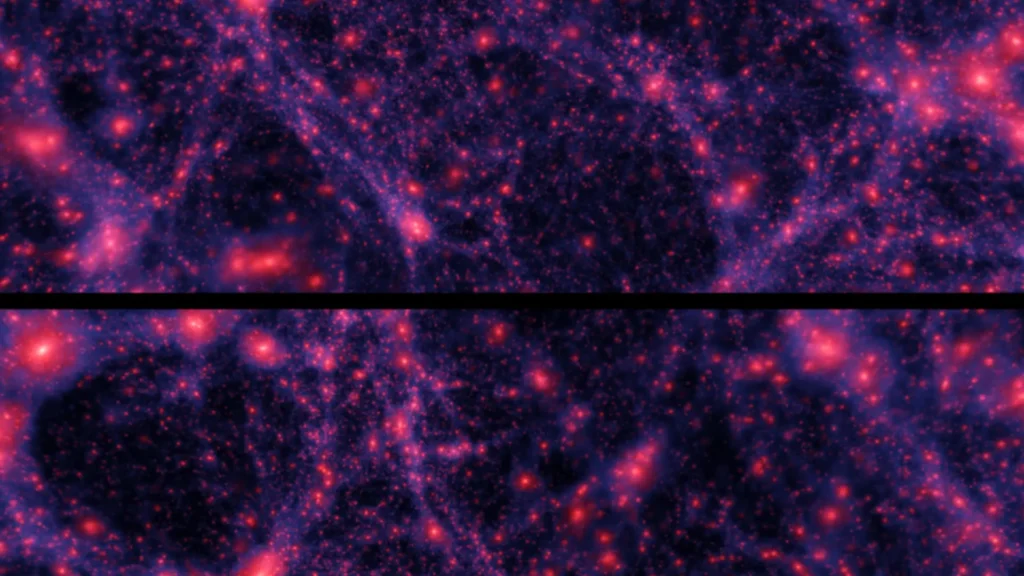
These observational conundrums compel cosmologists to explore "new physics" – theoretical extensions or alternatives to ΛCDM that could resolve these issues. Such theories often involve concepts like modified gravity (altering Einstein’s theory of general relativity on cosmic scales), different forms or behaviors of dark energy, or the precise mass and properties of neutrinos. Investigating these possibilities, however, is an extraordinarily resource-intensive undertaking. Researchers must generate enormous numbers of detailed computer simulations, each representing a hypothetical universe constructed under different physical assumptions. These simulations, which model the complex interplay of gravity, matter, and energy over billions of years, are computationally expensive, often requiring access to supercomputers and consuming thousands of CPU hours, translating into significant financial and energy costs. For instance, sophisticated N-body or hydrodynamical simulations can take weeks or even months to run on powerful clusters, making the comprehensive exploration of new physics parameters a formidable bottleneck.
Transfer Learning: A Shortcut to the Cosmos
It is against this backdrop of computational intensity and the urgent need for faster exploration that the researchers turned to transfer learning. This machine learning paradigm allows an AI system to leverage knowledge acquired from one task to accelerate learning in a related, but distinct, task. Instead of training a neural network from scratch on the most complex and computationally costly simulations of new physics, the team devised a more efficient strategy.
Their approach involved an initial "pretraining" phase where the AI system was first exposed to and learned from simpler, less expensive simulations based solely on the well-understood ΛCDM model. This foundational training equipped the AI with a general understanding of cosmic structure formation, gravitational dynamics, and the expected statistical properties of the universe under standard physics. Only after this initial phase was the network then subjected to additional training using more sophisticated models that incorporated potential new physics – such as the effects of massive neutrinos or evolving dark energy.
Adrian Bayer likens this innovative approach to a student learning from textbooks: "You first read a basic book to get an idea of the knowledge, and then move to the really complicated book." He elaborated, "Usually people train the AI directly on the most computationally expensive simulations. What we do instead is first use simpler and less expensive ΛCDM simulations to give the AI an idea of what’s happening, and only afterward move to the more complex models."
Veena Krishnaraj underscored the practical benefit, explaining that this strategy prevents the AI from having to "digest everything at once." By progressively building its understanding, the AI can more efficiently grasp the nuances of the more complex, new physics scenarios. The results of their investigation were remarkably promising. In some cases, the implementation of transfer learning reduced the number of expensive simulations required for accurate parameter inference by more than a factor of ten. This translates directly into substantial savings in computational time, energy consumption, and financial resources, freeing up valuable supercomputing hours for other critical research and significantly accelerating the pace of discovery. The ability to explore a broader parameter space for new physics theories with fewer resources could dramatically shorten the time it takes to either confirm or rule out proposed extensions to the standard model.
The Unexpected Pitfall: When Knowledge Becomes a Blind Spot
However, the study also brought to light a less intuitive but equally crucial challenge inherent in this powerful technique: the phenomenon known as "negative transfer." This occurs when prior learning, instead of facilitating new learning, actually impedes it. Returning to Bayer’s textbook analogy, imagine a medical student who has extensively studied common diseases. When confronted with a rare condition that shares many superficial symptoms with a more prevalent ailment, the student’s deeply ingrained knowledge of the common disease might lead them to an incorrect diagnosis, struggling to recognize the truly novel pathology.
The same issue can manifest in AI systems. The researchers observed that in certain scenarios, the subtle observational signatures of new physics closely resembled patterns that the AI had already strongly associated with parameters within the standard cosmological model. When faced with such ambiguous data, the pretrained neural network tended to interpret the unfamiliar information through the lens of its existing ΛCDM knowledge, making it harder to discern genuinely new effects.
A prime example of this "physical degeneracy" emerged during their study of simulations incorporating massive neutrinos. Neutrinos, though nearly massless, collectively contribute to the universe’s total mass-energy density, influencing structure formation. Some of the observational signatures linked to neutrino mass, such as their damping effect on the growth of cosmic structures, bear a striking resemblance to changes associated with an existing ΛCDM parameter called σ8. The σ8 parameter quantifies the amplitude of matter fluctuations in the universe on a scale of 8 megaparsecs, essentially measuring how strongly matter clusters. A higher σ8 value implies more clumpy matter, while a lower value suggests a smoother distribution.
Because the effects of massive neutrinos and changes in σ8 can produce very similar observable patterns in the cosmic web, the pretrained neural network initially struggled to differentiate between the two. It was biased towards interpreting these patterns as variations in σ8, a parameter it was already intimately familiar with, rather than recognizing them as potential indicators of neutrino mass. "The negative transfer is not random. It is driven by underlying physical degeneracies in the model," explained Krishnaraj. This highlights a profound challenge: it’s not simply an AI error, but a reflection of the inherent ambiguities in the physical universe itself, where different fundamental processes can yield remarkably similar observational outcomes. This necessitates an awareness of such degeneracies and the development of mitigation strategies to ensure the AI’s interpretations are robust and unbiased.
The Dawn of New Observational Eras: AI as an Indispensable Partner
The findings of this study arrive at a critical juncture in cosmology, coinciding with the advent of a new generation of sophisticated astronomical surveys poised to collect unprecedented volumes of high-precision data about the universe. These upcoming missions will generate petabytes, and eventually exabytes, of information, far exceeding what human researchers can manually process. This data deluge makes AI not merely a useful tool, but an absolutely indispensable partner in the quest for cosmic understanding.
Among these monumental projects are:
- Euclid: Launched by the European Space Agency (ESA) in July 2023, Euclid is a space telescope designed to map the dark universe by observing billions of galaxies out to a distance of 10 billion light-years. It will measure the shapes and redshifts of galaxies with extraordinary precision to probe the nature of dark energy and dark matter through weak gravitational lensing and baryonic acoustic oscillations.
- The Vera C. Rubin Observatory’s Legacy Survey of Space and Time (LSST): Located in Chile, this ground-based observatory, expected to achieve first light in 2024, will survey the entire visible southern sky every few nights for a decade. It will generate an astonishing 20 terabytes of data nightly, creating a dynamic, multi-epoch catalog of billions of cosmic objects. LSST’s primary goals include mapping dark matter and dark energy, studying transient events like supernovae, and exploring the structure of the Milky Way.
- The Nancy Grace Roman Space Telescope (formerly WFIRST): A NASA mission scheduled for launch in the mid-2020s, Roman will provide high-resolution imaging and spectroscopic data over vast fields of view. Its objectives include exploring the nature of dark energy, searching for exoplanets using microlensing, and conducting wide-field infrared surveys.
These surveys will produce datasets of such scale and complexity that traditional analytical methods will be overwhelmed. AI, and specifically techniques like transfer learning, will be crucial for everything from automated anomaly detection and classification of celestial objects to precise parameter inference for cosmological models. Integrating AI into the data pipeline will allow scientists to rapidly identify subtle patterns, pinpoint unusual phenomena, and test theoretical predictions against observational reality at speeds previously unimaginable. The ability to swiftly analyze these vast datasets will be paramount to extracting meaningful scientific insights and accelerating the pace of discovery.
Broader Implications: AI’s Role in Scientific Discovery
The implications of this research extend far beyond the realm of cosmology. The promise and pitfalls of transfer learning resonate across numerous scientific disciplines where large-scale simulations and data analysis are critical. In materials science, AI can accelerate the discovery of new compounds with desired properties; in drug discovery, it can predict molecular interactions and identify potential therapeutic candidates; and in climate modeling, it can improve the accuracy of predictions and identify critical feedback loops. For instance, DeepMind’s AlphaFold, which uses deep learning to predict protein structures with unprecedented accuracy, demonstrates the transformative power of AI in fundamental biology.
This work also connects to the broader trend of "foundation models" – a concept popularized by large language models and generative AI – where a single, massive model is pretrained on a vast dataset and then fine-tuned for specific tasks. The cosmological transfer learning approach mirrors this spirit, seeking to build robust general knowledge within an AI system that can then be efficiently adapted to specialized, cutting-edge problems.
Ultimately, this study highlights the evolving nature of the scientist-AI partnership. AI is not replacing human intellect but augmenting it, enabling researchers to tackle more ambitious problems, explore broader theoretical landscapes, and analyze datasets of previously unmanageable proportions. However, the findings also serve as a vital reminder that while AI offers immense power, it is not infallible. The "negative transfer" phenomenon underscores the critical need for human oversight, careful validation of AI outputs, and a deep understanding of the underlying physics to ensure that AI-driven discoveries are robust and genuinely novel. Researchers must actively design AI systems that can mitigate biases, identify true anomalies, and avoid "catastrophic forgetting" or misinterpretation driven by prior learning.
Looking Ahead: From Simulations to the Stars
The next crucial step for the team, as outlined in their paper, will be to apply these transfer learning techniques not just to theoretical simulations but to real astronomical observations from the upcoming generation of cosmological surveys. This transition from the controlled environment of simulations to the messy, complex reality of observational data will be the ultimate test of the method’s efficacy and robustness.
The long-term vision is clear: AI will become a central pillar in the ongoing quest to understand the universe. By harnessing its power responsibly, cosmologists can significantly accelerate their search for new physics, potentially leading to breakthroughs that redefine our understanding of cosmic origins, evolution, and ultimate fate. The research by Krishnaraj, Bayer, Jespersen, and Melchior provides a compelling blueprint for this future, showcasing AI’s immense potential while simultaneously embedding a crucial caution: the most powerful tools demand the most careful and discerning use, ensuring that our pursuit of new knowledge is truly open to the unexpected.