The interval between a driver exiting the finish lights and returning to the grid for their next attempt represents the most critical window for technical intervention in the sport of autocross. In this high-pressure environment, where victory is often determined by hundredths of a second, the ability to interpret data from the previous run and translate it into mechanical adjustments is paramount. Competitors typically have a window of 10 to 15 minutes to evaluate tire pyrometer readings, analyze vehicle telemetry, and execute changes to the chassis and tire pressures. This process of real-time optimization is what separates elite drivers from the rest of the field, transforming the car from a static machine into a dynamic instrument tuned to the specific conditions of the day.
The Science of Thermal Management and Contact Patch Optimization
The primary interface between the vehicle and the pavement is the tire’s contact patch, a relatively small area of rubber that must manage the immense lateral and longitudinal forces generated during high-speed maneuvers. In autocross, where courses are tight and transitions are frequent, the thermal state of this rubber is the single most influential factor in determining available grip. Unlike professional circuit racing series such as Formula 1 or IndyCar, where drivers have multiple laps to bring tires up to operating temperature, autocross competitors must achieve peak performance almost immediately upon leaving the start line.
Data indicates that most modern "Extreme Performance" summer tires, commonly used in street-class autocross (often categorized by a 200-treadwear rating), operate most effectively within a specific temperature window, typically between 120°F and 160°F. If the tires are below this threshold, the rubber remains too hard to conform to the micro-textures of the pavement. Conversely, if the tires exceed their optimal thermal ceiling, the molecular bonds in the tread compound begin to soften excessively, leading to a "greasy" sensation and a precipitous drop in lateral friction.
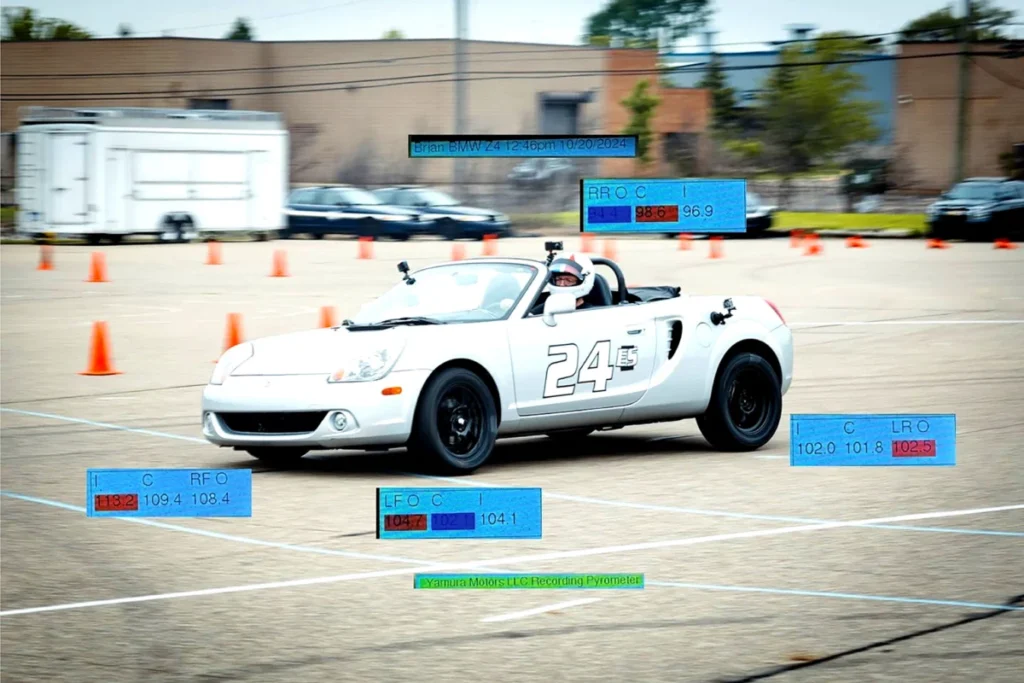
To manage this, drivers utilize infrared pyrometers to measure three points across the tread: the inner edge, the center, and the outer edge. These readings provide a roadmap for adjustment. If the center of the tire displays the highest temperature, it serves as a factual indicator of over-inflation, as the high pressure causes the tire to crown, concentrating heat and wear in the middle. If the center is significantly cooler than the edges, the tire is under-inflated, causing the sidewalls to support the load while the center of the tread bows inward. Technical experts suggest adjusting in increments of 1 to 2 psi, as even minor fluctuations can significantly alter the car’s balance.
Strategic Cooling and the Role of Evaporative Heat Dissipation
As the event progresses through the morning and into the afternoon, the cumulative heat soak from successive runs becomes a liability. While the first run of the day may suffer from "cold tire" understeer, by the fourth or fifth run, the tires may be well beyond their thermal limit. This is particularly true for heavy, front-engine vehicles where the front tires—specifically the outside tire on the majority of the course’s turns—bear the brunt of the work.
To counteract this, the practice of "spraying" tires has become a standard protocol in the paddock. Using pressurized water sprayers, teams apply a fine mist to the tread and sidewalls between runs. This utilizes the principle of evaporative cooling to draw heat out of the tire carcass. Observations from regional events organized by the Sports Car Club of America (SCCA) show that a well-timed water application can drop surface temperatures by 20 to 30 degrees in minutes, resetting the tire to its optimal "window" for the final, decisive run.
However, the strategy is not universal. On overcast or cool days, heat retention becomes the priority. While professional tire warmers are prohibited in most club-level events, many drivers employ thermal blankets or simple covers to shield tires from wind chill, ensuring that the hard-earned heat from the previous run is not lost to the atmosphere.
Precision Suspension Calibration and Chassis Dynamics
Beyond tire maintenance, the mid-event window allows for critical adjustments to the vehicle’s suspension geometry and damping characteristics. The most common adjustment derived from tire temperature data is camber—the vertical angle of the wheels relative to the road. In a high-speed corner, centrifugal force causes the car’s body to roll, which can lift the inner edge of the outside tire off the pavement.
A pyrometer reading that shows significantly higher temperatures on the outer edge of the tire suggests a lack of negative camber; the tire is "rolling over" onto its sidewall rather than maintaining a flat contact patch. Conversely, excessive heat on the inner edge indicates too much negative camber, meaning the tire is not utilizing its full width during cornering. For vehicles equipped with adjustable camber plates or eccentric bolts, a quick adjustment in the paddock can align the tire more effectively for the specific radius of the course’s turns.
Furthermore, drivers with adjustable shock absorbers (dampers) or sway bars can fine-tune the car’s handling balance to combat understeer (where the front tires lose grip first) or oversteer (where the rear tires slide out). The general technical consensus is to soften the end of the car that lacks grip. For example, if a driver experiences "push" or understeer in a tight hairpin, softening the front dampers can allow for better weight transfer and improved front-end bite. These adjustments are a response to the "evolution" of the course, which changes as the day progresses.
Environmental Evolution and Surface Dynamics
An autocross course is a living entity that changes with every car that passes over it. In the early morning "heat," the track is often "green"—covered in a fine layer of dust, morning dew, or oils that have risen to the surface of the asphalt or concrete. During this phase, grip is at its lowest, and drivers must be cautious.
As more vehicles complete their runs, a phenomenon known as "rubbering in" occurs. The high-friction tires of the competitors deposit microscopic layers of rubber into the pores of the pavement, effectively creating a "line" of increased grip. However, this is balanced against the rising ambient and surface temperatures. On a clear, sunny day, asphalt temperatures can soar to over 140°F, which can actually decrease the effectiveness of the rubbered-in surface by making the pavement itself more pliable and less stable.
The chronology of a typical event reflects this evolution:
- The Reconnaissance Phase (Run 1): Focus on learning the line and scrubbing the tires.
- The Adjustment Phase (Runs 2-3): Implementing pressure and suspension changes based on initial data.
- The Peak Performance Phase (Final Runs): The track is at its most "rubbered-in" state, and the driver has optimized the vehicle’s settings. This is typically when the "Fastest Time of the Day" (FTD) is recorded.
Broader Implications for the Automotive Industry and Grassroots Motorsports
The technical rigor required for successful autocross performance has broader implications for the automotive industry and the culture of grassroots motorsports. The sport serves as a real-world laboratory for tire manufacturers like Bridgestone, Michelin, and Falken, who monitor how their consumer-grade performance tires handle the extreme heat cycles of autocross. The data gathered by thousands of amateur racers informs the development of next-generation compounds that offer higher safety margins and better wet-weather performance for the general public.
From a sociological perspective, the "paddock culture" of shared data and technical assistance fosters a high level of mechanical literacy among participants. Unlike many professional sports where secrets are guarded, the autocross community often relies on collective knowledge to improve the safety and speed of the field. Official responses from club stewards often emphasize that the goal of these technical allowances is to encourage an engineering mindset, turning drivers into amateur race engineers.
Ultimately, the ability to manage tire pressures, thermal loads, and suspension settings under the pressure of a ticking clock is what defines the competitive spirit of the sport. As drivers gather more data across different venues—from the abrasive concrete of decommissioned airfields to the smooth, sun-baked asphalt of stadium parking lots—they build a comprehensive database of settings. This "logbook" approach ensures that they are never starting from zero, but rather refining a complex equation of physics and friction.
In conclusion, while the driver’s skill behind the wheel is the most visible element of autocross, the silent work performed in the 15 minutes between runs is equally decisive. Through the precise application of thermodynamics, mechanical engineering, and environmental analysis, competitors can extract every possible ounce of performance from their machinery, ensuring that when they finally pull up to the start line for their last run, both man and machine are in perfect harmony with the pavement.