The realm of horology is a vast and intricate landscape, populated by iconic brands with histories stretching back centuries. Among these esteemed houses, Jaeger-LeCoultre (JLC) stands as a titan, renowned for its unparalleled mastery of complications and its enduring commitment to precision engineering. While the allure of contemporary JLC creations, with their cutting-edge innovations and sophisticated designs, is undeniable, a compelling argument can be made for the exceptional value and intrinsic appeal found within the brand’s neo-vintage offerings. This period, roughly spanning the late 1990s through the 2010s, represents a sweet spot for watch enthusiasts seeking genuine manufacture-grade timepieces at remarkably accessible price points, a stark contrast to the escalating values of many of their steel sports watch counterparts from other prestigious brands.
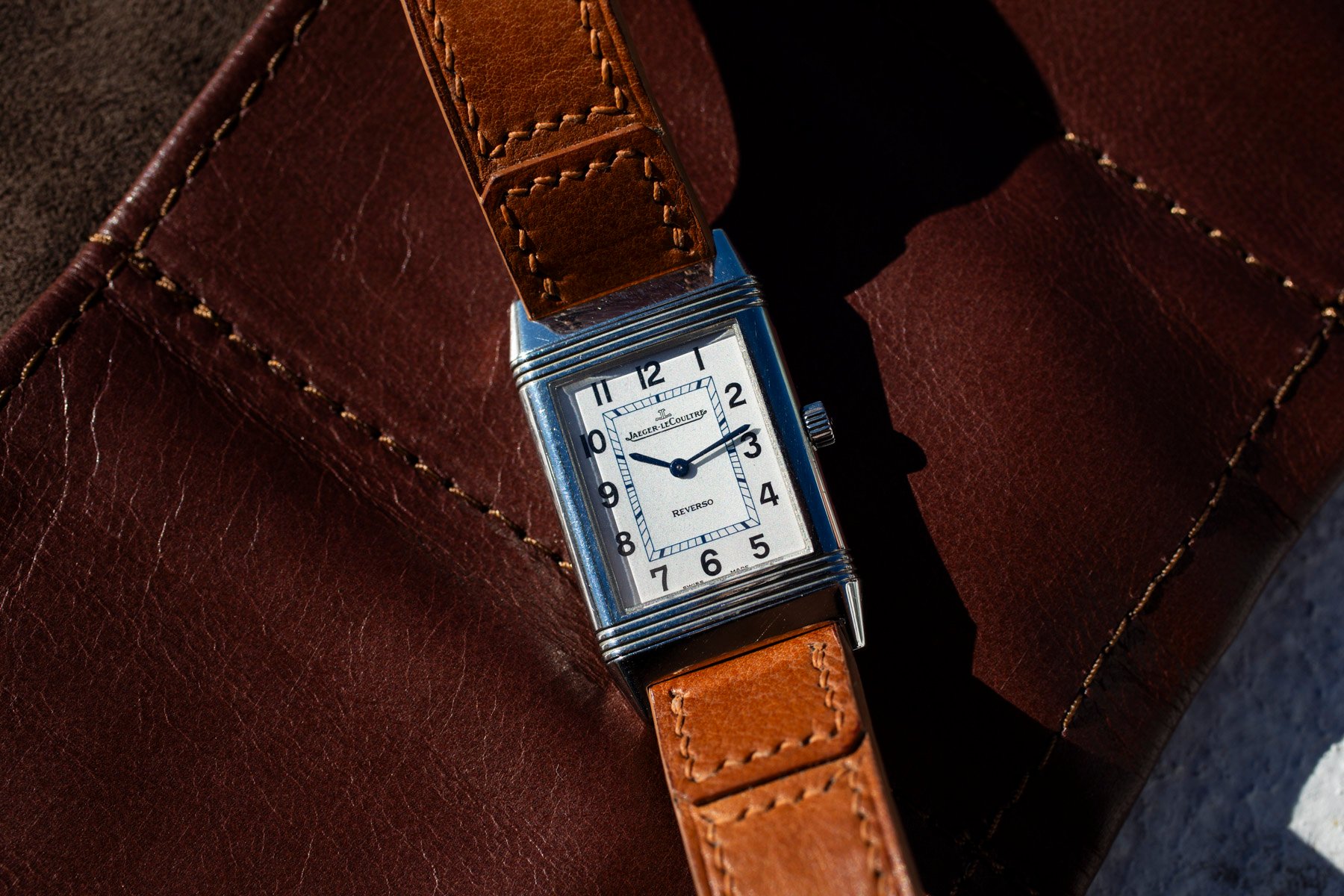
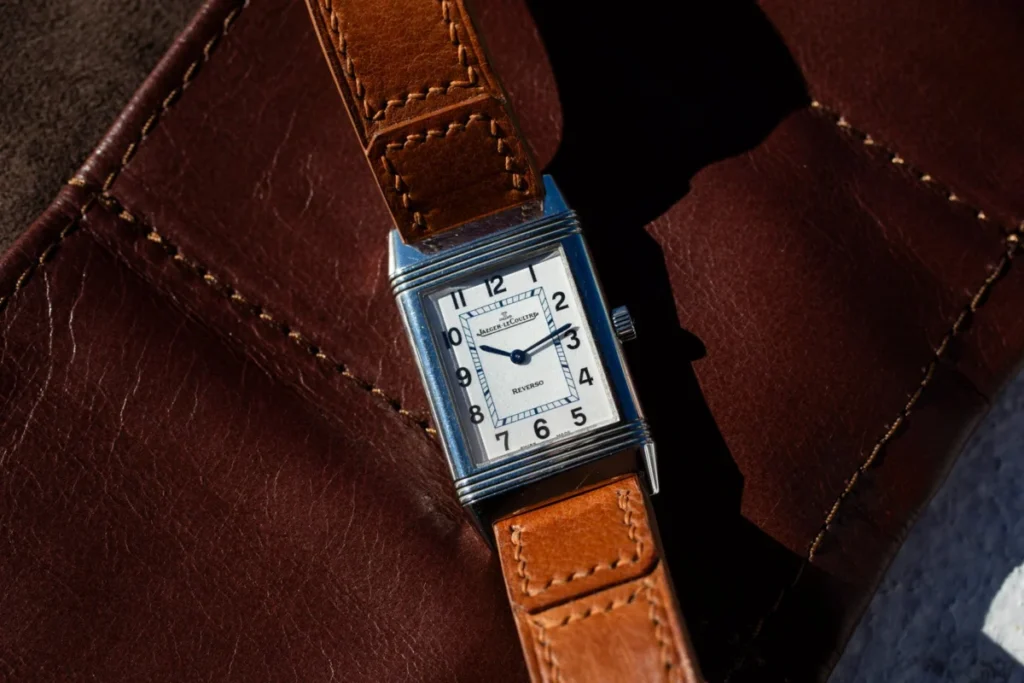
At the heart of this appreciation lies a watch that perfectly encapsulates the essence of neo-vintage JLC: the Reverso Classique, reference 252.8.86. This manually wound, steel example, dating from the mid-2000s, may appear unassuming on paper. It lacks the ostentatious complications that often command premium prices, offering instead a refined interpretation of the iconic Reverso silhouette. However, it is precisely this unadorned elegance, this commitment to fundamental horological principles, that makes it such a compelling proposition. This watch, and many like it from this era, represents a fantastic and fruitful ground for the savvy collector and enthusiast, offering a tangible connection to JLC’s rich heritage and manufacturing prowess without the prohibitive cost associated with its modern counterparts.
The Reverso Classique 252.8.86: A Testament to Timeless Design
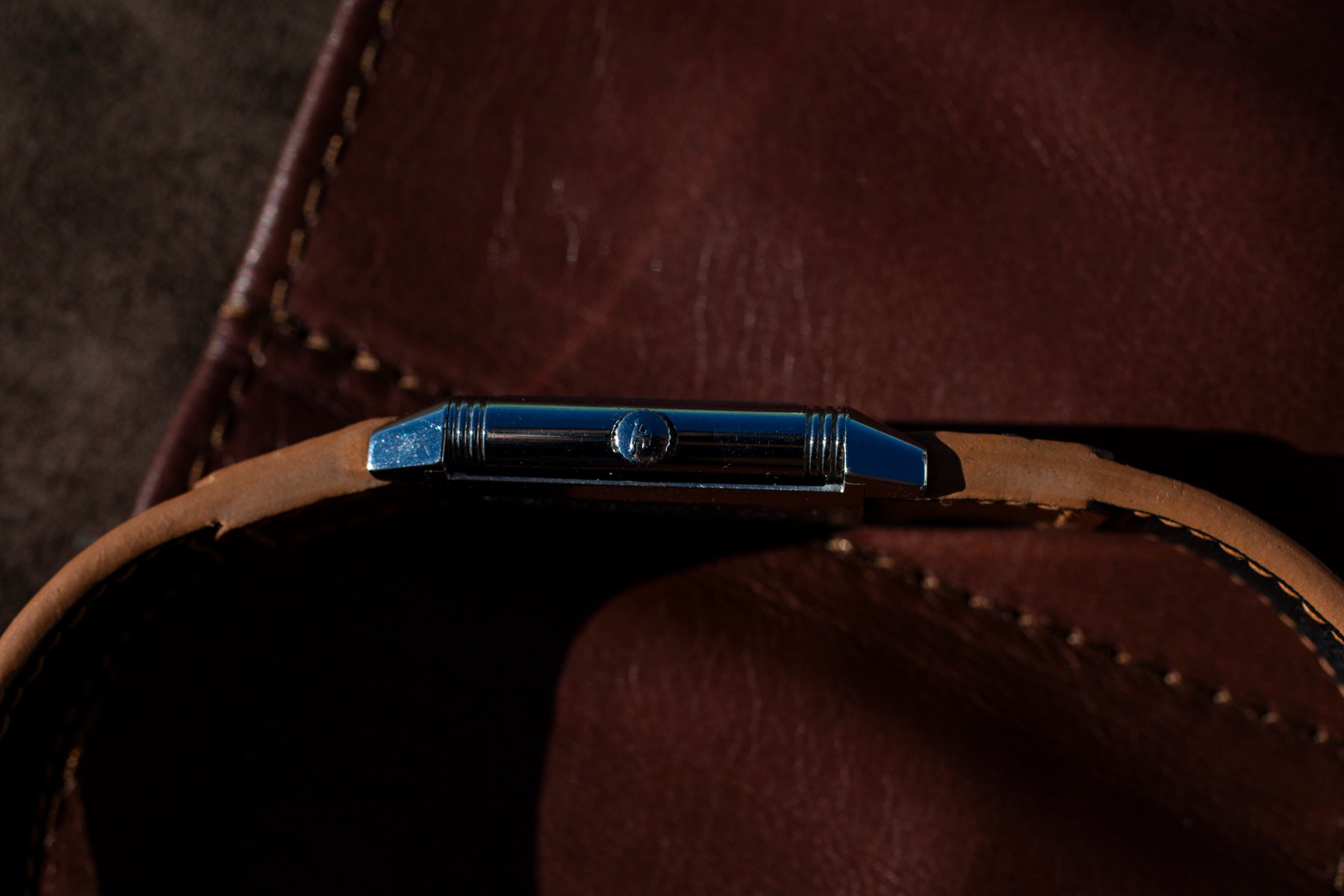
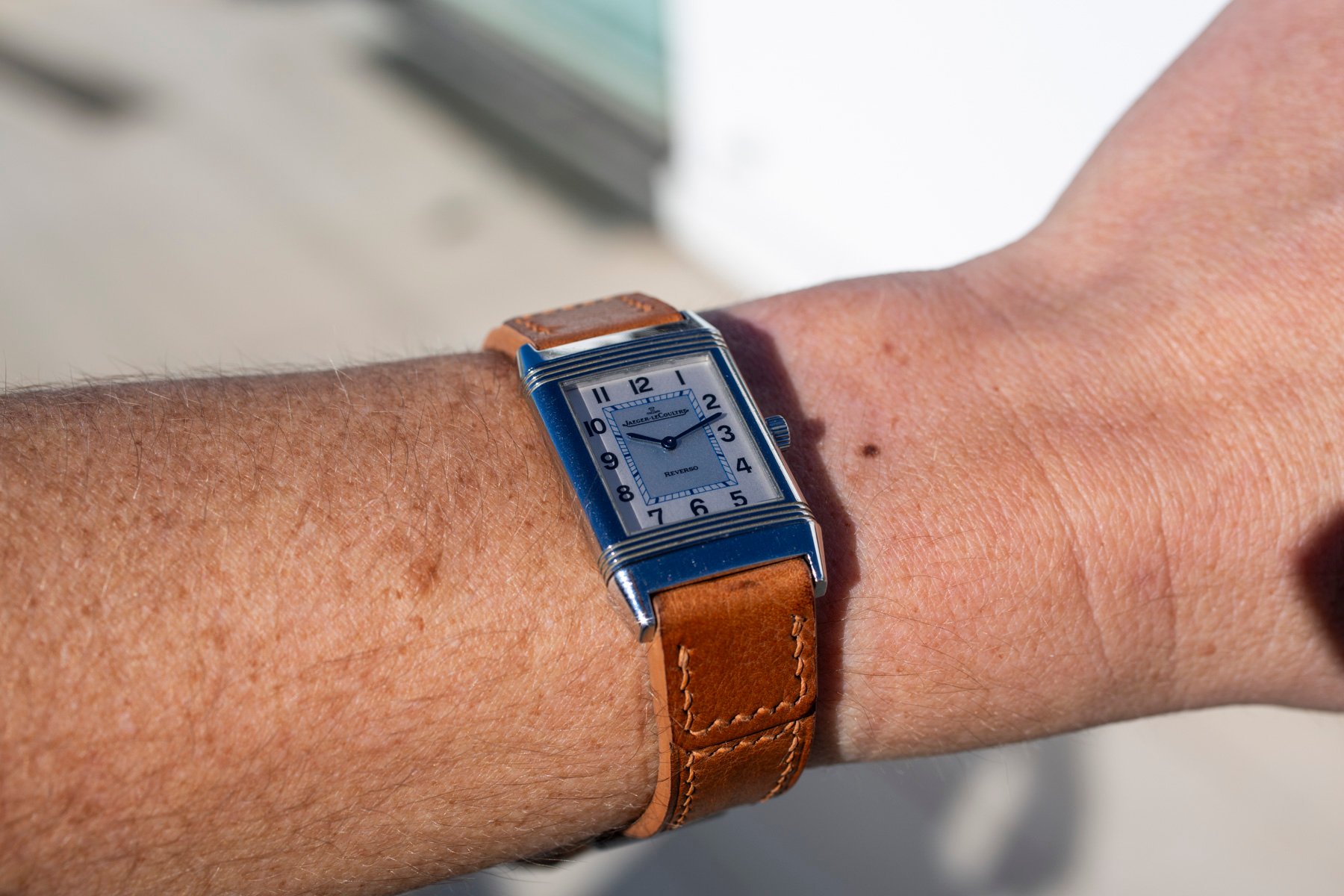
The Reverso Classique reference 252.8.86, a personal favorite of many aficionados, strips the legendary Reverso design back to its 1931 origins. Its rectangular steel case, measuring a refined 23mm by 38mm, is mounted on a pivotal carriage. This mechanism, a marvel of engineering that originally served to protect the watch crystal during polo matches, still pivots with the same satisfying precision that has characterized the Reverso for nearly a century. This particular reference, from the mid-2000s, features a monochromatic silver dial adorned with crisp Arabic numerals and elegant blued steel hands. In person, the watch exudes a quiet sophistication that is simply captivating.
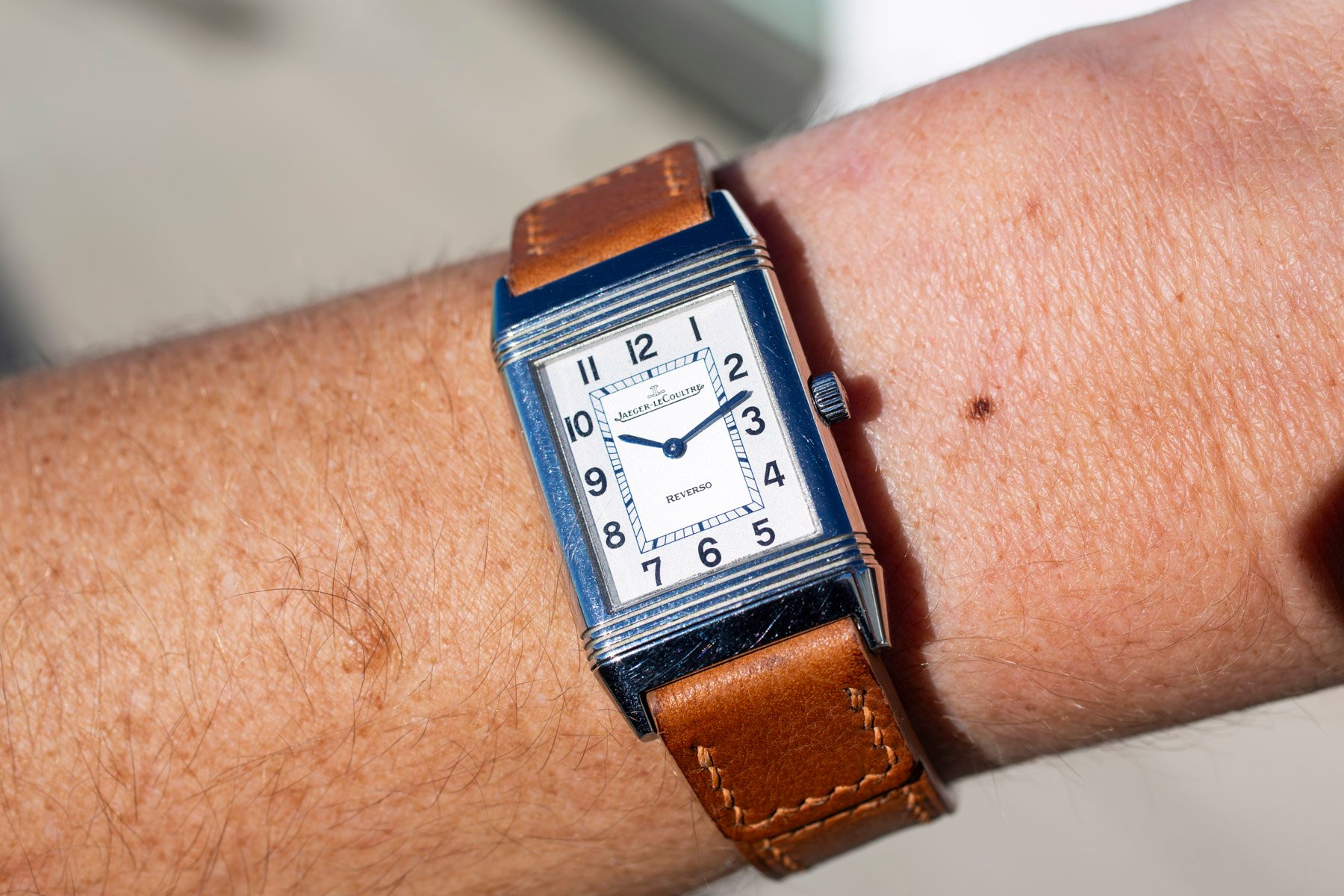
The dial, a quintessential JLC aesthetic, is powered by the manually wound Caliber 846/1. This movement, while relatively simple in its complication set, is a testament to JLC’s commitment to quality and precision. Its robust construction and meticulous finishing are hallmarks of the brand’s manufacturing capabilities. The overall impression of this reference is one of understated luxury. This is achieved through JLC’s unwavering attention to detail, evident in every facet of the watch’s construction. Furthermore, its unisex sizing and the legibility of its dial contribute to its enduring appeal, retaining a connection to the original Reverso’s tool-watch spirit.
The Intriguing Landscape of Neo-Vintage Jaeger-LeCoultre
The period from the late 1990s through the 2010s is particularly significant for Jaeger-LeCoultre for several converging reasons, making it an exceptionally interesting era for collectors. Firstly, this was a pivotal time when JLC was actively re-establishing and solidifying its identity as a true manufacture in the most comprehensive sense. The brand meticulously designed, produced, and finished its own movements, cases, and components, primarily in-house at its historic Le Sentier workshops. This level of vertical integration, where virtually every part of the watch is crafted under one roof, is a rare and highly valued attribute in haute horlogerie.
Secondly, this era predates the widespread proliferation of the term "manufacture" as a ubiquitous marketing buzzword. Back then, the designation carried significant weight and was reserved for brands with a genuine, demonstrable capacity for in-house production. JLC’s claim to the title during this period was not a marketing ploy but a factual representation of its operational reality. The burgeoning craze for "in-house" movements as a primary selling point had not yet reached its zenith, making JLC’s authentic manufacture status a more exclusive and meaningful distinction.
The third, and arguably most crucial, reason for collectors is the present-day affordability of these timepieces. The secondary market has, for the most part, not yet fully recognized the inherent value and historical significance of JLC’s neo-vintage output. While steel sports watches from brands like Rolex, Patek Philippe, and Audemars Piguet have experienced a dramatic and well-documented reappraisal in value over the past decade, JLC has largely remained outside this speculative frenzy. This presents a unique opportunity for discerning buyers to acquire exceptional manufacture watches from this era at remarkably reasonable prices. These watches boast hand-finished cases, exquisitely decorated movements, and were conceived by designers who were not influenced by the fleeting trends of social media. They represent a purer form of watchmaking, driven by intrinsic quality and timeless design principles.
The Master Control Line: A Case Study in Value
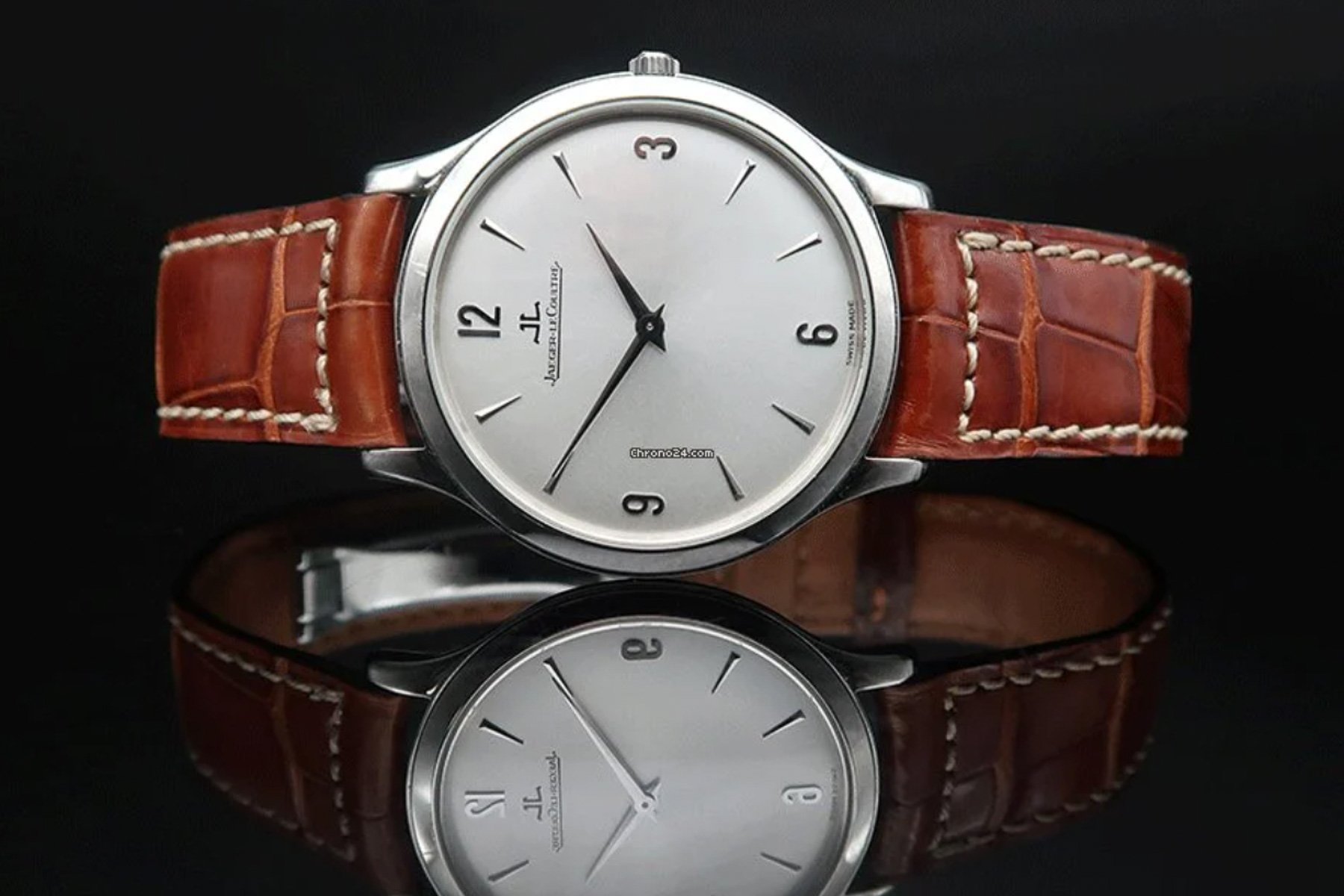
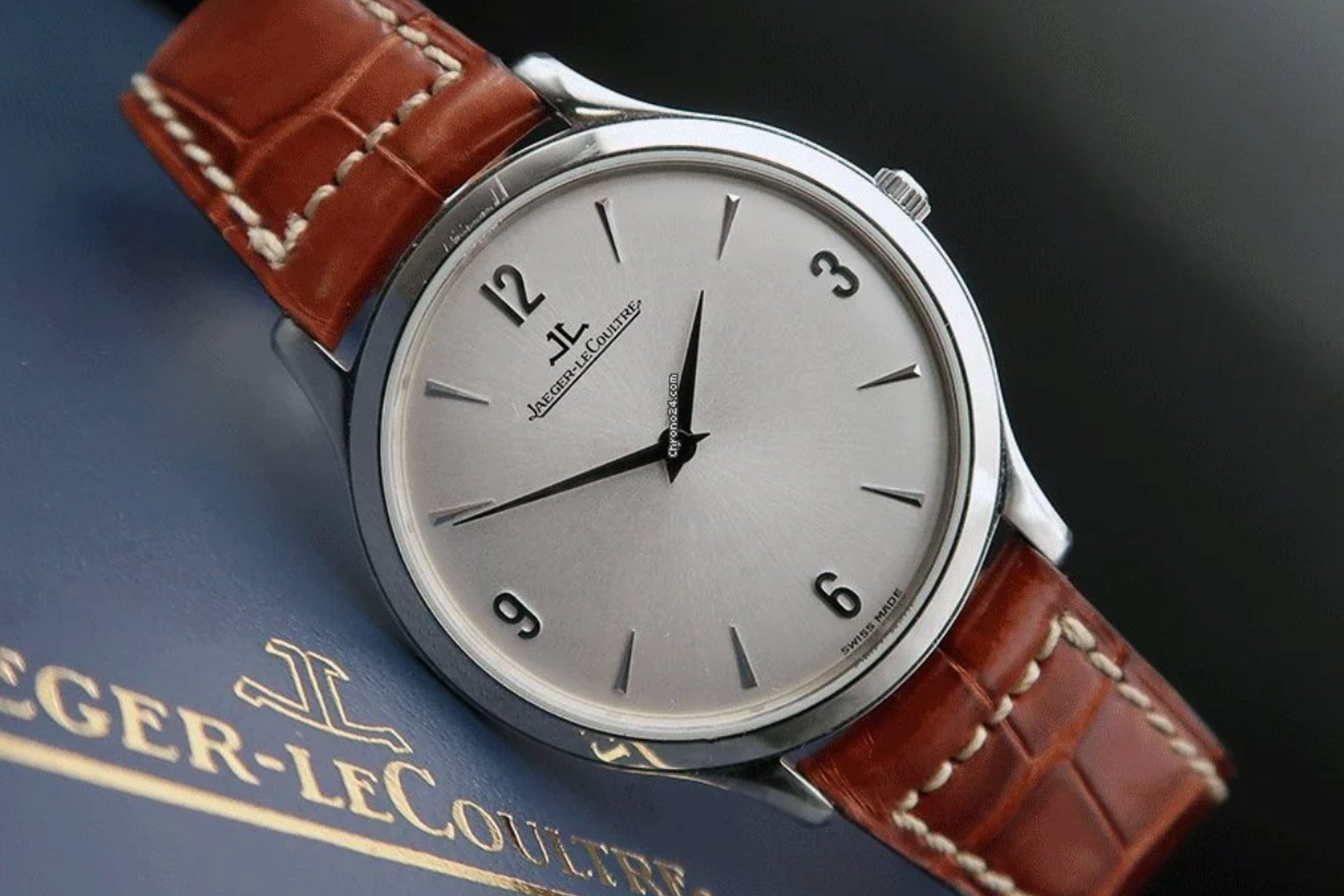
The Jaeger-LeCoultre Master Control collection serves as a prime illustration of this compelling value proposition. These timepieces were JLC’s considered response to a fundamental question: what defines a serious, understated, and versatile everyday automatic watch? The answer lay in clean dial aesthetics, refined case lines, and the creation of an elegant and beautiful daily companion. A key feature of the Master Control line was JLC’s rigorous thousand-hour control testing. This comprehensive testing regime, conducted before a watch ever left the manufacture, was a self-imposed standard that far exceeded basic chronometer certification. It underscored JLC’s unwavering commitment to reliability and performance, ensuring that each timepiece met the brand’s exacting quality benchmarks.
These watches were built with the same philosophy that underpinned JLC’s more complex and celebrated creations, but without the added complications. On the pre-owned market, well-maintained Master Control examples from this period are often available for a fraction of the price of comparable automatics from other renowned brands. Many of these Master Control models are paragons of simple elegance, characterized by impeccable proportions and exceptional build quality. The author, an enthusiast who does not yet own a JLC, admits to frequently casting a "longing gaze" at second-hand Master Control listings, drawn to their inherent beauty and intrinsic value.
The Enthusiast’s Calculus: Value and Authenticity
It is crucial to emphasize that the pursuit of neo-vintage JLC watches should not be solely driven by the prospect of future value appreciation. While these timepieces represent sound investments in horological quality, the true joy of collecting lies in the appreciation of craftsmanship, history, and personal connection. No watch, regardless of its brand or era, should be acquired purely as a speculative instrument. The appeal of this specific window of JLC production lies in its practical considerations as well. Servicing a manually wound caliber like the 846/1 requires a watchmaker with specific expertise in JLC’s intricate architecture. However, for the discerning buyer, the advice remains consistent: "buy the seller" and prioritize what genuinely appeals to you, rather than solely focusing on potential future returns. This hobby, at its core, is a passion of the heart, not merely a calculation of the head.
As an entry point into genuine, in-house Swiss watchmaking, this era of JLC production offers an unparalleled opportunity. These are not mere homages to fine watchmaking, nor are they from brands that benefit from association with established horological powerhouses. They are the authentic article. A Reverso Classique, like the reference 252.8.86, does not demand attention with ostentatious displays. Its enduring appeal stems from its timeless design, which has remained elegant and pure since its inception in 1931. Crucially, at present, these watches are also quietly affordable. Well-maintained examples can still be acquired for comfortably under €5,000, a price point that represents exceptional value for a genuine manufacture timepiece of this caliber. This confluence of quality, heritage, and affordability is a situation unlikely to persist indefinitely.
Concluding Thoughts on the Enduring Appeal of Neo-Vintage JLC
One might reasonably inquire, "Why, if these watches are so compelling, do you not already own a JLC?" The answer is rooted in personal lifestyle choices. The author frequently engages in activities such as swimming, and many of the JLC models that capture his admiration do not possess the requisite water resistance for such pursuits. This is where the brilliance of the Rolex Oyster case becomes apparent, offering both elegance and robust water protection. Thus, this article is penned by a watch enthusiast who, despite his deep appreciation for the brand’s history and manufacturing prowess, does not yet own a JLC – new, neo-vintage, or vintage. This is a situation that the author intends to rectify. While modern JLC watches represent significant investments by the brand in its watchmaking capabilities and product line enhancements, their current price points are beyond his immediate reach.
Fortunately, a brief retrospective of a decade or two reveals JLC timepieces that are far more accessible and possess designs and proportions that are truly remarkable. The importance of proportions cannot be overstated, particularly when considering the Reverso. In the author’s humble opinion, the most aesthetically pleasing Reversos are those that remain closer to the original, smaller dimensions, thus preserving the purity of the design. The question then arises for fellow enthusiasts: would you consider adding a neo-vintage Jaeger-LeCoultre to your collection? And if so, which models would you gravitate towards? The author eagerly awaits your insights and recommendations in the comments. This exploration into the value and artistry of neo-vintage Jaeger-LeCoultre underscores a fundamental truth in watch collecting: true treasures often lie not in the latest releases, but in the well-crafted legacies of the past, waiting to be rediscovered by those with a discerning eye and a passion for horological excellence.