A transformative advancement in biomaterials science has emerged from the Massachusetts Institute of Technology (MIT), where engineers have successfully developed a novel hydrogel that is both highly hydrated and remarkably permeable to air. This innovation addresses a long-standing limitation in hydrogel technology, which, despite its myriad applications in medicine, has been hindered by its inability to breathe, leading to issues like skin irritation and reduced efficacy of attached devices. The breakthrough, detailed today in the esteemed journal Nature, promises to usher in a new era for medical patches, wearable health monitors, drug delivery systems, and even contact lenses, offering enhanced comfort, extended wear, and improved performance.
The Unmet Need: The Dilemma of Conventional Hydrogels
Hydrogels are a class of polymeric materials known for their remarkable water content, often exceeding 90 percent of their mass. Their Jell-O-like consistency, biocompatibility, and adhesive properties have made them indispensable in a variety of medical and consumer applications. From sophisticated wound dressings and surgical glues to platforms for encapsulating and releasing medications, hydrogels offer a versatile solution for interacting with biological tissues. They can be formulated into patches, sprays, or glues, designed for direct application to the skin or for implantation within the body.
Despite their inherent advantages—including softness, stretchiness, and protective qualities—conventional hydrogels possess a critical drawback: their impermeability to air. This characteristic, stemming directly from their water-rich composition, means that when worn for extended periods, hydrogel-based devices can trap moisture and sweat against the skin. This occlusion creates an environment ripe for skin irritation, maceration, and even bacterial growth. For patients, this often translates to discomfort, itching, redness, and in severe cases, medical adhesive-related skin injury (MARSI), which can compromise skin integrity and hinder healing. Beyond patient comfort, the trapped moisture can also degrade the performance and adhesion of medical devices, such as biosensors or transdermal patches, leading to unreliable readings or premature detachment. The challenge has long been to impart breathability without sacrificing the material’s essential hydrated nature and mechanical integrity.
A New Paradigm: Engineering Air Permeability
Recognizing this critical limitation, a team of MIT engineers, led by Professor Xuanhe Zhao, the Uncas (1923) and Helen Whitaker Professor of Mechanical Engineering, embarked on a multi-year quest to redefine hydrogel capabilities. Their goal was ambitious: to create a hydrogel that maintained its characteristic softness, stretchiness, and robustness, while simultaneously allowing air to pass through freely. The solution they devised involves an ingenious "recipe" that incorporates a network of tiny, interconnected tunnels woven throughout the gel structure, transforming an otherwise impermeable material into a breathable membrane.
Professor Zhao emphasized the fundamental significance of their achievement: “Water and oxygen are both essential for life. Now that we’ve added air to hydrogels, people can find broad applications.” This statement underscores the profound biological implications of allowing oxygen exchange through a material designed to interface intimately with living tissues. The ability to wear such devices for longer durations without causing irritation or sweat buildup, even during strenuous physical activity, represents a significant leap forward.
Previous attempts to engineer breathable hydrogels largely pursued two main strategies, each with its own set of limitations. One approach involved physically puncturing microscopic holes throughout the gel. While this method could indeed render the material breathable in air, these pores would invariably clog when exposed to liquids, rendering them ineffective in the moist biological environments where hydrogels are typically used. Another strategy involved blending hydrogels with inherently air-permeable polymers, such as silicone. However, achieving sufficient air permeability through this method often necessitated incorporating a substantial volume of these polymers, which in turn diluted the hydrogel’s water content, compromising its hydration and many of its desirable "squishy" properties. The MIT team’s innovation stands apart by achieving breathability while preserving the hydrogel’s high water content and mechanical performance.
The Scientific Ingenuity: Viscoelastic Phase Separation
The key to the MIT team’s success lies in a sophisticated understanding and manipulation of material science, specifically leveraging a phenomenon known as viscoelastic phase separation. Co-lead author Xiao-Yun Yan eloquently articulated the challenge: “In general, water is not breathable. Hydrogel is 80 to 90 percent water, similar to Jell-O. And you cannot breathe through Jell-O.” The breakthrough came from finding a way to introduce air pathways without diminishing the water-heavy makeup that defines hydrogels.
The research team discovered that by mixing a small amount of silica aerogel particles—essentially “solid-form” air bubbles—into their conventional hydrogel recipe, they could induce a unique structural transformation. These silica aerogel particles, described by Yan as being "like boba beads," are hydrophobic, meaning they naturally repel water and are exceptionally stable within an aqueous environment. The critical insight was recognizing that these particles behave similarly to oil when mixed with water.
During the mixing process, the inherent differences in the "phases" of the water-heavy hydrogel solution and the silica particles triggered viscoelastic phase separation. Rather than distributing evenly, the water molecules preferentially "glommed together," coalescing faster than the less abundant silica particles could disperse. This dynamic process effectively squeezed the silica particles into intricate, interconnected tunnels. Over a period of several hours, this effect culminated in the formation of a robust network of thin, silica-skinned channels permeating the entire gel. Co-lead author Shucong Li vividly described this architecture: “It’s as if the particles formed a network of connected tunnels, like air-permeable highways within the hydrated hydrogel.” Once this elaborate network of air channels was established, the researchers employed a cross-linking chemical process to permanently "freeze" the gel and its breathable architecture in place. This novel approach allows air to flow freely through the silica-lined "highways" while the surrounding hydrogel matrix retains its high water content, ensuring both breathability and hydration.
Validation and Efficacy: Rigorous Testing and Clinical Insights
To rigorously validate their invention, the MIT engineers subjected the new aerated hydrogel to a battery of mechanical and physiological tests. One of the most compelling demonstrations involved human volunteers. In an initial experiment, participants wore wireless electrocardiogram (ECG) monitors affixed to their chests using the new breathable hydrogel while exercising for 20 minutes. For comparison, volunteers also wore monitors with conventional, commercial hydrogel adhesives. The results were striking: the breathable hydrogel consistently maintained a strong, clear ECG signal throughout the workouts, whereas the conventional gel exhibited significant signal fluctuations, indicative of compromised contact duece to sweat accumulation and skin irritation.
Extending this preliminary success, the researchers conducted a more prolonged study. Several volunteers wore the breathable hydrogel-attached ECG monitors for 10 consecutive days, engaging in regular exercise. The findings from this extended trial were equally promising. As Li reported, “We reliably saw that after 10 days, the quality of the ECG signal is still pretty good, and after you take off the monitor, there were no noticeable blisters or redness on the skin. This indicates healthy skin conditions.” This direct evidence of sustained efficacy and absence of skin irritation over an extended period marks a significant milestone, addressing a primary limitation of current hydrogel technologies.
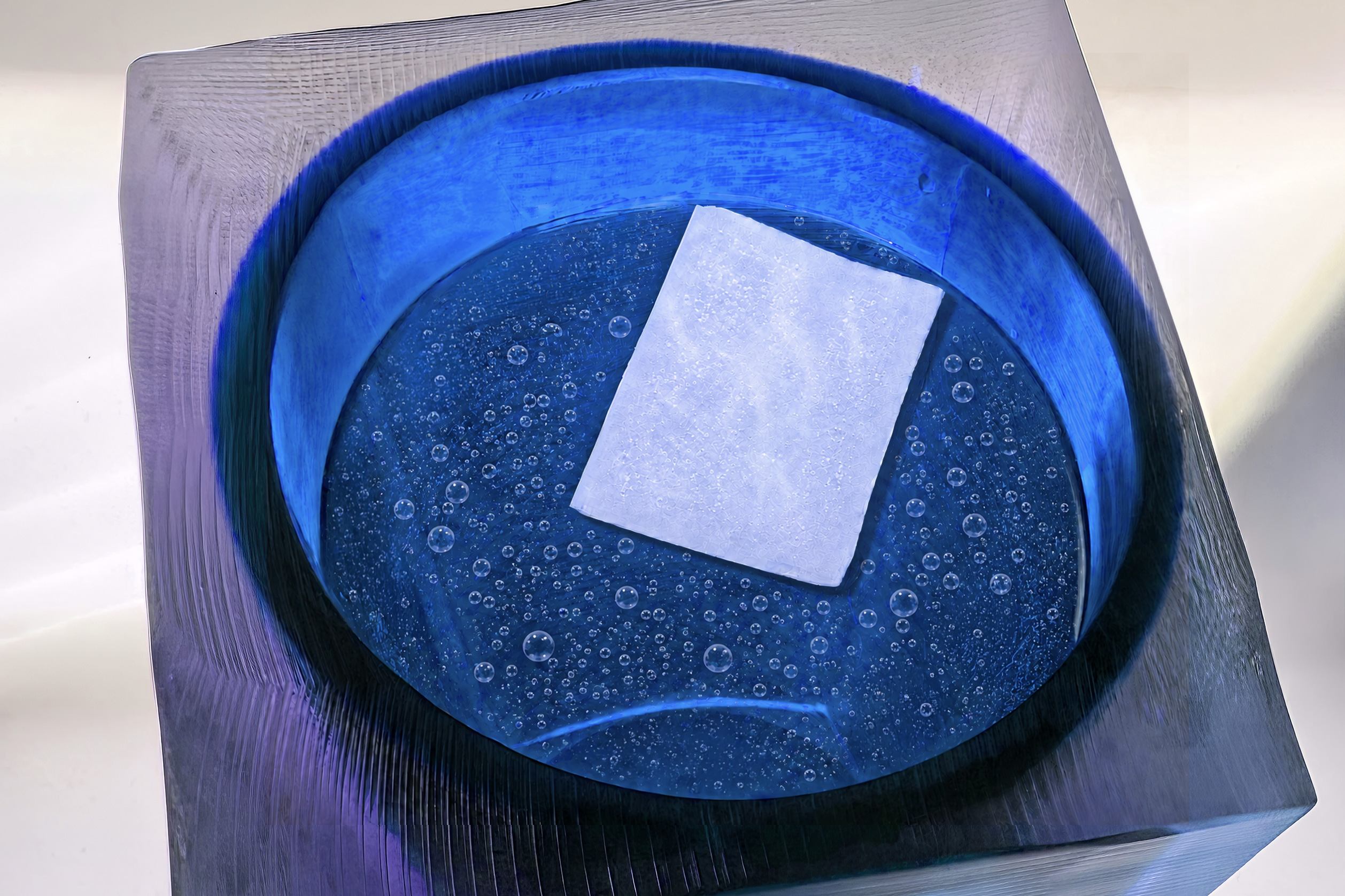
Beyond human trials, the team also performed extensive mechanical durability tests on the hydrogel itself. The material was subjected to 10,000 cycles of stretching and compression, simulating the constant micro-strains experienced by devices worn on the body (e.g., chest movement from breathing and heartbeats). Remarkably, even after this intense mechanical stress, the gel retained its network of air channels, with less than a 5 percent drop in oxygen permeability. This exceptional durability is crucial for real-world applications, ensuring that the breathable properties are maintained throughout the product’s intended lifespan. The team even provided a visual demonstration: unlike conventional hydrogels that sink in water, the new aerated hydrogel floats due to the air trapped within its tunnels, a simple yet powerful testament to its unique structure.
Expert Perspectives and Broader Vision
The implications of this research extend far beyond mere material improvement; they represent a fundamental shift in how biomedical devices can interact with the human body. Professor Zhao views this discovery not just as a product, but as a "technology platform." He stated, "We’ve discovered that this process can create these air-permeable hydrogels, and we demonstrate one application. But we think there can be very broad applications." This perspective suggests that the principles of viscoelastic phase separation can be adapted to create a diverse range of breathable, multifunctional hydrogels, opening doors for future innovation across various fields.
The research team, which included co-authors Xiao-Yun Yan, Shucong Li, Won Jun Song, Runze Li, Bastien Aymon, Jingjing Wu, Gengxi Lu, Jiayi Liu, Shu Wang, Eric Lu, Hyunhee Lee, James Zhang, Casey O’Brien, and Zachary Smith, alongside collaborators from multiple other institutions, highlights a collaborative effort at the forefront of materials science. Their work builds on decades of hydrogel research, pushing the boundaries of what these versatile materials can achieve. The ability to maintain hydration while facilitating oxygen exchange fundamentally improves the biocompatibility and patient experience for countless medical and consumer products.
Transformative Applications and Market Implications
The development of breathable hydrogels holds the potential to revolutionize numerous sectors:
Medical and Healthcare Applications:
- Advanced Wound Care: Longer-lasting, more comfortable bandages and dressings that promote better healing by allowing the wound bed to breathe, reducing the risk of infection and maceration. This could significantly improve outcomes for chronic wounds, which are a major healthcare burden.
- Enhanced Wearable Health Monitors: Devices like ECG monitors, continuous glucose monitors, and sweat sensors can now be worn for extended periods with greater patient comfort and improved signal quality. This addresses a key challenge in patient compliance and data reliability for remote monitoring and diagnostics. The global wearable medical device market, valued at approximately $14 billion in 2022, is projected to grow substantially, and this innovation could capture a significant share by offering superior user experience.
- Improved Drug Delivery Systems: Transdermal patches for sustained drug release can become more effective and less irritating, leading to better patient adherence and therapeutic outcomes.
- Bio-integrated Implants: For internal applications, breathable hydrogels could serve as superior coatings or components for implants, fostering better tissue integration and reducing inflammatory responses by allowing for local oxygen supply.
- Surgical Adhesives and Sealants: These could benefit from improved tissue compatibility and long-term stability in the body.
Consumer and Personal Care Products:
- Cosmetic Face Masks: Consumers could wear face masks for longer durations, potentially enhancing the absorption of active ingredients without the common discomfort or irritation associated with occlusive masks.
- Advanced Contact Lenses: By allowing greater oxygen flow to the eye, breathable hydrogels could lead to more comfortable and healthier contact lenses, reducing the risk of corneal hypoxia and extending wear time. The contact lens market, a multi-billion dollar industry, constantly seeks innovations for improved comfort and eye health.
- Sports and Fitness Gear: Adhesives for athletic sensors or protective gear could offer enhanced performance and comfort during intense physical activity.
The implications for the medical device industry are particularly profound. The global hydrogel market itself is a multi-billion dollar industry, and the introduction of breathable variants could unlock new product categories and expand existing markets. Companies manufacturing everything from bandages to smart wearables will likely explore integrating this technology, driven by the demand for more patient-centric solutions. The reduction in skin irritation and improvement in device efficacy could lead to better patient outcomes, fewer hospital visits for complications, and ultimately, a more efficient healthcare system.
Future Directions and Commercial Potential
While the initial results are exceptionally promising, the journey from laboratory breakthrough to widespread commercial application involves further research and development. Key areas for future investigation include exploring the compatibility of this breathability mechanism with a wider array of hydrogel chemistries, optimizing the pore structure for specific applications, and scaling up manufacturing processes. Regulatory approval for medical devices will also be a significant step, requiring comprehensive safety and efficacy studies.
Nevertheless, Professor Zhao’s vision of a "technology platform" suggests that this discovery is not a singular solution but rather a foundational principle upon which countless new innovations can be built. The ability to control both hydration and aeration in a biocompatible material opens up unprecedented opportunities for designing next-generation biomedical devices that are not only effective but also inherently more comfortable and safer for human use. This research marks a pivotal moment in materials science, promising a future where medical technologies seamlessly integrate with our biology, enhancing health and well-being without compromise.
This work was carried out in part through the use of MIT.nano’s facilities and was supported in part by the MIT Hatsopoulos Faculty Fellowship, the Uncas and Helen Whitaker Professorship, a HEALS seed grant, the National Institutes of Health, the National Science Foundation, and the Department of Defense Congressionally Directed Medical Research Programs.