Cambridge, MA – A groundbreaking collaboration between researchers at the Massachusetts Institute of Technology (MIT) and industrial machinery manufacturer Sumitomo Heavy Industries has culminated in the development of a revolutionary control system for heavy machinery, particularly excavators. Dubbed the "World-Space Interface" (WSI), this innovative system promises to dramatically simplify the operation of complex equipment, significantly accelerate operator training, and pave the way for safer, more efficient remote operations in hazardous environments.
"This is a more intuitive way to command the machine," states Hermano Krebs, principal research scientist in MIT’s Department of Mechanical Engineering and a lead figure in the project. "With this new interface, we can eliminate a lot of the mental maps that an operator would need to build in order to operate an excavator." This fundamental shift from abstract controls to direct, mimetic interaction is expected to have profound implications for the global construction industry, which grapples with persistent challenges in workforce development, safety, and operational efficiency.
The findings, detailing the open-access results of their extensive research, were published this week in the prestigious Journal of Computing and Civil Engineering. The MIT co-authors include Moises Alencastre-Miranda, Joao Buzzatto, and Eran Beeri Bamani, who worked alongside collaborators from Japan-based Sumitomo Heavy Industries.
The Enduring Challenge of Heavy Equipment Operation
Operating heavy machinery like excavators has long been considered a highly skilled trade, requiring extensive training and a unique cognitive ability to translate joystick commands into complex movements of the machine’s arm, bucket, and cab. Traditional excavator controls, typically involving multiple joysticks, demand that operators develop intricate "mental maps" – a complex neurological process of associating abstract lever movements with specific, coordinated mechanical actions in three-dimensional space. Mastering this translation can take months, often years, of dedicated practice, typically on actual machines in controlled environments.
The current training paradigm involves novices spending significant time learning to coordinate these seemingly disparate inputs to perform tasks such as scooping, dumping, digging trenches, or clearing debris. This steep learning curve is not only time-consuming and expensive but also presents inherent safety risks, particularly during the initial stages of training. Errors in judgment or coordination can lead to costly damage to equipment or, more critically, serious accidents on job sites.
A Growing Crisis: The Aging Workforce and Training Gap
The impetus for this transformative research was significantly driven by a looming demographic crisis within the heavy machinery operating sector, particularly acute in Japan. Sumitomo Heavy Industries approached MIT in 2018, expressing concern over the rapidly aging population of heavy machinery operators in their home country. With a significant portion of the experienced workforce nearing retirement, there is an urgent need to train their replacements quickly and effectively.
This challenge is not unique to Japan. Globally, the construction industry faces a severe shortage of skilled labor. According to a 2022 Associated General Contractors of America (AGC) survey, 89% of construction firms reported difficulty finding qualified workers, with equipment operators being among the most sought-after positions. The average age of a heavy equipment operator in many developed nations hovers around 45-50 years, signaling a retirement wave that will exacerbate existing labor gaps. The traditional, lengthy training methods are simply insufficient to meet the accelerating demand for new operators, making innovations like the WSI critical for sustaining the industry’s growth and productivity. The global construction equipment market, valued at over $170 billion in 2022 and projected to grow, underscores the economic imperative of efficient workforce development.
Genesis of a Solution: MIT’s Expertise Meets Industrial Need
The collaboration brought together MIT’s Krebs group, renowned for its work in human-robot interactions with a long-standing focus on physical rehabilitation, and Sumitomo Heavy Industries, a global leader in industrial machinery. Krebs’ team had accumulated extensive knowledge regarding how humans intuitively control their limbs and how this understanding could be leveraged for more natural machine interaction. This background proved invaluable in rethinking the human-machine interface.
Recognizing the urgent need for a faster and more intuitive training methodology, the joint team reasoned that if they could eliminate the necessity for operators to construct these complex "mental maps," they could drastically shorten the training process. Their quest was for a more natural control mechanism, one that moved beyond the abstract manipulation of joysticks. The solution they landed upon was a mechanical arm design that physically mimics the excavator’s own arm and bucket. This design allows operators to directly mimic and control the excavator’s movements, thereby bypassing the need for extensive mental translation.
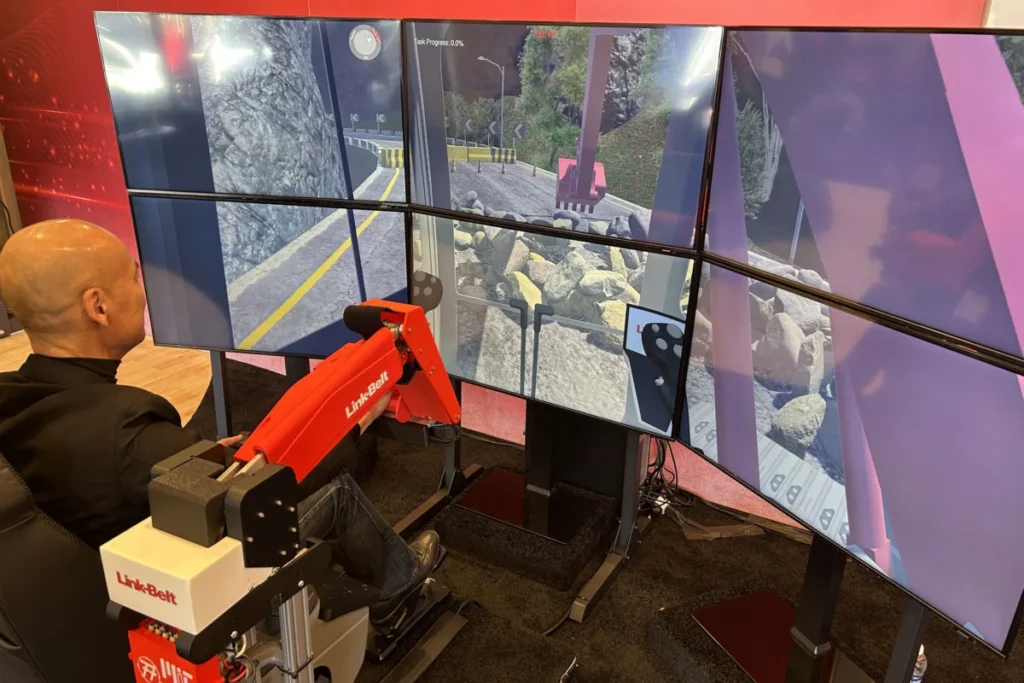
Over several years, the researchers diligently developed the mechanical arm hardware, alongside sophisticated software designed to pair its movements with a virtual simulation of an excavator. This synergistic combination of the physical arm and the virtual simulator forms the core of the new training and control platform, which the team aptly named the "World-Space Interface."
Krebs elaborates on the nomenclature: "‘World-space’ refers to everything in the world that is outside of yourself, or in this case, outside of the excavator’s cab. Normally, operators have to build a mental map of how to manipulate things in the world-space. But now, we can just mime picking up rocks or dirt, and the computer will do that translation to the world-space for us." This direct, intuitive control mechanism is the cornerstone of WSI’s transformative potential.
Introducing the World-Space Interface (WSI): A Paradigm Shift in Control
The World-Space Interface fundamentally redefines how humans interact with heavy machinery. Instead of operating abstract joysticks, an operator uses a miniature mechanical arm, similar to an exoskeleton, which directly translates their arm and hand movements into commands for the excavator. This "machine mimicry" means the operator’s physical actions directly correspond to the desired movements of the excavator’s boom, stick, and bucket.
The WSI offers dual application modes:
- On-site Operation: Imagine an operator sitting in the excavator’s cab, their arm placed within the miniature WSI arm. Their natural arm movements would directly control the machine, offering a far more intuitive and less mentally taxing experience than traditional joysticks. This can significantly reduce operator fatigue and increase precision.
- Remote Tele-operation: For tasks in dangerous or inaccessible environments – such as demolition of hazardous structures, disaster response, or operations in extreme weather conditions – an operator could be safely situated off-site, perhaps in a trailer or control room. Using the WSI arm, they could remotely tele-operate the excavator with the same intuitive control, effectively extending their presence without risking their safety. This capability holds immense promise for improving safety standards across the construction and mining industries.
Accelerated Learning: Novices Match Experts from Day One
To validate the efficacy of the WSI, the research team conducted rigorous training experiments. Volunteers, comprising both expert excavator operators and complete novices, were tasked with operating virtual excavator simulations using both the WSI and a traditional joystick-based simulator. The virtual environments were meticulously designed to replicate 15 realistic excavation scenarios, including construction sites, highways, riverbanks, and mining areas, each with associated tasks like scooping gravel, digging trenches, or clearing debris.
The experiment was structured to mimic a typical week-long excavator driving course, with participants engaging for one hour daily over seven days, tackling tasks of increasing difficulty. The results were striking. While novices using the joystick simulator consistently performed worse than experts initially, showing gradual improvement over the training period, the WSI demonstrated a remarkable capability: novices using the World-Space Interface performed as proficiently as experts from the very first session.
"In this case, joysticks are a non-intuitive way to control and coordinate the machine," explains study co-author and MIT postdoc Joao Buzzatto. "This is the first interface that does not require me to command the excavator with joysticks." This immediate proficiency among novices represents a paradigm shift, potentially reducing training times from months or years to mere days, thereby significantly cutting training costs and accelerating workforce integration. The construction industry spends billions annually on training and safety programs; a system that can drastically shorten the learning curve offers substantial economic benefits.
The Road Ahead: Haptics and Industry Adoption
The team is not resting on its laurels. The next phase of development for the WSI involves integrating haptics, or the sense of touch, into the physical arm. This enhancement would provide force feedback to the operator. For example, if an operator uses the WSI arm to mime picking up a heavy pile of rocks, the arm would generate a resistive force, allowing the operator to "feel" the weight of the rocks. This tactile confirmation would further enhance the intuitiveness and immersion of the system, providing crucial feedback that mirrors real-world interaction.
"Haptics would make this an even more intuitive system," notes co-author and visiting engineer Solmon Jeong. This added sensory dimension would likely improve precision, reduce errors, and make remote operation feel even more like direct, physical interaction.
The construction industry is already exploring advanced virtual simulators to train operators and enable remote control. Major players like Caterpillar, Hyundai, and Komatsu are investing heavily in these technologies. However, most of these existing simulators are still built around traditional joystick controllers, which, as the MIT research demonstrates, inherently require a substantial learning period. The WSI offers a distinct advantage by fundamentally redesigning the input mechanism itself.
The researchers envision a future where the WSI arm could be incorporated directly into an excavator cab as an appendage, or as the primary control mechanism in advanced tele-operational simulators. In such a scenario, even first-time operators, having bypassed the steep learning curve of joysticks, could be productive on day one.
Broader Implications for the Construction Sector
The World-Space Interface holds transformative potential across several facets of the construction industry:
- Workforce Development and Accessibility: By democratizing access to complex machinery operation, the WSI can attract a broader talent pool, including individuals who might otherwise be deterred by the perceived difficulty of traditional controls. It can significantly reduce the time and cost associated with training, making careers in heavy equipment operation more accessible and appealing.
- Enhanced Safety: The ability to tele-operate excavators from a safe, remote location will drastically reduce the risk to human operators in hazardous environments, such as unstable ground, demolition sites, or areas exposed to toxic substances. Even in conventional settings, the intuitive controls can lead to fewer operational errors, thereby reducing accidents and improving overall site safety.
- Increased Efficiency and Productivity: Faster training means more skilled operators available sooner. The intuitive nature of the WSI can also lead to more precise and efficient task execution, reducing project timelines and operational costs. Reduced fatigue for operators could also translate to sustained higher productivity throughout shifts.
- Integration with Smart Construction and Automation: The WSI aligns perfectly with the broader trend towards smart construction, automation, and the Internet of Things (IoT) on job sites. As construction becomes increasingly digitized, an intuitive interface like the WSI can serve as a crucial bridge between human operators and advanced robotic systems, facilitating hybrid models of operation.
- Global Impact: The challenges of an aging workforce and the need for efficient training are global. The WSI offers a scalable solution that can be adopted worldwide, particularly benefiting developing nations seeking to rapidly upskill their labor forces for infrastructure projects.
- Economic Benefits: For construction companies, the WSI promises reduced training expenditures, lower insurance premiums due to improved safety, and potentially higher profit margins through enhanced project efficiency and faster completion times.
This research, supported in part by Sumitomo Heavy Industries, represents a significant leap forward in human-machine interaction. By fundamentally rethinking how we control complex machinery, MIT and Sumitomo Heavy Industries are not just improving excavator operation; they are laying the groundwork for a safer, more efficient, and more accessible future for the entire heavy equipment industry. The World-Space Interface stands as a testament to the power of interdisciplinary collaboration in addressing critical industrial challenges.