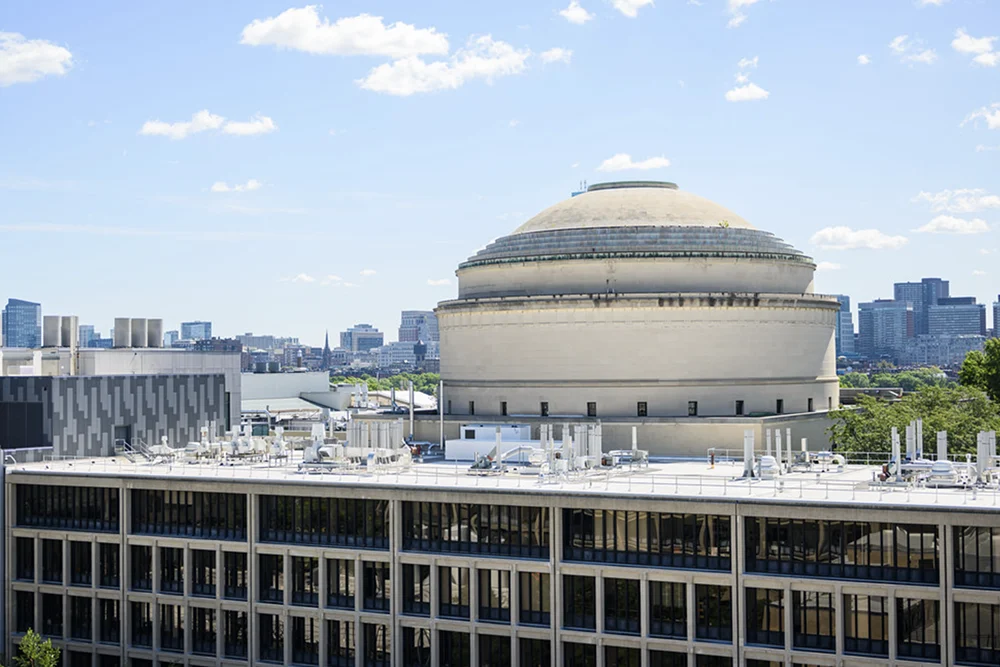
The National Science Foundation (NSF) has officially designated the Massachusetts Institute of Technology (MIT) to establish and spearhead a new Materials Research Science and Engineering Center (MRSEC), a move intended to catalyze breakthroughs in medical imaging, sustainable metallurgy, and semiconductor architecture. Announced on July 30, this initiative is part of a broader $108 million federal investment aimed at fortifying the United States’ leadership in materials science. The MIT-led center is expected to receive approximately $18 million in research funding over the next six years, contingent upon the finalization of a formal research agreement between the Institute and the NSF.
This new center represents a massive interdisciplinary undertaking, uniting 16 distinct research groups from nine academic departments. While the administrative heart of the center will reside within the MIT Materials Research Laboratory (MRL), the collaboration extends far beyond a single building or even a single campus. The project incorporates expertise from four major institutions, including three collaborating universities and a prominent teaching hospital, creating a robust ecosystem for scientific discovery and practical application.
Strategic Research Thrusts: Imaging and Sustainability
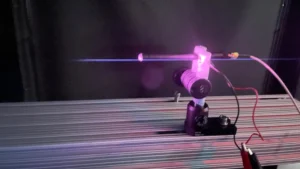
The MIT MRSEC will concentrate its intellectual resources on two primary research "thrusts," each addressing a critical challenge in modern technology and industry. The first thrust focuses on the advancement of X-ray detection technology. By engineering specialized materials at the nanoscale, researchers aim to re-invent scintillators—the materials responsible for converting high-energy X-rays into visible light.
Current X-ray technology, while indispensable, faces limitations in terms of resolution, speed, and radiation dosage. The MRSEC team, led by optical materials experts such as Professor Marin Soljačić and Professor Juejun Hu, seeks to enhance the sensitivity and energy-resolution of these detectors. The implications of this research are profound: in the medical field, it could lead to significantly more accurate cancer diagnoses and reduced radiation exposure for patients. Beyond healthcare, improved X-ray sensitivity has direct applications in industrial non-destructive testing and high-security screening at ports and airports.
The second research thrust pivots toward the foundation of industrial civilization: metals and semiconductors. This group will explore the properties and applications of high-temperature, sulfur-based molten materials. The goal is to revolutionize the production of critical metals, such as copper, which are essential for the global transition to renewable energy and electric vehicles. Traditional metal smelting is often energy-intensive and environmentally taxing; by mastering the chemistry of molten sulfides, the center aims to develop more efficient, sustainable production methods. Furthermore, this research opens the door to new thin-film semiconductor technologies, which are vital for the next generation of electronic devices. This focus also serves a strategic purpose: rebuilding domestic expertise in high-temperature liquid chemistry, a field that has seen a decline in U.S. academic circles in recent decades.
A Legacy of Interdisciplinary Excellence
The selection of MIT for this award is not an isolated event but the latest chapter in a 60-year history of materials research at the Institute. The lineage of the new MRSEC can be traced back to the 1960s, when the U.S. Department of Defense supported the first centralized materials laboratories on campus. Over the subsequent decades, NSF-funded centers have provided the continuity and resources necessary to build world-class research communities.
Previous investments in materials science at MIT have yielded significant dividends, laying the groundwork for renowned centers of excellence such as the MIT Microphotonics Center and the Microsystems Technology Laboratories (MTL). These entities have been instrumental in developing technologies that define the modern digital age. Associate Professor Rafael Jaramillo, the newly appointed director of the MRSEC, emphasizes that the center is designed to continue this legacy of "intentional" teamwork. By breaking down the silos between departments such as Physics, Chemistry, and Earth, Atmospheric and Planetary Sciences (EAPS), the center aims to solve problems that are too complex for any single discipline to handle.
Collaboration Across Institutions and Departments
The scale of the MRSEC is reflected in the breadth of its internal and external partnerships. Within MIT, the center integrates faculty from five departments:
- Department of Materials Science and Engineering (DMSE)
- Department of Chemistry
- Department of Chemical Engineering
- Department of Earth, Atmospheric and Planetary Sciences (EAPS)
- Department of Physics
This internal synergy is augmented by external collaborations with Yale University and the University of California at Santa Barbara. Crucially, the inclusion of the Department of Radiology at Massachusetts General Hospital and Harvard Medical School ensures that the fundamental research into X-ray materials remains grounded in clinical reality and patient needs.
Leading the center alongside Director Rafael Jaramillo is Professor Caroline Ross of DMSE, who will serve as associate director. The faculty roster includes luminaries such as Moungi Bawendi, a Nobel laureate in Chemistry, and Martin Bazant, a leader in chemical engineering and electrochemical systems. This concentration of expertise is designed to create what Jaramillo describes as a new "intellectual center of gravity" for materials science.
Infrastructure and Shared Facilities
A significant portion of the NSF funding will be dedicated to expanding the physical infrastructure available to the materials science community. The award will support a new shared laboratory managed by MIT.nano, the Institute’s state-of-the-art facility for nanoscale research. This new lab will be specifically equipped for testing magnetic materials and characterizing materials under extreme conditions—such as the high temperatures required for molten sulfide research.
Importantly, these facilities will not be exclusive to MIT researchers. As part of the NSF’s national portfolio of research facilities, the lab will be accessible to both academic and industrial users from across the country. This open-access model is intended to accelerate the commercialization of new materials and provide small-scale startups and external researchers with the tools needed to validate their technologies.
Educational Outreach and the "DISASTER!" Initiative
Recognizing that scientific advancement requires public support and a skilled workforce, the MIT MRSEC is launching an ambitious outreach program. Director Jaramillo noted a particular need for materials science education in the New England region, where local industries are often in search of workers with specialized processing backgrounds.
One of the center’s most unique initiatives is titled "DISASTER!"—an educational program designed to introduce the public and undergraduates to materials science through the lens of forensic engineering. By analyzing high-profile historical catastrophes, the program will illustrate how the failure of specific materials can lead to systemic collapses.
Key case studies include:
- The RMS Titanic: Forensic analysis revealed that the impurities in the iron rivets used in the ship’s hull made them brittle in the freezing temperatures of the North Atlantic, contributing to the vessel’s rapid sinking.
- The de Havilland Comet: As the world’s first commercial jetliner, the Comet suffered a series of mysterious mid-air disintegrations. Investigations eventually identified metal fatigue as the culprit, leading to a fundamental shift in aerospace engineering and safety protocols.
By telling these stories, the MRSEC hopes to inspire a new generation of scientists and engineers while demonstrating the critical role that materials science plays in ensuring public safety and economic stability.
Broader Economic and National Security Implications
The establishment of the MIT MRSEC comes at a pivotal moment for U.S. industrial policy. As the global economy shifts toward electrification and advanced computing, the demand for "critical materials"—minerals and metals that are essential for technology but vulnerable to supply chain disruptions—has skyrocketed.
The center’s work on sustainable metal production and semiconductor thin films aligns closely with national priorities, such as those outlined in the CHIPS and Science Act. By developing new ways to process copper and other essential elements more efficiently and domestically, the center contributes to the resilience of the U.S. manufacturing sector. Furthermore, the focus on rebuilding academic expertise in high-temperature chemistry ensures that the U.S. maintains a competitive edge in heavy industry and advanced metallurgy.
Future Outlook: Building the Next 60 Years
Looking toward the conclusion of the six-year grant period, the leadership of the MIT MRSEC envisions a center that has become a self-sustaining hub of innovation. The long-term goal is to rebuild the "muscle memory" of interdisciplinary collaboration, ensuring that the Institute remains at the forefront of the field for decades to come.
"I hope that we will have rebuilt the muscle memory to come together in an interdisciplinary way around materials science," said Jaramillo. "I hope that we then compete successfully for the next center and lay the groundwork for the next 60 years."
The successful proposal for the MRSEC was supported by MIT’s Research Administration Services and its Research Development team, which specializes in navigating the complexities of large-scale federal grants. With the funding expected to commence following the finalization of the research agreement, the MIT community and its partners are poised to begin a new era of discovery that promises to transform how we see the human body and how we build the world around us.