The rapid integration of artificial intelligence (AI) and data science into the global infrastructure has fundamentally altered the methodology of knowledge acquisition and decision-making. In the healthcare sector, this transformation is particularly pronounced, as researchers and clinicians leverage machine learning algorithms to analyze vast datasets, identify disease patterns, and accelerate the development of novel therapeutic interventions. However, the deployment of these technologies is not without significant risk. When AI systems are trained on datasets that reflect historical inequities or are designed without rigorous ethical oversight, they often amplify existing biases, leading to disparate health outcomes for marginalized populations. Addressing this critical juncture between technological advancement and social responsibility, Kathy Jessen Eller of The Concord Consortium recently presented the Data Science, AI & You (DSAIY) program during the fourth installment of the Raspberry Pi Foundation’s research seminar series.
The seminar, part of an ongoing series focused on teaching AI within the arts, humanities, and sciences, highlighted the urgent need for pedagogical frameworks that move beyond mere technical proficiency. As students increasingly utilize generative AI and automated tools in their academic pursuits, educators face a burgeoning crisis: the potential for "cognitive offloading." This phenomenon occurs when students rely on AI to perform the intellectual heavy lifting—such as synthesizing information or generating arguments—without engaging in the critical evaluation required to verify the accuracy or ethical implications of the output. The DSAIY curriculum, colloquially referred to as "Daisy," seeks to bridge this gap by fostering a deep-seated critical judgment in high school students, specifically through the lens of healthcare.
The Pedagogical Challenge: Critical Thinking in the Age of Automation
A central theme of Eller’s presentation was the erosion of critical inquiry in the face of seamless AI interfaces. When a student receives an answer from a large language model or an automated data tool, there is a natural inclination to accept the result as an objective truth. Eller argued that without a foundational understanding of how these models are constructed, students are ill-equipped to identify hallucinations, data gaps, or algorithmic prejudice. The challenge for modern educators is to facilitate the productive use of AI while ensuring that students remain the primary architects of their own reasoning processes.
The DSAIY program addresses this by immersing students in the "mechanics under the hood." Rather than treating AI as a "black box" that provides answers, the curriculum positions it as a process that requires human intervention at every stage. This approach is designed to transform students from passive consumers of technology into informed critics who can interrogate the data sources, the training methodologies, and the deployment strategies of the tools they encounter in daily life.
Architecture of the Data Science, AI & You (DSAIY) Curriculum
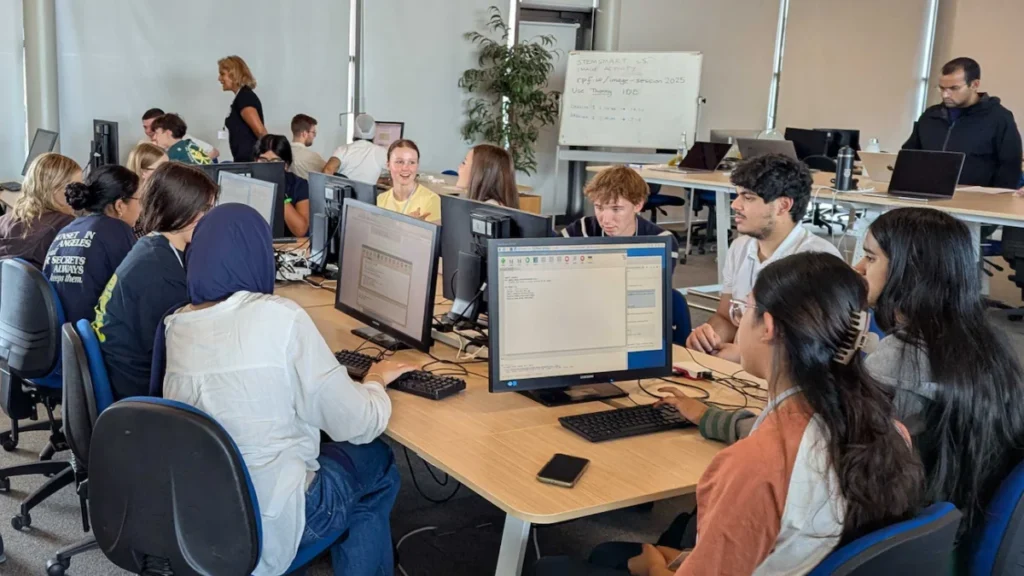
The DSAIY program is structured as a comprehensive, semester-long curriculum specifically tailored for high school environments. Its primary objective is to introduce the machine learning process through active participation rather than theoretical abstraction. The curriculum is built around the machine learning pipeline, which includes data collection, data preparation, model training, testing, and eventual evaluation.
A cornerstone of the program is the "AI-a-thon," a culminating event modeled after industry hackathons but adapted for an educational setting. During this event, students form cross-disciplinary teams to tackle real-world healthcare challenges. They do not work in isolation; instead, they collaborate with professional data scientists, healthcare clinicians, and their own instructors. This exposure to industry professionals provides students with a rare glimpse into the practical applications and ethical dilemmas faced by those working at the forefront of medical technology. By working alongside clinicians, students learn that data points are not merely numbers on a screen but represent human lives, emphasizing the gravity of algorithmic accuracy.
Technical Implementation: CODAP and Python Integration
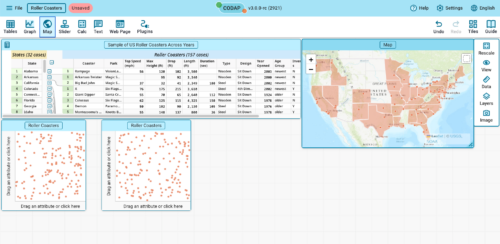
To make complex data science concepts accessible to students who may lack a background in computer science or advanced statistics, the DSAIY program utilizes the Common Online Data Analysis Platform (CODAP). Developed by The Concord Consortium, CODAP is a free, web-based tool that provides a highly visual and interactive environment for data exploration.

Unlike traditional spreadsheets, which can be intimidating and opaque, CODAP allows students to visualize large datasets through dynamic graphs and charts. A key feature of the platform is the ability to "click into" individual data points. This functionality allows students to see the specific case or individual behind a statistical outlier, humanizing the data and making the concept of variability more tangible. By lowering the barrier to entry, CODAP ensures that the curriculum is inclusive, catering to students regardless of their prior technical expertise.
As students progress through the curriculum, they transition from the visual interface of CODAP to hands-on programming with Python. They use Python to train and test simple machine learning models using authentic healthcare data. This transition is intentional; it moves students from basic data visualization to complex model evaluation, forcing them to reason deeply about how changes in a dataset can radically alter the predictions of an AI model.
Case Study in Bias: The Pulse Oximeter and Racial Inequity
One of the most impactful modules within the DSAIY curriculum involves the study of pulse oximeters—medical devices used to measure blood oxygen saturation. This real-world example serves as a powerful illustration of how hardware and software design can harbor systemic bias. Pulse oximeters function by passing red and infrared light through the skin. However, historical data and recent clinical studies have shown that these devices are often less accurate for individuals with darker skin pigmentation, as melanin can interfere with light absorption.
In the classroom, students engage with this issue by collecting their own blood oxygen data and plotting the results in CODAP. They observe the inherent variability in the measurements and are tasked with deciding how to handle outliers. This exercise leads to profound ethical discussions: Is it appropriate to remove data points that don’t fit the model? What happens if those outliers represent a specific demographic that the technology is failing to serve? By grappling with these questions, students develop a nuanced understanding of "fairness" in AI, realizing that a model can be mathematically accurate according to its training data while remaining socially and medically unjust.
Impact and Demographics: Success in Rhode Island
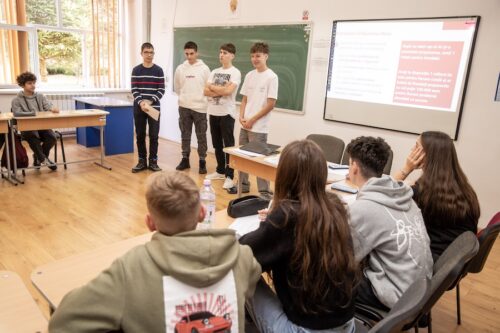
The effectiveness of the DSAIY program has been demonstrated through its implementation in Rhode Island, USA. At the time of Eller’s seminar, 11 teachers had successfully delivered the curriculum to a diverse cohort of over 800 students. The program’s reach extended across various educational settings, including schools where students had zero prior experience in coding or statistics.
One of the most notable outcomes of the Rhode Island pilot was the high level of female participation. In an academic field—computer science—that has historically struggled with gender parity, DSAIY saw enrollment figures for girls that exceeded those in traditional CS courses. Educators attributed this success to the curriculum’s focus on healthcare and social impact. By framing data science as a tool for humanitarian benefit and ethical inquiry rather than just a technical skill, the program appealed to a broader demographic of students who might otherwise have felt alienated by the subject matter.
To support this implementation, teachers received four days of intensive professional development and ongoing technical assistance. This "train-the-trainer" model ensures that educators feel confident navigating the rapidly evolving landscape of AI, allowing them to provide the necessary scaffolding for their students’ learning.
Analytical Implications: Data Literacy as a Foundation for AI Literacy
The concluding argument of Eller’s seminar was that AI literacy cannot exist in a vacuum; it must be built upon a foundation of data literacy. This distinction is vital for the future of education. While many current AI initiatives focus on teaching students how to prompt or use specific software, the DSAIY approach emphasizes the underlying data that informs every AI-driven decision.
When students learn to examine the provenance of data, question its representativeness, and understand the mathematical logic of a model, they gain a "critical computational literacy." This skill set is transferable beyond the classroom. Whether they are evaluating a diagnosis provided by an AI assistant in a hospital or questioning the biased output of a chatbot, these students are equipped with the skepticism and analytical tools necessary to hold technology accountable.
The focus on healthcare serves as an ideal pedagogical vehicle because the stakes are high and the human impact is undeniable. It forces a level of rigor that might be absent if students were merely analyzing consumer trends or social media algorithms. In the context of healthcare, "bias" is not just a theoretical flaw; it is a matter of life and death.
Looking Ahead: The Future of AI Education
The Raspberry Pi Foundation’s seminar series continues to explore these themes, with the next session scheduled for July 14. That seminar will feature Dan Verständig from Goethe University Frankfurt, who will delve into the relationship between Social Explainable AI (Social XAI) and Critical Computational Literacy. This upcoming discussion promises to build on the foundations laid by Eller, examining how we can make AI systems more transparent and understandable to the general public.
As AI continues to permeate every facet of the human experience, the work being done by organizations like The Concord Consortium and the Raspberry Pi Foundation is essential. Programs like DSAIY demonstrate that it is possible to teach high-level technical concepts while simultaneously fostering the ethical and critical thinking skills required to navigate a complex, automated world. The success of the Rhode Island pilot suggests a scalable model for integrating AI education into the standard high school curriculum, ensuring that the next generation of doctors, engineers, and citizens are not just users of AI, but its informed and ethical overseers.