The intricate world of watchmaking, often lauded for its complex movements and exquisite dial work, frequently overlooks a critical component: the clasp. Far from being a mere fastener, the modern watch clasp represents a pinnacle of engineering, a testament to meticulous research and development, and often, a showcase of artisanal craftsmanship. This article delves into the rich history and diverse evolution of watch clasps, exploring their transformation from rudimentary closures to sophisticated mechanisms that significantly enhance both the functionality and aesthetic appeal of a wristwatch.
Early Inventions and the Dawn of the Pin Buckle
The earliest iterations of timepieces worn on the wrist, particularly for women in the 18th and 19th centuries, often eschewed clasps altogether. These elegant creations functioned more as jewelry, designed to be slipped over the wrist. Similarly, early metal expanding bracelets, such as the "Army" bracelet developed by Gay Frères during World War I, operated without a distinct clasp mechanism, relying on their inherent flexibility to secure to the wearer’s wrist.
The genesis of the modern watch clasp can be traced back to the humble pin buckle, a design whose lineage stretches back to the Bronze Age, around 2,000 BC. These early closures, primarily for belts and straps, utilized a loop-and-pin system, often for utilitarian purposes like military gear. By the Iron Age, approximately 1,500 years later, the design had evolved into recognizable metal frames with a central pin, or "tongue," designed to engage with evenly spaced holes in a strap. This robust and time-tested concept proved adaptable to the nascent wristwatch.
The period following the Second Boer War (1899-1902) witnessed the increasing adoption of wristwatches, often converted pocket watches, which were initially fitted with improvised leather straps. The pin buckle, or "ardillon" as it is known in French, quickly became the dominant closure for these straps. World War I further cemented its prevalence, with pin-buckled straps becoming standard issue for military wristwatches, essential for the harsh conditions of trench warfare. By the 1920s, with the explosion in wristwatch popularity, leather straps paired with pin buckles were ubiquitous, standing alongside early metal bracelet designs like the Bonklip and expandable one-piece bracelets.
Interestingly, the widespread adoption of leather belts with pin buckles for everyday wear, a concept we now take for granted, also gained significant traction in the early 1920s, partly due to innovations like Levi Strauss adding belt loops to jeans. However, a significant drawback of traditional pin buckles remained: the lack of fine-tuning. Unlike contemporary bracelet clasps with micro-adjustment capabilities, wearers were confined to the fixed spacing of pre-punched holes in their straps. This limitation persisted for nearly a century.
A New Era of Adjustability: The Delugs Fitwell Micro-Adjust Buckle
The 21st century has seen a significant re-evaluation of the traditional pin buckle’s limitations. In 2018, Delugs, a specialist in high-quality leather watch straps, recognized the need for enhanced adjustability. The company, known for its bespoke designs for prestigious brands such as Vacheron Constantin, Cartier, and Tissot, developed a groundbreaking solution: the Fitwell Micro-Adjust Buckle. This innovative design, currently patent-pending, is available in steel and titanium and offers a tool-free micro-adjustment mechanism. Discreetly integrated into what appears to be an ordinary pin buckle, the Fitwell system provides up to 3mm of expansion with a simple pull, offering a subtle yet brilliant enhancement to a design that has historically been static and unyielding. This innovation addresses the long-standing issue of strap fit, providing wearers with a more precise and comfortable experience.
The Ingenuity of the Deployant Clasp
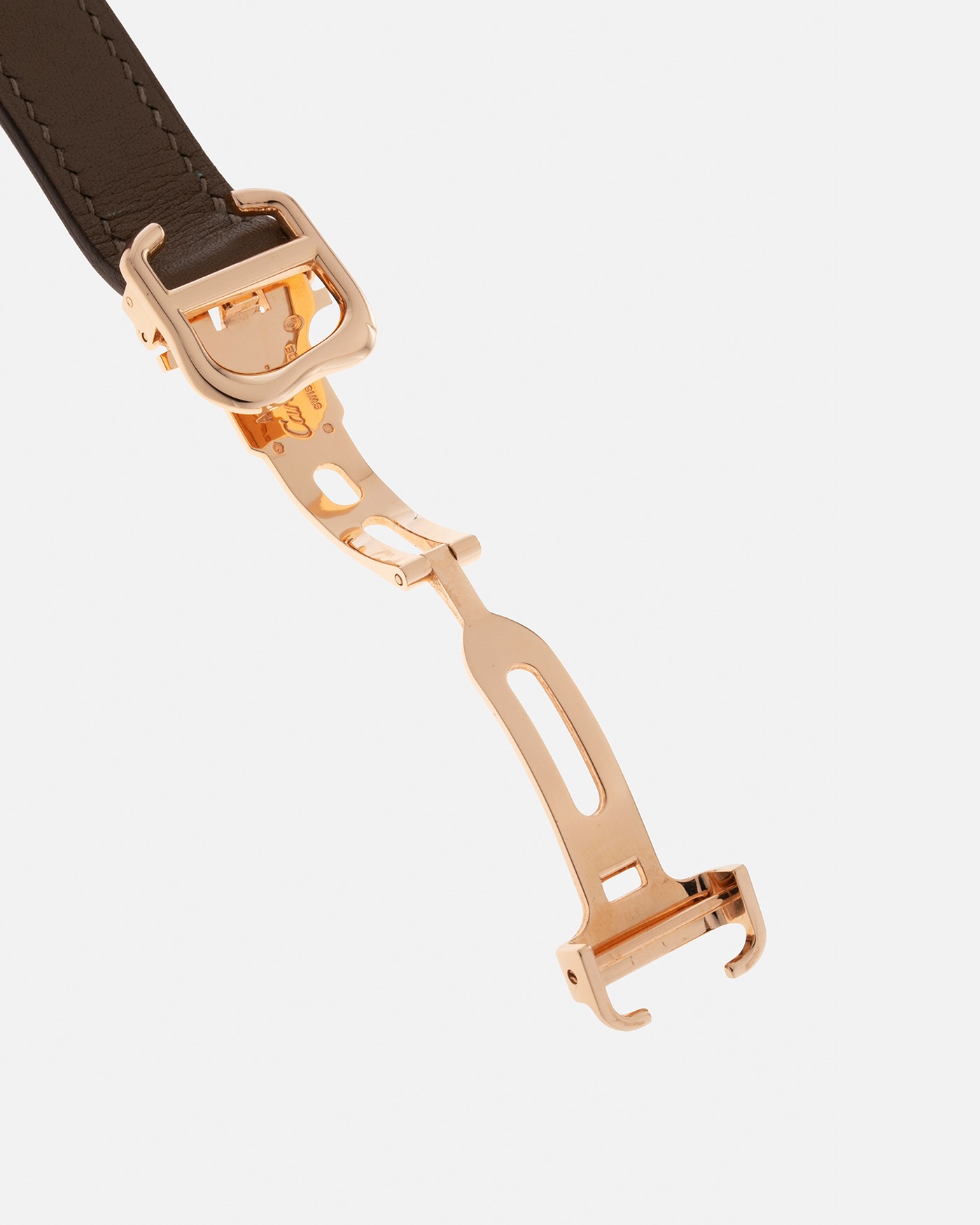
The deployant clasp, also known as a folding clasp, represents another pivotal development in the evolution of watch closures. Its invention is widely attributed to Louis Cartier, in collaboration with French watchmaker Edmond Jaeger (of Jaeger-LeCoultre fame), around 1909. The "boucle déployante" made its debut in 1911 on the iconic Cartier Santos. This ingenious design was initially paired with leather straps to mitigate the wear and stress caused by traditional pin buckles, which, when fastened and unfastened twice daily, subjected the leather to considerable pulling and bending.
The deployant clasp effectively transforms a two-piece strap into a continuous loop, akin to a bracelet, by locking onto one of the strap’s pre-punched holes with a pin or tongue. The other end of the strap is then secured by a spring bar, leaving the clasp permanently attached. This configuration places the burden of daily fastening and unfastening on the clasp itself, significantly reducing stress on the leather. When open, the three-piece design reveals two curved metal blades connected by a hinge, allowing the wrist to easily slide into the strap. The clasp then folds together and secures either through a pressure snap or a pusher system, resting discreetly on the underside of the wrist.
While the terms "deployant" and "folding" clasps are often used interchangeably on bracelets, on a leather strap, a deployant clasp is specifically designed to create this continuous loop by locking into a chosen hole for size adjustment.
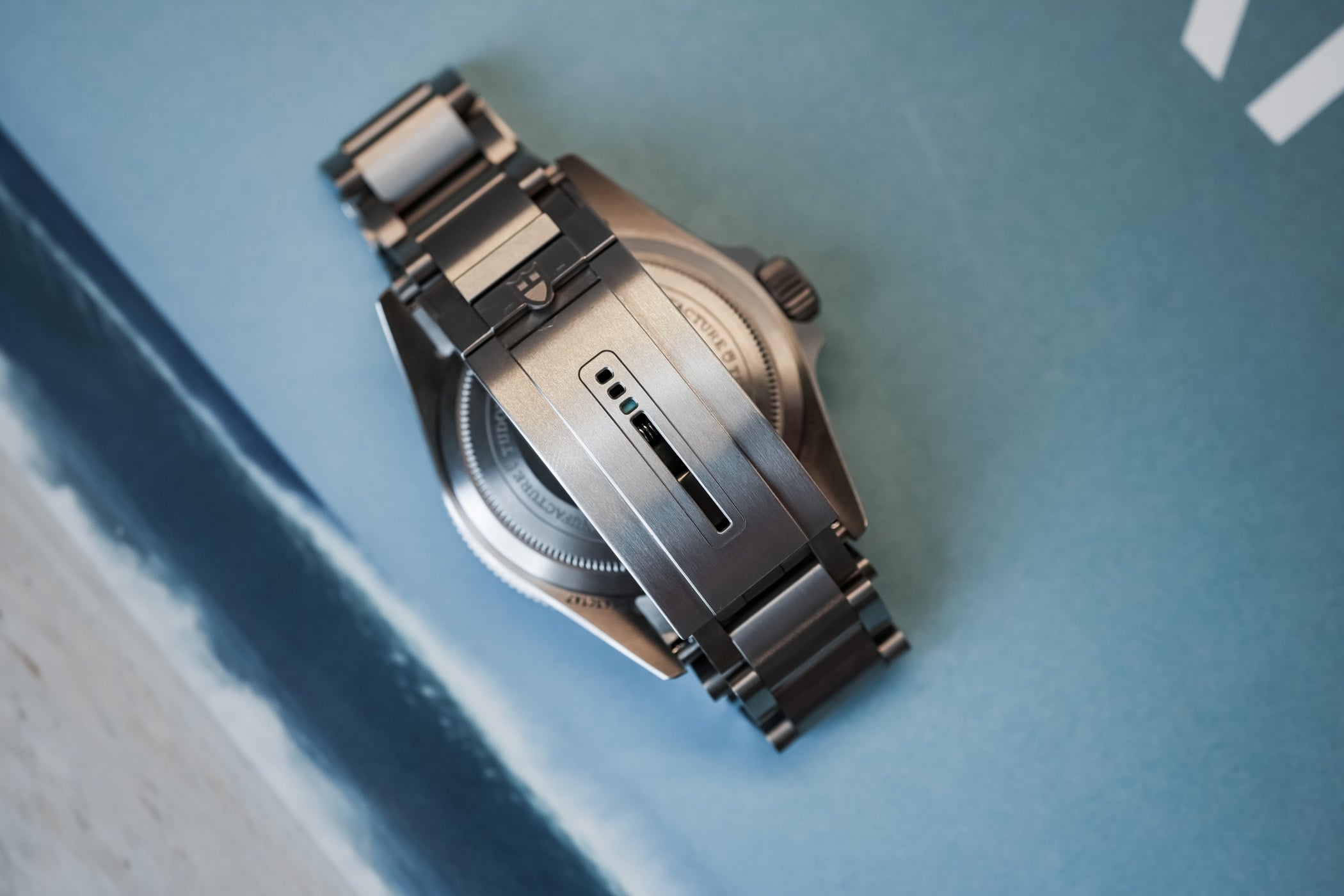
Modern deployant clasps offer various methods of securing and releasing. Some operate via simple pressure, snapping shut and opening with a pull on a small lip or groove. Others employ buttons or pushers on the side, with many featuring dual pushers for enhanced security. For critical applications, such as dive watches, a secondary locking mechanism is often incorporated, where a metal flap folds over the closed clasp from an adjacent bracelet end, providing an additional layer of safety. Rolex, for instance, refers to its triple-deployant clasp as the Oysterlock, a testament to its robust security features. These clasps can be crafted from a wide array of materials, including stainless steel, titanium, gold, platinum, and ceramic, each contributing to the overall aesthetic and durability of the timepiece.
The Precision of Micro-Adjusting Deployant Clasps
A significant advancement in deployant clasp technology is the integration of micro-adjustment capabilities. Many modern deployant clasps can now extend up to 10mm, and some specialized versions even more, allowing for precise fine-tuning of the fit after links have been removed or throughout the day as wrist size fluctuates due to factors like heat and humidity. Traditionally, this adjustment involved a spring bar that could be moved between a series of holes on the clasp’s sides, a process that typically required a small tool to compress the bar from the outside – an inconvenient solution when on the go.
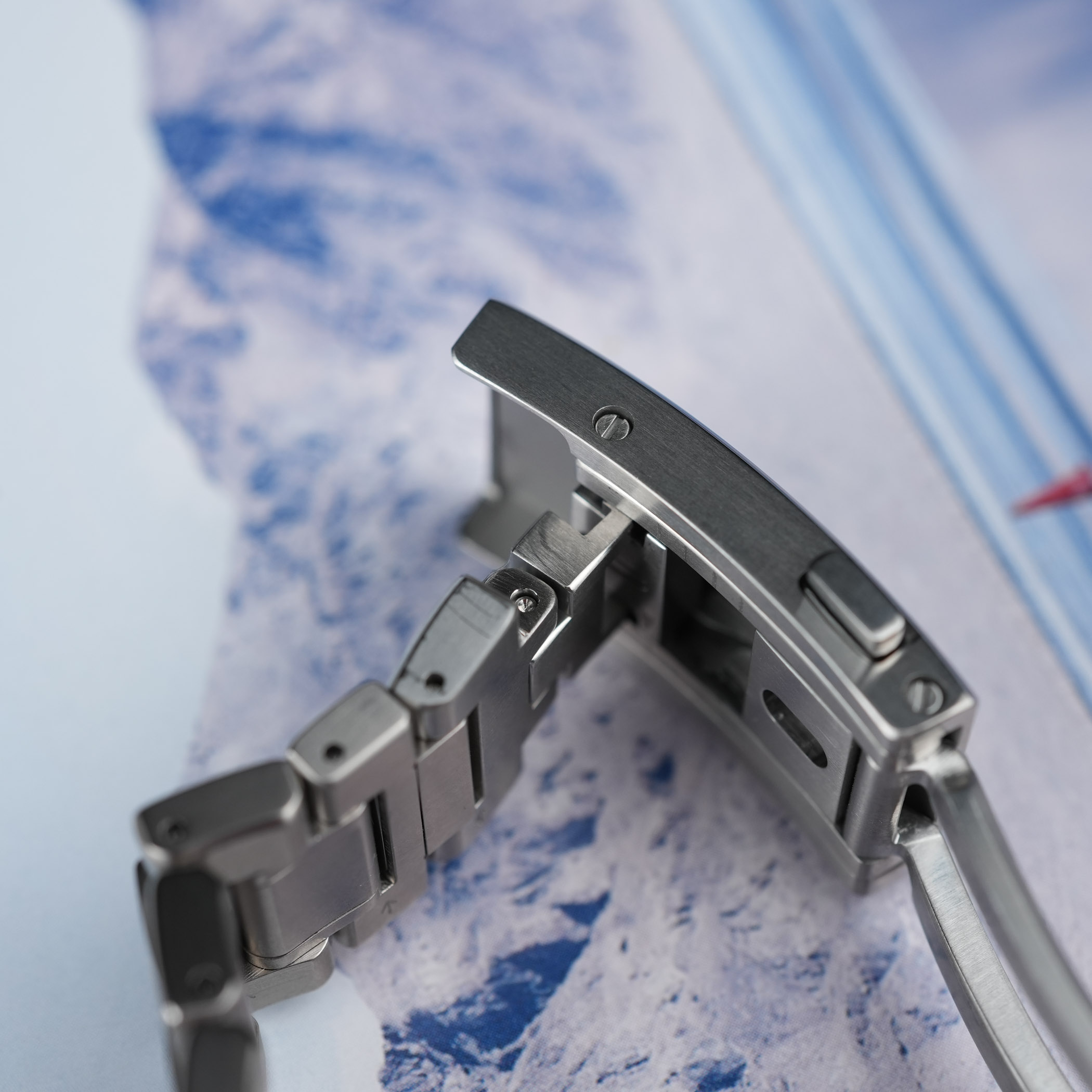
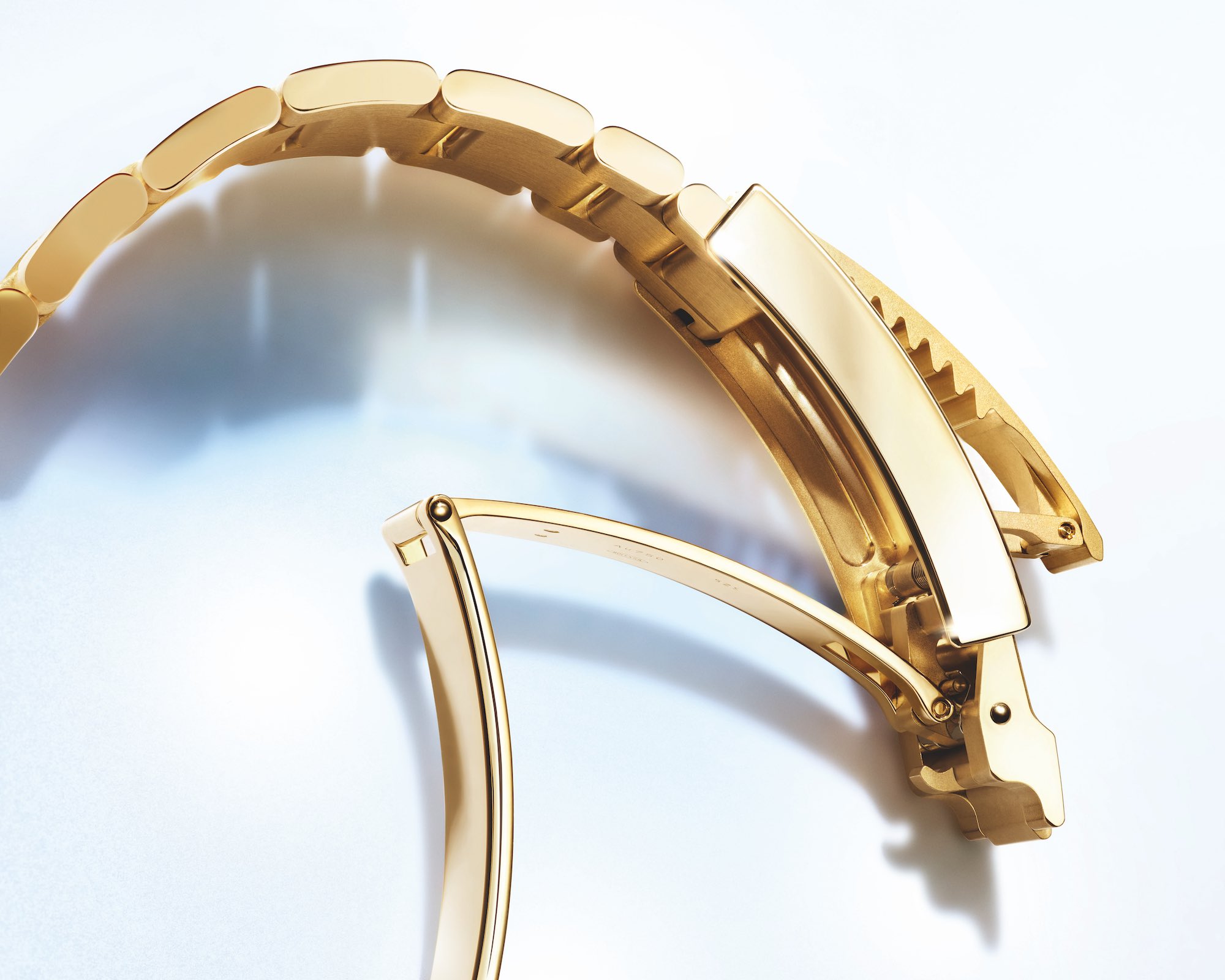
The evolution towards on-the-fly, tool-free micro-adjustment has revolutionized user experience. While the exact inventor of the first micro-adjusting clasp remains uncertain, it is widely believed to have emerged from third-party suppliers in the latter half of the 20th century. One of the most celebrated examples is Rolex’s Glidelock system, introduced in 2008 on dive models like the Submariner. This innovative design offers an impressive 20mm of adjustment in 2mm increments via a rack-and-notch sliding mechanism, facilitating effortless transitions over wetsuit sleeves.
Rolex’s Sea-Dweller and Deepsea models further enhance this functionality with the addition of the Fliplock extension. This system, when unfolded via three blades, provides an additional 26mm of length, ideal for accommodating thick wetsuits. While the Glidelock can be adjusted while wearing the watch and maintains a slim profile (around 6-7mm), the Fliplock requires the watch to be removed for manual unfolding. Omega’s Seamaster Professional 300M features a comparable fold-out diver’s extension, while Seiko Prospex models incorporate ratcheting diver’s extensions.
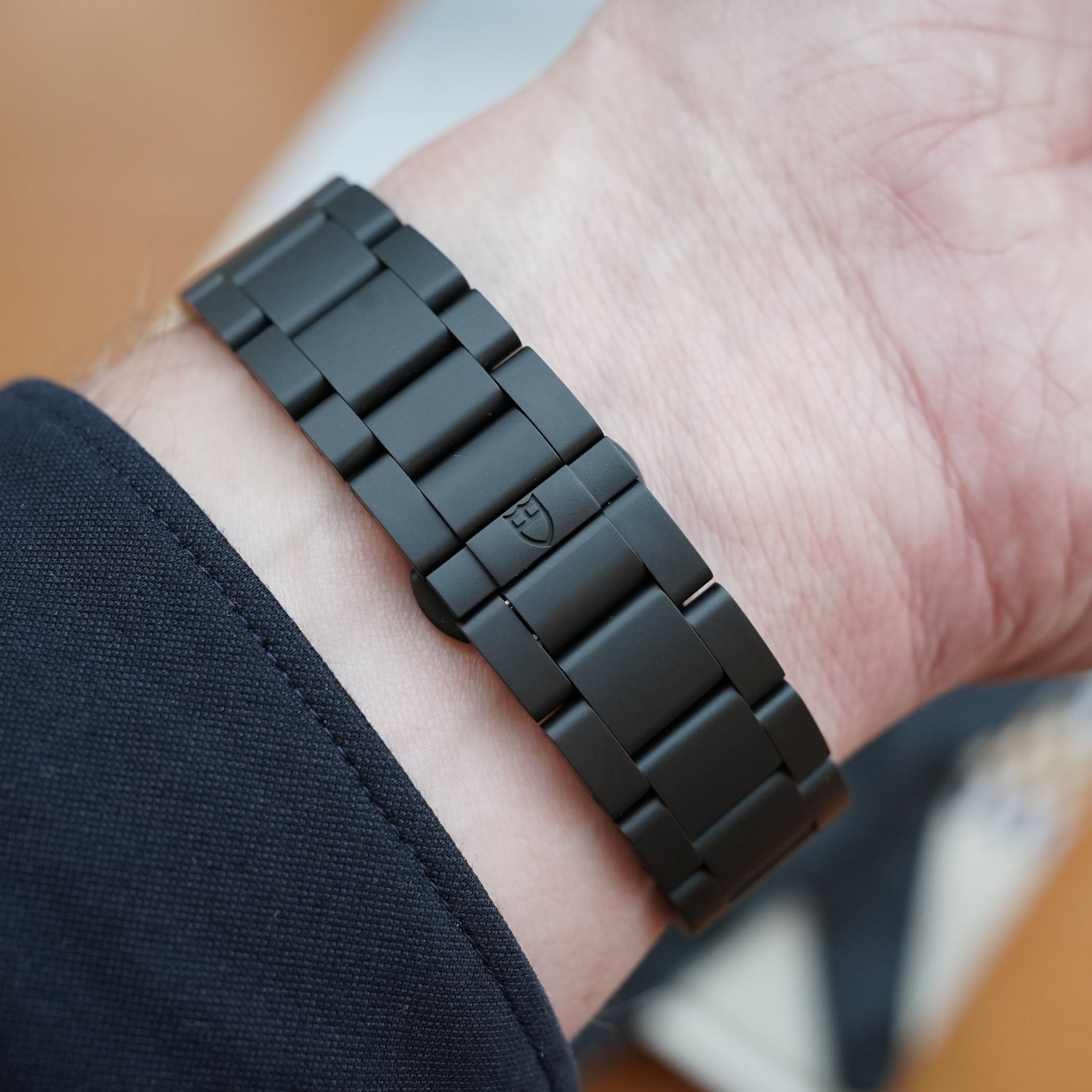
Tudor has introduced its Pelagos Ultra with a patented auto-adjustable spring mechanism within the clasp. This ingenious system adapts to water pressure, tightening in deep water to compensate for wetsuit compression and loosening slightly during ascent. This feature, combined with a standard micro-adjustment system, functions analogously to a Super Compressor case back, but for the wristband.
Other notable micro-adjustment systems include the Brogioli mechanism, commonly found in watches from IWC and A. Lange & Söhne, which offers approximately 7mm of adjustment via a flush central logo button. Tudor’s T-Fit clasp provides 8mm of adjustment, and the independent Swiss watchmaker Horage has introduced the ultra-thin HMAC clasp, measuring just 5.6mm and offering 10mm of adjustment in 1mm increments through an internal button. For brands that do not offer integrated micro-adjustment clasps, specialized manufacturers like Delugs provide custom solutions tailored to specific watch models.
The Elegant Concealment of the Butterfly Clasp
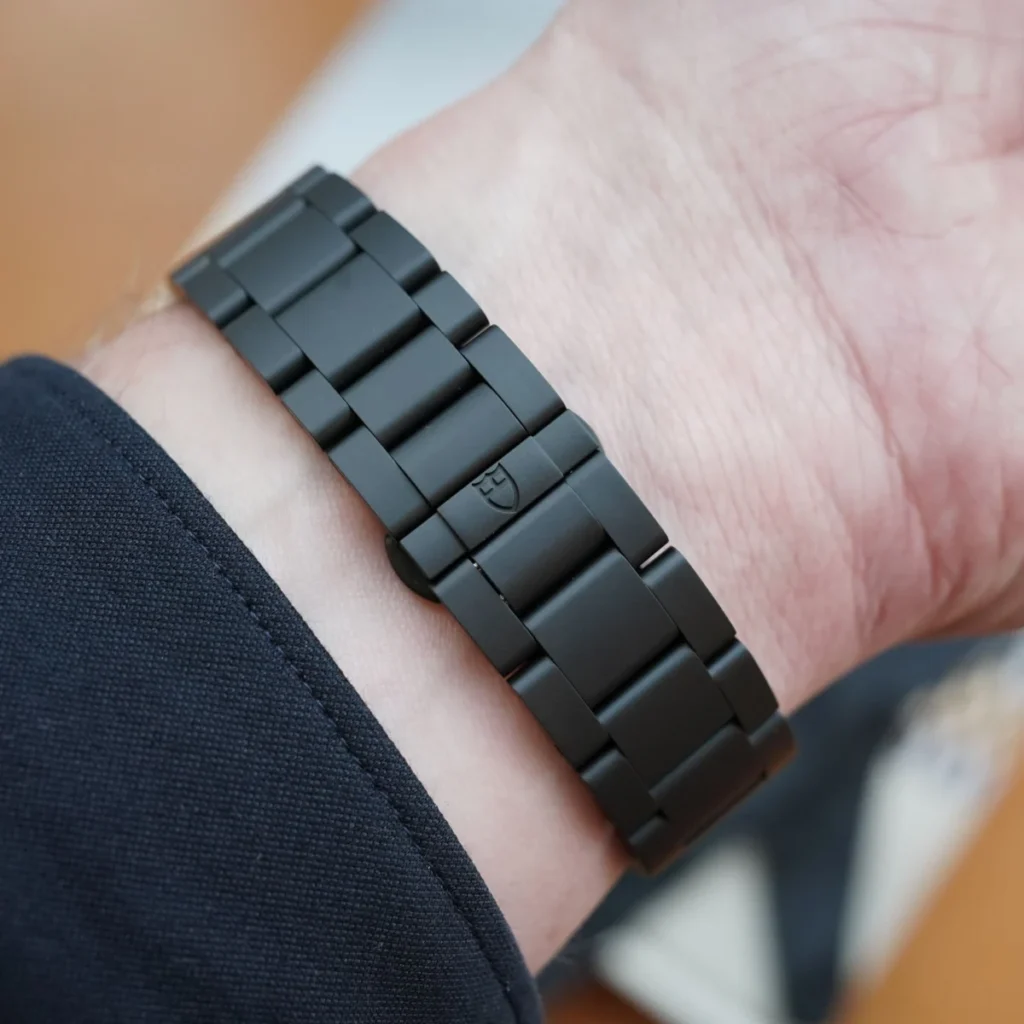
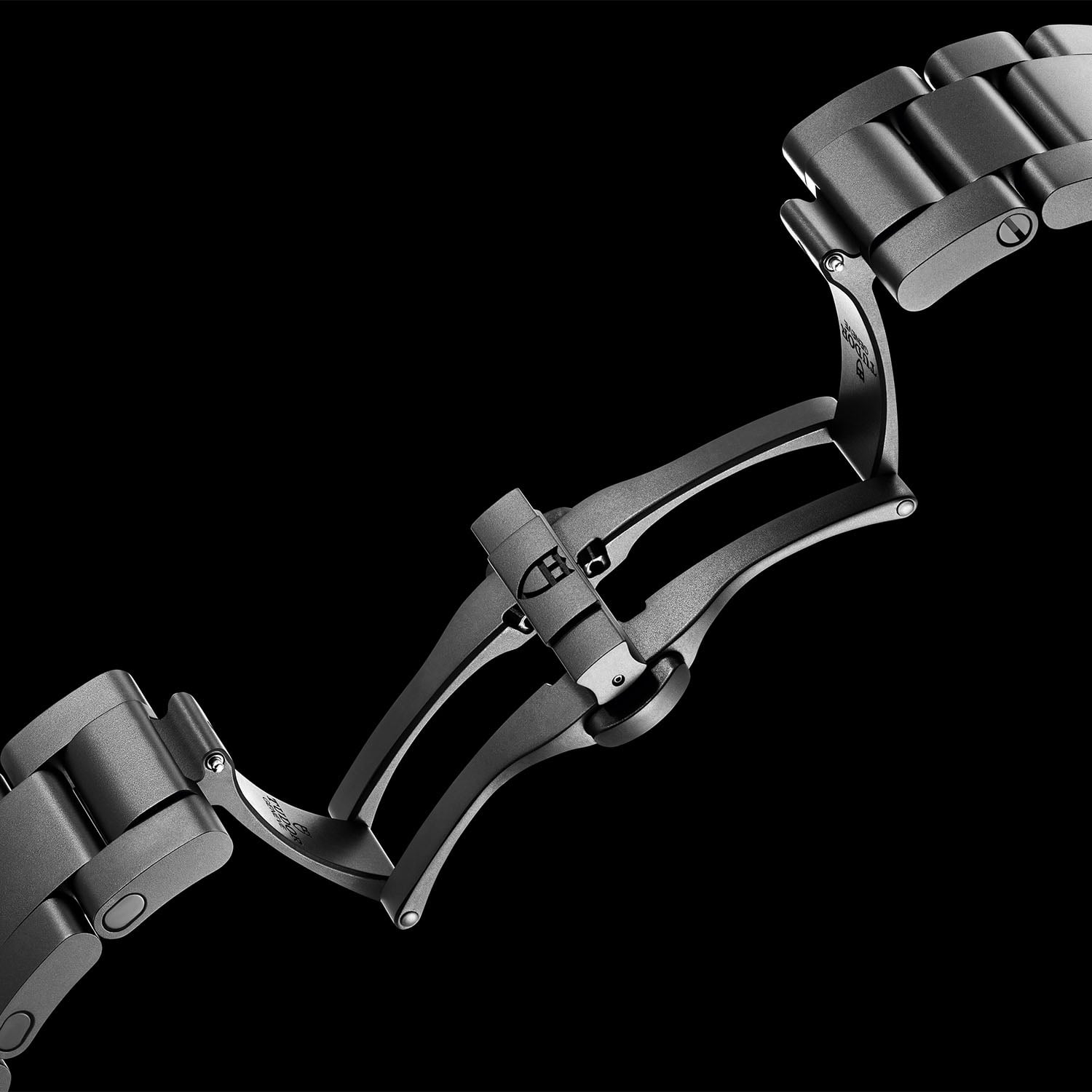
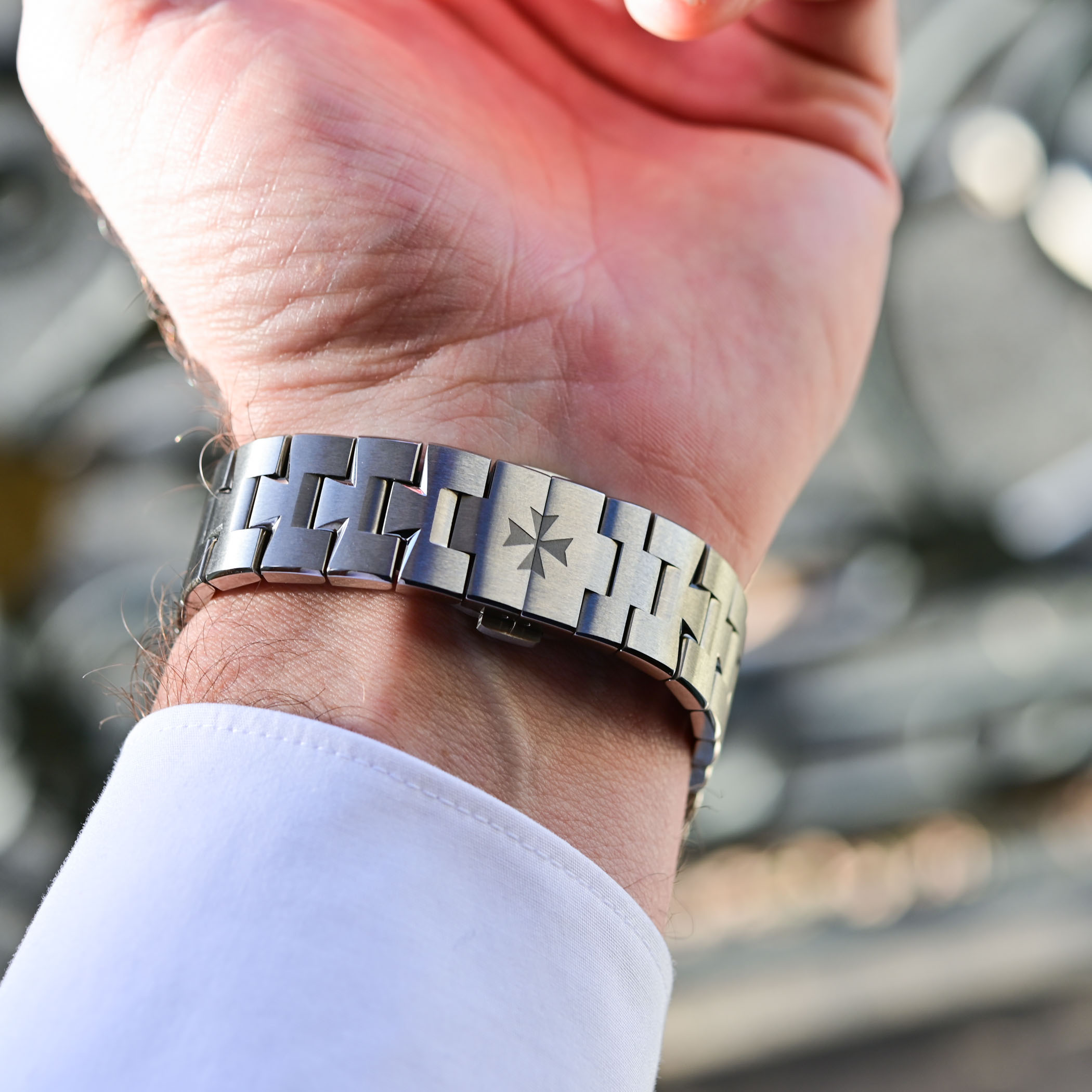
Another invention attributed to Louis Cartier, the butterfly clasp, or triple-deployant clasp, while initially developed for leather straps, has found its most prominent application on metal bracelets. Unlike conventional deployant clasps that are visible on the exterior of the bracelet, butterfly clasps are entirely concealed underneath. This is achieved through two hinged arms that fold inward from either side, meeting in the center to bring the bracelet halves together. The result is a seamless, continuous aesthetic, giving the impression of a single, unbroken piece of metal.
These clasps can be opened via side pushers or by a simple friction fit, and their name derives from the way the arms unfold like butterfly wings. While the brand’s logo may appear at the point where the two bracelet halves meet, the clasp mechanism itself remains hidden. This clean, minimalist look is highly appealing. However, traditional butterfly clasps have had limitations, including potential discomfort for wearers with smaller wrists if the clasp doesn’t conform smoothly to the wrist’s underside, and a historical lack of micro-adjustment capabilities.
Nevertheless, this limitation is also being addressed. Vacheron Constantin, for instance, has incorporated a butterfly clasp into recent Overseas models that offers 2mm of expansion within the last two bracelet links on either side of the central piece. A simple pull on each side allows these links to slide outward, providing a degree of fine-tuning not typically found in this clasp type. Christopher Ward has also introduced an adjustable butterfly clasp for its Twelve integrated sports watch series, offering up to 3mm of adjustment. Formex provides a similar design with adjustability of up to 6mm across three positions.
Simplified Solutions: Sliding and Hook Clasps
For bracelets like Milanese (mesh) and Bonklip, simpler clasp designs offer infinite sizing options without the need to remove links, essentially serving as early forms of micro-adjustment. In Milanese bracelets, an open clasp with a metal frame slides down the opposite side of the two-piece design and locks into place anywhere along the bracelet’s length through friction from a folding piece. This design, popularised in Pforzheim, Germany, in the 1920s, is a refined descendant of medieval chainmail. The Apple Watch’s Milanese Loop, introduced in 2015, reintroduced this style to a wider audience, though it utilizes a magnetic closure for even greater simplicity.
Bonklip bracelets, often referred to as "Ladder" or "Bamboo" bracelets, consist of horizontal metal tube links connected by metal loops. Patented in England in the late 1920s, their clasps allow for infinite adjustment. A T-shaped hook locks between the tube links on the opposite side of the bracelet, securing the clasp at any desired position. Modern variants sometimes include an additional locking flap for enhanced security.
Pushing the Boundaries: Advanced and Innovative Clasps
The evolution of watch clasps continues to push the boundaries of innovation. Brands like Ming are experimenting with unique material combinations, such as 3D-printed titanium Polymesh bracelets paired with pin buckles, blurring the lines between metal and fabric. MB&F, renowned for its avant-garde watchmaking, has developed a leaf spring deployant clasp for models like the HM7 Aquapod. This design incorporates arced springs within the folding blades; when the clasp is closed, tension on the springs creates opposing friction against the frame, ensuring a secure hold through tension locking. This allows the clasp to be opened simply by pulling, without the need for pushers, and is widely regarded as one of the most sophisticated clasps available.
The Enduring Significance of the Clasp
While bracelets and straps often capture the spotlight, the clasp is a component of paramount importance, its significance amplified in specific scenarios, such as deep-sea diving with a wetsuit. The demand for on-the-fly micro-adjustments has become a key consideration for many buyers, enhancing comfort across varying climates and environments. Similarly, preferences for deployant clasps over pin buckles on leather straps, or vice versa, highlight the personal importance of this functional element.
Ultimately, the clasp is the literal point of connection between a timepiece and its wearer. Over the past century, these components have transformed from simple closures into sophisticated and often highly engineered feats of precision, integral to the overall experience and functionality of a watch. Their ongoing development underscores a commitment to both practicality and refined design within the enduring art of horology.