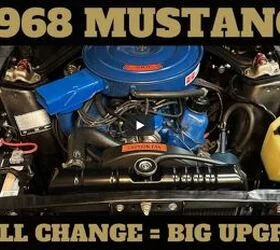
The intricate world of automotive restoration and modification is often characterized by its dynamic nature, where unforeseen discoveries can dramatically alter the trajectory of a project. This was precisely the scenario that unfolded with a meticulously maintained 1968 Ford Mustang coupe, a classic American icon whose owner embarked on a seemingly straightforward mission to revive its air conditioning system. What began as a focused endeavor to combat the summer heat soon transformed into a comprehensive front-end cooling system upgrade, a decision born from a deep respect for the vehicle’s inherent character and originality.
The genesis of this project, as documented within the TTAC Creators Series, a platform dedicated to showcasing diverse automotive enthusiasts and their endeavors, was the desire to enhance the driving experience of the vintage Mustang. The owner, whose identity is central to the narrative of this specific build, initially envisioned a functional air conditioning system as the primary objective. This goal, common among owners of classic vehicles seeking to bridge the gap between vintage charm and modern comfort, was pursued with the typical steps of diagnostic assessment and component procurement.
The Crossroads of Authenticity: Re-evaluating the A/C
The pivotal moment arrived during the initial stages of disassembly. As the existing air conditioning unit was meticulously examined, a crucial realization dawned upon the owner: the system was not factory-installed. This discovery served as a significant inflection point, prompting a reevaluation of the project’s ultimate purpose. The owner acknowledged that a fully functional, albeit aftermarket, air conditioning system might inadvertently encourage the use of the Mustang for extended journeys, such as long-distance road trips or cross-country expeditions.
This contemplation led to a deeper consideration of the car’s overall condition and its place within the automotive historical landscape. The 1968 Ford Mustang coupe, in its current state, reportedly retained a high degree of originality. For many collectors and enthusiasts, preserving such originality is paramount. Introducing a non-period-correct, albeit functional, convenience feature like an aftermarket A/C system, especially one that had undergone significant modification or repair to reach a usable state, could be seen as a departure from the car’s authentic heritage.
The owner’s deliberation, a testament to his dedication to the car’s intrinsic value, led to a strategic pivot. The decision was made to forgo the reinstallation of the air conditioning system. This was not a rejection of comfort, but rather a prioritization of the Mustang’s historical integrity. The owner’s perspective, as articulated in the project’s documentation, emphasized that maintaining the car’s original character and inherent value outweighed the desire for a feature that was not part of its original manufacturing specifications. This nuanced approach underscores a growing trend in the classic car community, where authenticity and preservation are increasingly valued over outright modernization.
From A/C to Overhaul: A Necessary Evolution
The consequence of this decision was a redirection of the project’s scope. The dismantled components of the air conditioning system were set aside, and the focus shifted to addressing the broader needs of the Mustang’s front-end cooling system. This expansion of the project was not merely a substitution of tasks but an opportunity to enhance the vehicle’s reliability and performance in a manner that aligned more closely with its original design.
The subsequent work involved a comprehensive cleanup of the front end, a process that often uncovers underlying issues and provides a clean slate for upgrades. This included a thorough inspection and potential replacement of various cooling system components. While the exact timeline of these events is not precisely detailed, the narrative suggests a period of concentrated effort, likely spanning several weeks or months, given the scope of a front-end cooling system overhaul.
The upgrade itself involved the installation of a new radiator, a critical component responsible for dissipating heat from the engine. This undertaking, while intended to improve the car’s thermal management, was not without its challenges. The transcript indicates that the project encountered "several unexpected complications." These could have ranged from compatibility issues with existing engine components to unforeseen damage to surrounding parts during installation.
A particularly noteworthy detail is the mention of having to "remove and reinstall the new radiator." This suggests a setback in the process, where the initial installation did not meet the desired outcome, necessitating its removal and a subsequent reinstallation. Such occurrences, while frustrating for any builder, are not uncommon in the restoration of vintage vehicles, where original designs may not always seamlessly integrate with modern aftermarket parts or where hidden issues emerge during the process. Despite these hurdles, the project ultimately concluded successfully, with the upgraded cooling system performing as intended.
Project Conclusion and Future Endeavors
The owner has deemed the 1968 Ford Mustang coupe project "essentially finished for the year." This indicates a satisfactory completion of the immediate objectives, with the car now in a state that the owner finds acceptable for the current season. Future plans for the Mustang are limited to routine maintenance, a testament to the thoroughness of the recent work and a desire to preserve the car’s newly restored condition.
A significant event on the horizon for the owner and his Mustang is attendance at Carlisle. Carlisle Events hosts a series of automotive festivals across the United States, with their Spring and Fall Swap Meets in Carlisle, Pennsylvania, being particularly renowned for attracting vast numbers of classic car enthusiasts and vendors. The owner’s intention to display the Mustang, specifically alongside other 1967-1968 models, signifies a desire to share his work with a wider community and to participate in the vibrant culture surrounding these iconic vehicles. This display will likely serve as an opportunity for the owner to receive feedback, share his experiences, and connect with fellow enthusiasts.
Looking ahead, the owner’s next major project is slated to be a 1988 Ford Thunderbird. This choice of vehicle signals a shift in focus from the intensive restoration-style work undertaken on the Mustang. The stated goal for the Thunderbird is considerably more straightforward: to make the car functional, perform basic cleanup and maintenance, and crucially, to "avoid the extensive restoration-style work" that characterized the Mustang project. This suggests a desire for a less demanding, perhaps more driver-focused, approach to automotive engagement for his next endeavor. The Thunderbird, a model that represents a different era of Ford design and engineering, offers a distinct canvas for the owner’s evolving automotive passions.
Broader Implications for Classic Car Enthusiasts
The narrative surrounding the 1968 Ford Mustang coupe’s cooling system upgrade offers valuable insights for the broader classic car community. It highlights the delicate balance between enhancing functionality and preserving originality. The owner’s decision to prioritize the car’s authentic character over the convenience of an aftermarket air conditioning system is a stance that resonates with many who view classic vehicles not just as modes of transportation but as pieces of history.
This approach also underscores the importance of thorough assessment and informed decision-making in any restoration project. The initial goal of fixing the A/C system, while seemingly simple, led to a deeper understanding of the car’s condition and its historical context. This iterative process of discovery and adaptation is a hallmark of successful classic car projects.
Furthermore, the mention of challenges encountered during the cooling system upgrade serves as a reminder that even seemingly straightforward tasks can present unforeseen complexities. The ability to adapt and overcome these obstacles, as demonstrated by the owner’s persistence in re-installing the radiator, is a crucial skill for any automotive enthusiast. The successful completion of the project, despite these setbacks, reinforces the rewards of dedication and meticulous work.
The owner’s participation in events like Carlisle also speaks to the communal aspect of car collecting. Sharing one’s passion, displaying one’s work, and engaging with fellow enthusiasts are integral to the hobby. The Mustang, having undergone this significant transformation, is now poised to be a focal point of discussion and admiration within this community.
Finally, the owner’s forward-looking plan for the 1988 Ford Thunderbird indicates a potential evolution in his approach to automotive projects. The desire for a simpler, more functional restoration suggests a possible shift towards enjoying classic cars as drivers rather than solely as museum pieces. This diversification of interests within a single collector’s journey reflects the multifaceted nature of the automotive world, where different eras, styles, and levels of restoration can all hold significant appeal. The story of this 1968 Mustang, therefore, is not just about a single car’s rejuvenation but also about the evolving philosophies and practices within the enduring passion for classic automobiles.