The automotive industry is undergoing a profound transformation, marked by the increasing integration of autonomous technology into vehicles and the escalating use of sophisticated robots in manufacturing processes. This dual evolution signals a future where cars are not merely modes of transportation but intelligent agents on the road, and where factories are increasingly populated by advanced robotic counterparts to human workers, blurring the lines between human and machine in both our daily commutes and the creation of the vehicles themselves.
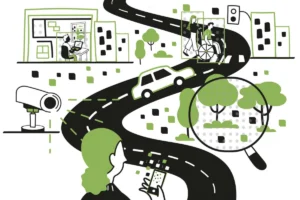
The shift towards autonomous driving is rapidly progressing, moving beyond the realm of advanced driver-assistance systems (ADAS) that have become commonplace. Today’s vehicles are equipped with features that actively monitor driver attention, issue alerts for speeding, and engage emergency braking to prevent collisions. These are the nascent stages of cars evolving into sophisticated robotic entities, designed to enhance safety and efficiency. The trajectory points towards fully autonomous taxis and delivery fleets becoming a reality in the near future, with privately owned autonomous vehicles poised to follow suit, fundamentally altering personal mobility.
Parallel to this on-road revolution, the very genesis of automobiles is also embracing a robotic paradigm. While robots have been integral to car manufacturing for over four decades, their capabilities and form factors are undergoing a dramatic metamorphosis. Historically, industrial robots were largely confined to repetitive, pre-programmed tasks, often characterized by their fixed, multi-jointed arms. However, the landscape is now shifting dramatically with the emergence of humanoid robots, increasingly designed to work alongside human employees. This evolution is not merely cosmetic; it is driven by a concerted effort to imbue these machines with enhanced cognitive abilities, enabling them to perform more complex and adaptable tasks.
The Rise of Humanoid Robots in Automotive Manufacturing
The acquisition of Boston Dynamics by the Hyundai Group in 2021 underscored the industry’s burgeoning interest in advanced robotics. Boston Dynamics, renowned for its pioneering work in agile and dynamic robotics, has developed machines that are pushing the boundaries of what is physically possible for robots. This investment signifies Hyundai’s commitment to leveraging cutting-edge robotic technology not only in its vehicle development but also in its production lines.
Ford Motor Company has also embraced this trend, deploying Boston Dynamics’ Spot robot at its Halewood plant. This four-legged robot, reminiscent of a metallic dog, is equipped with advanced sensory technology, including thermal cameras and microphones. These sensors allow Spot to meticulously monitor factory equipment for subtle changes in heat signatures and detect air leaks, crucial for proactively identifying potential failures and minimizing costly downtime. Navigation within the complex factory environment is facilitated by LiDAR technology, enabling Spot to map its surroundings and move autonomously. Crucially, the robot is programmed with sophisticated safety protocols, including recognizing pedestrian right-of-way and autonomously stopping if any human approaches within a two-meter radius, ensuring seamless and safe coexistence on the factory floor.
The adoption of two-legged, humanoid robots is a particularly significant development. Boston Dynamics’ latest creation, Atlas, stands as a testament to this progress. Described as a "general-purpose humanoid" robot, the 6-foot 2-inch, 90-kilogram Atlas represents a significant leap in robotic dexterity and mobility. Hyundai has ambitious plans to mass-produce Atlas for deployment across a wide array of industrial applications, signaling a future where these sophisticated machines are not confined to specialized research labs but are actively integrated into the fabric of industrial operations.
Hyundai’s Vision for Humanoid Robotics in EV Production
Hyundai’s strategic vision for Atlas is set to be realized at its Metaplant America facility in Georgia, a state-of-the-art electric vehicle (EV) production plant slated for full operation by 2028. This plant will be instrumental in manufacturing popular Hyundai and Kia models, including the Hyundai Ioniq 5, Hyundai Ioniq 9, and the Kia Sportage Hybrid. At Metaplant America, Atlas robots will be integrated into the production process, tasked with performing intricate "sequencing tasks." In manufacturing parlance, this translates to the precise selection and delivery of components to the assembly line in the correct order and at the optimal time, a task that requires a high degree of precision, coordination, and adaptability. The AI-driven "brain" of Atlas will be programmed to execute these complex sequences, streamlining the manufacturing workflow and potentially enhancing production efficiency.
BMW’s Collaboration with Figure AI for Advanced Manufacturing
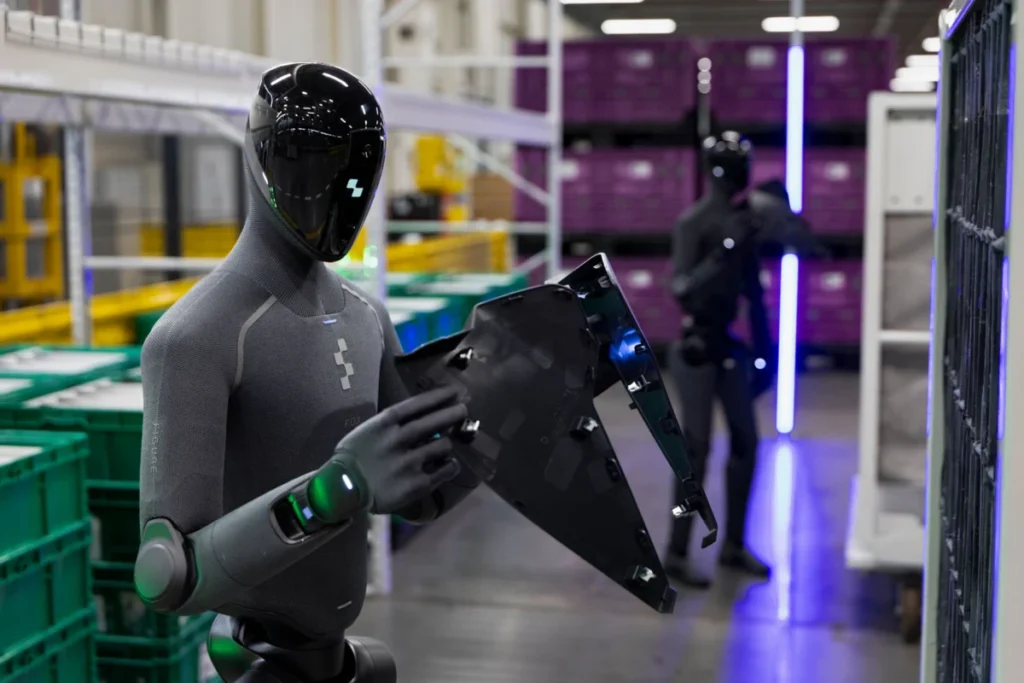
The integration of humanoid robots is not limited to Hyundai. BMW has also actively embraced this technological frontier, collaborating with the tech company Figure AI to introduce their humanoid robot, Figure 02, at BMW’s Plant Spartanburg in South Carolina. Over a ten-month period, Figure 02 played a vital role in the production of over 30,000 BMW X3 vehicles, specifically within the body shop. Its primary function involved the precise insertion of sheet metal parts for welding, a task demanding accuracy and reliability.
BMW’s engagement with Figure AI is ongoing, with the company now transitioning to the Figure 03 model. This next-generation robot boasts several significant upgrades, including wireless charging capabilities, enhanced safety features with soft components designed to mitigate potential harm in human-robot interactions, and advanced communication systems that enable speech-to-speech interaction. Furthermore, Figure 03 features more human-like hands equipped with tactile sensors and cameras. This sophisticated sensory feedback system dramatically increases the robot’s precision and dexterity, allowing it to perform tasks requiring a finer touch and a more nuanced understanding of its environment.
Enhancing Robotic Dexterity Through Advanced Sensing
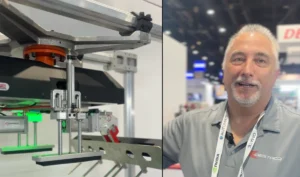
The quest for greater robotic precision and dexterity extends to the development of novel sensing technologies. Scientists at Queen Mary University in London have pioneered a new type of sensor that generates a spectrum of colors in response to applied pressure. When integrated into the fingertips of robotic hands, alongside miniature cameras within each finger, this innovative sensor technology allows robots to "see" and "feel" touch with unprecedented sensitivity. This enhanced tactile perception opens up a vast array of potential applications, ranging from the development of more sophisticated prosthetic limbs and advanced surgical robots to the refinement of precision manufacturing processes. The ability for robots to accurately gauge pressure and texture could revolutionize tasks requiring delicate manipulation, bringing them closer to human-like dexterity.
Broader Implications and the Future of the Automotive Landscape
The confluence of autonomous vehicle technology and advanced robotics in manufacturing heralds a new era for the automotive industry. The implications are far-reaching, impacting not only how cars are designed and produced but also how they are experienced by consumers and integrated into our societal infrastructure.
Economic Shifts and Workforce Adaptation: The increasing automation of manufacturing processes raises questions about the future of the human workforce in the automotive sector. While robots are poised to take over many repetitive and physically demanding tasks, there will be a growing demand for skilled professionals capable of programming, maintaining, and overseeing these complex robotic systems. This necessitates a proactive approach to workforce retraining and education to ensure a smooth transition and to equip individuals with the skills needed for the evolving industrial landscape. The introduction of humanoid robots that can collaborate with humans may also redefine roles, leading to new forms of human-robot teamwork.
Enhanced Safety and Efficiency: On the road, the widespread adoption of autonomous driving promises significant improvements in safety by reducing human error, which is a contributing factor in a vast majority of traffic accidents. Industry data consistently points to human error as the primary cause of collisions, and autonomous systems, free from fatigue, distraction, and impairment, have the potential to dramatically lower accident rates. In manufacturing, the precision and tireless nature of robots can lead to higher quality standards, reduced waste, and increased production speeds, ultimately benefiting consumers through more reliable and potentially more affordable vehicles.
The Evolution of Mobility and Urban Planning: The advent of fully autonomous vehicles will fundamentally alter urban landscapes and transportation networks. Ride-sharing services could become entirely automated, changing patterns of vehicle ownership and usage. Cities may need to adapt their infrastructure to accommodate autonomous fleets, potentially leading to redesigned roadways, dedicated lanes, and new forms of urban mobility solutions. The ability of autonomous vehicles to communicate with each other and with traffic infrastructure could optimize traffic flow, reduce congestion, and improve overall transportation efficiency.
Ethical and Regulatory Considerations: As vehicles become more autonomous and factories more automated, complex ethical and regulatory frameworks will need to be developed. Questions surrounding accountability in the event of accidents involving autonomous vehicles, the ethical implications of AI decision-making, and the privacy of data collected by connected vehicles will require careful consideration and robust legislative responses. Similarly, regulations governing the safe integration of humanoid robots in industrial and public spaces will be crucial.
The automotive industry stands at the precipice of a robotic revolution. From the intelligent systems that will guide our future journeys to the sophisticated machines that will craft our vehicles, the presence of robots is set to become increasingly pervasive. This transformation, driven by technological innovation and strategic investment, promises a future of enhanced safety, efficiency, and a reimagining of mobility, while simultaneously presenting new challenges and opportunities for the workforce and society at large. The journey ahead will undoubtedly involve a dynamic interplay between human ingenuity and artificial intelligence, shaping the very essence of how we move and how our world is built.