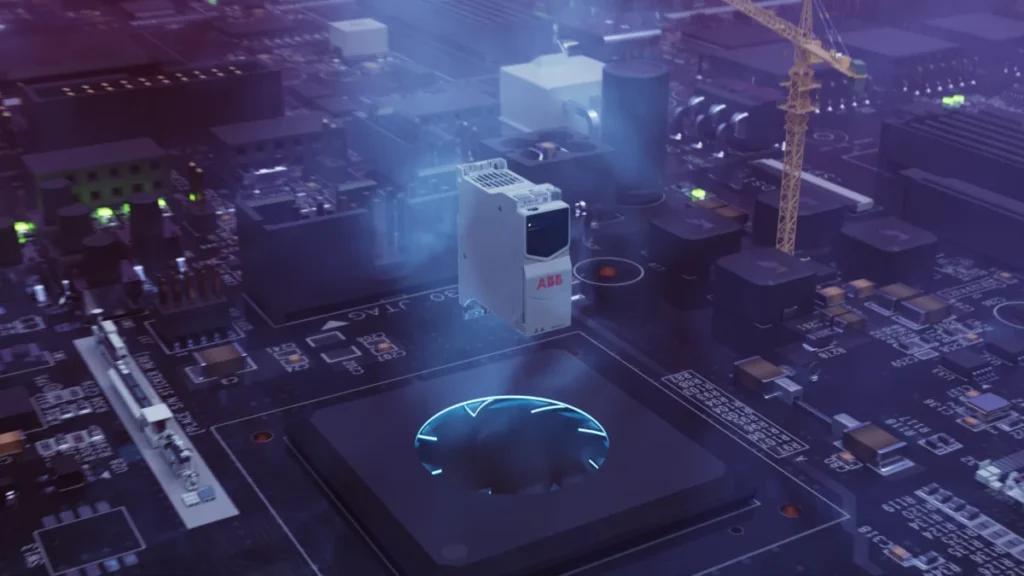
Global circularity has demonstrably slipped to a concerning 6.9%, a stark indicator that industries worldwide are currently consuming resources at a rate significantly faster than they can be recuperated or regenerated. This alarming trend, highlighted by recent analyses, underscores an urgent need for systemic change in industrial practices. Among the most potent tools available to help bridge this widening resource gap are highly efficient motor drives, specifically Variable Frequency Drives (VFDs), which offer a tangible pathway towards more sustainable industrial operations.
The recent Circularity Gap Report for 2025 serves as a critical barometer, vividly illustrating not only the overarching environmental challenges facing the planet but also the profound structural hurdles confronting contemporary businesses. For companies striving for long-term competitiveness and resilience in an increasingly resource-constrained world, the imperative is clear: future prosperity hinges on their ability to design, manufacture, and operate industrial assets that inherently consume less energy and fewer materials, boast extended lifespans, and are designed for the preservation and recovery of Critical Raw Materials (CRMs). These CRMs, a diverse group of elements and compounds ranging from rare earth metals to specific industrial minerals, form the bedrock of modern technologies, from consumer electronics to advanced industrial automation, and their finite supply chains present significant geopolitical and economic vulnerabilities.
Industrial motor-driven automation systems, ubiquitous across manufacturing, infrastructure, and processing sectors, represent a substantial portion of global energy consumption. For manufacturers and operators engaged in supplying or operating these systems, VFDs stand out as long-life infrastructure assets. Their inherent design characteristics, particularly their service life and material efficiency, directly dictate not only the energy consumption of the connected motors but also the overall uptime of industrial processes and the volume of waste generated over decades of operational use. This fundamental relationship elevates VFDs from mere components to pivotal instruments in the pursuit of industrial sustainability.
The Urgency of the Circularity Gap: A Global Challenge
The concept of circularity stands in stark contrast to the traditional linear "take-make-dispose" economic model that has dominated industrialization for centuries. A truly circular economy aims to keep products, components, and materials at their highest utility and value at all times, minimizing waste and the continuous extraction of virgin resources. The decline in global circularity to just 6.9% from previous estimates (e.g., 9.1% in 2018, 8.6% in 2020) is not merely a statistical anomaly; it represents a systemic failure to transition towards sustainable resource management. This downward trend signifies that humanity is moving further away from, rather than closer to, a sustainable future, exacerbating issues like climate change, biodiversity loss, and resource scarcity. The report emphasizes that industries are at the forefront of this challenge, being both major consumers of resources and potential architects of circular solutions.
The implications are far-reaching. Resource depletion leads to increased price volatility for raw materials, disrupts global supply chains, and intensifies geopolitical competition over access to critical resources. Furthermore, the energy-intensive processes of extracting and refining virgin materials contribute significantly to greenhouse gas emissions, undermining global efforts to meet climate targets such as those outlined in the Paris Agreement. Therefore, addressing the circularity gap is not just an environmental imperative but a strategic economic necessity for businesses aiming for long-term viability and resilience.
Evolving the Definition of ‘Premium’ for Industrial Drives
Given the pressing global context, the traditional definition of "premium" in the context of VFDs must undergo a radical evolution. Historically, a premium drive might have been characterized primarily by its upfront purchase price, its immediate energy efficiency rating, and perhaps its sheer power output. However, in the contemporary industrial landscape, this narrow focus is no longer sufficient. A truly premium VFD today must encompass a broader spectrum of attributes, including exceptional durability, unwavering reliability, an inherently material-efficient design, and crucially, the inherent ability to retain its value and utility across multiple life cycles.

This expanded definition recognizes that the true cost and value of an industrial asset extend far beyond its initial acquisition. It embraces the total lifecycle cost, factoring in energy consumption over decades, maintenance requirements, the environmental footprint of its materials, and its end-of-life recovery potential. As Anne Franzas, Global Product Manager for Circularity at ABB, rightly points out, "Efficient motor drives can help close this gap." This statement encapsulates the profound impact these devices can have when designed and utilized with a holistic circularity mindset.
Circularity by Design: Beyond End-of-Life Considerations
A common misconception is that circularity is solely an end-of-life consideration, focused primarily on recycling. However, for industrial drives, the journey towards circularity commences much earlier – at the foundational level of design, material selection, and anticipated operating life. The strategic importance of preserving and efficiently utilizing Critical Raw Materials (CRMs) has escalated to a central priority for drive manufacturers. This necessitates a paradigm shift in engineering philosophy, demanding equipment designed with fewer dependencies on scarce resources, engineered for significantly longer lifetimes, boasting higher recoverability rates for components and materials, and featuring clearer traceability throughout its lifecycle.
For leading drive manufacturers, this commitment to circularity by design translates into several key directives:
- Minimal Material Footprint: Actively seeking to reduce the quantity and diversity of materials used, particularly CRMs, through intelligent design and material substitution.
- Modular Architecture: Implementing modular designs that allow for easier repair, upgrades, and component replacement, extending the overall lifespan of the drive and preventing premature obsolescence of the entire unit.
- Design for Disassembly: Engineering products that can be easily disassembled at end-of-life to facilitate the efficient recovery and recycling of high-value materials.
- Durability and Reliability: Prioritizing robust construction and advanced testing to ensure maximum operational uptime and extended product life, thereby delaying the need for replacements.
- Traceability and Transparency: Developing systems to track material origins, component lifecycles, and end-of-life pathways, enabling more effective material recovery and responsible sourcing.
Therefore, reliability, traditionally viewed as a core engineering target for operational performance, now simultaneously serves as a crucial resource-conservation strategy. A drive that functions flawlessly for an extended period inherently consumes fewer resources over its lifetime by delaying the need for new material extraction, manufacturing, and transportation associated with replacement units.
Resource Efficiency Through Smart Design and Manufacturing
Part of this innovative approach includes a relentless focus on minimizing material usage. Every kilogram of avoided material in the manufacturing process and every kilowatt-hour saved over a drive’s operating life contributes directly to the preservation of non-renewable materials and accelerates progress towards global climate goals. Recent redesigns from some of the industry’s most innovative suppliers demonstrate how principles like modularity and lightweight construction can significantly reduce the overall material demand of VFDs while simultaneously boosting installation flexibility and ease of maintenance. For instance, the transition from heavy, monolithic designs to more compact, modular units reduces the requirement for metals like copper, aluminum, and various rare earths.
Furthermore, advanced manufacturing techniques, including additive manufacturing for certain components or optimized casting processes, can further reduce material waste during production. The emphasis is not just on using less, but on using smarter – selecting materials that are durable, high-performing, and, crucially, recyclable or reusable.
The Power of Energy Efficiency: VFDs as Decarbonization Catalysts

While material circularity is paramount, the most significant circularity impact from industrial drives undoubtedly stems from their unparalleled energy efficiency capabilities. A staggering proportion of industrial motors globally still operate "direct-on-line" (DOL), meaning they run at full speed regardless of the actual load conditions, with any necessary speed or flow adjustments being achieved through inefficient mechanical throttling (e.g., valves, dampers). This widespread practice represents one of the largest untapped opportunities for industrial decarbonization globally.
Speed control through the precise regulation offered by VFDs can dramatically reduce a motor’s energy consumption, with savings typically ranging from 25% to an impressive 70%, depending on the application and load profile. Beyond mere energy savings, VFDs also offer numerous operational benefits: they boost process yield by enabling more precise control, reduce wear and tear on mechanical systems by eliminating abrupt starts and stops, and prevent unnecessary electricity use by matching motor speed exactly to demand. For example, in pumping or fan applications where torque is proportional to the square of the speed and power to the cube of the speed, even a modest reduction in speed (e.g., 20%) can lead to substantial energy savings (e.g., 50%).
Therefore, increasing the adoption rates of VFDs across diverse industrial sectors is not just an environmental good; it is one of the most effective and readily available ways to reduce the total lifecycle material and energy consumption footprint of industries worldwide. This widespread adoption is critical for industries to meet increasingly stringent energy efficiency regulations and achieve their own corporate sustainability targets.
Innovation for Longevity and Adaptability
Beyond initial efficiency ratings, a truly premium drive distinguishes itself through reliable, long-term performance. This enduring reliability delays replacement cycles and minimizes costly downtime, thereby reducing the systemic pressure on critical raw material supply chains. This fundamental principle lies at the core of circular design: products that last longer inherently reduce the demand for new resources.
Moreover, VFDs must be designed to remain relevant and functional even as customer requirements evolve, digital ecosystems advance, and regulatory expectations tighten. This necessitates a modular, forward- and backward-compatible architecture. Such designs minimize the need for complete unit replacements, allowing for targeted upgrades of specific components or software, and crucially, keeping CRM-intensive components in productive use for extended periods. For instance, an older VFD frame might be able to accommodate a new control board with enhanced digital features, or a cooling module might be independently replaceable or upgradable.
Digital diagnostics play a pivotal role in extending the useful life of VFDs. By continuously monitoring performance parameters and detecting early signs of potential issues, these systems prevent premature replacement based on fixed service schedules or reactive failures. Instead, maintenance can be optimized, shifting from time-based to condition-based, ensuring that parts are replaced only when truly necessary, thus avoiding wasteful spare-parts usage and extending the operational life of the entire system. Firmware-based performance enhancements, delivered through software updates, offer another avenue to extend usefulness without consuming new materials, adding new functionalities, or improving control algorithms over time.
Closing the Loop: End-of-Life Strategies and Remanufacturing
When an industrial drive finally reaches the genuine end of its useful life – not due to planned obsolescence but due to technological limitations or irreversible wear – the circular economy model dictates that its technical and material value should not be lost to waste streams. This is where robust take-back and remanufacturing programs become indispensable.

Through these programs, materials and components from end-of-life units are systematically reclaimed, sorted, and reintroduced into the manufacturing cycle. This could involve direct reuse of certain components, remanufacturing of sub-assemblies to "as new" condition, or high-quality recycling of raw materials. For example, copper from windings, steel from enclosures, and rare earth elements from magnets can be recovered and utilized in new products. This approach not only conserves virgin resources but also significantly reduces the energy required for manufacturing, as recycling typically consumes far less energy than primary extraction and processing.
The establishment of clear value chains for these reclaimed materials and components is vital for the success of such programs. This requires collaboration across the industry, from manufacturers to specialized recycling and remanufacturing facilities, ensuring that the necessary infrastructure and expertise are in place to close the loop effectively.
Industry Responses and Broader Implications
The shift towards a circular economy for industrial drives is not merely a theoretical concept but a tangible strategic direction for leading manufacturers like ABB. Their investments in R&D, advanced testing laboratories (such as the Helsinki laboratory mentioned in the original text, which uses electron microscopy, accelerated aging, vibration, and corrosion exposure to understand component degradation), and product redesigns underscore a commitment to engineering VFDs for maximum longevity and resource preservation.
This paradigm shift carries profound implications for the broader industrial landscape.
- Economic Resilience: By reducing reliance on volatile raw material markets and creating new value streams through remanufacturing, businesses can enhance their economic resilience.
- Competitive Advantage: Companies that proactively embrace circular design principles can differentiate their products, appeal to environmentally conscious customers, and gain a competitive edge in a market increasingly valuing sustainability.
- Regulatory Compliance: Governments worldwide are introducing stricter regulations on waste, resource efficiency, and product lifespan. Adopting circular practices positions companies ahead of these evolving compliance requirements.
- Technological Innovation: The pursuit of circularity drives innovation in material science, modular design, digital monitoring, and advanced recycling technologies, fostering a more dynamic and forward-thinking industry.
The Path Forward: A Leaner and Cleaner Industry
In the coming decade, the imperative to rethink "premium" in industrial drives will only intensify. Industrial drives and motors collectively convert over 40% of global electricity into motion, making their efficiency and circularity profoundly impactful. Their potential to accelerate the green transition is immense, but this potential can only be fully realized if two critical conditions are met:
- Increased Adoption in Under-Automated Applications: A significant expansion in the deployment of VFDs in currently under-automated Direct-On-Line (DOL) applications is crucial to unlock massive energy savings.
- Engineering for Circular Material Flows: The drives themselves must be fundamentally engineered for circular material flows, prioritizing longevity, reparability, upgradability, and end-of-life resource recovery.
By embracing these principles, end-users can simultaneously boost operational performance and profitability while actively contributing to the creation of a leaner, cleaner, and more sustainable industry. In a world grappling with constrained materials, escalating energy costs, and the undeniable impacts of climate change, the development and widespread adoption of CRM-efficient drives are not merely environmentally responsible actions; they are strategically indispensable for the future of global industry. The journey towards a truly circular industrial economy is complex, but with innovations in technologies like VFDs, the path forward is clearer than ever.