Toyota is embarking on a significant strategic shift, poised to revitalize its iconic MR2 and Celica nameplates as part of an ambitious expansion of its GR (Gazoo Racing) performance division into a fully independent brand. This move signals a renewed commitment to enthusiast-focused vehicles, a departure from a previous corporate focus on volume sales, and a testament to the enduring influence of Chairman Akio Toyoda’s "no more boring cars" philosophy. The GR division, long the engine behind Toyota’s most potent offerings like the GR Yaris, GR Supra, and GR 86, is set to solidify its status as a distinct entity alongside Lexus and the Japan-centric Daihatsu and Century brands.
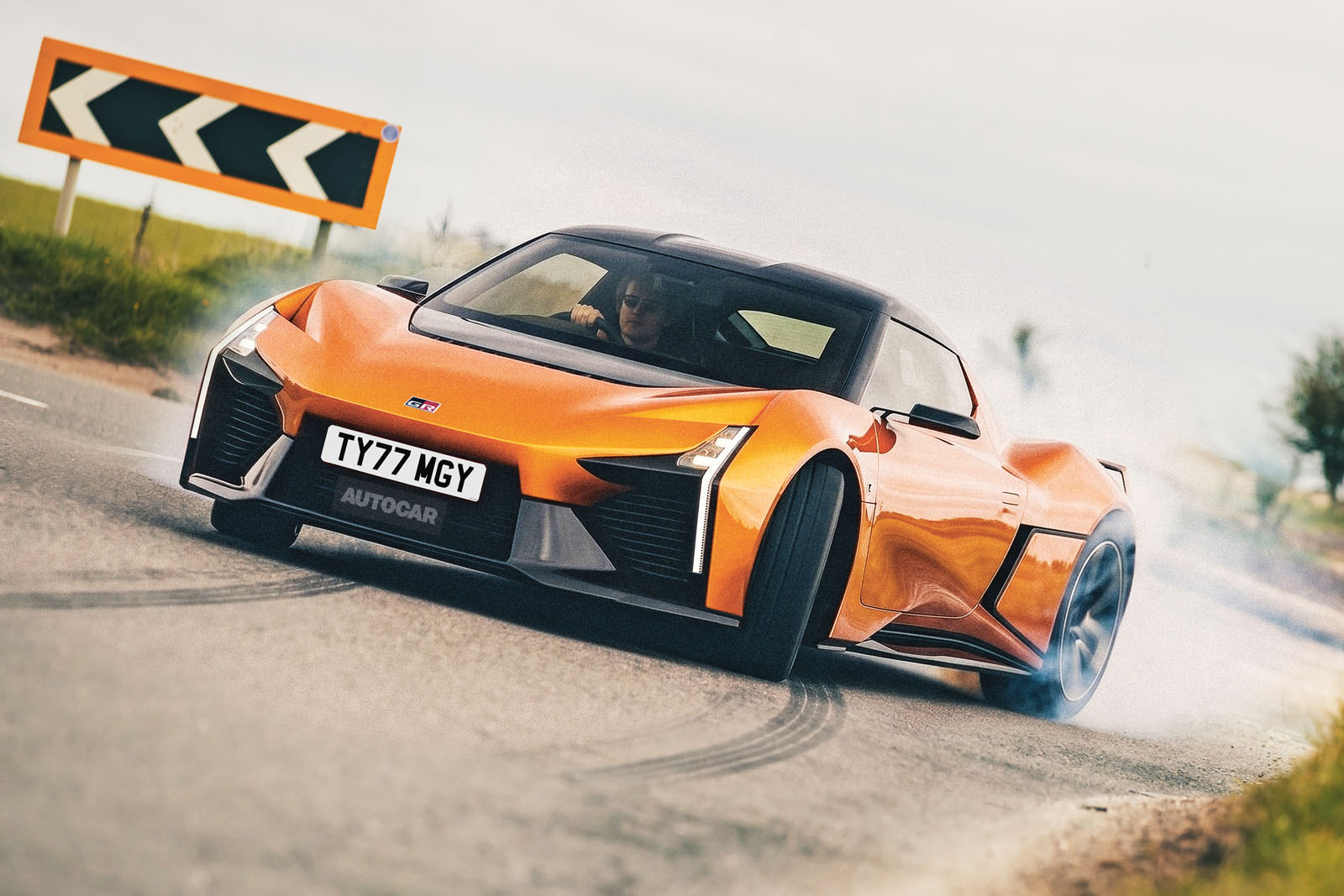
The imminent launch of the GR GT supercar and its GT3 racing counterpart will mark the debut of models exclusively bearing the GR badge. With the GR 86 and GR Supra having concluded their production runs and the GR Yaris soon to follow, these supercars will initially represent the entirety of the GR lineup. However, a deliberate strategy is in motion to populate the lower echelons of the GR portfolio with a range of dedicated sports cars, catering to diverse price points in a market segment where many rivals are increasingly exiting. This expansion is deeply intertwined with Gazoo Racing’s ongoing motorsport endeavors. The next iteration of Toyota’s World Rally Championship challenger is anticipated to be based on the upcoming Celica, while the mid-engined MR2’s development is unfolding with remarkable transparency, evidenced by a prototype actively competing in a prominent Japanese racing series.
Tomoya Takahashi, president of Toyota’s motorsport division, highlighted this strategic pivot, emphasizing a shift towards niche models that serve a halo purpose rather than solely focusing on commercial viability. He elaborated on the development of the MR2, referencing the mid-engined GR Yaris M concept as a crucial testing ground. "In the 2000s, we had what was known as the ‘global master plan’ and Toyota had become a company that only built cars that made money," Takahashi explained. "Since midship models don’t sell in large numbers, they naturally fell by the wayside. If we were the old Toyota, I think the response to this project would have been: ‘What are you talking about? Forget it!’ But under chairman Akio Toyoda’s presidency, the company came to embrace new challenges." Takahashi further underscored this transformative approach: "In the past, a newly built car would never have been driven like this, and I don’t think you would have seen a vehicle at this stage of completion entered in a race, with ‘Master Driver’ Akio Toyoda behind the wheel testing it out. I hope our efforts here demonstrate that we are dedicated to continuing to make cars through motorsports."
The Heart of the New MR2: A Potent 2.0-Liter Engine
The resurrected MR2 is slated to enter a market where mid-engined sports cars are a rare commodity. By the time of its anticipated 2028 arrival, the Lotus Emira will likely stand as the sole mainstream manufacturer offering in this configuration. While Alpine has indicated its next-generation A110 could accommodate an engine, it is scheduled to launch as an all-electric vehicle.
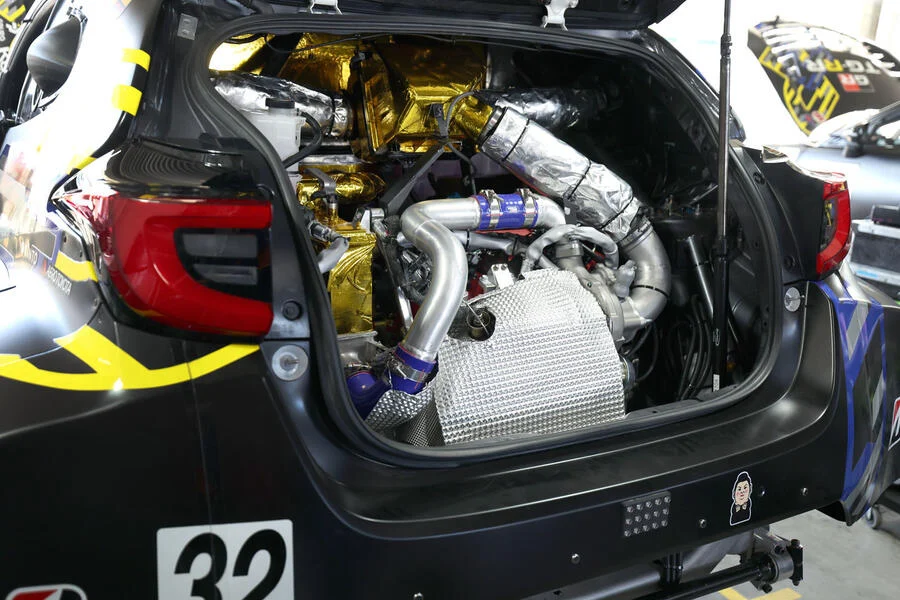
Toyota is reportedly developing a bespoke 2.0-liter engine specifically for hybrid sports cars, which is expected to power the new MR2. This innovative ‘G20E’ four-cylinder engine has undergone rigorous testing in a modified, mid-engined GR Yaris prototype, which has even competed in Japan’s Super Taikyu endurance racing series to validate its performance and durability. The G20E engine builds upon the foundation of the 1.6-liter unit found in the current GR Yaris. It is engineered to maximize both performance and efficiency while minimizing its physical footprint, a critical factor for achieving the compact dimensions and low center of gravity essential for a mid-engined sports car.

Initial reports suggest the standard tune of the G20E engine will produce between 400 and 450 horsepower. However, in its race-tuned configuration, as seen in the prototype, it is capable of generating upwards of 600 horsepower. This would position it among the most powerful four-cylinder engines ever created for automotive applications. For context, Mercedes-AMG’s ‘M139’ engine currently holds the title for the most powerful four-cylinder in a production car, delivering 416 horsepower in the A45 S hot hatch. While the mid-engined GR Yaris M prototype relies solely on gasoline power, the G20E engine’s design incorporates compatibility with hybrid and plug-in hybrid powertrains, benefiting from a shorter piston stroke compared to its predecessor, which contributes to its compact packaging.
Addressing Dynamic Limitations Through Mid-Engine Layout
Toyota’s decision to place the engine behind the cockpit is a direct response to the dynamic limitations inherent in front-engined performance cars. The company has articulated this rationale, stating, "Vehicles such as the GR Yaris have a front-mounted engine, concentrating the load on the front tyres during all driving operations of braking, steering and acceleration. In circuit environments, this significantly affects tyre wear and leads to a tendency for understeer when cornering at the limit due to reduced grip." The mid-engined configuration, a concept co-developed with Chairman Toyoda, is designed to mitigate these issues while enabling drivers to "control [the car] exactly as they intend."

The GR Yaris M concept, named in part to honor Toyoda’s racing alter ego ‘Morizo’, features a drivetrain capable of distributing power to both axles, mirroring the standard GR Yaris. However, it remains uncertain whether a smaller sports car utilizing the same engine would adopt an all-wheel-drive system. The original MR2’s characteristic tail-happy demeanor was a defining element of its driving experience, and a successor is expected to uphold this legacy, especially given the name’s common interpretation as "Mid-engined, Rear-wheel-drive, two-seater." The GR Yaris M’s drivetrain’s ability to channel power exclusively to the rear axle offers the potential for the MR2 to remain true to its rear-wheel-drive roots while simultaneously benefiting from the added stability and composure of an all-wheel-drive setup.
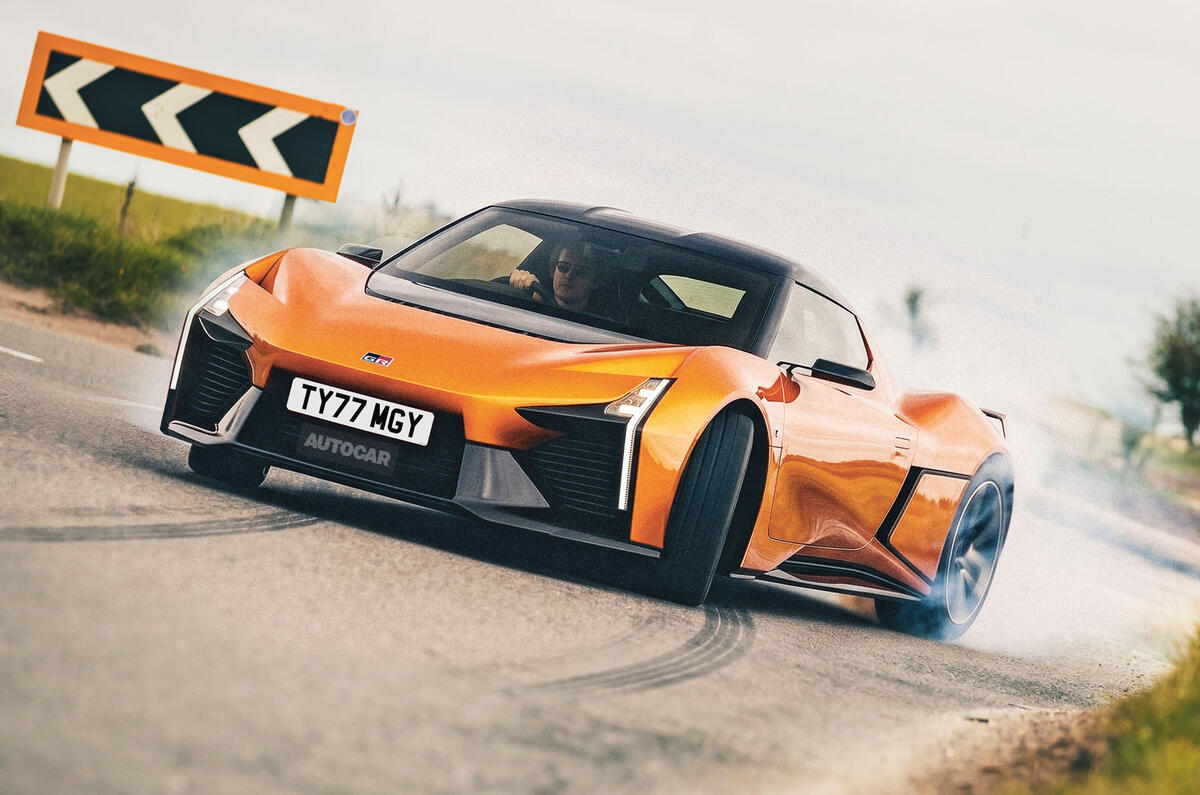
Toyota has already secured the "GR MR2" trademark, indicating a clear intention for the new model. It is anticipated that the car will forgo traditional Toyota badging, similar to the GR GT, to further solidify the GR brand’s positioning as a distinct performance marque. Recent testing activities suggest a ramp-up in development, with a prototype sports car recently spotted at the Toyota-owned Fuji Motor Speedway. This test vehicle, a compilation of body panels from various Toyota models including Lexus LC doors and GR Yaris lights, clearly displays its mid-engined architecture, evidenced by large side air intakes and a vented hood. Audio recordings from the track reveal a purposeful turbocharged four-cylinder engine note. While this prototype offers insights into the size and engineering of Toyota’s forthcoming entry-level sports car, its styling is not expected to be a direct preview. Instead, the new Emira rival is anticipated to draw heavily from the striking FT-SE concept unveiled by Toyota in 2023. Although the FT-SE was initially conceived with an all-electric powertrain utilizing Toyota’s next-generation battery technology, its unmistakable mid-engined proportions suggest it could transition to production with minimal changes, particularly with the advent of the compact G20E engine. Since the FT-SE’s debut, Toyota has reinforced its commitment to a multifaceted energy strategy, investing in new gasoline, hybrid, and even hydrogen combustion powertrains, alongside its expanding EV portfolio, thereby paving the way for a new generation of combustion-engined sports cars.
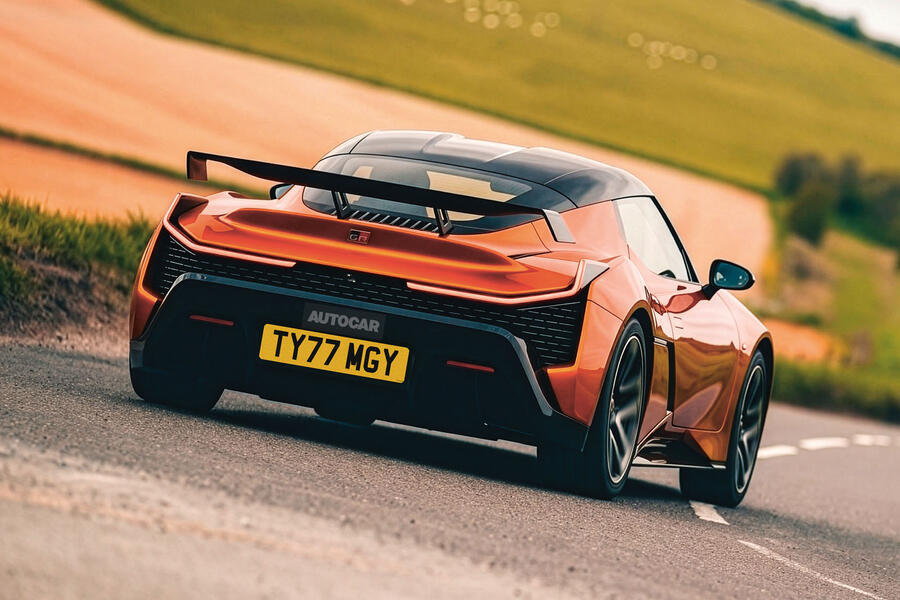
Insights from the GR Yaris M Test Car
Toyota’s ambition with its new mid-engined platform is to eliminate what Chairman Akio Toyoda terms "prayer time" – the precarious moment when a powerful front-engined car encounters a sharp bend, leading to understeer and a desperate hope for divine intervention. While the standard GR Yaris has demonstrated success in various motorsport disciplines, including the World Rally Championship, Super Taikyu, and the Nürburgring 24 Hours, the inherent limitations of its front-engine, all-wheel-drive layout are acknowledged to cap its ultimate performance potential.
"The front-engine 4WD packaging means that all of the vehicle’s functions – stopping, turning, accelerating – are concentrated around the front section," a Toyota statement explained. "This layout places a heavier load on the front tyres, which wear out more easily and must be replaced three times as often as the rear. Increased wear can also result in understeer." The relocation of the engine to the center of the chassis in the GR Yaris M concept directly addresses these shortcomings. Furthermore, Tomoya Takahashi, head of Toyota Gazoo Racing, stated that this configuration makes "cars that are fun for customers to drive." He referenced the original MR2 as an example of a car with "incredibly well-balanced weight distribution between the front and rear," while also acknowledging its infamous propensity for snap oversteer in fast corners. "What made the car turn so well also let it spin out easily on corners," he commented. However, by combining the mid-mounted engine with a four-wheel-drive system, Takahashi explained, "you transform the power that causes the vehicle to spin into a force that pulls the car forward, improving stability through corners." He concluded, "When you get behind the wheel, we hope the first thing people notice is how well the car turns."
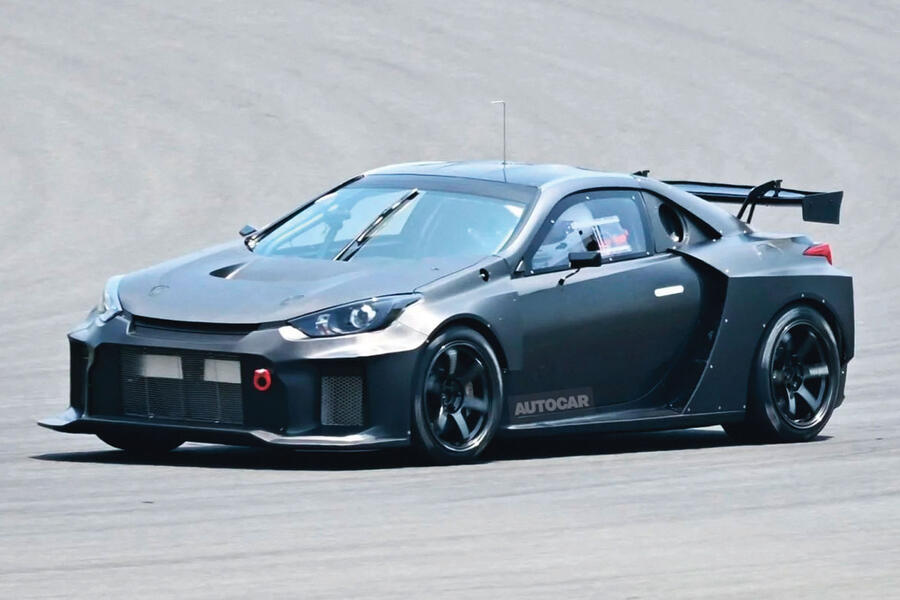
Following a practice session in the prototype ahead of its competitive debut, Akio Toyoda expressed cautious optimism about the vehicle’s potential. "It’s a fun drive, but there’s still work to be done, isn’t there?" he remarked. "If I don’t improve my driving skills, I won’t be able to handle this car."
The strategic repositioning of the GR division and the ambitious development of new sports car models like the MR2 and Celica underscore a significant cultural and product evolution within Toyota. Driven by a passion for driving and a commitment to performance, the company is embracing a future where exciting, enthusiast-focused vehicles play a central role, even if their commercial volume is not the primary metric of success. The reborn MR2, with its potent new engine and innovative mid-ship layout, is poised to reignite the passion for affordable, engaging sports cars and further cement Toyota’s GR brand as a formidable force in the performance automotive landscape.