The traditional understanding of black hole formation, a cornerstone of astrophysics for decades, is currently undergoing a significant revision. For years, the scientific consensus suggested that black holes primarily originate from the dramatic death of massive stars. In this "textbook" scenario, a star reaching the end of its life cycle exhausts its nuclear fuel, leading to a violent supernova explosion that sheds its outer layers while its core collapses under intense gravity into a singular, dense point. However, new research led by physicists at the Massachusetts Institute of Technology (MIT) suggests that a substantial portion of the black holes we detect today may have a far more complex lineage.
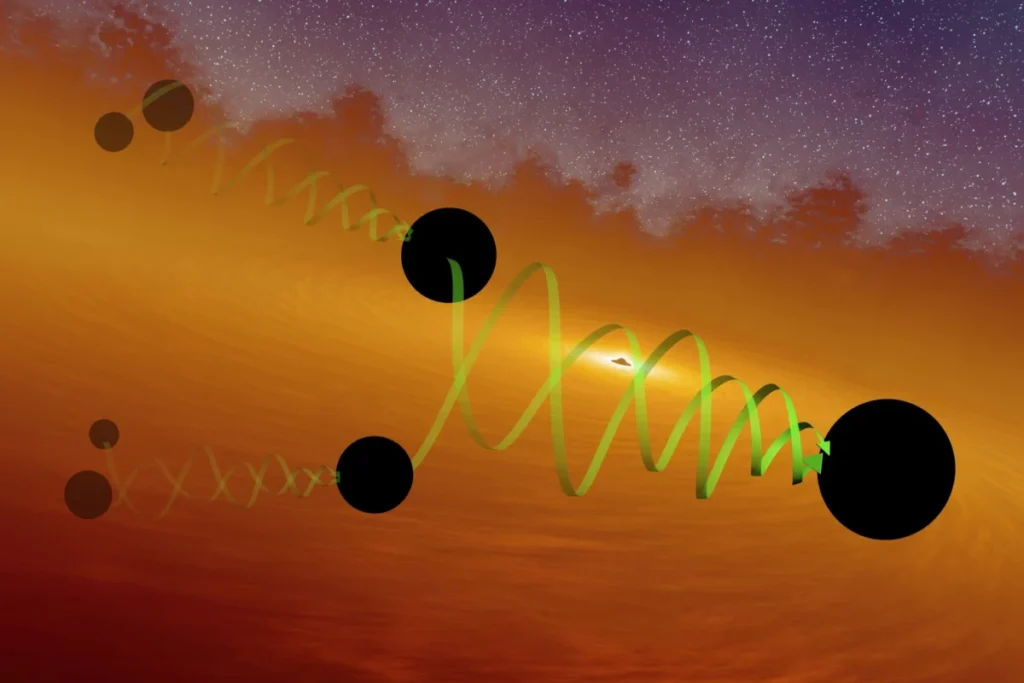
According to a study published this week in the journal Physical Review Letters, approximately 14 percent of merging black holes in the universe are likely "second-generation" black holes. These celestial objects did not form directly from a dying star but were instead created by the collision and subsequent merger of two smaller, precursor black holes. This process, known as "hierarchical merging," represents a significant alternative pathway for black hole evolution, suggesting that the cosmic population of these objects is more interconnected and dynamic than previously believed.
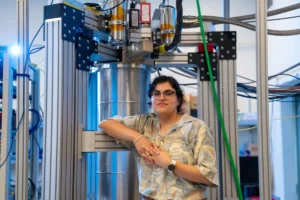
The MIT team, led by graduate student Cailin Plunkett and associate professor Salvatore Vitale, reached these conclusions after conducting a comprehensive analysis of the most recent data provided by the international network of gravitational-wave observatories, including the Laser Interferometer Gravitational-Wave Observatory (LIGO) in the United States, the Virgo detector in Italy, and the KAGRA observatory in Japan. Their findings indicate that for many black holes currently populating the cosmos, their recent merger was not their "first rodeo," but rather a continuation of a multi-generational cycle of growth and collision.
The Physics of Hierarchical Merging and Spin Dynamics
To distinguish between a black hole born from a star and one born from a previous merger, scientists look at two primary physical characteristics: mass and spin. When a massive star collapses, it undergoes a process that significantly reduces its angular momentum. The explosion of the supernova carries away a vast majority of the star’s mass and spin, leaving behind a "first-generation" black hole that typically possesses very little to no inherent spin.
In stark contrast, when two black holes collide and merge, the resulting entity is born out of a violent, high-energy event that imparts a massive amount of angular momentum. "They would be spinning very fast, at about 70 percent of their maximum possible spin," explains Salvatore Vitale, associate professor of physics at MIT. This high spin rate acts as a cosmic "fingerprint," identifying a black hole as the product of a prior merger rather than a direct stellar collapse.
The MIT researchers focused on identifying these high-spin signatures within a dataset of 155 pairs of binary black holes. By examining how these black holes interacted before their final collision, the team could infer their individual histories. Specifically, they looked for "lopsided" pairs—mergers where one participant was significantly more massive and possessed a much higher spin than its partner. Such an imbalance strongly suggests that the larger participant had already grown through a previous merger event.
Identifying Orbital Precession and the "Wobble" Effect
The methodology employed by Plunkett and Vitale involved a sophisticated analysis of "orbital precession." As two black holes spiral toward each other in a binary system, they generally orbit within a flat, disk-like plane. If the spins of the black holes are aligned perpendicularly to this orbital plane, the system remains relatively stable. However, if one or both of the black holes possess a significant spin that is tilted relative to the plane, the entire orbital disk begins to wobble.
This wobbling, or precession, leaves a distinct mark on the gravitational waves emitted by the system. By developing an analytic model to capture these specific patterns of precession, the MIT team was able to scan the LIGO-Virgo-KAGRA Gravitational Wave Transient Catalog 4.0 (GWTC-4.0). This catalog represents the most comprehensive collection of gravitational-wave detections to date, including data from the observatories’ fourth observing run.
Rather than examining each signal in isolation, the researchers looked for a statistical trend across the entire population. Their model revealed that roughly 14 percent of the detected mergers exhibited the characteristic "wobble" associated with a second-generation black hole. This finding provides a statistical foundation for hierarchical merging, moving the concept from a theoretical possibility to a documented cosmic reality.
The Mass Gap Conundrum and Stellar Evolution
One of the most compelling aspects of the MIT study is its potential to solve a long-standing mystery in stellar evolution theory known as the "upper mass gap." Traditional models of star death predict that stars of a certain size—those that would typically produce black holes between 50 and 130 solar masses—should undergo a "pair-instability supernova." These explosions are so incredibly violent that they completely disrupt the star, leaving behind no remnant black hole at all.
"Stellar evolution theory predicts you shouldn’t be able to form black holes in that mass range at all from just a supernova," Plunkett notes. "We think supernovae from really massive stars end up being so violent that they leave no black holes at all above roughly 45 solar masses."
Despite this theoretical prediction, gravitational-wave detectors have frequently observed black holes with masses exceeding 40, 50, and even 60 solar masses. The hierarchical merging pathway provides a logical explanation for these "forbidden" objects. If two 20-solar-mass black holes (both first-generation) merge, they create a 40-solar-mass second-generation black hole. If that second-generation black hole then merges with another 20-solar-mass first-generation black hole, it creates a 60-solar-mass third-generation black hole, effectively bypassing the constraints of stellar collapse.
The team’s analysis found that first-generation black holes tend to cluster around 10 and 30 solar masses. Meanwhile, the identified second-generation black holes were found in specific ranges around 20 solar masses, 40 solar masses, and above, aligning perfectly with the hierarchical growth model.
Dense Stellar Environments: The Cosmic Breeding Grounds
For hierarchical merging to occur, the environment must be sufficiently crowded to allow black holes to find new partners after their initial merger. Black holes are not stationary; they move through space, and in the vast emptiness of most of a galaxy, the chances of two black holes finding each other are slim. However, in dense stellar environments like globular clusters or the centers of galaxies, the density of stars and black holes is high enough to facilitate repeated encounters.
"You might have a ton of stars whizzing around each other, and if some are massive and explode, they become black holes," Plunkett says. "The black holes continue to whizz around, and can capture each other and merge. This process can repeat potentially ad infinitum."
In these "gravitational beehives," the massive gravitational pull of the cluster helps retain the products of mergers. While the energy of a merger can sometimes give the resulting black hole a "kick" that ejects it from the cluster, many remain trapped, ready to pair up with another neighbor. This environmental context is crucial for understanding why hierarchical merging accounts for 14 percent of the population rather than being a rare outlier.
Chronology of Detections and Global Collaboration
The journey toward this discovery has been marked by several key milestones in gravitational-wave astronomy. The first detection of gravitational waves in 2015 (GW150914) proved that binary black holes existed and could merge. Since then, the sensitivity of detectors has improved significantly.
In 2024, the scientific community identified two specific signals—labeled GW241011 and GW241110—that served as the catalyst for the MIT study. These signals showed clear evidence of lopsided mergers with high-spin components. These individual cases inspired Plunkett and Vitale to expand their search to the entire GWTC-4.0 catalog.
The collaboration between LIGO, Virgo, and KAGRA has been essential. By using a global network of sensors, scientists can triangulate the location of these events and extract more precise data regarding the mass and spin of the involved objects. This international effort has transformed gravitational-wave physics from a field of single-event discovery to one of population-wide statistical analysis.
Broader Implications and Future Outlook
The confirmation that 14 percent of merging black holes are second-generation has profound implications for our understanding of the universe’s history. It suggests that black holes are not just the "end" of a stellar life cycle, but active participants in a continuing process of cosmic assembly.
This research also sets the stage for the next generation of observatories. Future projects like the Einstein Telescope in Europe and the Cosmic Explorer in the United States aim to increase detection sensitivity by an order of magnitude. Furthermore, the Laser Interferometer Space Antenna (LISA), a space-based observatory led by the European Space Agency and NASA, will be able to detect mergers of much larger black holes, potentially revealing even higher-order hierarchical chains.
Professor Vitale emphasized the rapid pace of progress in the field, noting that within the next decade, technology will allow scientists to see gravitational waves from across the entire observable universe. This will likely lead to the discovery of third- and fourth-generation black holes, further mapping the complex genealogy of the darkest objects in the cosmos.
As researchers continue to peel back the layers of black hole origins, the "textbook" story is becoming a rich, multi-chapter saga. The discovery that hierarchical merging is a significant pathway confirms that the universe is a place of constant recycling and growth, where the remnants of dead stars combine to form ever more massive and powerful entities. This work, supported by the National Science Foundation and the Brinson Foundation, marks a pivotal step in our quest to understand the fundamental lifecycle of the universe’s most mysterious residents.