IBM has unveiled a revolutionary 2-nanometer processor, meticulously engineered to seamlessly integrate Arm computing directly into its venerable mainframe systems. This pioneering development, announced at the prestigious Hot Chips conference, marks a pivotal moment for enterprise computing, allowing organizations to concurrently run Arm-native Linux applications alongside their existing IBM Z and LinuxONE workloads on the same infrastructure. The processor, representing the first dual-architecture mainframe chip from IBM, is currently under development for deployment in future iterations of IBM Z and LinuxONE systems, solidifying a significant hardware milestone stemming from IBM’s strategic collaboration with Arm, initiated in April of the current year.
A New Era of Enterprise Computing: Bridging Architectures
The core philosophy behind this innovative chip is to empower enterprises with unprecedented flexibility. It addresses a long-standing challenge by enabling the execution of Arm applications without the cumbersome necessity of migrating those workloads to separate, disparate server environments. Simultaneously, critical z/OS and Linux applications, which form the bedrock of many global enterprises, can continue operating on the same robust, secure, and highly available mainframe infrastructure. This architectural convergence is poised to grant IBM customers direct access to the rapidly expanding Arm software ecosystem, which currently boasts a staggering community of over 22 million developers worldwide, while simultaneously preserving the unparalleled security, reliability, availability, and scalability features inherently associated with IBM’s mainframe platforms.
Christian Jacobi, Chief Technology Officer and IBM Fellow for IBM Systems Development, articulated the strategic imperative behind this innovation. "As organizations modernize their application portfolios and integrate AI into core business operations, they need infrastructure that expands their options," Jacobi stated. He further emphasized, "This processor represents a significant architectural advancement for IBM Z and LinuxONE. By bringing Arm natively to our platform, we’re combining access to one of the industry’s fastest-growing software ecosystems with the qualities that have made IBM systems the foundation for how businesses run today."
Technical Prowess: Two Architectures, One Processor Core
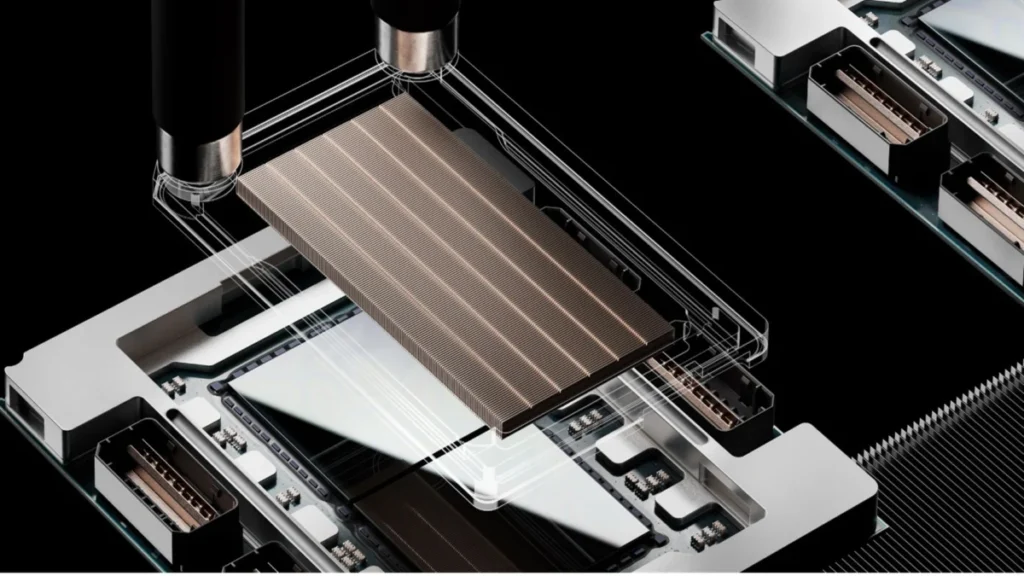
At the heart of this advancement lies a sophisticated design manufactured using a cutting-edge 2-nanometer process technology. This diminutive scale allows for an extraordinary density of components, contributing to enhanced performance and energy efficiency. The processor is equipped with 11 high-performance cores, each capable of operating at impressive clock speeds exceeding 5.7 GHz. Beyond general-purpose computing, the chip also integrates dedicated AI inference accelerators, specifically optimized for demanding enterprise workloads such as real-time in-transaction fraud detection, a critical application where speed and accuracy are paramount.
One of the most remarkable aspects of this design is IBM’s ingenious approach to core architecture. Rather than designing separate, distinct Arm and IBM Z cores, IBM engineered each core to natively execute both Arm and IBM Z or LinuxONE instruction sets. This groundbreaking "universal" core design allows the two distinct software environments to operate seamlessly and concurrently within the identical processor architecture, eliminating the need for emulation or virtualization layers that could introduce performance overhead or complexity. This native execution capability is a game-changer, ensuring optimal performance and resource utilization for both types of workloads.
Further enhancing its enterprise capabilities, the chip incorporates a dedicated on-chip data processing unit (DPU) specifically designed to accelerate I/O operations. In data-intensive environments, I/O performance can often be a bottleneck, and this dedicated DPU promises to significantly mitigate that challenge. Complementing this is a large, multi-level cache architecture, meticulously optimized to handle the demanding memory access patterns characteristic of large-scale enterprise workloads, ensuring data is readily available to the processing cores. IBM’s Z and LinuxONE platforms are renowned for their massive scalability, capable of supporting hundreds of cores and tens of terabytes of memory. This new dual-architecture processor is designed to leverage this inherent scalability, positioning it perfectly for systems handling colossal transaction-processing volumes and highly data-intensive workloads across various industries.
The Strategic IBM-Arm Alliance: A Chronology of Convergence
The unveiling of this 2nm processor at Hot Chips is the direct result of a strategic collaboration between IBM and Arm, formally established in April. This partnership signaled IBM’s intent to broaden the capabilities of its mainframe ecosystem, recognizing the burgeoning influence and widespread adoption of Arm architecture across various computing domains. For IBM, the alliance represented a forward-looking step to future-proof its mainframe offerings and attract a new generation of workloads and developers. For Arm, it signified a monumental expansion into the highly regulated, mission-critical enterprise mainframe space, an area traditionally dominated by proprietary architectures.
Prior to this collaboration, Arm processors had already achieved widespread adoption across mobile devices, establishing themselves as the dominant architecture in that sector. More recently, Arm’s influence has surged within cloud infrastructure, with major cloud providers like Amazon Web Services (AWS) offering Arm-based instances (e.g., Graviton processors) that promise superior price-performance ratios for many cloud-native workloads. This expansion has extended into edge computing and, increasingly, into specialized AI computing applications. IBM’s move now extends Arm’s software compatibility and developer ecosystem into a class of systems – mainframes – that have historically been built around IBM’s own highly optimized processor architectures. This strategic pivot acknowledges the growing ubiquity and developer mindshare of Arm, bringing its ecosystem directly to the mainframe’s unparalleled strengths.
Arm’s Ascendance in the Enterprise and Cloud Landscape
The journey of Arm processors from low-power mobile devices to high-performance data centers and now into mainframes is a testament to the architecture’s inherent efficiency, scalability, and the robustness of its ecosystem. The success of Arm in the cloud, particularly with AWS Graviton processors, has demonstrated that Arm can deliver compelling performance and significant cost savings for a wide array of cloud-native applications, microservices, and high-performance computing tasks. Other major cloud providers, including Microsoft Azure and Google Cloud, have also begun to offer Arm-based instances, validating the architecture’s viability beyond mobile.
This widespread adoption is fueled by several factors:
- Energy Efficiency: Arm’s RISC (Reduced Instruction Set Computer) architecture is inherently more power-efficient than complex x86 designs, translating into lower operational costs and reduced carbon footprint for data centers.
- Developer Ecosystem: The 22 million-strong developer community provides a vast pool of talent and an extensive library of software tools, libraries, and applications.
- Customization: Arm’s licensing model allows for greater customization, enabling companies like IBM to design highly specialized cores tailored to specific workload requirements, as demonstrated by this new dual-architecture processor.
- Performance Gains: While historically associated with lower power, modern Arm designs, particularly those optimized for server workloads, now deliver competitive performance, often excelling in specific areas like parallel processing and throughput.
Mohamed Awad, Executive Vice President, Cloud AI, at Arm, underscored this trend: "As AI scales, more of the computing landscape is converging on Arm. IBM Z and LinuxONE power some of the world’s most demanding workloads in highly regulated industries. Bringing Arm compute and its software ecosystem to these platforms will extend that momentum into mission-critical enterprise infrastructure to give organizations greater choice in how they deploy AI." This statement highlights Arm’s strategic intent to penetrate the most critical segments of enterprise IT, leveraging its growing relevance in AI.
Unlocking New Possibilities for the Enterprise
For enterprises, this architectural evolution promises a wealth of benefits and new strategic options.
- Workload Consolidation and Simplification: Organizations can now run a broader spectrum of applications – both traditional mainframe workloads and modern Arm-native applications – on a single, unified platform. This reduces infrastructure complexity, simplifies management, and potentially lowers operational costs by consolidating servers and reducing the need for separate management tools and skill sets.
- Access to the Arm Ecosystem: Enterprises gain direct access to the vast and rapidly growing Arm software ecosystem. This means they can leverage a wider array of open-source software, cloud-native applications, and specialized Arm-optimized solutions without having to re-architect or port them to a different instruction set. This is particularly valuable for organizations looking to modernize their application portfolios with new, Arm-native cloud services or AI frameworks.
- Leveraging Mainframe Strengths: Arm workloads running on IBM Z and LinuxONE systems will automatically inherit the legendary security, reliability, availability, and scalability features of the mainframe. This includes hardware-level fault detection and recovery, robust encryption capabilities, secure key management, and the integrated AI acceleration already present on the chip. For highly regulated industries like finance, healthcare, and government, where these attributes are non-negotiable, this provides an unparalleled environment for Arm applications. Mainframes are known for "five nines" (99.999%) or even "six nines" (99.9999%) availability, equating to mere minutes or seconds of downtime per year – a standard few other platforms can match.
- Hybrid Cloud Optimization: This innovation facilitates a more seamless hybrid cloud strategy. Enterprises can develop and test Arm applications in the cloud and then deploy them on-premises on their mainframes with greater architectural consistency, optimizing for performance, cost, or compliance as needed. It blurs the lines between public cloud and on-premise, allowing for true workload portability across Arm-based environments.
- Future-Proofing Investments: By embracing Arm, IBM is future-proofing its mainframe platform against shifts in the computing landscape. It allows customers to continue leveraging their significant investments in mainframe infrastructure while simultaneously adopting emerging technologies and application paradigms built around Arm.
Broader Impact and Strategic Implications
The implications of IBM’s dual-architecture processor extend far beyond just its immediate customer base.
- For IBM: This move reinforces the mainframe’s relevance in a rapidly evolving tech landscape. It positions IBM Z and LinuxONE not as legacy systems, but as highly adaptable, future-ready platforms capable of hosting the most modern workloads. It also signals IBM’s commitment to open ecosystems and innovation, potentially attracting new customers who might have previously viewed mainframes as too specialized or closed. This could lead to a revitalization of the mainframe market, which, while niche, still handles an estimated 80% of corporate data and 90% of all credit card transactions globally.
- For Arm: Integrating into the mainframe solidifies Arm’s position as a truly universal architecture, capable of powering everything from tiny IoT devices to supercomputers and now, the most mission-critical enterprise systems. It validates Arm’s long-term strategy to expand beyond its traditional mobile stronghold and become a dominant force in data centers and enterprise computing. This also presents a significant opportunity for Arm’s partners and developers to target new, highly lucrative markets.
- For the Industry: This development could accelerate the trend of architectural convergence, where different instruction sets coexist and interoperate more seamlessly. It challenges the long-standing dominance of x86 in the server market and fosters greater competition and innovation. It also highlights the increasing importance of specialized accelerators (like the integrated AI inference engine) and on-chip data processing units in modern processor design, moving towards more heterogeneous computing environments tailored for specific workload types.
Timeline and Future Outlook
While the 2nm dual-architecture processor marks a monumental achievement, it is still in the development phase. IBM has not yet announced a specific timeline for when systems incorporating this new chip will become commercially available. However, the company’s clear communication of the design’s capabilities and strategic intent signals its commitment to delivering this innovation to market. The ongoing development phase will likely involve extensive testing, optimization, and collaboration with enterprise customers to ensure the seamless integration and robust performance required for mission-critical environments.
The design itself is a significant step towards giving enterprises unprecedented flexibility in where they choose to run newer Arm-based software, bridging the gap between modern cloud-native development and the unparalleled stability and security of the mainframe. This innovation is not merely about adding Arm support; it’s about fundamentally reshaping how enterprises can leverage their core infrastructure, enabling them to innovate faster, operate more efficiently, and maintain the highest standards of security and reliability in an increasingly complex and data-driven world. The fusion of Arm’s expansive ecosystem with IBM’s mainframe prowess is poised to redefine enterprise computing for the next generation.