A surprising consensus has emerged across the American political spectrum, uniting conservatives and liberals in their apprehension towards Flock’s automated license plate reader (ALPR) technology. This widespread discontent stems from concerns that the widespread deployment of these cameras logs citizens’ movements without sufficient legal oversight, leading to a growing number of jurisdictions reconsidering or outright canceling their contracts with the surveillance technology provider. As of August 2026, an open-source tracking site, DeFlock, has documented over 90 municipalities that have either terminated or declined to renew their agreements with Flock. This burgeoning movement against ALPR technology highlights a fundamental tension between public safety objectives and the constitutional right to privacy.
The opposition is multifaceted, with distinct but converging arguments from both sides of the aisle. Conservatives often frame the issue as a clear case of "big government" overreach, echoing long-standing objections to invasive surveillance programs that they argue erode individual liberties and create a chilling effect on lawful behavior. Their primary concern revolves around the potential for unwarranted tracking of law-abiding citizens, arguing that the constant monitoring of vehicle movements — who visits where, when, and how often — constitutes an unacceptable intrusion into private lives, especially when conducted without probable cause or a warrant.
On the other side of the political spectrum, liberals are raising alarms about the implications of mass surveillance, particularly concerning its potential impact on vulnerable populations. A significant worry is that the pervasive tracking of vehicles could deter undocumented immigrants from accessing essential services or commuting to work, out of a justifiable fear that their movement data could be shared with federal agencies like Immigration and Customs Enforcement (ICE). This concern stems from the potential for ALPR data to be used in ways that could lead to deportation or other punitive actions, effectively criminalizing everyday activities for specific communities. Despite originating from different ideological starting points, both factions arrive at a shared conclusion: the current implementation and oversight of Flock’s ALPR systems are problematic.
The sheer volume of contract cancellations underscores the growing dissatisfaction. Los Angeles, the nation’s second-largest city, notably opted out of its Flock contract in July 2026. This decision followed a staggering report indicating that the cameras had generated 161 false reports of stolen vehicles within a mere two-month period, according to DeFlock’s data. Such a high rate of inaccuracy is far beyond what could be dismissed as a minor technical glitch; it suggests a systemic issue that directly impacts innocent citizens by misidentifying them as criminals. The city’s administration evidently concluded that the persistent false alarms and the associated burden on law enforcement and the public were not worth the purported benefits of the technology.

A Bipartisan Coalition Against Digital Surveillance
The alignment of voices against Flock is particularly striking. Scott Perry, a Republican congressman from Pennsylvania frequently associated with the more conservative wing of his party, has been an outspoken critic. Perry articulated his objections in a public statement on Facebook, asserting that "Flock and Flock-like cameras track where law-abiding people go, who they visit, and how they live — all without a warrant." He actively sought to curtail the technology’s proliferation, proposing an amendment aimed at prohibiting its use. Though his amendment ultimately failed in committee, he vowed to continue the fight, stating, "that’s not the end of this, though. The mass surveillance of the American People must end."
At the opposite end of the political spectrum, Marc McGovern, a Democratic member of the Cambridge, Massachusetts City Council, has been a leading advocate for discontinuing the city’s Flock deployment. McGovern characterized the technology as "terribly dangerous" and was instrumental in Cambridge’s decision to terminate its contract in December 2025. Adding fuel to the fire, reports surfaced that Flock may have installed cameras within the city without explicit prior authorization, a move that likely solidified the council’s resolve to sever ties. The fact that a congressman known for his staunch conservative stance and a city councilor from a progressive stronghold are vocalizing the same fundamental concerns about privacy and government overreach signals a significant shift in public and political opinion regarding ALPR technology.
The Growing Data Trail of Discontent
The data compiled by DeFlock offers a tangible measure of this backlash. The site’s meticulous tracking reveals a consistent trend of contract terminations and non-renewals spanning across numerous states and municipalities. This growing list of jurisdictions includes cities and counties that have grappled with the practical implications of ALPR systems, from accuracy issues to privacy concerns. For example, beyond Los Angeles, Denver also reportedly shut down its Flock cameras in June 2026, with some reports suggesting a subsequent decline in auto theft rates. While correlation does not always equate to causation, such instances provide fodder for arguments that the perceived benefits of ALPRs may not always outweigh their drawbacks.
The timeline of these cancellations suggests a maturing debate. The period between January 2025 and August 2026 appears to be a critical juncture where many jurisdictions began to critically evaluate their investments in ALPR technology. This period of reassessment was likely influenced by a confluence of factors, including increased media scrutiny, academic research on the efficacy and privacy implications of ALPRs, and grassroots advocacy efforts. As more communities experience the reality of ALPR deployment, the negative feedback loop, amplified by organizations like DeFlock, appears to be gaining momentum.
The Unaddressed Shadow: A Shift, Not a Solution?
However, a critical question emerges from this widespread opposition to Flock: is the movement truly about reducing surveillance, or is it merely about changing the vendor? The article hints at a disquieting possibility: that some jurisdictions are not abandoning vehicle surveillance altogether but are instead transitioning to alternative providers. The implication is that the underlying infrastructure of widespread vehicle tracking might persist, merely under a different corporate banner.
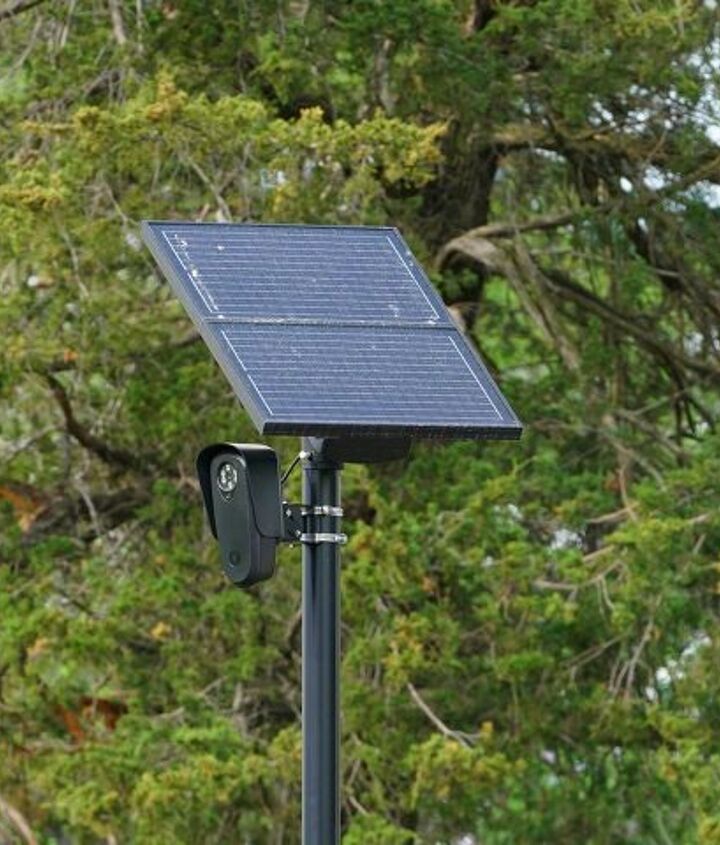
This is where the narrative of a definitive victory for privacy begins to fray. While the political consensus against Flock is undeniably significant and indicative of genuine public limits on surveillance, the long-term implications remain uncertain. The article points to rivals like Axon, a company that not only offers ALPR technology but also boasts a vast network of millions of closed-circuit television (CCTV) cameras across the United States. Axon’s stated capabilities include using artificial intelligence (AI) to "recognize critical activity in live videos." This suggests a potential for even more pervasive and sophisticated forms of surveillance, extending beyond just license plates to encompass broader video analysis and integration with other data streams, such as body-worn camera footage within what Axon terms its "Axon Ecosystem."
The analysis suggests that the focus on Flock, while politically expedient and satisfying in its bipartisan appeal, might be misdirected. Disengaging from one vendor, even one with a controversial track record, does not automatically translate to a reduction in surveillance if the underlying appetite for such technology remains. Replacing Flock with a company like Axon, which offers a more expansive surveillance suite, could represent a lateral move at best, or a step towards a more intrusive surveillance state at worst.
The core of the issue, therefore, transcends specific companies. It delves into the fundamental questions of how much data the government and private entities should collect about citizens’ movements, what safeguards should be in place, and who ultimately benefits from this data. The bipartisan revolt against Flock demonstrates that a significant portion of the populace has reached a threshold of discomfort with unchecked surveillance. The critical challenge moving forward will be to translate this growing awareness into concrete policies that prioritize privacy and civil liberties, rather than simply facilitating a reshuffling of surveillance technologies under different brand names. The true test of this burgeoning movement will be whether it leads to a genuine decrease in surveillance or merely a more aesthetically varied, yet equally pervasive, digital monitoring of everyday life.