
The state of Britain’s roads continues to be a pressing concern for motorists and local authorities alike, with potholes and general wear and tear becoming an increasingly common sight. Amidst this deteriorating infrastructure, a debate has emerged regarding the vehicles most responsible for the damage. While popular opinion and some policy considerations have pointed towards Sport Utility Vehicles (SUVs) and Electric Vehicles (EVs) as major contributors, a growing consensus among civil engineering experts suggests this attribution is overly simplistic and potentially misleading, diverting attention from more significant causal factors.
The argument against SUVs and EVs often hinges on their increasing prevalence and, in the case of EVs, their often substantial battery weight. Data reveals a significant trend: over the past nine years, the average kerb weight of new cars sold in the UK has risen dramatically. From a mean average of 1,553kg in 2014, this figure has climbed by nearly 400kg to 1,947kg in 2023. This upward trajectory is further underscored by vehicle testing data. Last year, the average weight of cars road-tested by industry publication Autocar was 2,024kg. Of the 73 vehicles subjected to these tests, SUVs emerged as the dominant body type, and electric powertrains were the most frequently encountered fuel type. This confluence of heavier vehicles and a shift in popular automotive segments has fuelled accusations that SUVs and EVs are disproportionately contributing to road damage, prompting some local authorities, including those in London and Cardiff, to explore the possibility of implementing additional parking charges specifically for these vehicle types.
Challenging the Narrative: The Physics of Road Damage
However, leading voices in the civil engineering field are urging a more nuanced understanding of road degradation. Elizabeth Orchard, director of infrastructure consultancy Endelevu, articulated a perspective that has gained traction among critics of the prevailing narrative. In a recent blog post for the Institute of Civil Engineers, Orchard posited that the increasing weight of vehicles, particularly EVs due to their battery packs, plays a role in pothole formation. She argued, "Roads are designed to withstand a certain number of heavy vehicles during their lifetime. As vehicles – especially EVs – become heavier, the wear per vehicle increases. More damage occurs more quickly, reducing the lifespan of the road." This viewpoint highlights the cumulative effect of weight over time and the potential for heavier vehicles to accelerate the deterioration process.
Yet, this perspective is countered by a more in-depth analysis of the physics governing road wear. Ali Rahman, an assistant professor at the School of Civil Engineering at the University of Leeds, believes that while vehicle weight is a factor, the prevailing criticism of SUVs and EVs often overstates their individual impact. Rahman points to the "fourth power law," a fundamental principle in pavement engineering. This law dictates that road damage is not linearly proportional to axle load, but rather increases exponentially. Specifically, if a vehicle’s axle load doubles, the damage inflicted on the road surface does not simply double; it increases by approximately 16 times.
This crucial distinction shifts the focus of blame significantly. Rahman elaborates, "Heavy goods vehicles [HGVs] are the principal cause of road damage. One HGV can cause the same damage as many thousands of car journeys." The immense weight carried by trucks and other commercial vehicles, concentrated on their axles, exerts forces on the road surface that are orders of magnitude greater than those produced by even the heaviest passenger cars. Therefore, while the average weight of cars has increased, the relative impact of these heavier cars on road wear pales in comparison to the persistent and substantial loads imposed by HGVs.
A Multifaceted Problem: Beyond Vehicle Weight
The emphasis on vehicle weight, particularly for SUVs and EVs, risks overlooking a constellation of other critical factors that contribute to the sorry state of Britain’s roads. Rahman contends that singling out specific vehicle types for blame is an oversimplification. He argues that a confluence of issues, including the pervasive impact of climate change, the insidious ingress of water into the road structure, and persistent delays in essential road maintenance, collectively contribute to road deterioration. These environmental and systemic factors, when acting in concert, create a perfect storm for pavement degradation.
Climate change, with its increasingly extreme weather patterns, plays a significant role. Freeze-thaw cycles, where water seeps into cracks, freezes, expands, and then thaws, repeatedly weaken the road surface and sub-base, leading to the formation and exacerbation of potholes. Intense rainfall can saturate the ground beneath the road, compromising its structural integrity and making it more susceptible to damage from traffic loads.
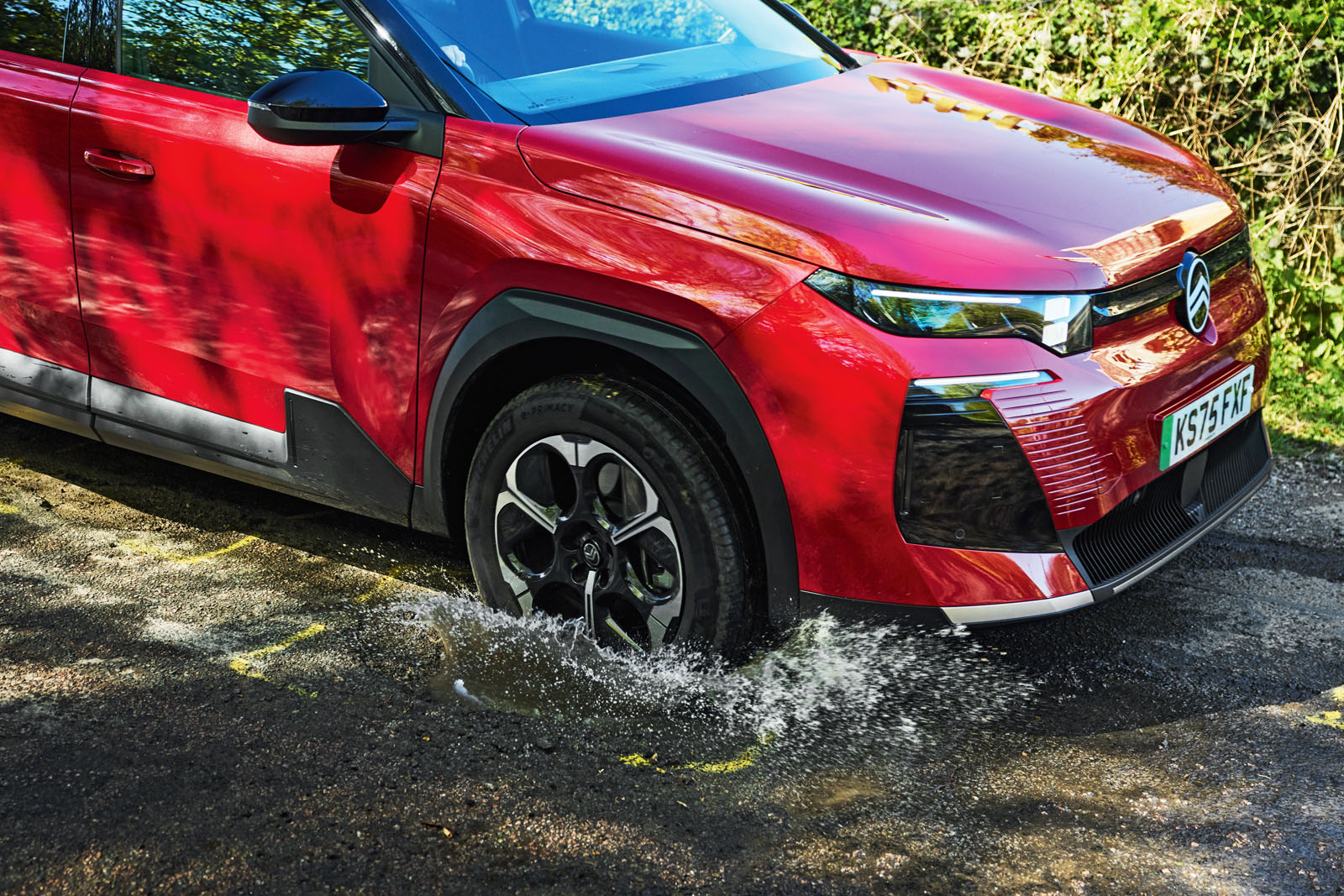
Furthermore, a chronic underfunding of road maintenance has created a significant backlog of necessary repairs. The Asphalt Industry Alliance (AIA) has consistently highlighted the scale of this problem. In March of the current year, the AIA reported that local authorities in England and Wales were facing a staggering £18.62 billion backlog of carriageway repairs. This deficit is so substantial that it would take an estimated 12 years to clear, assuming consistent and adequate funding. The situation is further exacerbated by the structural condition of existing roads; the AIA revealed that 16% of local roads, an equivalent of over 32,500 miles, have been assessed as having less than five years of structural life remaining. This alarming statistic indicates a fundamental issue with the underlying quality and longevity of the road network, irrespective of the vehicles using it.
Government Response and Financial Realities
Recognizing the severity of the road maintenance crisis, the government has announced a series of funding initiatives. In a bid to address the mounting backlog, a £7.3 billion spending package for roads maintenance was allocated for the four years leading up to 2030. This investment aims to bolster repair efforts and improve the overall condition of the road network. Alongside this financial commitment, the government has also sought to enhance the efficacy of these funds by tightening the rules around how local councils can spend the allocated money, ensuring greater accountability and a focus on high-priority repairs and preventative maintenance.
However, the scale of the problem often dwarfs the available resources. The £18.62 billion backlog represents a significant investment gap. While the £7.3 billion package is substantial, it is crucial to assess whether it is sufficient to address both immediate repair needs and the long-term structural issues plaguing many roads. The AIA’s figures suggest that a sustained and significantly higher level of investment may be required to truly bring the nation’s road network up to a satisfactory standard and prevent further deterioration.
Implications for Policy and Public Perception
The debate surrounding the cause of road damage has tangible implications for public policy and perception. The consideration of additional parking charges for SUVs and EVs by councils like London and Cardiff, while perhaps well-intentioned as a means to generate revenue for road repairs, risks penalizing consumers for purchasing vehicles that are increasingly popular and, in the case of EVs, represent a crucial component of the transition to a lower-carbon future.
A more evidence-based approach would involve focusing resources on the primary drivers of road wear – namely, the significant loads imposed by HGVs and the critical need for sustained investment in road maintenance and resilience. Understanding the fourth power law and the cumulative impact of heavy commercial traffic provides a more accurate framework for resource allocation.
Furthermore, public perception can be influenced by simplified narratives. While it is natural to associate the vehicles we see most often with the problems we experience, a deeper dive into the engineering principles and systemic issues at play reveals a more complex reality. Educating the public about the disproportionate impact of HGVs and the critical role of proactive maintenance in preserving road infrastructure can foster more informed discussions and support for effective solutions.
The increasing weight of passenger vehicles, including SUVs and EVs, is undoubtedly a factor that contributes to road wear. However, to place the primary blame on these vehicles, while overlooking the overwhelming damage caused by heavy goods vehicles and the chronic underfunding of road maintenance, is to misdiagnose the problem. A comprehensive solution requires addressing the structural integrity of our roads, ensuring adequate and consistent funding for repairs, and acknowledging the dominant role of commercial traffic in their degradation. Only through such a holistic approach can the UK hope to reverse the trend of deteriorating road infrastructure and provide a safer, more reliable network for all road users. The future of Britain’s roads hinges not on singling out specific vehicle types, but on a robust commitment to engineering principles, strategic investment, and a clear-eyed understanding of the true causes of pavement failure.