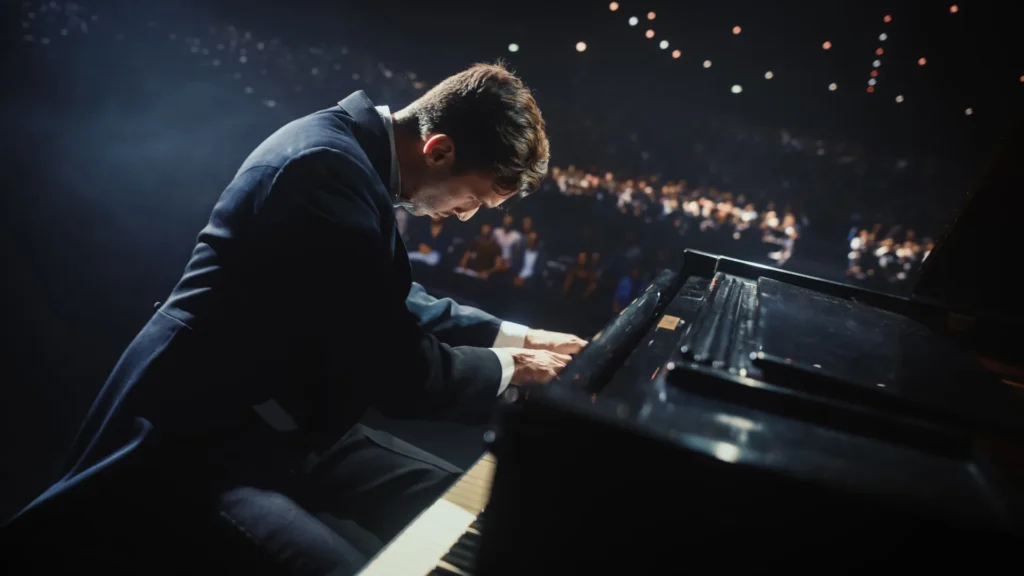
For generations, pianists and music teachers have passionately asserted that a performer’s unique touch can fundamentally alter the character of a piano’s sound, imbuing it with expressive qualities beyond mere volume or timing. This artistic conviction, deeply embedded in pedagogical traditions and performance practice, has often been met with skepticism from the scientific community. Critics argued that once a piano hammer strikes a string, the resulting tone, or timbre, is almost entirely determined by the instrument’s inherent physical properties, with any perceived variations being largely psychological or attributable to differences in loudness or rhythm. Now, groundbreaking research has provided some of the clearest and most compelling scientific evidence yet, decisively demonstrating that pianists truly possess the ability to sculpt a piano’s timbre through the nuanced mechanics of touch alone.
Unlocking the Secrets of Expressive Performance
The seminal study, spearheaded by Dr. Shinichi Furuya of the NeuroPiano Institute and Sony Computer Science Laboratories, Inc., leveraged state-of-the-art, ultra-high-speed sensing technology to meticulously capture and analyze the hitherto hidden movements that underpin expressive piano playing. Their transformative findings, published in the prestigious Proceedings of the National Academy of Sciences (PNAS), offer profound insights, suggesting that the almost imperceptible motions of a pianist’s fingers and hands exert a tangible influence on how listeners perceive intricate qualities such as brightness, heaviness, and clarity within individual musical notes. This research not only validates centuries of artistic intuition but also opens new avenues for understanding the complex interplay between motor control, auditory perception, and musical expression.
The Historical Echoes of a 100-Year Conundrum
The debate over a pianist’s ability to manipulate timbre through touch is far from new, echoing through the halls of music conservatories and scientific laboratories since the early 20th century. Prominent pedagogues like Theodor Leschetizky and Tobias Matthay championed the concept of a "singing tone" or "arm weight," asserting that specific physical approaches could evoke a richer, more varied palette of sounds. Their students, including legendary figures like Ignacy Jan Paderewski and Myra Hess, seemingly exemplified this belief through their highly individual and expressive playing.
Conversely, early acousticians and scientists, notably Hermann von Helmholtz in the 19th century, laid the foundation for a more mechanistic view. They posited that a piano string, once struck, vibrates according to its physical characteristics (length, tension, mass) and the initial force of impact, producing a waveform that largely defines its timbre. From this perspective, the "touch" of the pianist was primarily a matter of regulating velocity, and thus loudness, and the timing of notes. Any talk of "warm," "dark," "bright," or "heavy" tones, if not linked to changes in volume or tempo, was often dismissed as subjective artistic metaphor or psychological illusion. The lack of sufficiently precise measurement tools in earlier eras meant that scientists struggled to isolate and quantify the subtle physical parameters that might differentiate one "touch" from another, leaving the debate largely unresolved and fueling a persistent divide between artistic experience and scientific explanation.
The Methodology: A Microscopic View of the Keyboard
To bridge this historical divide, the research team developed an innovative, custom-built noncontact sensing system dubbed "HackKey." This sophisticated technology was capable of recording the movements of all 88 piano keys with unprecedented precision, achieving a sampling rate of 1,000 frames per second and microscopic spatial resolution. Unlike previous systems that might interfere with the natural playing motion, HackKey’s noncontact nature ensured that the pianists could perform without inhibition, providing truly authentic data.
Twenty internationally acclaimed pianists were meticulously selected for the study. These virtuosos, representing diverse schools and styles, were tasked with playing individual notes and short musical phrases while intentionally striving to produce contrasting tonal qualities. For instance, they were asked to play the same note with the explicit aim of making it sound "bright" versus "dark," or "light" versus "heavy." This experimental design was crucial, as it allowed the researchers to isolate the physical actions associated with specific timbral intentions, rather than merely observing spontaneous playing. The data captured included the precise velocity profiles of the keys, the timing of key depressions and releases, and other micro-gestures.
Following the performance phase, extensive listening tests were conducted. Participants, including both musically trained individuals (professional pianists) and those with no formal musical background, were asked to identify the intended timbres from the recorded performances. The results were remarkably consistent: listeners, regardless of their musical expertise, consistently recognized the intended timbral differences. Professional pianists, as might be expected, demonstrated an even greater sensitivity and accuracy in discerning these subtle distinctions, underscoring the perceptual reality of the pianists’ intentional timbral shaping.
The Hidden Choreography Behind Musical Expression
The detailed analysis of the vast dataset revealed that only a select handful of extremely precise movement features were strongly correlated with changes in perceived timbre. These were not gross movements, but rather tiny, almost imperceptible variations in parameters such as acceleration during the initial key press, the exact timing of key release relative to impact, and the subtle synchronization (or lack thereof) between the hands when playing chords. For instance, a "brighter" tone might be consistently associated with a slightly sharper initial acceleration of the key, while a "heavier" tone might involve a different velocity curve and release timing.
A particularly crucial finding was the demonstration of a causal link: altering a single, isolated movement feature could reliably and reproducibly change how listeners described the sound. This direct evidence definitively established that touch itself plays a causal role in shaping timbre, rather than simply accompanying other musical effects like changes in loudness (dynamics) or tempo. It refutes the long-held skeptical view that timbre variations were merely psychological interpretations of dynamic shifts.
The study characterized these subtle gestures not as arbitrary actions, but as integral components of a highly refined motor skill, painstakingly developed through years of advanced piano training. This implies that the artistry behind piano tone is not merely a metaphorical construct or a subjective interpretation; it is demonstrably grounded in measurable, precise physical actions. As Dr. Furuya articulated, this work represents a pivotal moment, successfully translating a long-standing artistic intuition into the quantifiable realm of science. The findings not only corroborate what countless pianists have inherently understood for decades but also furnish a clearer, empirical understanding of how skilled, nuanced movement creates the rich emotional and aesthetic experiences that define music.
Broad Implications Beyond the Concert Stage
The significance of these findings extends far beyond the confines of concert halls and music conservatories, promising to reshape various disciplines.
Transforming Music Education and Pedagogy:
One of the most immediate and profound implications is for music education. The research team believes these discoveries could revolutionize how expressive techniques are taught and learned. Traditional piano pedagogy often relies on abstract, metaphorical instructions such as "play warmer," "use a lighter touch," or "make the phrase sing." While effective for some, these subjective directives can be challenging for students to translate into concrete physical actions. Future training systems, informed by this research, could move beyond such vagueness. Imagine intelligent tutors equipped with sensing technology that can show students the exact physical movements—the precise acceleration profiles, the timing nuances—associated with specific tonal qualities. This could involve real-time feedback, visual representations of ideal finger trajectories, or even haptic devices that guide a student’s hand. Such precise, data-driven feedback could accelerate learning, make advanced techniques more accessible, and potentially reduce the frustration often associated with mastering subtle expressivity.
Advancements in Neuroscience and Rehabilitation Science:
The study offers invaluable insights into the intricate relationship between advanced motor control and sensory perception. It highlights how the brain integrates highly precise movements with auditory feedback to achieve desired perceptual outcomes. This understanding could significantly impact neuroscience, offering clues about the neural mechanisms underlying skilled motor learning and sensory processing. For rehabilitation science, the findings suggest new avenues for therapeutic interventions. For individuals recovering from neurological injuries (e.g., stroke) or those with motor control challenges, incorporating music-based movement tasks that focus on shaping timbre could potentially enhance dexterity, coordination, and fine motor control, leveraging the brain’s plasticity through engaging and perceptually rich activities.
Innovations in Robotics and Human-Computer Interaction:
The ability to quantify the subtle physical inputs that generate specific expressive outputs has significant implications for robotics and human-computer interaction (HCI). If machines can learn the precise motor patterns required to produce human-like musical expressiveness, this could lead to more sophisticated and emotionally resonant digital instruments. Current virtual instruments, while highly advanced, often struggle to replicate the nuanced, organic expressiveness of a live performer. By integrating the movement data identified in this study, future AI-powered music systems could generate more realistic and emotionally compelling performances. This could also extend to robotic systems designed for delicate manipulation or human interaction, allowing them to perform tasks with greater dexterity and a more "human-like" touch. Researchers in related fields are already exploring technologies inspired by expressive musical performance, focusing on modeling timbre, generating realistic piano motion, and building systems capable of reproducing subtle expressive nuances in performance.
The Science of Creativity and "Dynaformics":
Finally, the study makes a substantial contribution to the burgeoning scientific effort to understand the elusive nature of creativity itself. For decades, much of the research on perception in music predominantly focused on quantifiable elements such as pitch, loudness, and rhythm. Timbre, often described as the "color" or "texture" of a sound, has proven far more challenging to study scientifically because it involves higher-level sensory interpretation, emotional response, and subjective experience. By meticulously identifying specific physical actions that are causally linked to timbre perception, the researchers have opened a crucial door. They have provided a concrete framework for studying how artistic expression, a hallmark of human creativity, emerges from the intricate and dynamic interaction between the body, the brain, and the resulting sound.
This work is a cornerstone of a broader, interdisciplinary movement sometimes referred to as "dynaformics"—the science of music performance. Proponents of dynaformics believe that a deeper scientific understanding of performance mechanics can ultimately help musicians train more efficiently, avoid performance-related injuries (a common affliction for professional musicians), and overcome physical limitations that often accompany years of intense practice. It moves beyond mere ergonomic considerations to address the very essence of artistic control and expression.
The palpable excitement surrounding these findings stems from more than just solving a long-standing musical mystery. It profoundly reveals that some of the deepest emotional power and aesthetic impact of music may originate from movements so infinitesimally small they are nearly invisible to the naked eye, yet precise enough for the human ear and mind to distinctly perceive and feel the difference. This research elevates the pianist’s touch from a subjective art to a measurable science, enriching our understanding of human artistry and its profound connection to the physical world.