Oxford, UK – Researchers at the University of Oxford have achieved a significant breakthrough in quantum physics, successfully creating a new class of quantum superpositions built from highly nonclassical quantum components. This innovative approach, departing from traditional methods, opens new avenues for quantum computing, promises enhancements in sensing technologies, and offers unprecedented opportunities to explore the fundamental principles governing quantum reality. The work, detailed by the Oxford team, moves beyond the conventional understanding of quantum bits and introduces a more complex, yet potentially more robust, foundation for future quantum technologies.
The Elusive Nature of Quantum Superposition
At the heart of quantum mechanics lies the principle of superposition, a phenomenon where a quantum system can exist in multiple states simultaneously until it is measured. This counterintuitive concept is famously illustrated by Erwin Schrödinger’s 1935 thought experiment, involving a hypothetical cat enclosed in a sealed box with a vial of poison connected to a quantum event. According to quantum theory, the cat exists in a superposition of both "alive" and "dead" states concurrently until the box is opened and the cat’s state is observed. While a fictional scenario, this thought experiment powerfully conveys the probabilistic and observer-dependent nature of quantum reality, which fundamentally differs from the deterministic classical world we experience daily.
In the laboratory, scientists routinely generate and manipulate real quantum superpositions. From individual atoms existing in multiple energy levels at once to photons simultaneously occupying different polarization states, and even macroscopic objects like vibrating membranes existing in superpositions of different motional states, these quantum phenomena are central to the burgeoning field of quantum information science. The ability to precisely create and control these states is not merely an academic exercise; it is the bedrock upon which transformative technologies like quantum computers, ultra-precise atomic clocks, and highly sensitive quantum sensors are being built.
A familiar example of practical superposition is the quantum bit, or qubit. Unlike classical bits that can only be 0 or 1, a qubit can exist as a combination of both 0 and 1 simultaneously, a state often represented as $alpha|0rangle + beta|1rangle$, where $alpha$ and $beta$ are complex probability amplitudes. This capacity for multiple states at once is what gives quantum computers their potential for exponential computational speedup over classical machines. However, the quantum world is far richer than mere two-state behavior.
Beyond Qubits: The Richness of Quantum Harmonic Oscillators
Many physical systems in nature can be modeled as quantum harmonic oscillators (QHOs), which possess an infinite ladder of discrete energy levels. These systems offer a significantly broader range of possibilities compared to simple two-state qubits. Examples of QHOs abound in physics, including the quantized electromagnetic field (photons), the vibrations of atoms in a crystal lattice (phonons), and the mechanical motion of trapped particles. Scientists have extensively utilized QHOs to create a diverse array of quantum superpositions, pushing the boundaries of what is conceivable in quantum mechanics.
One prominent and well-studied example of a QHO superposition is the "cat state," named in homage to Schrödinger’s thought experiment. In these states, a quantum harmonic oscillator exists as a superposition of two macroscopically distinguishable "wave packets" moving in opposite directions in phase space. These wave packets are often constructed from what are known as "coherent states." Coherent states, first introduced by Erwin Schrödinger himself, are quantum states that most closely approximate classical motion. They represent the quantum equivalent of a classical oscillating field or a classical particle undergoing simple harmonic motion, possessing minimal quantum uncertainty. Creating superpositions of these coherent states effectively produces a quantum state where, for instance, a light field simultaneously points in two opposite directions or a trapped ion simultaneously oscillates in two distinct patterns. While remarkable, these "cat states" are typically built from components that are, in themselves, the closest quantum analogue to classical behavior.
A New Frontier: Building Quantum States from Nonclassical Components
The Oxford team, however, has now demonstrated an entirely new family of quantum superpositions that fundamentally departs from this established paradigm. Rather than constructing cat-like states from coherent-state wave packets, the researchers developed a sophisticated technique that combines a broad range of quantum components that are already highly nonclassical. This distinction is crucial.
The team’s breakthrough involves using "squeezed states" as the building blocks for their superpositions. In a squeezed state, the quantum uncertainty in one variable (e.g., position) is reduced below the standard quantum limit, at the expense of increased uncertainty in its conjugate variable (e.g., momentum), as dictated by Heisenberg’s Uncertainty Principle. This redistribution of quantum uncertainty makes squeezed states inherently more nonclassical than coherent states. By superposing these pre-existing nonclassical components, the Oxford researchers have created states with even more exotic and pronounced quantum features, where the quantum uncertainty is distributed uniquely across each part of the state.
The Trapped Ion Platform: A Versatile Quantum Laboratory
The experimental realization of these novel states relied on the exquisite control offered by a single trapped ion. Trapped ions are among the most advanced and promising platforms for quantum information processing and fundamental quantum studies. They offer a unique combination of two distinct quantum systems within a single platform:
- Internal State: The ion’s electronic energy levels behave like a robust qubit, providing a stable two-state system for encoding quantum information.
- Motional State: The ion’s collective motion within the trapping potential acts as a quantum harmonic oscillator, capable of occupying many different motional energy levels.
This dual nature makes trapped ions exceptionally versatile for creating complex quantum states that extend far beyond conventional two-level qubits. The ability to precisely control both the internal and motional degrees of freedom, coupled with long coherence times, has made trapped ions a leading contender in the race to build fault-tolerant quantum computers and ultra-precise quantum sensors. Pioneers like David Wineland, who shared the Nobel Prize in Physics in 2012 for his work with trapped ions, laid much of the groundwork for this field.
Engineering the Quantum State: Methodology and Programmable Control
To generate these unprecedented quantum superpositions, the Oxford researchers employed a multi-step process involving carefully engineered quantum interactions and measurements.
- Entanglement Generation: The team first created a quantum entanglement between the ion’s internal qubit state and its different possible motional states. Entanglement, often described by Einstein as "spooky action at a distance," is a unique quantum correlation where the states of two or more particles become interdependent, regardless of the physical separation between them.
- Mid-Circuit Quantum Measurement: Following the entanglement, a critical step involved performing a "mid-circuit quantum measurement" on the ion’s internal state. This measurement is not merely an observation; it actively influences the quantum state of the system. By projecting the internal state into a specific outcome, the ion’s motion "collapsed" into the desired superposition of nonclassical components. This technique effectively uses the internal qubit as a switch or a gate to sculpt the motional quantum state.
"This approach gave us a tool to sculpt the quantum superposition into almost any shape," explains lead author Dr. Sebastian Saner from the Department of Physics at the University of Oxford. This "sculpting" capability highlights the unprecedented level of control achieved by the team. By finely adjusting various experimental parameters, such as the duration and intensity of laser pulses used to manipulate the ion, the researchers could precisely modify the relative size, orientation, and separation of the nonclassical components within the superposition. This inherent flexibility allowed them to generate a wide variety of unusual motional quantum states using the very same trapped-ion system, showcasing the robustness and adaptability of their experimental platform.
Experimental Validation: Proving Nonclassicality
Establishing the creation of genuine quantum superpositions, particularly those built from highly nonclassical components, requires rigorous experimental validation. The Oxford team meticulously reconstructed the quantum states they produced. This process involved a technique known as quantum state tomography, where multiple measurements are performed on identically prepared states to infer the full quantum state.
Their measurements yielded compelling evidence of the states’ quantum nature, revealing two key signatures:
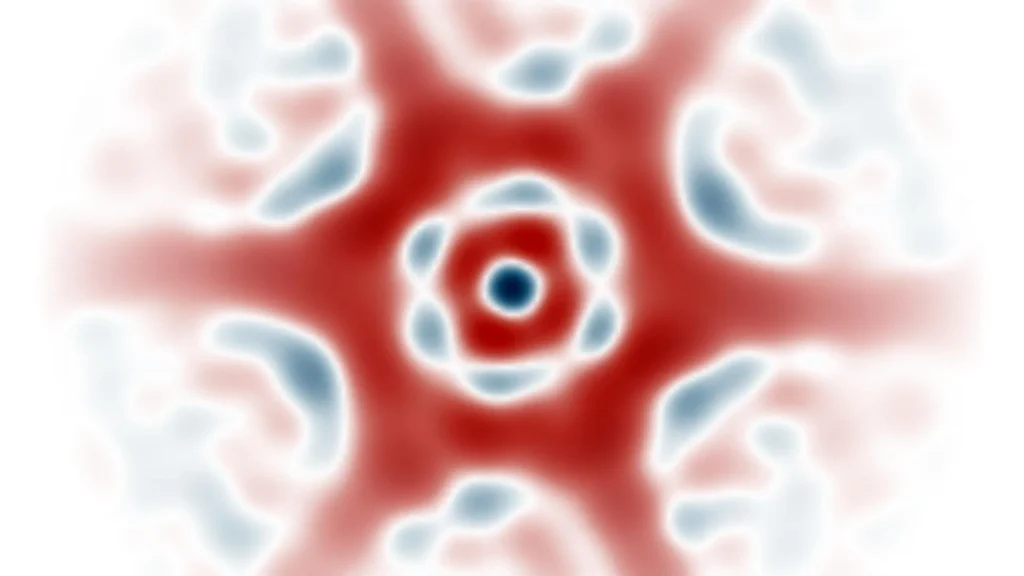
- Interference Patterns: The reconstructed states exhibited clear interference patterns. Quantum interference is a hallmark of superposition, where different parts of a quantum wave function interfere with each other, much like waves of light or water. These patterns are a definitive indicator that the system was indeed in a superposition rather than just a classical mixture of states.
- Wigner Negativity: Crucially, the states also showed regions of "Wigner negativity." The Wigner function is a quasi-probability distribution used in quantum mechanics to represent a quantum state in phase space (a space where position and momentum are plotted). For any classical system, the Wigner function is always non-negative. However, for genuinely nonclassical quantum states, the Wigner function can take on negative values in certain regions of phase space. The presence of Wigner negativity is a powerful and unambiguous criterion for nonclassicality, confirming that the experiment had successfully produced genuine quantum superpositions composed of truly nonclassical motional states that cannot be described by classical physics.
The team is now actively collaborating with theoretical physicists to better understand and quantitatively characterize exactly how "quantum" these newly created states are. This theoretical partnership is crucial for fully exploring the properties and potential applications of this novel class of superpositions. "We were really encouraged by our colleagues’ reaction when we showed them what we had made," says Dr. Raghavendra Srinivas from the Department of Physics at the University of Oxford, who supervised the groundbreaking work. "We believe we’re still scratching the surface of what’s possible, both for practical applications and for understanding these states at a more fundamental level."
Implications for Quantum Computing: Towards Error Resilience
The research by the Oxford team points toward a future generation of quantum technologies that may rely on the richer possibilities offered by quantum oscillators, moving beyond the sole reliance on simple two-state quantum bits. One of the most promising and impactful applications lies in the field of quantum computing.
Current quantum computers, whether based on superconducting qubits, trapped ions, or photonic systems, face significant challenges from decoherence and environmental noise, leading to high error rates. Quantum error correction is a vital but resource-intensive strategy to mitigate these errors, typically requiring many physical qubits to encode a single logical qubit. The new types of quantum states demonstrated by Oxford researchers may offer a more inherent resistance to certain types of errors, potentially supporting simpler and more effective error-correction strategies.
Specifically, these "oscillator states" could be highly valuable for continuous variable (CV) quantum computing. Unlike discrete variable (DV) quantum computing which uses qubits (0 or 1), CV quantum computing utilizes continuous properties of quantum systems, such as the amplitude and phase of light, or the position and momentum of an oscillator. Error correction in CV systems often involves encoding information in highly nonclassical states like squeezed states and their superpositions. By creating such robust and controllable nonclassical superpositions, the Oxford work provides a crucial experimental platform for developing and testing CV quantum error correction codes, which could be more resource-efficient or resilient to specific noise channels than their DV counterparts. This could significantly accelerate the path towards fault-tolerant quantum computers, which are essential for tackling complex problems like drug discovery, materials science, and advanced cryptography.
Broader Horizons: Quantum Sensing and Fundamental Physics
Beyond quantum computing, the development of these novel quantum superpositions holds profound implications for other areas of quantum technology and fundamental science.
-
Quantum Sensing: The ability to generate and control highly nonclassical states can dramatically enhance the precision of quantum sensors. For instance, sensors that measure tiny changes in magnetic fields, gravity, or time often rely on the quantum properties of atoms or light. By employing superpositions of squeezed states, which possess reduced quantum noise in specific variables, it is possible to achieve measurement sensitivities that surpass the standard quantum limit, leading to ultra-precise atomic clocks, gravimeters, and accelerometers. Such advancements could have revolutionary impacts on navigation, medical imaging, and fundamental physics experiments seeking to detect gravitational waves or dark matter.
-
Fundamental Physics: The research also provides an entirely new experimental platform for investigating one of physics’ biggest and most enduring questions: where the boundary lies between the classical world we experience and the underlying quantum reality that governs it. Schrödinger’s cat paradox highlights this tension – why do macroscopic objects not appear to exist in superpositions in our everyday lives? By creating increasingly complex and "macroscopic" quantum superpositions of nonclassical states, researchers can probe the limits of quantum mechanics and test theories of quantum-to-classical transition, such as decoherence models. These experiments offer invaluable insights into how quantum weirdness gives way to classical predictability, helping to refine our understanding of the universe’s most basic rules.
The Road Ahead: Theoretical Deep Dive and Practical Realization
The immediate next steps for the Oxford team involve a deeper theoretical analysis of the generated states. Quantifying the "quantumness" and characterizing the unique properties of these superpositions will be crucial for fully harnessing their potential. The collaboration with theoretical physicists aims to provide a comprehensive understanding of the new states’ resilience to noise, their computational power, and their suitability for various quantum information tasks.
Looking further ahead, the long-term vision is to integrate these nonclassical superpositions into larger quantum systems, potentially leading to the development of quantum processors that leverage the full continuous spectrum of quantum mechanics rather than just discrete qubits. This research not only pushes the boundaries of our understanding of quantum mechanics but also lays foundational groundwork for a new generation of quantum technologies that could redefine our technological capabilities in computing, sensing, and fundamental scientific exploration. The achievement by the University of Oxford team marks a significant milestone, underscoring the relentless pursuit of knowledge at the quantum frontier and its profound potential to reshape the future.