The labyrinthine path from nascent idea to thriving startup is replete with unforeseen challenges and critical junctures. For aspiring entrepreneurs, the invaluable insights gleaned from those who have navigated this journey successfully serve as both a practical guide and a potent source of inspiration. Recognizing this profound need, the Massachusetts Institute of Technology’s Department of Mechanical Engineering (MechE) has launched a groundbreaking new course, “Founder’s Journey: Launching and Scaling Hardware Startups” (2.S977/2.S979), designed to immerse students in the real-world complexities of building and growing hardware-focused companies. First held in Spring 2025, this pioneering initiative aims to tap into MIT’s rich legacy of innovation, directly connecting current students with a formidable network of alumni founders who have shaped industries ranging from robotics and 3D printing to advanced materials and consumer electronics.
Cultivating the Next Generation of Hardware Innovators
The genesis of the “Founder’s Journey” course stems from a strategic vision within MIT MechE to amplify entrepreneurial interest and accelerate the global deployment of MechE-born technologies. John Hart, the Class of 1922 Professor and head of the Department of Mechanical Engineering, articulated the department’s ambition, stating, “There are so many amazing entrepreneurial stories among our alumni. We want to bring those stories to our students and our community and build networks with our incredible alumni founders.” He emphasized the dual objective of the course and other new programs: “We want to cultivate interest in entrepreneurship among our students and expand opportunities to bring MechE-born technologies to the world.” This sentiment underscores MIT’s proactive approach to translating cutting-edge research and intellectual capital into tangible, world-changing solutions. The focus on hardware startups is particularly pertinent, given the mechanical engineering discipline’s inherent connection to physical products and systems. Unlike software ventures, hardware companies typically face distinct challenges related to manufacturing, supply chain management, capital intensity, and longer development cycles, making specialized guidance crucial.
MIT’s profound impact on the global entrepreneurial landscape is well-documented. A 2015 report on MIT’s global entrepreneurial impact revealed that over 30,000 active companies founded by MIT alumni worldwide collectively employ some 4.6 million people. This staggering figure highlights the institution’s unparalleled ability to foster innovation and economic growth. The report, while several years old, serves as a powerful testament to the enduring entrepreneurial spirit cultivated within MIT’s academic ecosystem and suggests an even greater impact today. Marina Hatsopoulos SM ’93, the founding CEO of Z Corp., an early market leader in 3D printing, and a co-leader of the new course, highlighted one of its core aims: to demystify the entrepreneurial process. “So much of this has been done before. I want them to understand that this is a well-trod path,” she affirmed. This perspective aims to empower students by showing them that while the journey is challenging, it is not an uncharted wilderness, and a wealth of accumulated experience exists to guide them.
The "Founder’s Journey": A Deep Dive into Hardware Startup Realities
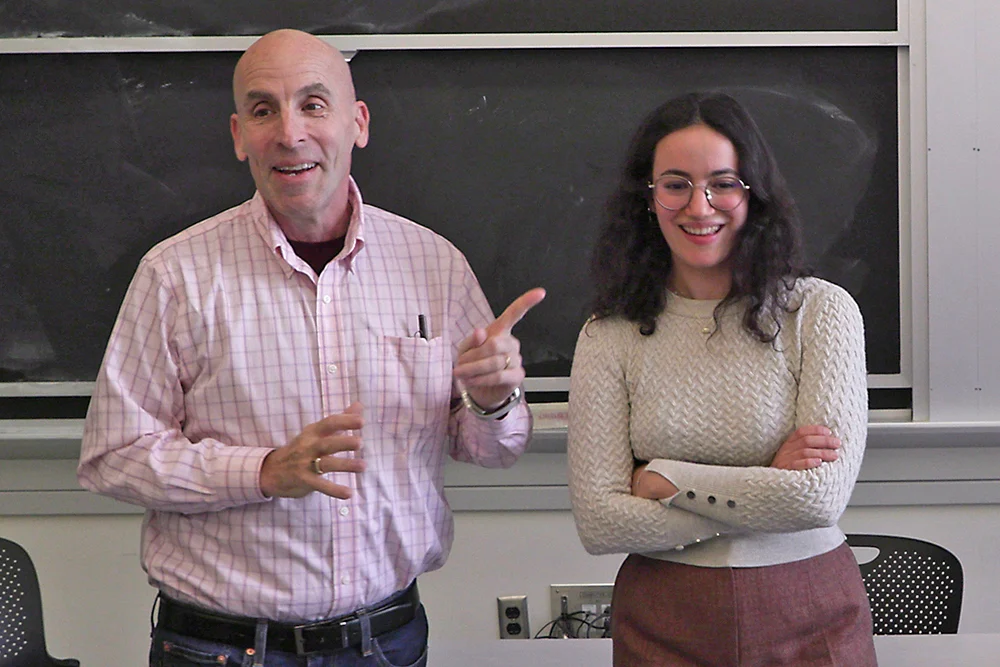
The "Founder’s Journey" course is meticulously structured to provide an immersive and practical learning experience. Co-led by Hatsopoulos and Ken Zolot, a senior lecturer at MIT, the curriculum delves into the multifaceted, real-life challenges inherent in launching and scaling hardware technologies. The inaugural Spring 2025 class was designed to "find and activate their entrepreneurial energy" by examining the trials and triumphs faced by founders and their teams across various stages of company development. These stages span the entire lifecycle of a hardware startup, from initial ideation and fundraising to navigating complex supply chain development, intellectual property, product-market fit, manufacturing scale-up, and market entry.
Each week of the semester-long course was dedicated to a specific key challenge, presented by the instructors and illuminated by insights from a distinguished guest speaker. These speakers were exclusively founders of highly successful companies operating in diverse frontier technologies, including robotics, sustainable energy solutions, advanced 3D printing, innovative consumer products, and deep tech. This direct engagement with seasoned entrepreneurs allows students to gain firsthand perspectives on critical decision-making, problem-solving strategies, and resilience in the face of adversity. Students were actively involved in preparing probing questions for the speakers, participating in dynamic follow-on discussions, and engaging in reflective exercises throughout the semester, ensuring a deeply interactive and experiential learning environment. This pedagogical approach moves beyond theoretical frameworks, offering a tangible connection to the practicalities and nuances of startup life, something particularly vital in the capital-intensive and often complex world of hardware.
Illuminating the Path: Voices from MIT’s Entrepreneurial Elite
The strength of the "Founder’s Journey" course lies significantly in its unparalleled access to MIT’s extensive network of alumni founders. The roster of guest speakers reads like a "who’s who" of modern industrial and technological innovation, providing students with a unique opportunity to learn from the architects of some of the world’s most transformative companies. Beyond Marina Hatsopoulos, speakers included Mick Mountz (Kiva Systems, acquired by Amazon), Jon Hirschtick (SolidWorks, Onshape), Max Lobovsky (Formlabs), Elise Strobach (AeroShield), Greg Mark (Markforged), Seemantini Nadkarni (Coalesenz), Eran Egozy (Harmonix), Renuka Babu (DOTS Technology), Davide Marini (Inkbit), Loewen Cavill (Amira), and Colin Angle (iRobot). John Hart himself, a co-founder of VulcanForms, also shared his experiences, demonstrating the practical application of MechE-born technologies. The narratives shared by these founders offer invaluable lessons on perseverance, strategic pivots, and the unwavering belief required to transform audacious visions into reality.
Colin Angle: From MIT Dorm to Robotics Revolution
Colin Angle ’89, SM ’91, co-founder and former CEO of iRobot, and now CEO and co-founder of Familiar Machines and Magic, epitomizes the MIT spirit of hands-on creation. Angle’s passion for building manifested early, noting, “This idea that you can create something from nothing, that you can have an idea and not just draw it, but build it and make it real, is something I’ve always loved.” He credits MIT’s “strong, hands-on ethos” with powerfully resonating with this inclination. His entrepreneurial journey began amidst a vibrant, albeit informal, startup culture within the Alpha Delta Phi Fraternity house at MIT, where he observed several multimillion-dollar companies emerge from his fraternity brothers’ endeavors. This direct exposure, he recounted, significantly demystified the startup process.
iRobot, which Angle co-founded in his living room, did not begin with a specific product but with a grand, almost philosophical vision: “We’re supposed to have robots. So, if not us, who? And if not now, when? It was a magical day.” This foundational belief propelled iRobot beyond its most famous product, the Roomba autonomous robotic vacuum cleaner. Over the years, the company developed critical technologies for diverse applications, deploying PackBot tactical mobile robots to Afghanistan, which saved thousands of lives, and even exploring the Great Pyramid in Giza live on National Geographic. Angle’s journey underscores the power of a compelling vision and the ability to scale impact far beyond individual capabilities. He shared, “The joy I have taken from my entrepreneurial journey has been the ability to build bigger things, from building teams to building a company capable of building something far beyond what I could have ever imagined doing myself… we created inventions that no one thought possible, simply because we believed we could.” His story illustrates how a strong mission, combined with MIT’s engineering prowess, can lead to globally recognized innovation and societal benefit.
Elise Strobach: Pioneering Sustainable Materials with AeroShield
Elise Strobach SM ’17, PhD ’20, CEO and co-founder of AeroShield Materials, represents the cutting edge of materials science entrepreneurship. Co-founded with Kyle Wilke PhD ’19 and Aaron Baskerville-Bridges SM ’20, MBA ’20, AeroShield develops super-insulating transparent window inserts based on advanced transparent silica aerogels. Strobach’s work originated during her PhD studies in Professor Evelyn Wang’s lab, where the seed of her entrepreneurial journey was unknowingly planted. “I wasn’t thinking of myself as an entrepreneur at that time, but looking back, that’s definitely where that seed was planted,” she reflected. Her experience highlights how deep scientific research can organically evolve into commercial ventures when combined with an entrepreneurial mindset.
AeroShield’s innovation addresses a long-standing limitation of aerogels, materials invented almost a century ago and first commercialized by NASA for space equipment insulation. Traditional aerogels possessed a hazy blue tint, restricting their widespread application. Strobach and her team developed a completely transparent aerogel, opening a myriad of new everyday uses, particularly in energy-efficient building materials. This breakthrough is not only technologically significant but also holds substantial environmental implications, contributing to reducing energy consumption in buildings. The company recently achieved a notable milestone with their work displayed at the Smithsonian National Air and Space Museum, a testament to their impact. Strobach’s advice to aspiring founders is pragmatic and encouraging: “You don’t have to know everything to start. You just have to know that this is what you want to do and just get started.” Her narrative underscores the importance of problem-solving freedom and continuous pursuit of optimal solutions within the entrepreneurial framework.
Maxim Lobovsky: Disrupting 3D Printing with Formlabs
Maxim Lobovsky SM ’11, CEO and co-founder of Formlabs, exemplifies disruptive innovation in the rapidly evolving field of 3D printing. Already engaged with 3D printers before his time at the MIT Media Lab, Lobovsky, along with fellow Media Lab graduates David Cranor SM ’11 and Natan Linder SM ’11, identified a critical market gap. At a time when professional 3D printers were prohibitively expensive, often costing $100,000 or more, Formlabs set out to develop a high-quality, professional-level 3D printer at a fraction of the cost, starting around $3,000, and with enhanced ease of use. “We definitely built Formlabs in a classic, disruptive innovation path,” Lobovsky stated.
Their significant cost reduction was achieved through a combination of ingenious engineering and strategic component sourcing. This included replacing outdated 1980s technology with modern consumer electronics components, such as the laser diodes initially developed for Blu-ray Disc players. Lobovsky’s journey also offers a candid look into the arduous process of fundraising. The team participated in MIT’s 100K competition and pitched their idea to numerous potential investors with initial limited success. Their pivotal moment arrived serendipitously: “As someone who is naturally introverted, shy engineer… a really important lesson [was] that, sometimes, you can get lucky,” he recalled. A chance overheard conversation at a restaurant between Lobovsky and an initial investor (whose pitch wasn’t going well) caught the attention of Mitch Kapor, the founder of Lotus Software and a PC industry pioneer. Kapor subsequently led Formlabs’ crucial first round of funding. Today, Formlabs stands as the world’s largest supplier of professional stereolithography and selective laser sintering 3D printers, a testament to their disruptive vision and the occasional fortunate twist of fate.
Jon Hirschtick: Architecting the Future of Product Design
Jon Hirschtick ’83, SM ’83, co-founder of SolidWorks and Onshape, has dedicated over four decades to the field of computer-aided design (CAD) software, beginning as an intern at MIT in 1981. His entrepreneurial inclination surfaced during his undergraduate years. “I had heard about startups, and it sounded like a lot of things that I was drawn to… a sense of being able to realize your vision, express yourself; a sense of excitement, of making money, and even the idea of a chaotic environment,” he explained. Hirschtick’s journey is deeply rooted in his conviction that the world could be a better place with the CAD software he envisioned.
He characterizes CAD as a "meta product design," a tool that enables others to design products, which he finds profoundly engaging. “We’re designing a product that other people use to design products, and that’s just really cool to me,” he said. Hirschtick views startups as a natural fit for his personality, thriving on the excitement and the challenge of solving multiple problems concurrently. He drew a parallel between the problem-solving ethos of MIT and that of a startup, noting, “MIT is a place of problem-solving… and a startup is a place where there’s lots of problems to solve.” While big companies innovate, he asserts that “startups are always doing things.” His work has had a pervasive impact, as virtually every manufactured product today is first modeled in CAD. He encourages those interested in product development to consider CAD, as it offers a gateway into global product creation. Hirschtick also offered a sobering but essential truth about entrepreneurship: “Nobody knows for sure when they start a company whether it’s going to be successful or not. If it were, if there was a way of knowing for sure, then there wouldn’t be all these classes in entrepreneurship. They’d just tell you the secret. There’s always risk. Visions and hallucinations, they look and feel the same. You only find out which is which once you really try to realize them.” This statement encapsulates the inherent uncertainty and the leap of faith required in any entrepreneurial endeavor.
MIT’s Enduring Legacy in Global Entrepreneurship
The launch of the "Founder’s Journey" course further solidifies MIT’s long-standing position as a global epicenter of innovation and entrepreneurship. The institution’s commitment to fostering a vibrant startup ecosystem extends far beyond individual courses. It is deeply embedded in its culture, research initiatives, and extensive network. Beyond MechE, MIT boasts other critical pillars supporting entrepreneurial ventures, such as the Martin Trust Center for MIT Entrepreneurship, which provides comprehensive educational programs and resources, and the MIT 100K Entrepreneurship Competition, a renowned platform for student startups to gain mentorship, visibility, and seed funding. The Deshpande Center for Technological Innovation also plays a crucial role in bridging the gap between cutting-edge research and market-ready technologies, often providing the initial push for many hardware-based innovations.
The confluence of these resources, coupled with a faculty deeply engaged in research and industry, creates an environment where transformative ideas are not only conceived but actively nurtured into viable businesses. The sheer volume of alumni-founded companies, employing millions globally, translates into significant economic impact, job creation, and technological advancement across diverse sectors. This demonstrates a continuous feedback loop: successful alumni give back through mentorship and investment, inspiring new generations of MIT innovators, thereby perpetuating the cycle of entrepreneurship.
Strategic Imperatives: Bridging Academia and Industrial Innovation
The "Founder’s Journey" course represents a strategic imperative for MIT, particularly within the Mechanical Engineering department, to address the unique demands of the "deep tech" or "hard tech" sector. While software startups can often scale rapidly with relatively lower capital expenditure, hardware ventures require substantial investment in R&D, prototyping, manufacturing infrastructure, and complex supply chains. This higher barrier to entry necessitates a more structured and informed approach, precisely what the course aims to provide. By connecting students directly with founders who have successfully navigated these intricate challenges, MIT is equipping its graduates with practical knowledge that transcends theoretical learning.
Official responses from the MIT administration, though not explicitly quoted in the original text, can be logically inferred as overwhelmingly positive and supportive of such initiatives. Investing in entrepreneurial education aligns perfectly with MIT’s mission to advance knowledge and educate students in science, technology, and other areas of scholarship that will best serve the nation and the world. Such courses not only enhance the educational experience but also strengthen MIT’s reputation as a catalyst for economic growth and technological leadership. For students, the opportunity to learn from and network with industry titans like Colin Angle or Jon Hirschtick is an invaluable differentiator, providing them with both inspiration and a pragmatic roadmap for their own ventures.
The Broader Impact: Fostering a Robust Hardware Ecosystem
The implications of the "Founder’s Journey" course extend beyond the individual students who participate. By actively fostering hardware entrepreneurship, MIT is contributing to a broader societal need for tangible technological solutions. In an era increasingly dominated by digital services, the development of advanced physical products—from robotics to sustainable energy systems and advanced manufacturing—is crucial for addressing global challenges, enhancing productivity, and creating resilient economies. The course helps to bridge the gap between academic research and industrial application, accelerating the commercialization of groundbreaking technologies that might otherwise remain confined to laboratories.
Furthermore, by emphasizing the "well-trod path" and the importance of learning from predecessors, the course helps mitigate some of the inherent risks associated with hardware startups, potentially improving their success rates. This, in turn, can attract more venture capital interest in the hard tech sector, which historically has sometimes been perceived as riskier than software. A more robust ecosystem of successful hardware startups will lead to more job creation, increased competition, and accelerated innovation cycles, ultimately benefiting consumers and industries worldwide. The "Founder’s Journey" is not merely a class; it is an investment in the future of innovation, ensuring that the next generation of engineers and scientists are not only equipped to invent but also empowered to build and scale the companies that will bring those inventions to the world. As the article originated from MechE Connects, the Department of Mechanical Engineering’s magazine, its focus on showcasing these initiatives highlights the department’s pride and strategic vision in continuing to shape the technological future.