In a landscape often dominated by established titans of horology, the vintage watch market continues to offer a captivating journey through lesser-known gems and historically significant pieces. This week’s "What’s Selling Where" column from Hodinkee highlights a diverse selection of timepieces, each with its own unique narrative, from military provenance to design innovation and enduring craftsmanship. The featured watches include a fascinating Wittnauer 235T chronograph, a strikingly minimalist Cleto Munari "Sotsy," a historically important Blancpain Fifty Fathoms Technisub, and a robust Eberhard & Co. Contograf. These selections offer collectors a glimpse into different eras of watchmaking and provide opportunities to acquire pieces with compelling stories and considerable horological merit.
Wittnauer 235T: A Chronograph with Space-Age Aspirations
The Wittnauer 235T chronograph stands as a compelling entry in the annals of watchmaking history, particularly for its connection, however indirect, to the United States’ space program. While often overshadowed by its more famous contemporaries, the 235T was one of the models submitted by Wittnauer to NASA for consideration during the early days of manned spaceflight. In 1967, a crucial period for the development of astronautical endeavors, NASA solicited proposals from ten watch manufacturers to equip its astronauts. Among the esteemed brands invited were Omega, Rolex, Wittnauer, and Hamilton. While Hamilton’s submission of a pocket watch led to its swift exclusion, and Rolex’s contribution was a reference 6238, Wittnauer’s entry remains a subject of significant interest.
Initially, the prevailing understanding within the watch enthusiast community suggested that the Wittnauer 242T, a larger-diameter, black-dialed chronograph also powered by the robust Valjoux 72 movement, was the watch presented to NASA. However, subsequent revelations from declassified NASA documents have cast a different light, pointing more definitively towards the 235T as the candidate model. This connection alone imbues the Wittnauer 235T with a significant historical cachet, appealing to collectors who value provenance and association with pivotal moments in human exploration.
The specific example currently available offers a unique opportunity to own a piece representing a transitional phase in the model’s development. Early iterations of the 235T, often referred to as "Solo" models, featured only the "Wittnauer" branding at the 12 o’clock position. This was followed by the "Wittnauer Geneve" dial, a configuration that signifies a transitional period in the model’s design evolution. The final and most commonly encountered iteration displayed "Wittnauer Professional Chronograph" at the top. While precise production numbers for each dial variation are elusive, the Wittnauer Geneve models are generally considered the least common on the market, making this particular example a potentially rare find for discerning collectors.
Despite some minor spotting on the dial, this particular Wittnauer 235T presents exceptionally well. The case retains its sharp lug bevels, a testament to careful preservation, and features the original crown. The tritium lume has developed the characteristic creamy yellow patina, a hallmark of watches from this era. The aesthetic appeal of the 235T is undeniable: the stark white dial, accented by tri-color printing, the aged tritium, and the elegant blued hands, all housed within a refined 36mm case that wears comfortably on the wrist, its lug bevels still clearly defined.

The market for 1960s chronographs, often referred to as "boomer" chronographs, has seen a recalibration since its peak several years ago. This has made watches like the Wittnauer 235T, powered by the highly regarded Valjoux 72 movement and offering exceptional wearability and historical significance, increasingly attractive as relative bargains. Typically available for under $3,000, these timepieces represent a compelling entry point into collectible chronographs. The example in question is currently fetching bids around $400, with the auction scheduled to conclude on the 8th.
Cleto Munari "Sotsy": A Study in Understated Elegance
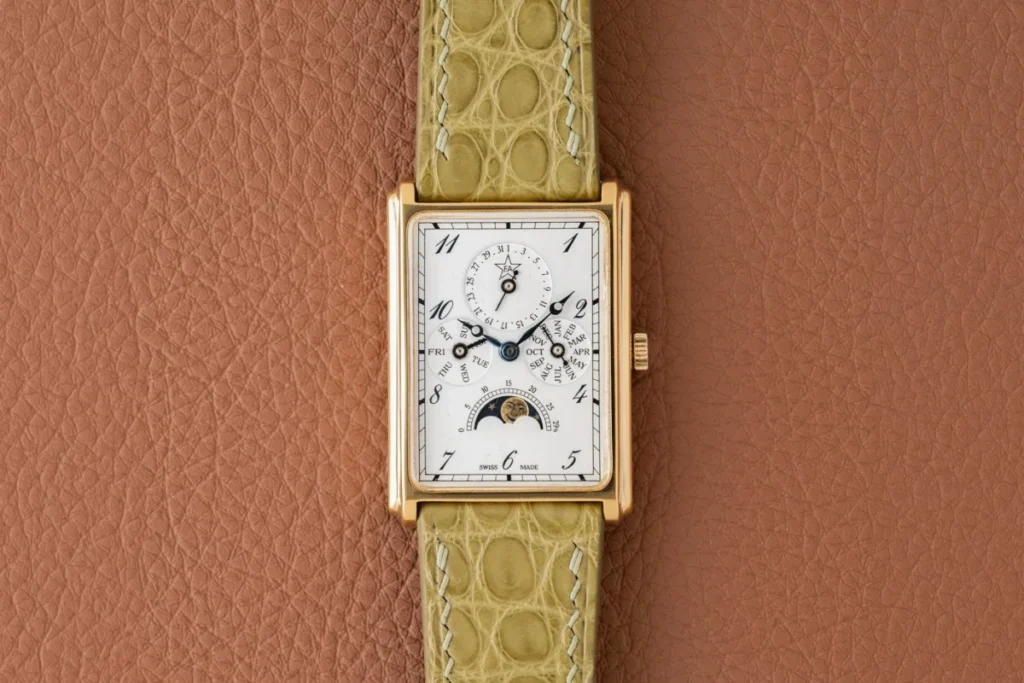
In stark contrast to the sporty and historically charged Wittnauer, the Cleto Munari "Sotsy" offers a profound exercise in minimalist design and luxurious understatement. To fully appreciate the "Sotsy," one must consider the legacy of its designer, Ettore Sottsass. Sottsass, a pivotal figure in post-modern design, was renowned for his bold, colorful, and often playful creations. His work extended across various disciplines, including furniture, architecture, and industrial design. Perhaps his most iconic design was the Olivetti Valentine typewriter, released in the late 1960s. This typewriter, with its vibrant red casing and distinctive form, became an instant design classic, finding its way into museum collections worldwide and symbolizing a departure from conventional industrial aesthetics.
Ironically, Sottsass himself reportedly expressed a degree of detachment from the Valentine, describing it as "too obvious, a bit like a girl wearing a very short skirt and too much make-up." This sentiment hints at a designer who, despite creating overtly expressive pieces, harbored a deeper inclination towards more reserved and introspective forms of beauty. The Cleto Munari "Sotsy" is a manifestation of this less flamboyant facet of Sottsass’s genius.
The "Sotsy" is an embodiment of quiet opulence. Encased in 18k gold, its design is remarkably subdued, almost mute. The dial is plain yet elegant, complemented by hands that are interesting without being ostentatious. The architectural lines of the case exude a refined austerity, creating an aura of serene sophistication. This watch feels like a whisper in a library, a stark departure from the visual clamor of some of Sottsass’s more famous works.
What truly elevates the "Sotsy" beyond its already impressive design is the meticulous attention to detail, a characteristic that Sottsass consistently applied to his creations. The buckle, in particular, stands out as a testament to this dedication. It is so seamlessly integrated with the case and bracelet that it feels like an intrinsic part of the overall design, radiating a profound sense of comfort and thoughtful craftsmanship. This is a watch where every element, from the broad strokes of the case to the finest details of the buckle, speaks to the designer’s unwavering commitment to perfection.
Such pieces are rare in the market. Relojes Vintage Mexico is offering a full-set example of this extraordinary Cleto Munari "Sotsy" for $28,000, a price point reflecting its exclusivity, precious metal construction, and the esteemed design pedigree.

Blancpain Fifty Fathoms "No Rad" Technisub: A Diver’s Icon
The Blancpain Fifty Fathoms is an undisputed legend in the realm of dive watches. Its historical significance, stemming from its development in the 1950s as one of the first purpose-built dive watches, makes it a cornerstone for any serious collector of horological history. The example featured in this week’s column is particularly noteworthy for two key details: its "No Rad" designation and its co-branding with Technisub.
The "No Rad" inscription on the dial signifies the absence of radioactive luminous materials, a transition that Blancpain, like many manufacturers, made in the early 1960s. This detail is highly sought after by collectors, as it marks a specific period in the watch’s evolution and often indicates a more refined manufacturing process. The co-signing with Technisub adds another layer of provenance. Technisub was an Italian company that supplied diving equipment and also retailed watches to divers, making this a desirable co-branded piece that speaks to the watch’s functional heritage.
Beyond its historical credentials, this particular Blancpain Fifty Fathoms is simply a stunning watch to behold. The condition of the dial and case is exceptional for a piece over 60 years old. The dial is remarkably well-preserved, and the case exhibits minimal signs of wear, a testament to its likely limited use or exceptional care. This remarkable state of preservation is not merely a matter of luck; it speaks to the inherent quality of design and construction that characterized early Fifty Fathoms models. The watch serves as a powerful reminder that well-made objects, while subject to the inevitable passage of time, can endure with remarkable grace and resilience.
This Blancpain Fifty Fathoms "No Rad" Technisub is being offered at auction on August 7th, with an estimated price range of €17,000-€20,000, reflecting its rarity, condition, and historical importance.
Eberhard & Co. Contograf: An Underrated Chronograph Gem
The Eberhard & Co. Contograf is a timepiece that, in the opinion of many enthusiasts, deserves far greater recognition within the horological community. This robust chronograph boasts a compelling set of features that make it a highly desirable vintage watch. It is presented in a 38mm stainless steel case, expertly crafted by Huguenin Frères, a renowned case maker. A key functional element is its rotating external bezel, typically configured with a 12-hour scale, which effectively allows the wearer to track a second time zone, akin to a basic GMT function.
At its heart lies the Eberhard caliber 310/82, an impressive in-house column-wheel chronograph movement. This caliber is notable not only for its sophisticated chronograph mechanism but also for its inclusion of a date function, an uncommon feature for chronographs of that era. Furthermore, this specific model features an independent date corrector conveniently located at the 9 o’clock position. The caliber 310/82 also found its way into the Doxa T-Graph, where it was known as the Doxa 287, underscoring its shared mechanical excellence across brands.
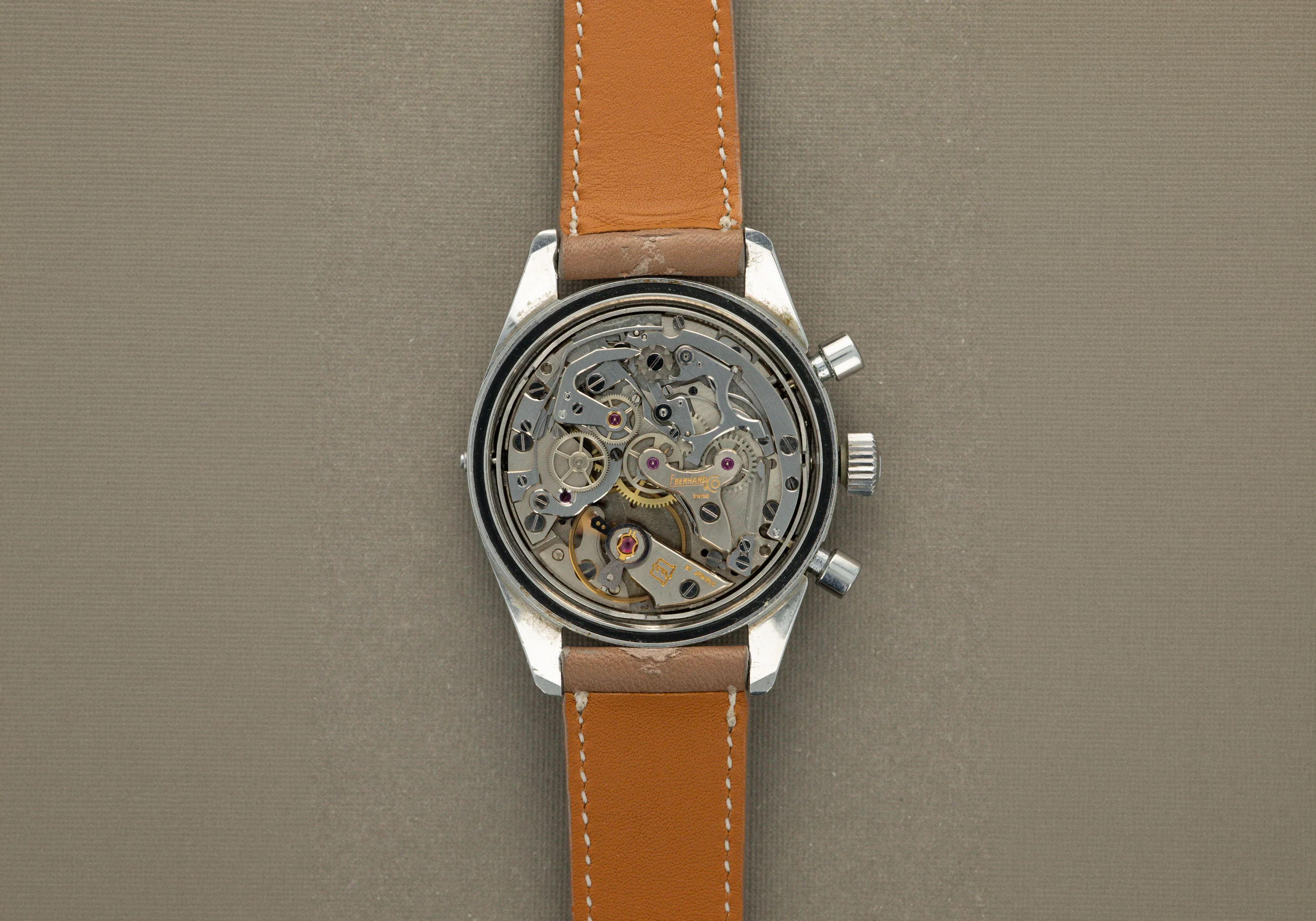
While not entirely overlooked, Contografs are relatively rare and command prices that reflect their scarcity. The model’s enduring appeal was recognized in 2014 with a reissue. However, for many, the original vintage piece holds a particular charm that a modern interpretation, despite its own merits, cannot entirely replicate. The 2014 reissue, with its 42mm diameter and considerable thickness, has only served to heighten the desirability of the more svelte and historically authentic vintage models.
Oliver & Clarke is currently offering a particularly attractive non-luminous variant of the Eberhard Contograf. This example features a beautifully brushed steel dial and a case that appears remarkably well-preserved, showing minimal signs of wear, especially considering its nearly 60 years of existence. The asking price of $13,850 for this exceptional timepiece is fully justified by its condition, rarity, and the inherent quality of its design and mechanics, making it a strong contender for collectors seeking a sophisticated and historically significant chronograph.
A Note on Provenance and Market Dynamics
The fluctuating market for vintage watches is a dynamic landscape. While certain iconic models may experience periods of intense speculation, often leading to unsustainable price peaks, other watches, like those highlighted here, offer enduring value and horological substance. The availability of these pieces through reputable dealers and auction houses provides collectors with a degree of confidence in their authenticity and condition.
The inclusion of items like the Tiffany & Co. jump hour watch, while ultimately flagged as a potential issue due to dating discrepancies in its movement and case, serves an educational purpose. It underscores the importance of thorough due diligence and the need to scrutinize every detail, from the hallmarks on a caseback to the provenance of a movement. The vigilance of collectors and experts, such as @jumphourking in this instance, is crucial in maintaining the integrity of the vintage watch market and ensuring that collectors are making informed decisions.
In conclusion, this selection of watches—the historically significant Wittnauer 235T, the elegantly minimalist Cleto Munari "Sotsy," the iconic Blancpain Fifty Fathoms Technisub, and the robust Eberhard Contograf—demonstrates the breadth and depth of the vintage watch market. Each timepiece offers a unique narrative, a testament to different eras of design, innovation, and craftsmanship, providing compelling opportunities for collectors to engage with horological history in tangible and aesthetically pleasing ways.