The industrial manufacturing sector is currently witnessing a transformative shift in the production of high-performance materials, particularly with the introduction of innovative additive manufacturing techniques for tungsten carbide-cobalt (WC-Co) cemented carbides. Traditionally known for its extreme hardness, wear resistance, and durability under intense pressure, WC-Co has long been the gold standard for cutting tools, drill bits, and heavy-duty machining equipment. However, the very properties that make it indispensable also make it notoriously difficult and expensive to process. A recent breakthrough by researchers at Hiroshima University, in collaboration with Mitsubishi Materials Hardmetal Corporation, has demonstrated that additive manufacturing—commonly referred to as 3D printing—can successfully produce these materials while significantly reducing waste and maintaining industrial-grade hardness.
The Industrial Significance of Tungsten Carbide-Cobalt
To understand the weight of this development, one must first look at the role of tungsten carbide in the global economy. Often referred to as "industrial diamond," WC-Co is a composite material where tungsten carbide particles provide the hardness, while a cobalt binder provides the toughness and metallic bonding necessary to prevent the material from shattering under impact. This combination is vital for industries ranging from aerospace and automotive manufacturing to mining and construction.
The global market for cemented carbides is valued in the billions of dollars, driven by the constant need for tools that can operate at high speeds and withstand the heat generated by friction. However, the supply chains for the raw materials—tungsten and cobalt—are frequently subject to volatility. Both elements are classified as critical raw materials by various governments due to their limited geographic availability and the high cost of extraction. Consequently, any manufacturing process that can maximize the utilization of these materials is of paramount strategic importance.
The Limitations of Traditional Powder Metallurgy
For decades, the primary method for producing WC-Co parts has been powder metallurgy. This process involves mixing fine powders of tungsten carbide and cobalt, pressing them into a specific shape under immense pressure, and then sintering them in a furnace. During sintering, the material is heated to a point where the cobalt melts and "wets" the carbide particles, bonding them into a solid mass without fully melting the tungsten carbide itself.
While effective, powder metallurgy has several inherent drawbacks. First, it is largely restricted to relatively simple geometries. Producing complex internal channels or intricate external shapes often requires extensive post-process machining using diamond-tipped tools, which is both slow and expensive. Second, the process is inherently wasteful. In many cases, a significant percentage of the raw material is ground away or discarded during the final shaping stages. Given the high cost of tungsten and cobalt, this "buy-to-fly" ratio—the weight of the starting material versus the weight of the finished part—is a major economic hurdle.
The Additive Manufacturing Breakthrough
The research team, led by Assistant Professor Keita Marumoto of Hiroshima University’s Graduate School of Advanced Science and Engineering, sought to bypass these limitations by utilizing additive manufacturing (AM). Unlike subtractive methods, AM builds components layer by layer, placing material only where it is functionally required. This "near-net-shape" capability holds the potential to revolutionize the cost structure of carbide tool production.
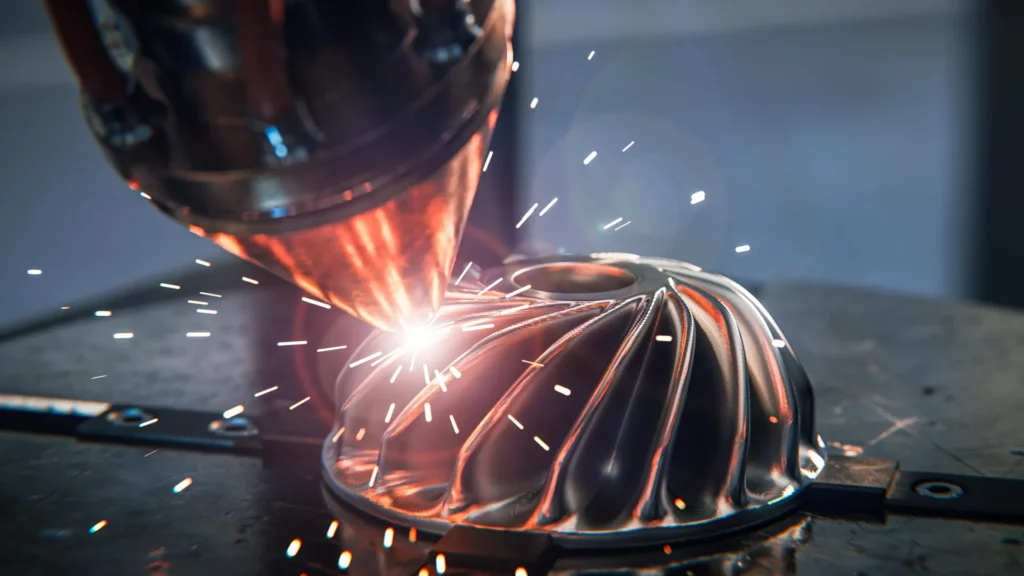
The specific technique employed in this study is known as hot-wire laser irradiation, or laser hot-wire welding. This process utilizes a high-energy laser beam to create a melt pool on a substrate, while a filler wire—in this case, a cemented carbide rod—is fed into the pool. What distinguishes this method from standard laser cladding is the "hot-wire" component: the filler wire is preheated by an electrical current before it reaches the laser’s focal point.
This preheating serves two critical functions. First, it increases the deposition rate, allowing parts to be built much faster than traditional 3D printing methods. Second, it reduces the amount of laser energy required to incorporate the filler material into the structure. This precise energy management is crucial when dealing with WC-Co, as excessive heat can lead to the decomposition of the tungsten carbide into less desirable chemical phases.
Experimental Methodology: Rod-Leading vs. Laser-Leading
The researchers conducted a series of rigorous tests to determine the optimal configuration for building carbide structures. They experimented with two primary fabrication arrangements:
- The Rod-Leading Method: In this setup, the cemented carbide filler rod was positioned ahead of the laser beam in the direction of travel. The laser was directed primarily onto the top of the rod.
- The Laser-Leading Method: Here, the laser beam preceded the filler rod, irradiating the space between the bottom of the rod and the base material (an iron substrate).
The experiments revealed that the spatial relationship between the heat source and the material significantly influenced the quality of the final product. In the rod-leading method, the researchers observed that the tungsten carbide tended to decompose near the upper portion of the manufactured structure. This decomposition often results in the formation of W2C (ditungsten carbide), which is more brittle and less stable than the desired WC phase, leading to microscopic defects and reduced structural integrity.
The laser-leading method showed more promise in terms of structural consistency but initially struggled to achieve the necessary hardness levels. This led the team to implement a series of metallurgical refinements to stabilize the process.
Overcoming Metallurgical Challenges: The Nickel Buffer and Thermal Control
One of the most significant challenges in 3D printing carbides onto a different substrate (such as iron) is the risk of dilution and cracking. To address this, the team introduced a nickel alloy-based middle layer. This buffer layer served to accommodate the thermal expansion differences between the base material and the cemented carbide, effectively preventing the formation of large cracks during the cooling phase.
Furthermore, the team focused on strict thermal management. The goal was to reach a temperature high enough to soften the material and melt the cobalt binder (which has a melting point of approximately 1,495°C) without reaching the point of "grain growth." Grain growth occurs when the microscopic crystals of tungsten carbide merge and expand, a phenomenon that drastically reduces the material’s hardness.
By maintaining the temperature within a specific window—above the cobalt melting point but below the threshold for rapid grain growth—the researchers were able to preserve the original microstructure of the carbide particles. This "softening over melting" philosophy is the cornerstone of their successful approach.
Data Analysis and Hardness Verification
The success of the experiment was validated through Vickers hardness testing (HV), a standard industrial metric for measuring a material’s resistance to indentation. Conventionally manufactured WC-Co tools typically exhibit hardness values ranging from 1,200 to 1,600 HV, depending on the cobalt content and grain size.
The Hiroshima University study achieved a breakthrough by producing a 3D-printed carbide structure with a hardness exceeding 1,400 HV. To put this in perspective:
- Standard Structural Steel: ~200 HV
- Hardened Tool Steel: ~600–900 HV
- WC-Co (The Study’s Result): >1,400 HV
- Sapphire: ~2,000 HV
- Diamond: ~10,000 HV
The achievement of 1,400 HV without significant defects or decomposition signifies that the additive manufacturing process can indeed match the performance of traditional powder metallurgy. This data point is critical for industrial adoption, as manufacturers will not switch to AM unless the resulting tools can survive the same rigorous cutting and drilling environments as their predecessors.
Collaborative Effort and Official Responses
The study was a collaborative effort between academia and industry, featuring contributions from Motomichi Yamamoto of Hiroshima University and a team of specialists from Mitsubishi Materials Hardmetal Corporation, including Takashi Abe and Akio Nishiyama. This partnership highlights the practical, market-driven nature of the research.
"Cemented carbides are extremely hard materials used for cutting tool edges and similar applications, but they are made from very expensive raw materials such as tungsten and cobalt, making reduction of material usage highly desirable," Assistant Professor Keita Marumoto explained. "By using additive manufacturing, cemented carbide can be deposited only where it is needed, thereby reducing material consumption."
Marumoto also emphasized the broader potential of their findings: "The approach of forming metal materials by softening them rather than fully melting them is novel, and it has the potential to be applied not only to cemented carbides, which were the focus of this study, but also to other materials."
Broader Implications: Sustainability and Economics
The implications of this research extend far beyond the laboratory. From a sustainability perspective, the ability to "print" carbide only on the high-wear surfaces of a tool—rather than making the entire tool out of the expensive material—could lead to a dramatic reduction in the demand for mined tungsten and cobalt. This supports a "circular economy" model where tools can also be repaired or resurfaced using AM, rather than being discarded when a single edge is worn down.
Economically, this process could lower the barrier to entry for producing custom, high-performance tools. Currently, creating a one-off carbide mold or a specialized cutting tool via powder metallurgy is cost-prohibitive due to the need for custom molds and expensive finishing. Additive manufacturing allows for rapid prototyping and small-batch production of complex designs that were previously impossible to manufacture.
Future Outlook and Challenges
While the results are a major step forward, the researchers acknowledge that the technology is not yet ready for mass industrial deployment. Several hurdles remain, including:
- Residual Stress and Cracking: While the nickel buffer layer helped, managing internal stresses in larger, more complex 3D-printed carbide parts remains a challenge.
- Geometric Complexity: The current study focused on rods and layers; the next phase will involve printing more intricate shapes required for modern machining.
- Process Scaling: Moving from a controlled laboratory environment to a high-volume factory floor requires further refinement of the laser hot-wire systems.
The team’s future work will focus on these areas, with a particular emphasis on producing practical cutting tools and testing the process with alternative binder materials to further reduce reliance on cobalt, which is often associated with ethical and environmental concerns in its mining regions.
In conclusion, the successful application of hot-wire laser irradiation to tungsten carbide-cobalt marks a pivotal moment in materials science. By reconciling the extreme hardness of carbides with the flexibility and efficiency of additive manufacturing, the researchers have laid the groundwork for a more sustainable, cost-effective, and innovative future for the global tooling industry.