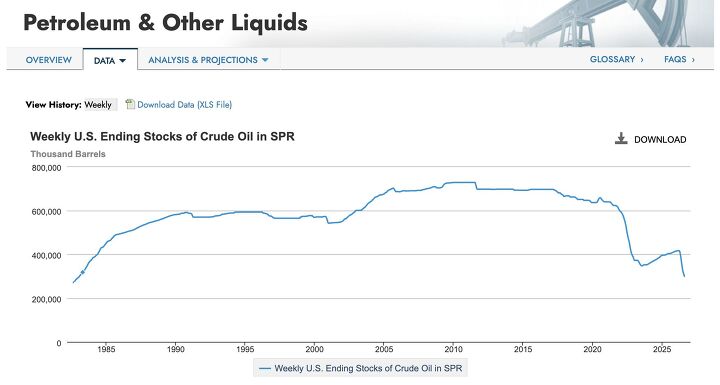
The United States Strategic Petroleum Reserve (SPR), a critical national asset designed to safeguard against severe energy disruptions, is reportedly approaching a perilous threshold. Repeated drawdowns of its crude oil inventory have depleted the reserves to approximately 243 million barrels, a level not seen in four decades. This significant reduction raises concerns about the long-term viability of the underground salt caverns used for storage and the nation’s ability to respond to future energy crises.
The current inventory marks the first time since 1983 that the SPR’s holdings have dipped below the 300-million-barrel benchmark. These substantial releases have been attributed, in part, to efforts to stabilize global energy markets amidst geopolitical tensions, including the ongoing conflict in Iran, which has seen the U.S. release an estimated 172 million barrels. While intended to alleviate immediate price pressures and supply concerns, these consistent withdrawals are now casting a shadow over the physical integrity of the SPR’s storage infrastructure.
The Unique Architecture of the Strategic Petroleum Reserve
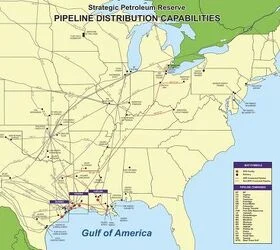
The SPR’s storage capacity is ingeniously housed within 60 massive salt caverns, excavated thousands of feet beneath the surface across four primary facilities strategically located along the Gulf Coast in Texas and Louisiana. These natural geological formations, known as salt domes, provide an ideal environment for storing large quantities of crude oil due to their inherent stability and impermeability.
The process of retrieving oil from these subterranean reservoirs is a testament to sophisticated engineering. It relies on a principle known as fluid displacement. To extract the lighter crude oil, freshwater is pumped directly into the caverns. This influx of water exerts pressure, forcing the crude oil upward towards the surface, where it can be siphoned off by pumps. This method has proven effective for decades, allowing for the controlled release of oil when national needs demand it.
Emerging Risks: The Peril of Thinning Oil and Sedimentation
However, this extraction method also presents inherent risks, particularly as oil levels dwindle. As the top layer of crude oil thins, there is an increasing likelihood that sludge and sediment, which naturally accumulate at the cavern floor, can be drawn into the extraction intakes. This influx of particulate matter poses a significant threat to the delicate surface infrastructure, including pipes and pumps, potentially leading to damage and operational disruptions.
Furthermore, the repeated cycle of drawing down oil and refilling the caverns with water has raised concerns about the structural integrity of the salt caverns themselves. A report by the Government Accountability Office (GAO) highlighted these risks, noting that "repeated partial drawdowns followed by refill can leach a single part of a cavern repeatedly, leading to undesirable shapes." This repeated process, according to the GAO, can alter the geometry of the caverns, potentially compromising their long-term stability.

A History of Drawdowns and a Lack of Long-Term Strategy
The SPR has a history of being tapped to address various energy market fluctuations. In 2022, for instance, the Biden administration authorized the release of 180 million barrels in response to Russia’s invasion of Ukraine, a move aimed at global market stabilization. While the GAO acknowledged that most caverns were in "very good condition" following this large-scale drawdown, the report also cautioned about the cumulative effects of such operations.
"However, every drawdown cycle expands cavern volume and reduces the spacing between caverns within the salt dome, which ultimately reduces their long-term viability," the GAO stated. This indicates a fundamental concern about the cumulative stress placed on the salt dome formations over time. The repeated expansion of cavern volume and the subsequent reduction in the protective salt pillars separating adjacent chambers significantly increase the risk of structural failure.
A critical factor contributing to the current situation is the apparent lack of a unified, long-term strategic plan for managing the SPR. While Congress and the Department of Energy (DOE) are responsible for its oversight, the GAO’s findings suggest a deficiency in cohesive planning that addresses the long-term implications of reserve drawdowns and replenishment strategies. This absence of a comprehensive roadmap for the SPR’s future operations leaves the nation vulnerable to unforeseen consequences.
The Science of Salt Cavern Degradation
The scientific principles behind the degradation of salt caverns are rooted in the interaction between brine (saltwater) and rock salt. When freshwater is injected, it dissolves the surrounding salt walls. This dissolution process can lead to several undesirable changes within the cavern:
- Flattening of Cavern Roofs: The upward dissolution of salt can cause the roofs of the caverns to become flatter, potentially weakening their structural integrity.
- Thinning of Protective Salt Pillars: The salt formations that act as natural pillars, separating adjacent caverns, can be eroded. This thinning reduces the buffer zone between chambers, increasing the risk of interconnected failures.
- Cavern Volume Expansion: Each drawdown and refill cycle, by dissolving salt, inherently expands the overall volume of the cavern. While this might seem to increase storage capacity in the short term, it also strains the surrounding geological structure.
These physical changes significantly elevate the risk of catastrophic events, such as massive ceiling collapses within the caverns or localized geological cave-ins that could compromise the entire storage facility.
The Minimum Viable Reserve and Operational Limits
The Department of Energy has stated that maintaining internal pressure within the caverns is crucial and that replacing extracted oil with water helps achieve this. However, engineers familiar with the SPR’s operations warn that these measures may not be sufficient to counteract the long-term degradation. A critical operational threshold for the SPR is the maintenance of at least 70 million barrels of oil. This minimum volume is essential to ensure that the extraction pipes remain submerged in oil, rather than water. If the oil level drops below this point, the pipes could draw in water, which is not only inefficient for extraction but also poses a greater risk of sediment contamination.
The original design of the SPR, established in 1975, envisioned a system capable of handling a maximum of five complete drawdown-and-refill cycles throughout its operational lifespan. This conservative design reflected an understanding of the geological stresses involved. However, over the past four decades, successive administrations have drawn upon the reserves dozens of times. These drawdowns have been implemented to manage short-term price spikes, respond to supply disruptions caused by geopolitical events, and address domestic energy emergencies. This continuous utilization has far exceeded the initial design parameters, placing unprecedented strain on the aging infrastructure.
Geopolitical Context and Historical Precedents
The history of the SPR’s utilization is intrinsically linked to global energy dynamics and geopolitical events. Established in the wake of the 1973 oil crisis, the SPR was designed to provide a buffer against the volatility of international oil markets and to deter potential oil embargoes. Its strategic importance has been underscored during various global crises, including:
- The 1979 Energy Crisis: Following the Iranian Revolution, the SPR was partially drawn down to mitigate supply shortages.
- The First Gulf War (1990-1991): The SPR played a role in ensuring market stability during the conflict in the Middle East.
- Hurricane Katrina (2005): The SPR was tapped to help alleviate supply disruptions caused by the devastating hurricane.
- The COVID-19 Pandemic and Subsequent Geopolitical Events: More recently, the SPR has been used in response to the economic fallout from the pandemic and the ongoing conflict in Ukraine.
Each of these drawdowns, while serving a critical immediate purpose, contributes to the cumulative wear and tear on the SPR’s infrastructure. The current inventory level represents a significant departure from its intended role as a long-term strategic reserve, highlighting a recurring tension between immediate market management and long-term infrastructure preservation.
Implications for National Energy Security
The declining inventory and the potential degradation of the SPR’s storage capacity carry significant implications for U.S. national energy security. A compromised SPR would diminish the nation’s ability to respond effectively to future severe energy disruptions, such as major supply outages, natural disasters impacting energy infrastructure, or renewed geopolitical crises that threaten global oil flows.
The potential for permanent damage to the salt caverns raises questions about the SPR’s long-term viability and the cost of remediation or replacement. If these caverns become unusable, the nation would lose a significant portion of its strategic oil storage capacity, necessitating potentially costly and time-consuming alternatives.
Furthermore, the perception of a weakened SPR could embolden adversaries and create uncertainty in global energy markets, potentially leading to increased price volatility. The SPR serves not only as a physical reserve but also as a psychological deterrent, signaling to the world that the U.S. has the capacity to weather energy storms.
Moving Forward: The Need for a Comprehensive Strategy
The current situation underscores the urgent need for a comprehensive, bipartisan strategy for the Strategic Petroleum Reserve. This strategy should encompass:
- Long-Term Replenishment Plan: A clear roadmap for replenishing the SPR to optimal levels, considering market conditions and the need to protect the infrastructure.
- Infrastructure Assessment and Modernization: Continuous and rigorous assessment of the salt caverns’ structural integrity, along with investment in advanced monitoring technologies and potential modernization efforts.
- Drawdown and Refill Protocols: Development of clear protocols and criteria for SPR drawdowns, ensuring they are used judiciously and with a full understanding of their long-term consequences.
- Diversification of Energy Sources: Continued investment in domestic energy production and the transition to cleaner energy sources to reduce overall reliance on imported oil, thereby mitigating the need for frequent SPR drawdowns.
The Strategic Petroleum Reserve remains a cornerstone of America’s energy security. However, its current trajectory suggests that without a renewed focus on long-term stewardship and strategic planning, this vital national asset may be approaching a point of irreversible decline, jeopardizing the nation’s resilience in the face of future energy challenges. The decisions made today regarding the SPR’s management will have far-reaching consequences for decades to come.