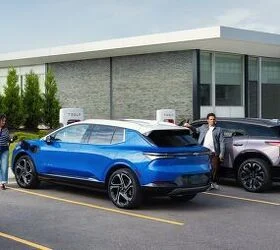
The United Kingdom’s automotive landscape is facing a significant shift as Andy Burnham assumes the role of Prime Minister, ushering in a new era of government policy. Among his administration’s inaugural actions is a decisive move to eliminate Value Added Tax (VAT) on domestic electricity bills, a change poised to impact millions of households and, crucially, the burgeoning electric vehicle (EV) sector. While the immediate financial relief for homeowners is modest, the decision is being heralded as a potent signal of the government’s commitment to alleviating the cost of living, with particular implications for EV drivers. However, this policy development has also cast a starker spotlight on the existing inequities faced by those reliant on public charging infrastructure, raising concerns about fairness and accessibility within the transition to electric mobility.
A New Government’s Opening Gambit: Zero-Rating Domestic Electricity
Effective immediately, the 5% VAT previously applied to household electricity consumption has been reduced to zero. The government estimates this will translate to an annual saving of approximately £45 for the average UK home. While seemingly small on an individual basis, this measure is being framed by the new administration as a foundational step towards a broader strategy of economic relief for citizens.
Heidi Alexander, the newly appointed Transport Secretary, articulated this sentiment during an appearance on BBC Radio 4’s Today programme. She described the VAT cut on domestic electricity, alongside the introduction of a national cap on bus fares, as a "signal of intent for the Burnham government." This suggests a deliberate policy direction aimed at tangible improvements in the daily lives of the populace, with energy costs and public transportation being key focal points.
The EV Driver’s Perspective: A Mixed Bag of Savings and Stagnation
For owners of electric vehicles, the implications of this VAT reduction are nuanced. David Martell, CEO of Andersen, a prominent home wallbox provider, highlighted that high-mileage EV drivers could see annual savings of around £40 on their electricity bills. "That may not sound transformational on its own," Martell commented, "but it’s the direction of travel that matters." This perspective underscores the symbolic importance of the move, indicating a government that acknowledges and is beginning to address the financial considerations of EV ownership.
Gurjeet Grewal, chief executive of Octopus Electric Vehicles, echoed this optimism, stating that the change means "the financial case for going electric has never been stronger." This sentiment suggests that even incremental cost reductions can significantly bolster the perceived economic advantage of switching to an EV, potentially accelerating adoption rates.
The Widening Chasm: Public Charging Disparities Exposed
Despite the positive reception from some quarters, the decision to remove VAT from domestic electricity has inadvertently exacerbated a growing concern within the EV community: the stark price difference between home charging and public charging. Drivers who are unable to charge their EVs at home, often due to living in flats or rented accommodation, will continue to face the prevailing 20% VAT rate on public charging.
Industry group ChargeUK has reported a significant increase in public charging prices, with costs rising by 38% since 2020. This trend, coupled with the continued application of the higher VAT rate, means that the financial disparity between charging at home and utilizing public infrastructure has widened considerably. While specialised "EV tariffs" for home charging have always offered a more cost-effective solution compared to public points, the gap is now demonstrably greater.
Victoria Edmonds, CEO of the campaign group EVA England, voiced strong criticism of this disparity. "The transition to EVs cannot be fair while people pay substantially more simply because they cannot charge at home," she asserted. Edmonds pointed to "significant taxes, levies and electricity costs faced by charge point operators" as key barriers that prevent the reduction of public charging costs, effectively making charging more expensive for a segment of the EV-driving population.

The "Tax on Circumstance": A Call for an End to the Divide
The issue of VAT on public EV charging has become a focal point of debate, with critics labelling it a "tax on circumstance." Professor David Bailey, a leading expert from Birmingham Business School, argued that charging individuals more for electricity simply because of their housing situation or charging accessibility is unjust. He has called for an end to this "EV charging tax divide once and for all," advocating for a more equitable approach to supporting EV adoption.
This disparity was brought into sharper focus in March when a tax tribunal ruled that the firm Charge My Street (CMS) should have been subject to a 5% VAT rate on its public charging services, rather than the standard 20%, as it was deemed to fall under the domestic provision threshold. However, Her Majesty’s Revenue and Customs (HMRC) has appealed this decision, indicating a continued official stance that public charging infrastructure falls under the higher VAT bracket. This ongoing legal battle underscores the complexity and contention surrounding VAT application in the EV charging sector.
A Broader Policy Landscape: The Burnham Administration’s Automotive Agenda
The VAT adjustment on domestic electricity is not an isolated policy but rather one piece of a larger puzzle that the Burnham administration must address regarding the future of motoring in the UK. While Prime Minister Burnham has not yet made direct, comprehensive statements on the state of the nation’s automotive sector, his government has indicated a desire for policy continuity with the preceding Starmer era, coupled with targeted adjustments to enhance the quality of life.
Several key areas remain under scrutiny and are likely to be shaped by the Burnham government’s forthcoming policies:
The Future of Public Charging Infrastructure
The current disparity in VAT treatment for home versus public EV charging is unsustainable in the long term if the government is serious about encouraging widespread EV adoption. Potential policy interventions could include:
- Reducing VAT on Public Charging: A direct application of the 5% or even a 0% VAT rate to public charging points would significantly lower costs for all EV drivers, particularly those without home charging access.
- Government Subsidies for Public Charging Operators: Financial incentives could be provided to charge point operators to help them reduce their prices, offsetting some of the costs associated with infrastructure development and electricity procurement.
- Regulatory Intervention on Pricing: The government might consider introducing regulations to cap or control the prices charged at public charging stations, ensuring they remain competitive and accessible.
Incentivising EV Adoption Beyond Home Charging
While the VAT cut on domestic electricity benefits a significant portion of EV owners, it does little to address the barriers faced by those who cannot charge at home. Future policies may need to focus on:
- Grants for Public Charging Access: Similar to scrappage schemes for older vehicles, grants could be offered to individuals without home charging facilities to offset the higher cost of using public chargers.
- Mandates for Charging Infrastructure in New Developments: Legislation could be introduced to ensure that all new residential developments, including apartment blocks, are equipped with adequate EV charging facilities.
- Support for Workplace Charging: Encouraging businesses to install charging points for their employees could provide another accessible and potentially more affordable charging option.
The Role of Existing Vehicle Taxation
The government will also need to contend with the broader tax and regulatory framework surrounding vehicles. This includes:
- Vehicle Excise Duty (VED) for EVs: While currently zero-rated, the long-term financial implications for the Treasury as EV adoption grows will necessitate a review of VED for electric vehicles.
- Company Car Tax (Benefit-in-Kind) Rates: The attractiveness of EVs as company cars is influenced by these tax rates. The government may consider maintaining or adjusting these to encourage fleet electrification.
- Fuel Duty on Electricity: While electricity for domestic use is now zero-rated for VAT, the broader question of taxing electricity used for transport, analogous to fuel duty on petrol and diesel, may arise as EV numbers increase significantly.
Addressing the Supply Chain and Manufacturing
The UK’s ambition to be a leader in the green automotive transition also hinges on its domestic manufacturing capabilities. The Burnham administration will likely face pressure to:
- Support Battery Manufacturing: Investing in gigafactories and the entire battery supply chain is crucial for reducing reliance on overseas production and ensuring competitive pricing for EVs.
- Incentivise UK Automotive Production: Policies aimed at encouraging car manufacturers to produce EVs and their components within the UK will be vital for job creation and economic growth.
Conclusion: A Policy Shift with Lingering Questions
The elimination of VAT on domestic electricity bills represents a clear and immediate policy action by the new Burnham government, signaling a commitment to easing the financial burden on households. For EV drivers, it offers a marginal but welcome reduction in charging costs. However, this move inadvertently magnifies the existing disparity for those who depend on public charging infrastructure, raising significant questions about equity and the pace of the EV transition for all segments of the population. The coming months will reveal whether this initial step is the precursor to a more comprehensive and inclusive strategy for the future of motoring in the United Kingdom, one that addresses the multifaceted challenges and opportunities presented by the shift towards electric mobility. The "artillery barrage of automotive questions" that Professor Bailey alluded to is indeed upon the Burnham administration, and how they navigate these complex issues will define their impact on the nation’s roads and economy.