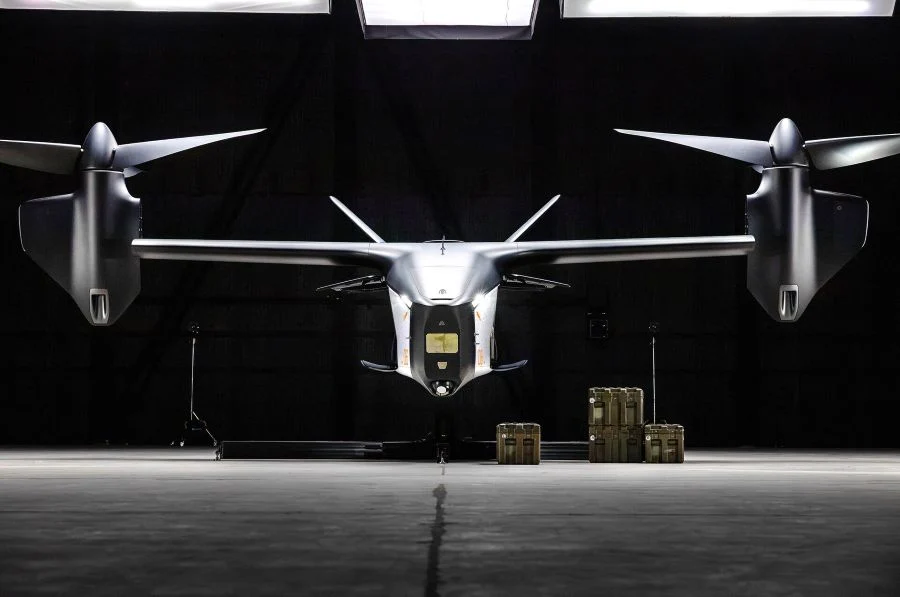
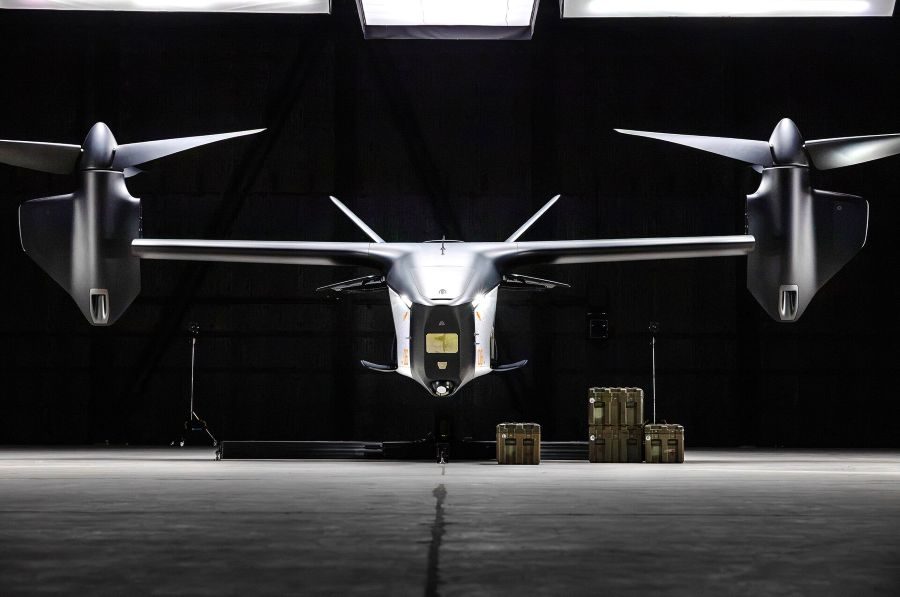
FARNBOROUGH, England — In a significant stride for autonomous aviation and defense technology, Archer Aviation Inc. and Anduril Industries jointly unveiled a groundbreaking autonomous vertical takeoff and landing (VTOL) aircraft platform at the prestigious Farnborough Airshow. This innovative battery-powered device, meticulously engineered for dual-use applications, introduces two distinct variants: "Thunder" for military operations and "Halo" for commercial logistics. The announcement marks a pivotal moment, signaling a convergence of cutting-edge electric propulsion, autonomous flight capabilities, and strategic design tailored for both national security imperatives and global supply chain challenges.
The unveiling event, held amidst a backdrop of increasing demand for efficient and versatile air mobility solutions, showcased a platform designed from the ground up to push the boundaries of current aerial capabilities. Unlike incremental upgrades to existing designs, the collaboration between Archer, a leader in electric vertical takeoff and landing (eVTOL) aircraft, and Anduril, a defense technology company known for its focus on autonomous systems, represents a clean-sheet approach. This partnership has yielded a rotorcraft promising next-generation performance across critical metrics including speed, range, payload capacity, and operating cost, fundamentally redefining expectations for autonomous aerial vehicles.
Technological Innovation and Design Philosophy
At the heart of the new platform’s advanced capabilities are its dual tiltrotors, a sophisticated propulsion system engineered for unparalleled efficiency. These tiltrotors are designed to dynamically vary their speed, allowing the aircraft to maintain optimal aerodynamic efficiency across different flight regimes. This adaptive control system significantly reduces power demand during cruise flight, translating directly into extended range and reduced energy consumption. Such efficiency is a game-changer, especially for battery-powered aircraft where energy density remains a primary constraint.
Beyond propulsion, the aircraft boasts a low acoustic signature, a critical attribute for military applications. In contested environments or during sensitive defense missions, minimizing noise output enhances survivability by making the aircraft harder to detect by adversaries. This feature underscores the deliberate military design considerations integrated from the initial stages of development. Furthermore, the platform’s ability to transport a variety of modular, heavy payloads highlights its versatility, allowing for rapid reconfiguration to suit diverse mission requirements, from reconnaissance and surveillance to critical resupply and evacuation.
Adam Goldstein, CEO of Archer Aviation, emphasized the radical departure from conventional design philosophy. "This mission required a clean sheet design, built from the ground up to meet the needs of modern commercial and defense applications," Goldstein stated during the unveiling. "We couldn’t simply tweak our existing [air taxi]. Instead, we took a bold first principles approach alongside Anduril to develop what we believe is the most sophisticated vertical lift aircraft ever made." He further elaborated on the foundational technology underpinning the new platform, noting, "Over the past eight years, we’ve engineered, tested and scaled the technology this platform is built on: The power train, the batteries, the motors, the manufacturing." This statement highlights Archer’s extensive background in eVTOL development, leveraging proven components and processes for this new venture.
Shane Arnott, Senior Vice President of Maneuver Dominance at Anduril, echoed Goldstein’s sentiments, stressing the strategic advantage of integrating commercial eVTOL advancements into defense applications. "From raw performance to producibility, harnessing the best technologies from the commercial eVTOL market for defense is central to how Thunder will deliver operational value to our customers," Arnott added. "The clean-sheet, dual-use platform that we’ve built with Archer truly represents a step change in capability." This perspective underscores a growing trend in defense procurement, where commercial innovation is increasingly seen as a faster and more cost-effective path to acquiring advanced capabilities.
Strategic Rationale Behind Dual-Use Platforms
The development of a dual-use platform like Thunder/Halo is a strategic move that addresses several contemporary challenges. For defense, it offers a pathway to acquire advanced autonomous capabilities at potentially lower costs due to the economies of scale derived from commercial applications. Military forces worldwide are seeking agile, rapidly deployable, and low-observable assets for a variety of missions, from logistics and medical evacuation to intelligence, surveillance, and reconnaissance (ISR) in increasingly complex operational theaters. Thunder, with its autonomous flight, low acoustic signature, and payload flexibility, is positioned to meet these evolving requirements.
On the commercial front, the demand for efficient, rapid, and cost-effective cargo transport is skyrocketing. E-commerce growth, the need for expedited deliveries in remote or difficult-to-access areas, and the rising cost of traditional logistics methods have created a fertile ground for autonomous cargo solutions. Halo aims to fill this void, offering a scalable solution for moving heavy payloads over long distances, without the need for extensive runway infrastructure or the human resource costs associated with piloted flights.
The Partnership Dynamics: Archer, Anduril, and Marubeni Aerospace
The collaboration between Archer and Anduril is a prime example of cross-industry synergy. Archer brings its deep expertise in eVTOL design, electric propulsion systems, battery technology, and manufacturing processes honed through years of developing its passenger-carrying eVTOL aircraft. Anduril, on the other hand, contributes its formidable capabilities in autonomous systems, artificial intelligence, software integration, and defense market understanding. This blend of commercial aerospace innovation with defense-grade autonomy and robustness is critical for a platform designed to operate in diverse and demanding environments.
Further extending its reach into the commercial sector, Archer has partnered with Marubeni Aerospace Corp. for the development and deployment of Halo in commercial logistics operations. Marubeni Aerospace, a prominent player in the global aerospace market, brings extensive experience in aviation services, market access, and commercialization strategies. This partnership is crucial for navigating the complex regulatory landscape and establishing the operational infrastructure required for large-scale autonomous cargo delivery.
Satoru Nakagawa, President and CEO of Marubeni Aerospace, articulated the transformative potential of Halo. "Currently, even in cargo transport operations that do not require onboard crew, flights are conducted with human pilots, absorbing the cost, scheduling constraints and human exposure that come with it," Nakagawa observed. "Halo’s unmanned, autonomous flight capabilities can address these challenges." This statement highlights the significant economic and operational efficiencies that autonomous cargo can unlock, particularly in reducing labor costs and mitigating risks associated with human involvement in potentially hazardous missions.
Market Context and Industry Landscape for eVTOLs
The unveiling of Thunder and Halo comes at a time of fervent activity and investment in the eVTOL market. The global eVTOL market, encompassing both passenger and cargo applications, is projected to grow significantly in the coming decade. Analysts predict the market could reach tens of billions of dollars by the early 2030s, driven by advancements in battery technology, electric propulsion, and regulatory frameworks. Key players, including established aerospace giants and innovative startups, are racing to develop and certify aircraft for various use cases, from urban air mobility (UAM) to regional logistics.
While much of the public attention has focused on passenger-carrying eVTOLs for "air taxi" services, the cargo segment represents an equally, if not more, immediate and viable market. Cargo operations often face fewer regulatory hurdles for autonomous flight compared to human transport, and the economic benefits of reduced operational costs and increased efficiency are highly compelling for logistics providers. Companies are exploring applications ranging from last-mile delivery in urban centers to heavy-lift transport in remote or disaster-stricken regions.
In the defense sector, the adoption of autonomous aerial vehicles (UAVs) is accelerating dramatically. Global military spending on drones is expected to continue its upward trajectory, with a focus on enhancing reconnaissance, precision strike capabilities, electronic warfare, and logistics support. The Russia-Ukraine conflict, for instance, has underscored the critical role of drones in modern warfare, demonstrating their utility for everything from tactical surveillance to delivering supplies and even direct combat roles. Thunder’s design positions it to capitalize on this growing military need for advanced, versatile, and survivable autonomous platforms.
Military Implications and Applications of Thunder
Thunder is poised to offer transformative capabilities to military forces globally. Its primary military variant is designed for a multitude of critical applications, including:
- Contested Logistics: Transporting essential supplies, ammunition, and equipment to forward operating bases or troops in contested zones without risking human pilots. This could significantly enhance logistical resilience and reduce the vulnerability of supply lines.
- Special Operations Support: Providing covert insertion or extraction capabilities for special forces, delivering specialized equipment, or conducting clandestine reconnaissance missions due to its low acoustic signature and autonomous nature.
- Medical Evacuation (MEDEVAC): Rapidly evacuating casualties from dangerous areas, reducing response times and improving survival rates by bypassing ground obstacles and threats.
- Intelligence, Surveillance, and Reconnaissance (ISR): Conducting persistent surveillance over wide areas, monitoring adversary movements, and gathering critical intelligence with reduced operational costs and human exposure compared to traditional manned aircraft.
- Electronic Warfare and Communications Relay: Serving as an airborne platform for electronic warfare payloads or as a mobile communications relay to extend network coverage in challenging terrains.
- Search and Rescue (SAR): Deploying quickly to search for downed personnel or survivors in disaster areas, operating autonomously in conditions that might be too risky for manned aircraft.
The ability to operate autonomously reduces the cognitive load on human operators, allowing them to manage multiple aircraft or focus on higher-level strategic decisions. Moreover, the modular payload capability ensures that Thunder can adapt to evolving threats and mission profiles, providing a flexible asset for future military needs.
Commercial Prospects and Logistical Revolution with Halo
The commercial variant, Halo, is envisioned as a catalyst for a logistical revolution, particularly in cargo transport. Its potential applications are vast and varied:
- Remote Area Deliveries: Delivering crucial supplies, medical aid, or emergency equipment to remote communities, islands, or disaster zones that lack traditional airport infrastructure.
- Heavy-Lift Logistics: Transporting significant payloads that exceed the capacity of smaller drones, potentially disrupting traditional methods for inter-city or regional cargo movement.
- E-commerce Fulfillment: Enhancing the speed and efficiency of e-commerce supply chains, enabling faster delivery of goods, especially for high-value or time-sensitive items.
- Industrial and Energy Sector Support: Transporting parts, tools, or personnel (in a future, potentially piloted version) to offshore oil rigs, wind farms, or remote mining operations, where traditional access is difficult or expensive.
- Humanitarian Aid and Disaster Relief: Rapidly deploying relief supplies, food, water, and medical kits to areas cut off by natural disasters, providing immediate assistance where ground access is compromised.
The elimination of onboard crew for cargo operations offers substantial cost savings by reducing salary, training, and support infrastructure expenses. Furthermore, autonomous flight can operate around the clock, unaffected by human fatigue limits, thereby increasing operational throughput and flexibility. Archer’s Goldstein’s goal "to move heavy payloads long distances, fast, into places with no runway, at a fraction of the cost of legacy platforms" succinctly captures the ambition behind Halo.
Challenges and the Road Ahead
Despite the immense promise, the path to widespread adoption for both Thunder and Halo is not without its challenges. For military applications, integration into existing command and control structures, cybersecurity concerns, and the development of robust doctrine for autonomous operations will be critical. For commercial applications, regulatory approval for autonomous flight in national airspace remains a complex hurdle, requiring extensive testing, certification, and public acceptance. Infrastructure development, including vertiports and charging stations, will also be necessary to support large-scale operations.
Moreover, the competitive landscape is intense. Numerous companies are vying for market share in both the military drone and commercial eVTOL cargo sectors. Archer and Anduril will need to demonstrate not only the technical superiority of their platform but also its cost-effectiveness, reliability, and scalability in real-world scenarios.
Broader Impact on Aviation and Defense
The unveiling of Thunder and Halo signifies a broader trend in aviation where electrification, autonomy, and advanced materials are converging to create new paradigms of air mobility. This platform is not merely an incremental improvement; it represents a fundamental shift in how goods and services, and indeed military capabilities, can be delivered.
For defense, it heralds a future where logistics are more resilient, operations are more agile, and personnel exposure to danger is minimized. For commercial aviation, it points towards a future of highly efficient, environmentally friendlier, and more accessible cargo transport, potentially unlocking economic opportunities in regions previously underserved by traditional logistics networks. The collaboration between Archer and Anduril, integrating commercial innovation with defense requirements, is a model that may well define the future of advanced aerospace development. As these aircraft move from unveiling to deployment, their impact on global logistics, national security, and the very fabric of air travel will be closely watched.