In a landmark development for condensed matter physics and material science, an international research team has demonstrated that machine learning can fundamentally alter the search for superconductors, materials capable of conducting electricity with zero energy loss. Led by the SuperC consortium and Aalto University Professor Päivi Törmä, the team has successfully utilized artificial intelligence to navigate the nearly infinite landscape of chemical combinations, identifying two new superconducting materials: YRu3B2 and LuRu3B2. This breakthrough, recently published in Physical Review Research, marks a transition from accidental discovery to a systematic, AI-driven pipeline that could potentially deliver a room-temperature superconductor within the next decade.
Superconductivity represents one of the most coveted phenomena in physics. When a material becomes superconducting, its electrical resistance vanishes, and it expels magnetic fields—a property known as the Meissner effect. However, for more than a century since its discovery in 1911 by Heike Kamerlingh Onnes, this state has typically been achievable only at temperatures approaching absolute zero (-273.15°C). The requirement for expensive and bulky cooling systems, often utilizing liquid helium, has restricted the use of superconductors to niche high-tech applications. By integrating machine learning with quantum geometric calculations, the SuperC consortium aims to bypass these thermal limitations, targeting materials that function at ambient temperatures and pressures.
The Computational Bottleneck in Material Discovery
The traditional path to discovering new superconductors has been characterized by a mix of theoretical intuition and serendipity. To date, approximately 7,000 superconducting materials have been identified. However, the vast majority of these were found through trial and error in the laboratory rather than predictive modeling. According to Professor Törmä, the computational intensity required to simulate quantum interactions at the atomic level is so high that researchers have only been able to theoretically predict the viability of about 20 of these 7,000 materials.
The challenge lies in the sheer scale of the "chemical space." With over 100 elements in the periodic table, the number of possible ternary (three-element) and quaternary (four-element) compounds is effectively limitless. Standard quantum mechanical simulations, such as Density Functional Theory (DFT), provide high accuracy but are far too slow to screen millions of candidates. A single complex calculation can take days or weeks of supercomputer time.
To overcome this, the SuperC team developed a specialized machine-learning algorithm designed to act as a high-speed filter. This AI was trained on existing material databases to recognize patterns in atomic structures and electronic configurations that correlate with superconductivity. Instead of performing exhaustive quantum calculations on every possibility, the AI rapidly screens billions of combinations, narrowing the field to a handful of "high-probability" candidates. Only these select few are then subjected to rigorous, resource-intensive quantum simulations.
Quantum Geometry and the Kagome Lattice
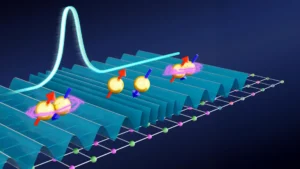
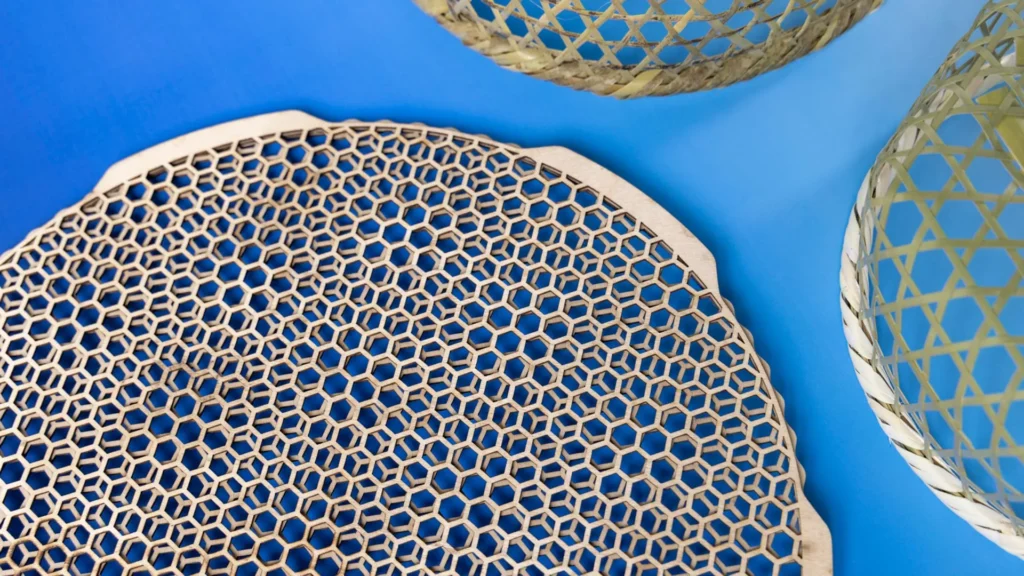
The discovery of YRu3B2 and LuRu3B2 highlights a specific structural focus of the research: the kagome lattice. Named after a traditional Japanese basket-weaving pattern, the kagome lattice is a network of corner-sharing triangles. This specific geometric arrangement is of intense interest to physicists because it can induce "flat bands" in the energy spectrum of a material.
In most conductors, electrons move at high speeds. However, in a flat band, the kinetic energy of electrons is suppressed, forcing them to move slowly and interact more strongly with one another. These strong electronic correlations are a prerequisite for high-temperature superconductivity. By focusing the AI on identifying materials that naturally form kagome lattices and exhibit specific quantum geometric properties, the researchers were able to predict that YRu3B2 and LuRu3B2 would exhibit superconducting properties.
Once the AI and subsequent quantum calculations flagged these materials, the project moved from the digital realm to the laboratory. Collaborators at Rice University, led by Professor Emilia Morosan, undertook the task of synthesis. Professor Morosan’s team chemically combined the constituent elements—yttrium (Y) or lutetium (Lu), ruthenium (Ru), and boron (B)—to create high-purity samples. Experimental testing confirmed the theoretical predictions, verifying that both compounds are indeed superconductors.
The SuperC Consortium: A Decade-Long Roadmap to 2033
The SuperC consortium was established in 2023 with a specific, ambitious mission: to discover a practical room-temperature superconductor by 2033. This international collaboration brings together leading physicists, chemists, and computer scientists from institutions across the globe, including Aalto University and Rice University. The project is driven not just by scientific curiosity, but by the urgent need to address global energy consumption and climate change.
The timeline for the consortium is aggressive. Following the successful proof-of-concept with YRu3B2 and LuRu3B2, the team plans to scale their AI models to explore increasingly complex chemical structures. By 2026, the research findings will be featured in Aalto University’s "Designs for a Cooler Planet" exhibition, highlighting the tangible environmental benefits of the work. The ultimate goal of 2033 aligns with global targets for decarbonization, positioning superconductivity as a "holy grail" technology for a sustainable future.
Economic and Environmental Implications of Room-Temperature Superconductors
The realization of a room-temperature superconductor would trigger a technological revolution comparable to the invention of the transistor or the steam engine. Currently, the global energy infrastructure suffers from significant inefficiencies. In the United States alone, approximately 5% to 10% of all electricity generated is lost as heat during transmission and distribution through copper or aluminum wires. Superconducting power lines would eliminate these losses entirely, allowing for the efficient transport of renewable energy from remote wind farms or solar deserts to urban centers.
The impact on the Information and Communication Technology (ICT) sector would be equally transformative. Data centers, which currently account for nearly 2% of global electricity demand, generate immense amounts of heat due to the electrical resistance in processors and servers. If regular conductors were replaced with superconducting materials, heat generation would be virtually eliminated. This would not only slash energy bills but also remove the need for the massive cooling infrastructures that currently consume nearly half of a data center’s total power.
Furthermore, room-temperature superconductors would democratize high-end medical and industrial technologies:
- Medical Imaging: Current MRI machines require liquid helium to cool their superconducting magnets. Room-temperature alternatives would make MRIs smaller, cheaper, and more accessible in developing regions.
- Transportation: Maglev (magnetic levitation) trains currently require complex cooling systems. Ambient-temperature superconductors could make ultra-high-speed, friction-free rail travel a standard global infrastructure.
- Fusion Energy: Fusion reactors, such as ITER, rely on massive superconducting magnets to confine plasma. Reducing the cooling requirements for these magnets would significantly lower the threshold for achieving commercially viable fusion power.
A New Paradigm for Material Science
The success of the SuperC team signals a broader shift in how scientific discovery is conducted in the 21st century. The integration of AI does not replace the physicist but rather empowers them to ask more complex questions. By automating the "search" phase of research, scientists can focus their efforts on the "understanding" and "application" phases.
"This approach will greatly speed up superconductor discovery in the future," Professor Törmä noted. "With machine learning, we may be able to push the number of materials we can process into the billions. This takes us a critical step closer to finding a room-temperature superconductor."
The multidisciplinary nature of the project—combining the abstract mathematics of quantum geometry, the predictive power of AI, and the precision of chemical synthesis—serves as a blueprint for future material science endeavors. Whether the 2033 goal is met or not, the tools developed by the SuperC consortium are already expanding the boundaries of what is possible in the search for the materials that will define the next century.
The SuperC consortium’s work is supported by a diverse group of philanthropic and scientific organizations, including The Kavli Foundation, Klaus Tschira Stiftung, the Jane and Aatos Erkko Foundation, and the Magnus Ehrnrooth Foundation, among others. As the project moves into its next phase, the global scientific community will be watching closely to see if the synergy of AI and quantum physics can finally unlock the door to a world without electrical resistance.