The cinematic drama of a rogue asteroid threatening Earth, as vividly depicted in films like "Armageddon," often overshadows a more profound and practical question: what if humanity could not only reach but actively utilize these celestial bodies? Beyond the spectacle of planetary defense, a groundbreaking study from the Swiss Federal Institute of Technology Lausanne (EPFL) suggests that asteroids could be instrumental in building not just a new world, but a sustainable human presence beyond Earth, specifically on Mars. This research, while not heralding an immediate space mining boom, offers a compelling solution to the critical logistical challenges that currently loom over ambitious interplanetary colonization efforts.
The Staggering Supply Chain Hurdle for Mars
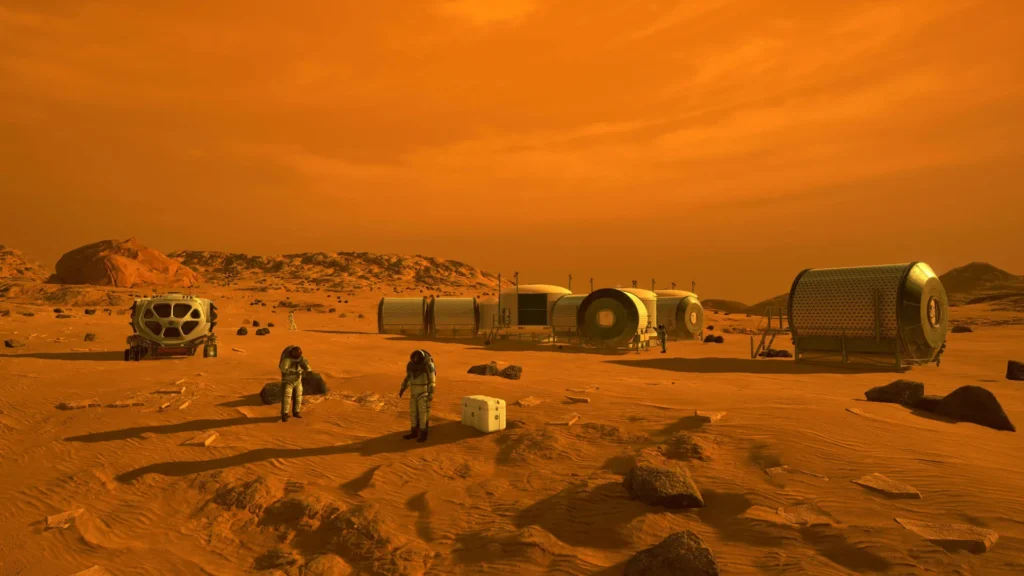
Establishing a permanent human settlement on Mars represents one of the most complex undertakings humanity has ever contemplated. While overcoming formidable engineering hurdles in life support, habitat construction, and radiation shielding are paramount, the sheer scale of the logistical problem remains a significant, often underestimated, impediment. The ability to reliably transport supplies, equipment, and, crucially, raw materials across the vast distances of the solar system could very well be the deciding factor in whether humanity transitions to a multiplanetary species or remains irrevocably tethered to its home planet.
A Martian colony would demand an immense and continuous influx of resources. Beyond the immediate needs of food, water, and breathable air, the foundational elements for a thriving settlement lie in the materials required for infrastructure and maintenance. This includes vast quantities of metals such as iron for structural components of habitats and machinery, aluminum for advanced technological systems, and steel for robust construction. Furthermore, the inevitable wear and tear on equipment, from scientific instruments to construction vehicles, would necessitate regular replacement and repair, further amplifying the demand for spare parts and raw materials.
The prospect of shipping all these essential commodities from Earth presents an almost insurmountable economic and temporal barrier. The cost of launching a single tonne of cargo into orbit, let alone on an interplanetary trajectory, can run into tens of millions of dollars. A journey to Mars itself is a lengthy undertaking, typically spanning between six and nine months, heavily dependent on the alignment of the two planets. This protracted transit time, coupled with the exorbitant launch costs, renders a consistent and dependable hardware supply chain from Earth entirely impractical for the sustained growth and survival of a Martian settlement.
Harnessing Asteroidal Wealth for Martian Needs
It is within this context of logistical scarcity that the EPFL research emerges as a potential game-changer. The study has meticulously calculated how asteroid mining could directly address the material needs of a Martian colony, providing a localized and sustainable source of vital resources. The solar system is populated by millions of asteroids, and a specific subset, known as M-type asteroids, are particularly rich in valuable metals like iron, nickel, and cobalt. These celestial bodies are, in essence, colossal, mobile mineral deposits traversing the cosmic expanse.
The central question that the researchers sought to answer was whether it is technologically and energetically feasible to reach these asteroids, extract their metallic riches, and transport them to Mars without expending an amount of energy and fuel that would negate the entire endeavor. The study’s findings are cautiously optimistic, suggesting that under specific, achievable conditions, such a feat could indeed become a reality.
Charting the Optimal Space Supply Routes
To arrive at their conclusions, the EPFL research team employed sophisticated computer modeling, testing thousands of potential combinations across various hypothetical supply chain scenarios. Their simulations factored in the energy requirements for spacecraft to travel between Mars and a diverse array of potential asteroid targets. Crucially, they also assessed the realistic amount of metal that could be extracted from these asteroids and the fuel necessary to complete the entire round trip, including the delivery to Mars.
A particularly innovative aspect of the study lies in its approach to the critical issue of return fuel. Instead of relying solely on Earth-bound fuel depots, the researchers incorporated the potential utilization of resources found within certain asteroids themselves. Some asteroids, classified as carbonaceous, are known to contain water ice and carbonaceous compounds. Through advanced processing techniques that could be developed and implemented in situ, these materials could be converted into rocket propellant. This would dramatically reduce the mass that spacecraft need to carry from Earth, as a significant portion of their return fuel could be generated in space, closer to their destination. The researchers meticulously integrated this in-orbit propellant production capability into their supply chain models.
The Crucial Role of Asteroid Selection
The results of the EPFL study highlight the existence of specific asteroids that are within reach of current spacecraft technology. For these carefully selected targets, the energy expenditure for the entire mining and delivery mission is calculated to be low enough to potentially justify the undertaking, making asteroid mining a viable proposition for supplying Mars.
However, the research underscores that the success of such missions hinges critically on the precise selection of the target asteroid. A poorly chosen asteroid, one that is significantly more challenging to reach or offers lower yields of valuable materials, could necessitate such a substantial expenditure of fuel that the economic benefit of the extracted metals would be entirely eclipsed by the mission’s costs.
It is important to temper enthusiasm with realism. The EPFL study does not suggest that asteroid mining operations will commence in the immediate future. Humanity is still in the nascent stages of developing the technologies and infrastructure required for sustained off-world resource extraction. However, the significance of this research lies in its compelling demonstration that the fundamental logistical challenges of interplanetary supply chains are not insurmountable. A future network for transporting vital metals from asteroids to Mars could be realized, leveraging propellant generated from the very resources mined in space.
The implications of this research are far-reaching. While the construction of a Martian colony will undoubtedly require human ingenuity and labor, an equally critical, and perhaps less discussed, necessity is the establishment of a dependable and efficient system for delivering the raw materials that those builders will need. The EPFL study provides a strong, evidence-based suggestion that such a system is not only conceivable but potentially achievable, offering a tangible pathway towards making humanity a truly multiplanetary species. This scientific exploration moves the concept of space resource utilization from the realm of science fiction firmly into the domain of practical, albeit future, engineering.