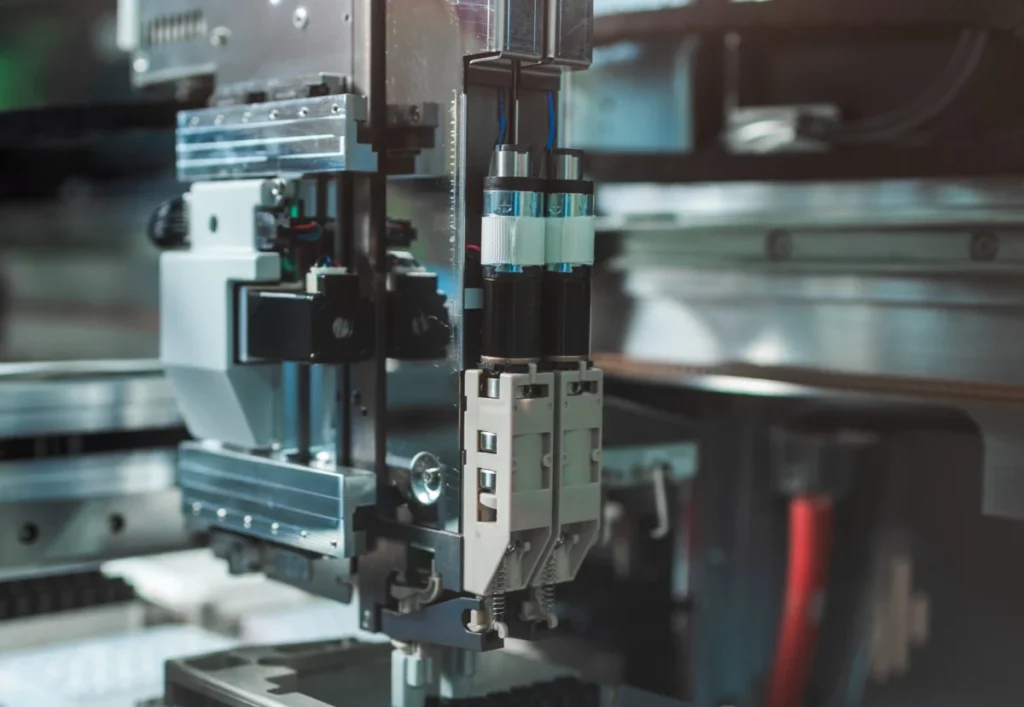
Automated motion systems are the unsung heroes of modern industry and everyday life, underpinning everything from intricate robotics to high-speed manufacturing lines. This primer delves into the fundamental principles and essential elements that constitute an automated motion system, whether it’s a sophisticated piece of robotics or a specialized machine designed for a specific routine. Understanding these core concepts is crucial for engineers and designers aiming to create efficient, precise, and reliable automated solutions.
At its heart, every motion system is an electric-motor-driven design built around two primary categories of components: electrical and mechanical. The electrical components encompass the motors themselves, the drives (amplifiers) that power them, the motion controllers that orchestrate their movements, and the sensors that provide critical feedback. Mechanical components, conversely, include the physical mechanisms that convert motor rotation into linear or rotary motion, such as linear axes, gearboxes, belts, pulleys, and various screw types. The intricate interplay between these elements dictates the system’s performance, precision, and overall capability.
For instance, an advanced vision system, often incorporating AI analysis and high-resolution imaging, relies heavily on motion systems to accurately scan vials for defects. Such a machine typically features electric motors paired with screw-driven and belt-driven linear axes, meticulously guided by precision linear guides to ensure repeatable and accurate positioning. This integration of advanced imaging with precise motion control exemplifies the sophistication inherent in modern automated systems.
Distinguishing Power-Transmission from Motion Systems
Within the industrial landscape, the terms "power-transmission designs" and "motion systems" are often used, but they carry distinct connotations reflecting different priorities in machine building.
-
Power-transmission designs typically emphasize raw torque (or force) and speed. These machine builds are often dominated by robust mechanical components designed to transmit significant power, such as large gearboxes, heavy-duty chains, or wide belts. The primary goal is often to move heavy loads or operate at high speeds, where precise positional control might be secondary to the sheer force or rapid throughput. Examples include heavy conveyors, mixers, or large pumps where the focus is on continuous, high-power operation rather than intricate, dynamic positioning.
-
Motion systems, in contrast, prioritize precise positioning and highly controlled motion profiles. These systems are defined by their ability to manage a machine’s speeds, accelerations, jerk (the rate of change of acceleration), speed-torque profiles, and homing routines with exceptional accuracy. The emphasis shifts from brute force to intelligent, coordinated movement. This control allows for complex trajectories, synchronized multi-axis operations, and adaptive adjustments based on real-time feedback. Robotics, CNC machines, pick-and-place units, and medical diagnostic equipment are quintessential examples of motion systems.
Both design philosophies are integral to countless products and processes, spanning consumer electronics, office automation equipment, medical devices, laboratory automation, and various forms of industrial automation.

Applications: Discrete vs. Process Automation
A crucial distinction in industrial application is between discrete factory automation and process (or analog) automation, each with unique demands on motion systems.
-
Discrete automation involves the working, machining, assembling, testing, capping, wrapping, packaging, labeling, counting, scanning, and transporting of separate, individual products or workpieces. Each workpiece might undergo several distinct operations before completion. The hallmark of discrete automation is the handling of distinct, identifiable items. Industries relying heavily on discrete automation include automotive manufacturing (assembly lines, robotic welding), electronics production (component placement, circuit board assembly), automated warehousing (pick-and-place robots, conveyor systems), and packaging (filling, sealing, labeling). The demand here is for high repeatability, precision in positioning, and rapid cycle times.
-
Process automation, on the other hand, deals with continuous flows, vats of liquids, uninterrupted systems of fluids, and other batches subject to continuous chemical reactions, temperature controls, metering, and blending operations that are generally difficult to stop and start. These systems manage continuous processes rather than individual items. Industries such as mining, energy (power generation, oil and gas extraction), food processing (large-scale mixing, cooking), pharmaceutical and chemical manufacturing (reactor control, fluid dispensing), glass and ceramic production, plastics, textiles, and wood and paper are dominated by process automation. While motion systems might be used for specific tasks within these environments (e.g., valve actuation, material feed), the primary control challenges revolve around continuous variables and system stability.
Motion system designs are predominantly associated with discrete automation, where their ability to deliver precise placement and transport of individual workpieces is paramount to achieving efficiency, quality, and throughput targets. The market for industrial automation, heavily driven by discrete manufacturing needs, is projected to continue its robust growth, with analysts forecasting a global market size exceeding $300 billion by 2027, underscoring the vital role of advanced motion systems.
Parameters Pertinent to the Motion System Design Process
The design of an automated motion system is a rigorous, multi-stage process that begins with a comprehensive understanding of the physical dynamics involved.
-
Load and Inertia Quantification: The initial step involves meticulously documenting the loads to be moved and the inertias inherent in the system. Inertia, an object’s resistance to changes in speed (acceleration or deceleration), is a critical parameter. The total inertia includes not only that of the workpiece but also the moving parts of the axis itself. This can range from very low in direct-drive torque motors or linear motors (which lack intermediate mechanical components) to significantly higher in systems incorporating gearsets for speed reduction or mechanical power transmission elements.
Inertial values vary greatly depending on the type of mechanical power transmission. For systems using tangential forms of power transmission like belt-and-pulley, rack-and-pinion, or chain-and-sprocket sets, calculating reflected inertia back to the motor shaft is essential. Similarly, linear actuators employing leadscrews, ballscrews, or roller screws each present unique inertial characteristics. Engineers must sum all axis components’ inertias and determine what is reflected back to the motor’s output shaft. A particularly complex scenario involves systems with changing inertia, such as robotic axes performing dispensing or machining tasks where the mass of the end-effector changes. In these cases, the motion controls may require advanced servotuning capabilities to dynamically compensate for the varying dynamics, ensuring consistent performance.

-
Required Motor Output Force/Torque Definition: Once the mechanisms, their friction, and their inertias are quantified, the next critical step is to define the required motor output force (for linear motors) or, more commonly, torque (for rotary motors). This allows for the proper sizing of the electric motor on each axis of the design. A servo axis motor must deliver sufficient torque not only for acceleration but also for any constant torques during the run phases and deceleration torques during stopping. This involves calculating peak and continuous torque requirements, often considering the system’s duty cycle to prevent motor overheating and ensure long-term reliability. A common industry guideline suggests an inertia match (load inertia to motor inertia) ratio of 5:1 or less for optimal servo performance, although modern controllers and motors can often handle higher ratios with proper tuning.
The Role of Motors and Advanced Motion Controls
The actions of various motors within an automated system are commanded by motor controls or motion controls. Over the last two decades, these two technologies have seen significant convergence, driven by advancements in digital processing, communication protocols, and integrated electronics. Both types of electronics accept low-power signals that inform their prompting of actuation-level electrical output to drive the involved motors.
Using a zoological analogy, motion controllers serve as the system’s "brains." They monitor, command, and integrate:
- Trajectory Generation: Creating the desired path and speed profiles for motion.
- Feedback Processing: Interpreting data from sensors and encoders to understand actual position and velocity.
- Error Correction: Calculating and implementing adjustments to minimize deviation from the commanded trajectory.
- Multi-axis Coordination: Synchronizing the movements of multiple axes for complex tasks.
- Communication: Interfacing with other automation components like PLCs, HMIs, and SCADA systems.
Just like the nervous systems of animals, motion controllers can work to command systems arranged for:
- Single-axis control: Managing the movement of one independent axis.
- Multi-axis coordinated control: Synchronizing several axes for complex, coordinated movements (e.g., robotic arms).
- Interpolated motion: Generating smooth, continuous paths between points (e.g., circular or linear interpolation in CNC machines).
- Gearing/Camming: Electronically linking the motion of one axis to another, often with variable ratios.
Choosing between centralized controls (with controls, motors, drives, and complementary electronics housed together in a cabinet) or distributed drive-based controls is a decision often made during reiterative design processes. Machines with many axes spread over a large area may benefit most from decentralized motion control. This approach can significantly trim wiring issues and costs, reduce electromagnetic interference, and allow for a smaller main control cabinet. In contrast, compact machine installations may benefit from the economies and simpler architecture associated with traditional centralized control. Recent trends indicate a strong shift towards decentralized or distributed intelligence, particularly with the rise of industrial Ethernet and edge computing, enhancing system modularity and scalability.
Regardless of the control architecture, each motor’s drive (motor control or amplifier) must possess the ability to provide acceleration and continuous current sufficient to satisfy the motion design’s duty-cycle requirements. This includes the power to both move the load and dissipate heat to slow the load. This capacity is ultimately dependent on RMS (root mean square) current for continuous operation and peak (acceleration) current, while also accounting for any increase in the motor’s winding resistance due to heat. Over-specifying a drive can lead to unnecessary costs, while under-specifying can lead to performance degradation, premature component failure, or safety issues.
The Special Case of Servosystems
Motion system designs that take the form of closed-loop systems, known as servosystems, are typically dynamic machines involving quick accelerations and decelerations and operation in all four design quadrants. This "four-quadrant operation" signifies that a design controls an axis over all positive and negative torques and speeds, enabling precise control during acceleration, constant velocity, deceleration, and even active braking or regenerative operation.

Sizing such servosystems necessitates a holistic, systems-based approach that concurrently accounts for mechanical, electrical, and software parameters. The drives supplying power to axes’ servomotors must be capable of delivering all necessary continuous (RMS) and acceleration (peak) currents. This involves detailed calculations of torque-speed curves, thermal considerations, and the dynamic response required by the application. The accuracy and repeatability of servosystems are paramount in applications like semiconductor manufacturing, where features are measured in nanometers, or in surgical robotics, where human safety depends on absolute precision. The global servo motor and drive market is experiencing steady growth, driven by increasing automation adoption and the demand for higher precision and efficiency.
Motion System Design Environmental Considerations
The environment in which a motion design will operate significantly influences component selection. Where a motion design will operate in hot, dusty, washdown, vacuum, explosive, or other challenging industrial environments, the power-transmission, electromechanical, and electronic components must be chosen for their ruggedness and specialized features.
Ratings specifically list whether a given component can withstand the anticipated conditions:
- IP (Ingress Protection) ratings and NEMA (National Electrical Manufacturers Association) ratings are crucial for defining protection against solids (dust, dirt) and liquids (water jets, submersion). For instance, a motor with an IP67 rating is dust-tight and can withstand temporary immersion in water, making it suitable for certain washdown environments.
- Material Selection: Components for washdown environments often require stainless steel or corrosion-resistant coatings. Bearings must be sealed, and cables must be designed to withstand detergents and high-pressure sprays.
- Explosion-Proof (Ex) ratings: In environments with flammable gases or dust, motors and controls must meet stringent explosion-proof standards (e.g., ATEX, UL HazLoc) to prevent ignition.
- Cleanroom Environments: For applications like semiconductor manufacturing or pharmaceutical production, components must meet strict cleanroom classifications (e.g., ISO 14644-1 or Federal Standard 209E) to minimize particle generation. This often involves specific materials, lubrication, and sealed designs.
- Temperature Extremes: Operating in very high or very low temperatures requires components rated for those ranges, including specialized insulation, lubricants, and cooling systems.
Ignoring environmental factors can lead to premature component failure, increased maintenance costs, and system downtime, highlighting the importance of thorough environmental assessment during the design phase.
Feedback and Connectivity for Motion Designs
Many motion system designs rely on sensors and encoders to track position, velocity, and other axis values during machine operation, forming the closed-loop control essential for precision. Various types of feedback devices are employed:
- Hall-effect sensors: Provide basic speed and position information, often used for commutation in brushless DC motors.
- Resolvers: Robust analog devices, ideal for harsh environments, providing absolute position information.
- Incremental encoders: Provide pulses per revolution, indicating relative movement and speed.
- Absolute encoders: Provide unique digital codes for each position, retaining position information even after power loss.
- Vision systems: Increasingly used for advanced feedback, providing positional data based on visual recognition and pattern matching, especially in robotic applications.
- Mechanical, optical, and magnetic feedback devices: Diverse array for specific applications, ranging from simple limit switches to high-resolution linear scales.
These devices convert their collected signals into (in many cases) digital signals for the motion controls to employ in their trajectory and correction calculations. The accepted communication protocols of the controls partially dictate which feedback devices are allowable in the system. Modern industrial communication protocols like EtherCAT, PROFINET, SERCOS III, and Ethernet/IP enable high-speed, real-time data exchange between controllers, drives, and feedback devices, crucial for tightly synchronized multi-axis motion.
The trend towards the Industrial Internet of Things (IIoT) and Industry 4.0 is profoundly impacting motion systems. Enhanced connectivity allows for remote monitoring, predictive maintenance, and data analytics, transforming how these systems are managed and optimized. Data from sensors and controllers can be aggregated and analyzed to identify potential failures before they occur, optimize operational parameters, and improve overall equipment effectiveness (OEE). This integration allows motion controls to not just execute movements but also to contribute to broader factory intelligence.

It is also worth noting that the cables and connectors transmitting power and data between components must satisfy specific electrical and physical requirements. Cable runs should be kept as short as possible to avoid issues associated with voltage drop, impedance, and (especially if pulse-width modulated or PWM drives are nearby) electromagnetic interference (EMI). This is particularly true if feedback data rides over high-speed protocols vulnerable to impedance and noise, necessitating proper shielding and grounding techniques. The integrity of the wiring infrastructure is as crucial as the components themselves for reliable operation.
The Significance of Motion Profiles and Precision Metrics
Supreme in the world of motion systems are motion profiles – the mathematically defined trajectories that motion controllers command axis drive-and-motor systems to follow. These profiles define sequences of position commands over time, instructing the axis how and where to position the attached load, as well as the necessary accelerations, move times, and dwell times. Motion-controller electronics convert these created trajectories to generate precise torque commands for the drive powering the motor. Common motion profiles include trapezoidal (constant acceleration, constant velocity, constant deceleration) and S-curve profiles (which smooth out acceleration and deceleration, reducing jerk and mechanical stress). The choice of profile impacts cycle time, mechanical wear, and the smoothness of motion.
Of course, a design’s required accuracy, resolution, and repeatability are just as important as its motion profile. These measures of precision dictate the level of mechanical backlash and compliance that are acceptable and what feedback components may be necessary.
- Accuracy refers to how close the actual position is to the commanded position.
- Repeatability describes the ability of a system to return to a previously commanded position within a specified tolerance, regardless of its starting point or previous path. This is often more critical than absolute accuracy in many industrial applications.
- Resolution is the smallest increment of movement that a system can detect or control.
Achieving high levels of accuracy, resolution, and repeatability often necessitates minimizing mechanical backlash (play in gears or screws), reducing compliance (flexibility in mechanical structures), and employing high-resolution feedback devices and sophisticated control algorithms. These precision metrics directly impact product quality, assembly tolerances, and the overall reliability of the automated process.
Future Outlook and Broader Implications
The field of motion system design is continuously evolving, driven by advancements in materials science, power electronics, digital control, and artificial intelligence. Emerging trends include further integration of AI and machine learning for adaptive control, enabling systems to learn and optimize their motion profiles in real-time, compensate for wear, and predict maintenance needs. Human-robot collaboration (cobots) is also pushing the boundaries, requiring motion systems that are inherently safe, intuitive to program, and highly responsive. Miniaturization, higher power density, and increased energy efficiency are ongoing objectives, leading to more compact, powerful, and sustainable automation solutions.
Ultimately, mastering the back-to-basics principles of motion system design is not merely about understanding components, but about orchestrating a complex symphony of electrical, mechanical, and software elements to achieve precise, efficient, and reliable automated movement. As industries continue to embrace automation and digital transformation, the importance of robust and intelligently designed motion systems will only grow, cementing their role as a cornerstone of modern technological progress.






