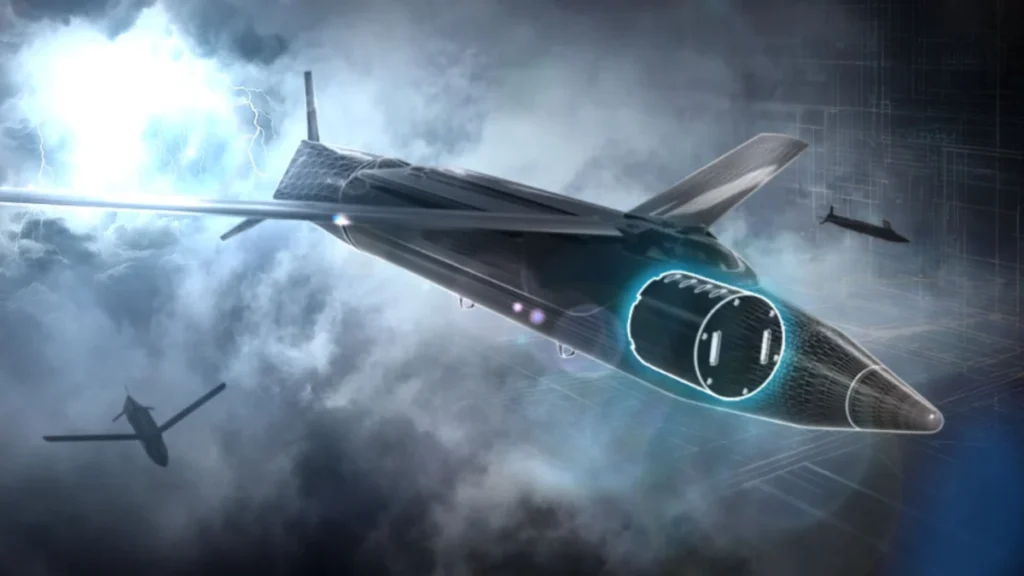
BAE Systems has officially unveiled its new Shadow Electronic Warfare (EW) family, a significant technological advancement designed to provide robust protection for small aircraft operating in increasingly complex and contested airspaces. This innovative suite of products directly addresses a critical and growing demand within modern defense for compact, lightweight, and power-efficient electronic warfare systems that can be integrated into platforms with severe space and payload constraints. The introduction of Shadow EW marks a pivotal moment in the evolution of airborne self-protection, offering capabilities traditionally reserved for larger, more expensive assets to a broader range of military aircraft, including the rapidly proliferating fleets of unmanned aerial systems (UAS).
The core philosophy behind the Shadow EW family centers on sophisticated electronic sensing and self-protection capabilities, meticulously engineered to minimize the size, weight, and power (SWaP) footprint that has historically plagued conventional EW solutions. Beyond its physical compactness, BAE Systems has strategically designed these systems for rapid production and large-scale deployment, aiming to make advanced electronic warfare more accessible and economically viable for military forces globally. This focus on scalability is further underpinned by an architectural choice to utilize commercially available microchips for computing needs, a move that not only simplifies the supply chain but also promises to accelerate production cycles as the global demand for affordable and adaptable EW solutions continues to surge.
The Evolving Battlefield: Why Compact EW Matters Now
The contemporary operational landscape is characterized by an unprecedented level of electronic sophistication and threat density. Adversaries, both state and non-state, are increasingly deploying advanced electronic warfare systems capable of detecting, tracking, jamming, and even spoofing airborne platforms across a wide spectrum of frequencies. This intensifying electromagnetic environment poses significant challenges to military operations, particularly for the smaller, more agile, and often expendable aircraft that are becoming central to modern combat doctrines.
-
The Proliferation of Unmanned Systems: The past decade has witnessed an exponential growth in the development and deployment of small drones and other unmanned airborne systems (UAS). From reconnaissance and surveillance to target acquisition and even strike missions, these platforms offer cost-effective and low-risk operational advantages. However, their inherent limitations in payload capacity, power generation, and physical size make integrating traditional, bulky EW equipment virtually impossible. The conflict in Ukraine, for instance, has underscored the pervasive and decisive role of small drones, simultaneously highlighting their vulnerability to electronic countermeasures and the urgent need for integrated self-protection. Without adequate EW capabilities, these invaluable assets can easily become targets, losing their effectiveness or being outright destroyed.
-
The SWaP-C Imperative: Traditional electronic warfare systems were often developed for large, manned aircraft, where generous allocations for size, weight, power, and cooling (SWaP-C) were feasible. These systems frequently involved custom-designed hardware, complex integration processes, and high costs, limiting their deployment to high-value assets. As military strategies shift towards distributed operations, network-centric warfare, and the concept of "affordable mass," the traditional SWaP-C paradigm becomes unsustainable. The Shadow EW family directly confronts this challenge by prioritizing miniaturization without compromising critical performance, making advanced EW accessible to platforms where it was previously impractical.
Shadow EW’s Technological Pillars: Innovation for Adaptability and Scale
The innovative design of the Shadow EW family is built upon several foundational technological pillars that enable its compactness, adaptability, and scalability. These include an open architecture, software-defined capabilities, the strategic use of commercial off-the-shelf (COTS) components, and a platform-agnostic approach.
-
Open Architecture and Software-Defined Flexibility: At the heart of Shadow EW is an open architecture design, a principle that promotes interoperability, modularity, and future expandability. This design choice allows for easier integration with existing and future platforms and systems, fostering a more connected and collaborative EW ecosystem. Crucially, the systems are software-defined, meaning their operational parameters, capabilities, and countermeasures can be updated and reconfigured through software changes, even after deployment. This flexibility is paramount in an environment where adversary electronic signatures and tactics are constantly evolving. Operators can rapidly respond to new threats, adapt to changing mission requirements, and ensure their systems remain effective against the latest EW techniques without needing costly and time-consuming hardware modifications. This paradigm shift from hardware-centric to software-centric EW significantly reduces the lifecycle costs and extends the operational relevance of the systems.
-
Leveraging Commercial Off-The-Shelf (COTS) Components: A cornerstone of Shadow EW’s design philosophy is the strategic incorporation of commercially available microchips and other COTS components. This approach represents a significant departure from the traditional defense industry model of relying heavily on highly customized, purpose-built hardware. COTS components offer several compelling advantages:
- Cost Reduction: Commercial components are produced at massive scales for consumer and industrial markets, benefiting from economies of scale that dramatically reduce unit costs compared to specialized military-grade hardware.
- Faster Innovation Cycles: The commercial technology sector advances at a blistering pace. By leveraging COTS, BAE Systems can integrate the latest processing power, memory solutions, and communication technologies much faster than if they had to develop proprietary military equivalents.
- Simplified Supply Chain: Relying on established commercial supply chains reduces the complexity and vulnerability often associated with niche military components. It broadens the pool of potential suppliers and mitigates risks associated with single-source dependencies.
- Performance: Modern commercial microchips offer substantial computing performance, often exceeding the requirements for many EW functions, allowing for sophisticated algorithms and real-time threat analysis within a compact footprint. While COTS components often require rigorous testing and ruggedization to meet military environmental specifications, the overall benefits in terms of cost, speed, and capability are profound.
-
Platform Agnosticism: A Strategic Advantage: The Shadow EW family is designed to be platform-agnostic, meaning it can support a wide array of aircraft, encompassing both manned and unmanned systems, without requiring extensive redesigns for each platform. This universal compatibility is achieved through standardized interfaces and a modular hardware/software architecture. The ability to deploy the same core EW capability across diverse platforms, from Group 1 small drones to larger tactical aircraft, offers significant strategic advantages. It streamlines training, logistics, and maintenance, and allows military forces to maximize their investment by deploying advanced EW capabilities wherever they are most needed, preserving valuable payload capacity for other mission-critical equipment.
From Concept to Deployment: Production Scalability and Affordability
The strategic choice of commercial components is intrinsically linked to BAE Systems’ ambition for high-volume, rapid production and deployment of the Shadow EW family. The company recognizes that in an era of potential large-scale conflicts, the ability to produce and field vast numbers of EW-equipped systems quickly and affordably will be as critical as the technology itself.
-
Reimagining the Defense Supply Chain: By reducing dependence on highly customized, specialized components, BAE Systems aims to simplify procurement processes and enhance supply chain resilience. This approach allows manufacturers to respond more agilely to changing production requirements and global demand fluctuations. The use of established, high-volume manufacturing methods, typical of the commercial electronics industry, will be leveraged to support larger orders and ensure faster deliveries, a stark contrast to the often protracted timelines associated with bespoke defense procurements.
-
Driving Down Costs for Widespread Adoption: Production scalability and cost-effectiveness are not merely desirable features; they are central tenets of the Shadow EW’s design philosophy. The U.S. military, alongside its allies, is actively exploring more affordable ways to equip its increasingly numerous autonomous and expendable systems. Traditional EW solutions, often representing multi-million-dollar investments per platform, become economically prohibitive when hundreds or thousands of attritable drones are envisioned for a single operation. Shadow EW seeks to break this cost barrier, offering an affordable electronic warfare option built for broader fielding. This approach democratizes advanced EW capabilities, making them accessible beyond high-value, manned platforms and enabling their integration into a wider array of assets that contribute to a distributed and resilient force structure.
Strategic Implications and Broader Impact
The introduction of the Shadow EW family has far-reaching strategic implications for modern military doctrine and the future of electronic warfare.
-
Enabling "Affordable Mass" in Defense: The concept of "affordable mass" is gaining significant traction within defense planning, particularly in response to the potential for peer-on-peer conflicts. This strategy emphasizes fielding a large number of relatively inexpensive, yet capable, systems that can overwhelm an adversary through sheer numbers, even if some are lost. Shadow EW directly supports this paradigm by providing critical self-protection capabilities to these attritable platforms without rendering them prohibitively expensive. This allows for a more robust and resilient force, capable of sustaining operations in contested environments where attrition rates might be high.
-
The Future of Collaborative Electronic Effects: Beyond individual platform protection, the Shadow EW family is designed to participate in collaborative electronic effects across multiple platforms. This means that networked Shadow EW systems could work in concert, sharing threat data, coordinating jamming efforts, and creating a more potent and adaptive electronic warfare umbrella. Such distributed and collaborative EW capabilities could overwhelm adversary sensors, confuse their targeting systems, and enhance the survivability of an entire force package, rather than just individual assets. This aligns with the broader vision of a truly integrated and network-centric battlespace.
Expert Perspectives and Industry Outlook
Rebecca Cruz, director of Shadow EW products at BAE Systems, emphasized the critical timing of this innovation. "Battlefield conditions are changing rapidly," she stated, underscoring the necessity for even smaller platforms to possess adaptable electronic warfare protection. Her remarks highlight the industry’s awareness of the dynamic nature of modern conflict and the urgent need for agile solutions. The configurable approach of the Shadow EW family, allowing customers to select capabilities tailored to individual missions, is a direct response to this evolving operational reality.
- Aligning with National Defense Strategies: The development of Shadow EW aligns closely with the strategic priorities of major military powers, including the U.S. Department of Defense. Initiatives like the Pentagon’s "Replicator" program, which aims to field thousands of autonomous systems, inherently require cost-effective and scalable protection solutions. Analysts suggest that BAE Systems’ offering directly addresses a capability gap in this domain, providing a viable pathway to equip these future fleets with essential EW capabilities. The emphasis on COTS and rapid production echoes calls from defense leaders for greater innovation and speed in military acquisition.
While BAE Systems has not yet disclosed specific performance figures for individual Shadow EW variants, such as detailed detection ranges, frequency coverage, power consumption, or specific platform integration options, the overarching engineering approach is clear. It focuses on shrinking EW hardware while maintaining adaptability through software, all while keeping production costs under control through commercial-scale manufacturing. This comprehensive strategy positions the Shadow EW family as a transformative solution, poised to redefine airborne protection for the next generation of military aircraft.
Conclusion: A New Era for Airborne Protection
The unveiling of BAE Systems’ Shadow EW family represents a significant leap forward in electronic warfare technology. By successfully addressing the long-standing challenges of SWaP-C, enabling rapid production through COTS components, and ensuring adaptability through a software-defined, open architecture, BAE Systems is poised to empower a wider array of military aircraft with crucial self-protection capabilities. This innovation is not merely about miniaturization; it is about democratizing advanced EW, fostering a more resilient and adaptable force structure, and ultimately enhancing the survivability and effectiveness of military operations in the increasingly contested electromagnetic spectrum. As global tensions persist and the nature of warfare continues to evolve, the Shadow EW family offers a compelling vision for the future of airborne protection, marking a new era where even the smallest platforms can operate with confidence in the face of sophisticated electronic threats.