The visual brilliance of Katsushika Hokusai’s iconic woodblock print, The Great Wave off Kanagawa, has long captivated observers with its striking contrast between deep Prussian blue and frothing, pristine whites. While the blue was achieved through the innovative use of imported synthetic pigments, the white foam of the waves and the snow-capped peak of Mount Fuji contain no pigment at all. Instead, the luminosity is a product of light scattering off the raw, exposed fibers of traditional Japanese washi paper. This optical phenomenon, known as structural whiteness, has recently become the cornerstone of a major scientific breakthrough. An international research team, led by Professor Easan Sivaniah of Kyoto University’s Institute for Integrated Cell-Material Sciences (iCeMS), has developed a new materials platform that replicates this natural effect to solve two of the most pressing environmental and health challenges in modern manufacturing: the reliance on titanium dioxide (TiO2) and per- and polyfluoroalkyl substances (PFAS).
The research, a collaborative effort involving Kyoto University, Tokyo Metropolitan University, and Donghua University in China, introduces a process termed Deep Foam Photolithography (DFP). By manipulating the microscopic architecture of common polymers, the team has succeeded in creating materials that are intensely white and naturally water-repellent without the need for traditional chemical additives. This innovation arrives at a critical juncture for the global chemicals industry, which is currently grappling with tightening regulations and a growing public demand for safer, more sustainable products.
The Physics of Structural Whiteness and the Biomimetic Inspiration
To understand the significance of this development, one must first distinguish between pigment-based color and structural color. Traditional white materials, such as those found in paper, plastic packaging, and paints, typically rely on pigments like titanium dioxide. These pigments work by absorbing and reflecting specific wavelengths of light. However, in nature, whiteness often emerges from a different mechanism. Clouds, sea spray, and the protective nests of certain frog species appear white because their internal structures are a chaotic arrangement of air pockets and material interfaces. When visible light hits these structures, it undergoes intense scattering across all wavelengths, resulting in the perception of pure, bright white.
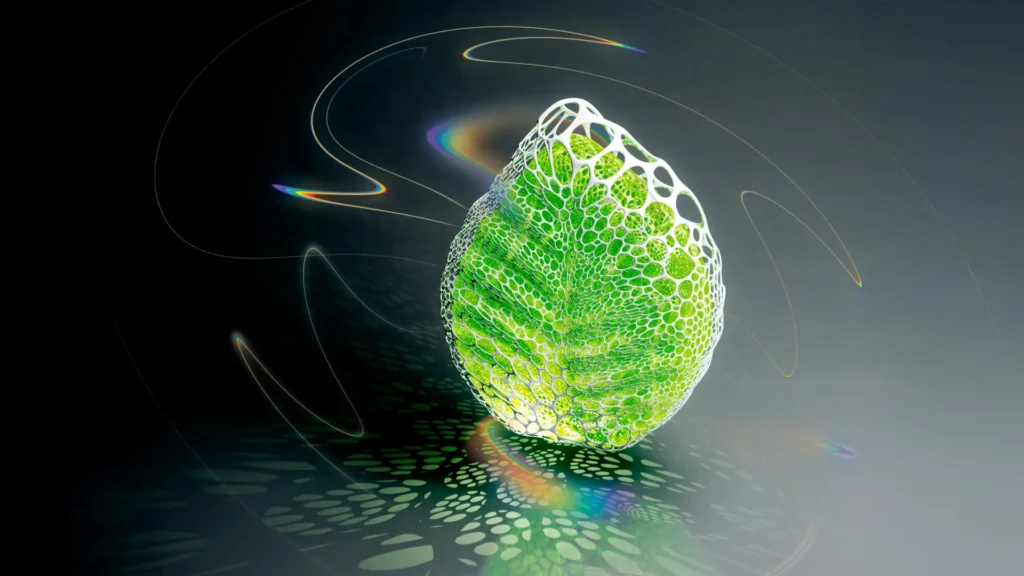
The researchers at iCeMS sought to replicate this "structural whiteness" by engineering a porous foam-like network within solid materials. By creating a specific density and arrangement of microscopic pores, they were able to induce the same light-scattering effect found in Hokusai’s washi paper or the petals of a white flower. This approach eliminates the need for TiO2, a substance that has come under intense regulatory scrutiny. In 2022, the European Union officially banned titanium dioxide (E171) as a food additive due to concerns regarding its potential genotoxicity and the inability to rule out its accumulation in the human body. As the industry anticipates further restrictions on TiO2 in cosmetics and pharmaceuticals, the demand for a non-toxic, structural alternative has never been higher.
Addressing the PFAS Crisis Through Physical Texture
The second major hurdle addressed by the DFP process is the replacement of PFAS, often referred to as "forever chemicals." For decades, PFAS have been the gold standard for creating water- and oil-repellent surfaces in everything from non-stick cookware to outdoor apparel and food packaging. However, their carbon-fluorine bonds are among the strongest in organic chemistry, meaning they do not break down in the environment. Studies have linked PFAS exposure to a range of health issues, including hormonal disruption, immune system suppression, and increased cancer risk. Consequently, governments worldwide are moving toward comprehensive bans on these substances.
The Kyoto-led team found a solution to the PFAS problem by looking toward the "lotus effect." The leaves of the lotus plant are famously water-repellent, not because of a chemical coating, but because of their nanoscopic surface roughness. Water droplets cannot penetrate the tiny gaps between the leaf’s surface structures, causing them to bead up and roll away, taking dirt with them. By using Deep Foam Photolithography, the researchers were able to engineer a similar "super-rough" surface texture on the foam. This physical architecture provides the material with inherent water-management functionality, effectively mimicking the performance of fluorinated chemicals through geometry rather than hazardous chemistry.
The Mechanism of Deep Foam Photolithography (DFP)
The manufacturing process developed by the team is notable for its relative simplicity and its compatibility with existing industrial polymers. The procedure begins by exposing a standard polymer film to a specific wavelength of light. This light triggers "chain scission," a process where the long, sturdy polymer chains are broken into smaller molecular fragments.
Once the material has been selectively "weakened" by light, it is treated with a mild solvent. This solvent interacts with the fragmented molecules, causing the polymer to swell and reorganize. As it expands, the material develops an intricate, open network of microscopic pores. This single transformation provides a dual benefit: the internal pores provide the structural whiteness via light scattering, while the resulting surface roughness provides the necessary hydrophobicity.
"A key challenge faced by biomimetic science is realizing environmentally friendly material designs inspired by nature at the scale and cost of existing materials," noted Associate Professor Taiki Yanagishima of Tokyo Metropolitan University. The DFP process is particularly promising because it does not require the synthesis of entirely new, expensive specialty chemicals. Instead, it utilizes commercially available polymers, making it a viable candidate for large-scale industrial adoption.
High-Resolution Capabilities and Textile Integration
Beyond its environmental benefits, the DFP platform offers technical precision that rivals or exceeds current printing technologies. The researchers demonstrated that the process can achieve an ultra-high resolution of 20,000 dots per inch (DPI). This level of detail opens the door for high-security printing, anti-counterfeiting measures, and the creation of specialized optical components.
Furthermore, the collaboration with textile researchers at Donghua University in Shanghai has proven that the technology is not limited to rigid films or printable coatings. The DFP method was successfully applied to fabrics, suggesting a future where white, water-repellent clothing could be manufactured without any chemical dyes or PFAS treatments. This could revolutionize the "fast fashion" and outdoor gear industries, which are currently among the largest contributors to microplastic and chemical pollution. In the textile application, the structural whiteness ensures that the fabric remains a vibrant white even after repeated washing, as there are no pigment particles to flake off or fade over time.
Chronology of Development and Regulatory Context
The development of DFP is the culmination of several years of interdisciplinary research. The timeline of this breakthrough reflects a broader shift in the scientific community toward "green chemistry" and biomimetics:
- 2019-2020: Initial research phases focused on understanding the light-scattering properties of natural foams and the limitations of TiO2 in food-grade packaging.
- 2021: The European Food Safety Authority (EFSA) publishes its opinion on TiO2, leading to the EU-wide ban. This accelerates the search for structural alternatives.
- 2022-2023: The international team perfects the photolithography process, moving from theoretical models to successful lab-scale prototypes using common polymers.
- 2024: Publication of the team’s findings, demonstrating the 20,000 DPI resolution and successful integration with textiles via the Donghua University partnership.
The regulatory environment has served as a powerful catalyst for this research. In the United States, the Environmental Protection Agency (EPA) recently announced legally enforceable levels for several PFAS in drinking water, while several states have moved to ban PFAS in food packaging and cosmetics. In Asia, Japan’s Ministry of the Environment has been tightening its oversight of perfluorinated compounds, aligning with the Stockholm Convention on Persistent Organic Pollutants. The DFP technology provides a timely exit strategy for industries caught in this regulatory tightening.
Broader Implications and Industry Analysis
The shift from chemical-based functionality to structure-based functionality represents a paradigm shift in materials science. By "building function into the material itself," as the researchers describe it, the industry can reduce the complexity of its supply chains. Currently, a single piece of plastic packaging might require a polymer base, a white pigment (TiO2), and a fluorinated coating (PFAS). Each of these components requires separate mining, synthesis, and transport. The DFP approach collapses these needs into a single material and a streamlined manufacturing process.
From an economic perspective, while the initial transition to photolithographic manufacturing may require capital investment, the long-term savings are significant. The elimination of expensive mineral pigments and the avoidance of potential litigation and cleanup costs associated with PFAS could make DFP-treated materials highly competitive. Furthermore, the reduced weight of porous materials—which are largely composed of air—could lead to lower shipping costs and a smaller carbon footprint across the global logistics chain.
Environmental groups have cautiously welcomed the news. "The move away from ‘forever chemicals’ and potentially harmful mineral pigments is a necessary step for a circular economy," said a spokesperson for a leading environmental NGO. "If we can achieve the same performance through physical architecture, we eliminate the toxic legacy that these materials leave behind."
Conclusion: A New Architectural Approach to Materials
The work of Professor Sivaniah and his colleagues serves as a reminder that the most sophisticated solutions are often found in the natural world. Just as Hokusai used the inherent properties of paper to create the illusion of foam and snow, modern science is now using the architecture of light and air to create the next generation of sustainable materials.
Deep Foam Photolithography offers a fundamentally different path forward. It moves away from the "additive" model of manufacturing—where chemicals are piled onto a substrate to achieve a result—and toward an "integrative" model, where the material’s own physical form provides the desired function. As the global community continues to grapple with the environmental consequences of the 20th century’s chemical revolution, the ability to engineer whiteness and water-repellency through structure alone may prove to be one of the most important technological shifts of the decade. The "Great Wave" of sustainable innovation, it seems, is already beginning to break.