Researchers at the Harvard John A. Paulson School of Engineering and Applied Sciences (SEAS) have unveiled a groundbreaking method for safeguarding delicate quantum information by utilizing mechanical vibrations, or microscopic sound waves, to insulate quantum bits from environmental interference. This development, emerging from the laboratory of Marko Lončar, the Tiantsai Lin Professor of Electrical Engineering at SEAS, represents a significant leap forward in the quest to build compact, chip-integrated quantum networks and hybrid quantum systems. The study, recently published in the journal Nature Physics, details a technique known as "all-mechanical coherence protection," which effectively "dresses" quantum bits in a shield of sound to preserve their functional state.
The research was spearheaded by Eliza Cornell, a recent Ph.D. graduate from the Lončar lab now serving as a postdoctoral researcher at Boston University, and Zhujing Xu, a former postdoctoral scholar in the same group. Their work addresses one of the most persistent hurdles in quantum science: the fragility of quantum states, which are prone to "decoherence" when exposed to the slightest environmental noise. By using phonons—quantized packets of mechanical vibration—the team has demonstrated that sound can serve a dual purpose, acting as both a carrier of information and a protective barrier for the data it transports.
The Quantum Coherence Challenge and the Role of Phonons
At the heart of the quantum computing revolution is the qubit, the fundamental unit of quantum information. Unlike classical bits, which exist as either a zero or a one, qubits can exist in a superposition of states. However, maintaining this state is notoriously difficult. Qubits are hypersensitive to their surroundings; magnetic fluctuations, temperature changes, and even nearby electrical signals can cause the quantum information to "leak" or become corrupted. This stability is measured by "coherence time," the duration for which a qubit can reliably hold and process information.
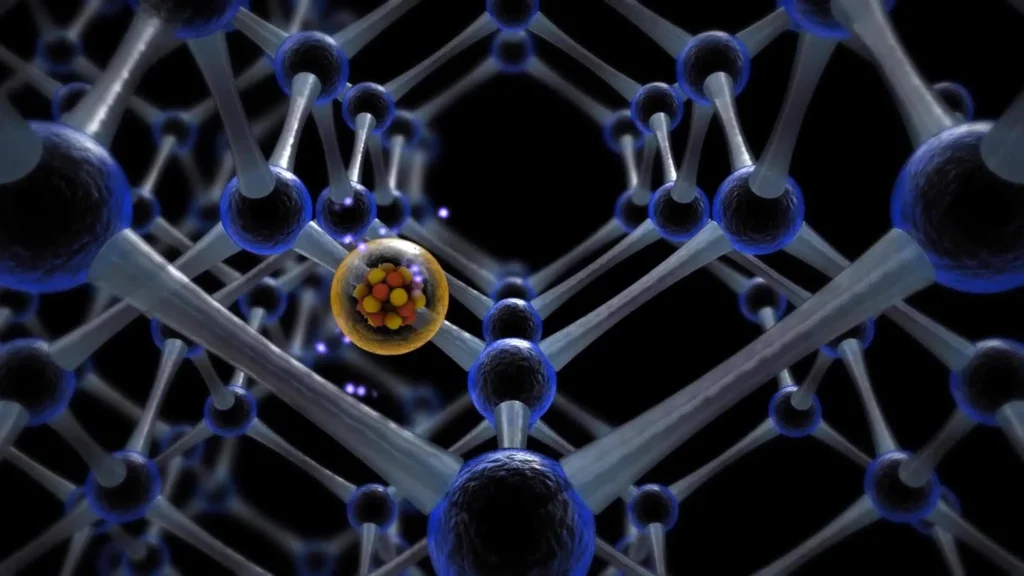
In the SEAS experiment, the researchers focused on a specific type of qubit: the silicon-vacancy (SiV) center in diamond. These are point defects in the diamond crystal lattice where a silicon atom replaces two carbon atoms. SiV centers are highly valued in quantum networking because they possess an electron spin that can store information and can be controlled with high precision. However, when these qubits are integrated into nanophotonic or nanomechanical structures to facilitate communication, they often become more vulnerable to noise, leading to a significant drop in coherence.
Traditionally, scientists have used microwave pulses to decouple qubits from their environment. This process, known as dynamical decoupling, involves hitting the qubit with rapid bursts of electromagnetic radiation to "average out" the effects of environmental noise. While effective in bulk materials, this method faces severe limitations when applied to qubits embedded in phononic cavities—nanoscale structures designed to trap and enhance mechanical vibrations. The Harvard team’s solution bypasses the need for microwaves entirely, opting instead for a continuous mechanical driving field.
The Mechanics of "Dressed" Qubits
The innovation lies in the creation of what the researchers call "dressed" qubits. By continuously applying a mechanical driving field composed of phonons, the researchers force the electron spin of the SiV center into a new quantum state. In this state, the qubit is effectively "wearing" the acoustic field. This "dressing" shifts the qubit’s energy levels in a way that makes it significantly less sensitive to the low-frequency noise that typically plagues solid-state quantum systems.
"We are solving two problems simultaneously," explained Eliza Cornell. "We want the spin to have strong interaction with phonons to move information, and we want the spin to have a long coherence time to store information. Our paper demonstrates a method of extending the coherence time that is compatible with the silicon-vacancy center being located within a cavity."
This compatibility is crucial. In previous iterations of quantum hardware, there was often a trade-off: you could have a qubit that was well-protected but isolated, or a qubit that was well-connected but highly unstable. By using phonons to provide the protection, the Harvard team has ensured that the mechanism used to shield the qubit is the same medium used to connect it to other parts of a network.
Experimental Results and Supporting Data
The results of the Harvard experiments are striking. By applying all-mechanical coherence protection, the team was able to increase the coherence time of the silicon-vacancy spin by approximately a factor of three. This extension, while seemingly modest, is a proof-of-concept that suggests mechanical noise suppression can be scaled and refined to provide even greater levels of stability in future devices.
Data from the study indicates that the "dressed" state is particularly effective at filtering out magnetic and thermal noise that resides in the lower frequency spectrum. Because the mechanical driving field is continuous, rather than pulsed like traditional microwave methods, it provides a constant "buffer" against the environment. Furthermore, the use of phonons offers a spatial advantage. At the same frequency as light (photons), phonons have wavelengths that are roughly 100,000 times shorter. This allows for the creation of quantum components that are significantly smaller than their optical counterparts, enabling a higher density of qubits on a single chip.
The experiments were conducted using the sophisticated facilities at the Harvard Center for Nanoscale Systems (CNS). The researchers utilized a phononic cavity—a tiny, bridge-like structure etched into the diamond—to confine the phonons and maximize their interaction with the SiV center. This setup allowed the team to observe the fast control of the spin qubit while maintaining the protective acoustic field.
A Chronology of Innovation in the Lončar Lab
The breakthrough is the latest in a series of advancements from Professor Marko Lončar’s group, which has spent over a decade exploring the intersection of nanophotonics, diamond quantum hardware, and acoustics.
- 2014-2018: The lab focused heavily on the development of silicon-vacancy centers in diamond as a viable alternative to nitrogen-vacancy centers, citing their superior optical properties and reduced sensitivity to electric field noise.
- 2019-2021: Research shifted toward the integration of these centers into "quantum microchips." During this period, the lab pioneered the use of phononic crystals to control the flow of mechanical vibrations at the nanoscale.
- 2022-2023: The team began exploring "spin-phonon" coupling, looking for ways to use sound as a bus for quantum information. This led to the realization that the same phonons could be manipulated to protect the spin states they were interacting with.
- 2024: The publication of the "all-mechanical coherence protection" findings in Nature Physics marks the culmination of this effort, providing a unified framework for quantum communication and protection using sound.
Broader Implications for Hybrid Quantum Systems
The implications of this research extend far beyond the walls of the Lončar lab. One of the most promising applications for all-mechanical coherence protection is in the development of hybrid quantum systems. Currently, the field of quantum computing is fragmented, with different researchers using different types of qubits—such as superconducting loops, trapped ions, or solid-state spins. Each has its own strengths: superconducting qubits are excellent for fast processing, while spin qubits in diamond are superior for long-distance communication and memory.
Phonons are an ideal "universal translator" for these different systems. Because they interact readily with both electromagnetic fields (used in superconducting qubits) and solid-state spins (like the SiV center), phonons can bridge the gap between disparate quantum technologies. The ability to protect information while it is being translated or transported via sound waves is a critical requirement for any large-scale quantum internet.
Furthermore, the shift toward mechanical control reduces the reliance on bulky microwave infrastructure. In a future where quantum computers require thousands or millions of qubits, the ability to control and protect those qubits using chip-scale mechanical resonators could lead to much more compact and energy-efficient systems.
Official Support and Future Commercialization
The research received substantial support from several U.S. federal agencies, reflecting the strategic importance of quantum information science to national security and economic competitiveness. Funding was provided by the National Science Foundation (NSF) under grant number EEC-1941583, and the Air Force Office of Scientific Research (AFOSR) under award numbers FA9550-23-1-0333 and FA9550-23-1-0338.
Additional support came from Q-NEXT, one of the five U.S. Department of Energy Office of Science National Quantum Information Science Research Centers. The work also utilized the National Nanotechnology Infrastructure Network, supported by the NSF.
Recognizing the commercial potential of this discovery, the Harvard Office of Technology Development (OTD) has announced that it is actively pursuing patent protection for the innovations described in the study. The OTD is also exploring opportunities for commercialization, which could involve licensing the technology to established semiconductor companies or spinning off a new venture focused on phonon-based quantum hardware.
Analysis of the Path Forward
While a three-fold increase in coherence time is a significant milestone, the path to a fully functional quantum computer remains long. The next steps for the Harvard team and the broader scientific community will involve optimizing the phononic cavity designs to achieve even higher "Q-factors" (a measure of how well the cavity traps vibrations). Higher Q-factors would allow for even stronger spin-phonon coupling and potentially longer coherence times.
There is also the challenge of scalability. While the Harvard team demonstrated protection for a single qubit, a quantum network will require the simultaneous protection and entanglement of multiple qubits across a chip. The "all-mechanical" nature of this new technique is a benefit here, as it simplifies the architecture needed to manage large arrays of qubits.
In the landscape of global quantum research, this Harvard-led advancement places a renewed spotlight on the field of quantum acoustics. As the limitations of purely optical or purely microwave-based systems become more apparent, the "sound" approach offers a compelling alternative that is compact, versatile, and—now—increasingly resilient. Microscopic sound waves, once thought of merely as a source of disruptive heat or noise in electronics, are now being tuned into the very guardians of the quantum age.