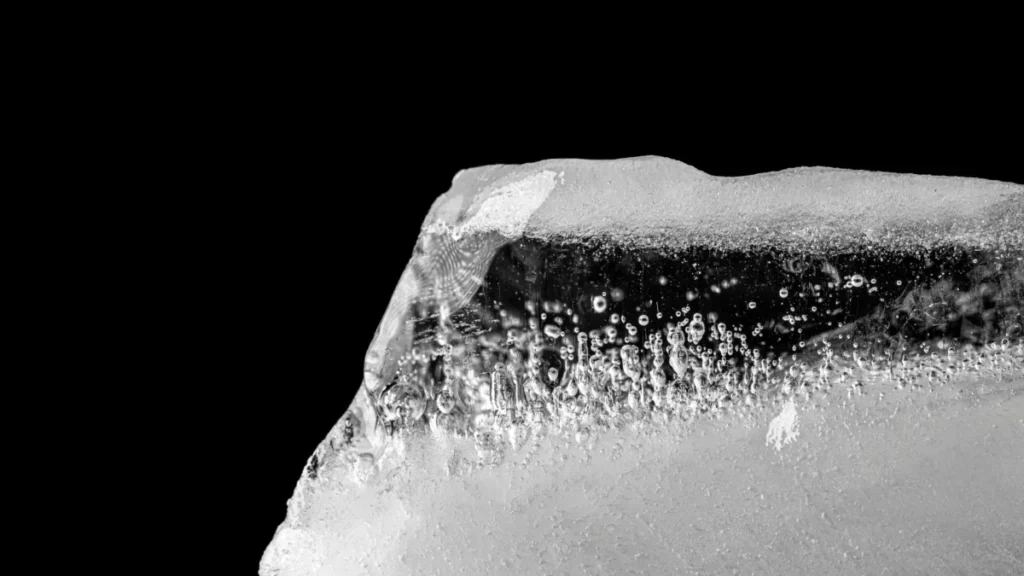
Scientists from the Hebrew University of Jerusalem have engineered a revolutionary material, dubbed BioPykrete, which represents a significant leap forward in the field of cryo-materials science. This novel form of reinforced ice is approximately ten times stronger than conventional ice, exhibiting properties that rival those of concrete. Unlike typical ice, which shatters abruptly upon impact, BioPykrete demonstrates a remarkable capacity for gradual deformation and bending before failure, a characteristic that could fundamentally alter construction methodologies in the planet’s most frigid and remote environments. The innovation, rooted in a sophisticated understanding of molecular interactions, promises to offer a sustainable and economically viable alternative for infrastructure development in the Arctic and Antarctic.
The Historical Echo: Pykrete’s Wartime Legacy
The concept of reinforcing ice to enhance its structural integrity is not entirely new; its origins can be traced back to the desperate exigencies of World War II. During this tumultuous period, Allied researchers, notably Geoffrey Pyke and Max Perutz, experimented with a composite material known as Pykrete. This precursor to BioPykrete was a mixture of ice and wood pulp, typically in a ratio of 14% wood pulp to 86% ice by weight. The intention behind Pykrete was ambitious: to construct unsinkable aircraft carriers, known as Project Habakkuk, capable of withstanding torpedo attacks and serving as mobile airbases in the mid-Atlantic.
Project Habakkuk was a testament to ingenious, if ultimately impractical, wartime innovation. The addition of wood pulp, primarily sawdust, significantly improved ice’s tensile strength and creep resistance, making it stronger and less prone to melting than pure ice. Tests conducted on Lake Patricia in Alberta, Canada, demonstrated that Pykrete could indeed float and withstand considerable impact. A scaled-down prototype, measuring 60 feet long and weighing 1,000 tons, proved remarkably resilient. However, the logistical challenges associated with producing and maintaining such colossal structures – requiring vast amounts of wood pulp, continuous refrigeration, and monumental construction efforts in remote locations – proved insurmountable. The project was eventually shelved in 1943, marking Pykrete as an intriguing but ultimately unfulfilled chapter in material science history.
Despite its failure to reach operational deployment, the Pykrete experiment laid foundational insights into the potential of ice as a structural material when properly reinforced. It demonstrated that incorporating fibrous elements could dramatically alter ice’s mechanical properties, shifting it from a brittle substance to a more resilient composite. Modern scientists, armed with advanced molecular engineering techniques, have now revisited this historical precedent, seeking to overcome its limitations by delving into the nanoscale realm.
A Molecular Revolution: Engineering Strength from Within
The development of BioPykrete by the Hebrew University team represents a profound evolution from the rudimentary fiber-mixing techniques of the Pykrete era. Rather than simply embedding macroscopic fibers, the researchers embarked on a molecular-level design strategy to create a material with unprecedented strength and energy absorption capabilities. Professor Ido Braslavsky, from Hebrew University’s Robert H. Smith Faculty of Agriculture, Food and Environment, articulated the core ambition: "We wanted to go beyond simply mixing fibers into ice and instead control how the different materials connect at the molecular level."
At the heart of BioPykrete’s superior performance lies a sophisticated combination of cellulose nanocrystals (CNCs) and a specially engineered protein. Cellulose nanocrystals are extremely small, stiff particles derived from cellulose, the most abundant natural polymer on Earth and the primary structural component of plant cell walls. These nanocrystals possess exceptional strength-to-weight ratios and are inherently sustainable, being renewable and biodegradable. When mixed with water, these nanocrystals, typically just a few nanometers in diameter and hundreds of nanometers long, self-assemble into intricate three-dimensional networks as the mixture freezes. This network acts as a robust scaffold, effectively compartmentalizing and reinforcing microscopic sections of ice.
The true innovation, however, lies in the design of a unique protein that acts as a molecular bridge, or "glue," between the ice and the cellulose nanocrystals. This bifunctional protein is meticulously engineered with two distinct binding domains: one part of the protein specifically attaches to the ice lattice, while the other part binds strongly to the cellulose nanocrystals. This dual-attachment mechanism ensures a seamless and strong interface between the two components, preventing delamination and distributing stress more effectively throughout the composite material. "The result changes not only how strong the ice is, but also how it breaks. Instead of suddenly shattering, it can absorb much more energy and deform gradually," Professor Braslavsky further explained, highlighting the critical role of this molecular-level engineering in transforming the material’s failure mode.
Unprecedented Performance: Rivaling Concrete and Beyond
Laboratory tests conducted on BioPykrete have yielded remarkable results, underscoring its potential as a groundbreaking construction material. Under compression, BioPykrete was found to be approximately ten times stronger than pure ice. To put this into perspective, typical compressive strengths for ordinary ice range from 1 to 10 megapascals (MPa), depending on temperature and crystal structure. BioPykrete, by achieving strengths comparable to conventional concrete, suggests compressive strengths potentially in the range of 20-40 MPa or even higher. Standard concrete commonly used in construction typically has compressive strengths ranging from 20 MPa (3,000 psi) for residential applications to over 70 MPa (10,000 psi) for high-performance structures. This direct comparison positions BioPykrete as a genuine contender for structural applications where strength is paramount.
Beyond sheer strength, BioPykrete exhibits an even more impressive characteristic: its energy absorption capacity. The material was found to absorb around 70 times more energy before failing compared to pure ice. This property, known as toughness, is crucial for materials exposed to dynamic loads, impacts, or seismic activity. A material that absorbs more energy before breaking is inherently safer and more resilient, as it can deform significantly without catastrophic failure. For structures in extreme cold environments, where materials can become particularly brittle, this gradual deformation capability is a critical safety feature, preventing sudden, unpredictable collapses. The engineered protein played a pivotal role in achieving this enhanced performance; adding it doubled both the strength and the energy absorption capacity compared with a similar ice-and-cellulose mixture that lacked this molecular bridge, definitively proving its efficacy as a molecular "superglue."
Sustainable Solutions for Extreme Environments
The primary envisioned application for BioPykrete is in the demanding and often inhospitable Arctic and Antarctic regions. Construction in these extreme environments presents formidable challenges, both logistical and economic. Transporting traditional building materials such as concrete, steel, and timber to remote polar research stations, mining operations, or military outposts is an extraordinarily expensive and complex undertaking. These materials must often be shipped thousands of miles, sometimes through treacherous seas or over vast expanses of frozen terrain, incurring exorbitant costs, significant carbon emissions, and considerable delays. A single ton of construction material can cost upwards of several thousand dollars to transport to these remote locales, making large-scale infrastructure projects prohibitively expensive.
BioPykrete offers a compelling solution to these challenges. Composed primarily of water (ice) and plant-based cellulose, both of which are abundant in many regions, the material could significantly reduce the reliance on imported heavy materials. This local sourcing potential dramatically cuts down on transportation costs and logistical complexities. Furthermore, the material’s composition inherently lends itself to a lower-carbon footprint. The production of traditional building materials like cement and steel is energy-intensive and accounts for a substantial portion of global industrial greenhouse gas emissions. By contrast, BioPykrete leverages renewable resources and minimizes manufacturing processes, potentially offering a more environmentally benign alternative. Its biodegradability is another significant advantage; at the end of its service life, BioPykrete structures could simply melt and decompose naturally, leaving minimal ecological impact, unlike concrete or steel debris. This aligns perfectly with the stringent environmental regulations and conservation efforts in polar regions, where preserving pristine ecosystems is a top priority.
Revolutionizing Polar Infrastructure
The implications of BioPykrete for infrastructure development in polar regions are far-reaching. Imagine temporary research stations that can be quickly erected and dismantled with minimal environmental disturbance, or durable shelters for scientific personnel and equipment that are both strong and sustainable. BioPykrete could also be used to construct ice roads with extended service lives, capable of supporting heavier loads and resisting deformation under stress for longer periods. Currently, ice roads in the Arctic are crucial for seasonal transport but require constant maintenance and are limited by temperature fluctuations. Reinforced ice could provide more stable and reliable transport routes.
Beyond roads, the material could pave the way for reinforced ice landing strips for aircraft, enabling safer and more frequent air travel to remote areas. Existing ice runways demand meticulous preparation and are susceptible to cracking and melting. BioPykrete’s enhanced strength and gradual failure mechanism would greatly improve their safety and operational lifespan. Other potential applications include foundations for scientific instruments, temporary dams for hydrological studies, or even protective barriers against extreme weather events. The ability to "grow" building materials largely from local resources, especially water, in sub-zero environments could revolutionize how we approach construction in these logistically constrained parts of the world.
The Path Forward: Challenges and Future Research
While the scientific breakthrough represented by BioPykrete is undeniable, the material is currently in its "proof of concept" stage. This means that while its fundamental properties and potential have been demonstrated in laboratory settings, extensive further testing and development are required before it can be deployed in real-world applications. The transition from lab to practical use often involves overcoming a myriad of challenges.
Key areas of future research include:
- Long-Term Performance: Scientists need to understand how BioPykrete performs over extended periods, particularly under constant load in extreme cold. The phenomenon of "creep," where materials slowly deform under continuous stress, is a critical factor for ice-based structures and must be thoroughly investigated.
- Freeze-Thaw Cycling: Polar regions experience seasonal temperature fluctuations. The material’s resilience to repeated freezing and thawing cycles, which can cause internal stresses and degradation, must be rigorously tested.
- Scale-Up and Production: Developing methods for cost-effective, large-scale production of BioPykrete components is essential. This includes optimizing the mixing process, controlling the freezing kinetics, and ensuring uniform distribution of cellulose nanocrystals and the engineered protein.
- Cost-Effectiveness Analysis: While potentially reducing transport costs, the initial production cost of the engineered protein and cellulose nanocrystals needs to be balanced against the overall economic benefits compared to traditional materials.
- Environmental Impact Assessment: A comprehensive lifecycle assessment (LCA) will be necessary to fully quantify the environmental benefits and potential impacts across the entire material lifecycle, from raw material extraction to disposal.
- Structural Design and Engineering Standards: New design principles and engineering standards will need to be developed for structures built with BioPykrete, taking into account its unique mechanical properties and environmental interactions.
Broader Implications for Material Science and Sustainability
The development of BioPykrete extends beyond merely providing a new building material for cold regions. It signifies a broader paradigm shift in material science, emphasizing biomimicry and sustainable engineering. By drawing inspiration from nature’s structural materials (cellulose) and employing molecular-level design, researchers are creating advanced composites with properties previously thought unattainable for such environmentally benign components. This approach could inspire the development of other novel materials for various applications, pushing the boundaries of what is possible with renewable resources.
This innovation also underscores the growing imperative for sustainable solutions in the face of climate change. As the world seeks to decarbonize industries and reduce its ecological footprint, materials like BioPykrete, which offer high performance with a low environmental impact, will become increasingly vital. It represents a tangible step towards a future where infrastructure development is not only robust and resilient but also harmoniously integrated with the natural environment, particularly in sensitive ecosystems like the polar regions. The scientific community, engineers, and environmental policymakers will undoubtedly watch the continued development of BioPykrete with keen interest, hoping it heralds a new, colder, and greener era for construction.