In a landmark development for the field of quantum information science, an international team of physicists has successfully extended the operational lifetime of magnons—quasiparticles representing collective excitations of electron spins—by nearly two orders of magnitude. By increasing the lifespan of these magnetic waves from a few hundred nanoseconds to a staggering 18 microseconds, researchers have effectively removed one of the most significant barriers to utilizing magnons as reliable carriers of quantum information. This breakthrough, led by the University of Vienna, suggests a future where quantum processing units could be miniaturized to the size of a small coin, dramatically shifting the trajectory of quantum hardware development.
The research, published in the prestigious journal Science Advances, represents a fundamental shift in how scientists perceive the limitations of magnetic systems. For decades, the fleeting nature of magnons made them difficult to harness for complex computations. However, the new findings indicate that the constraints on magnon longevity are not dictated by the immutable laws of physics, but rather by the tangible quality of the materials through which they propagate. This realization opens a clear engineering pathway toward high-performance, solid-state quantum devices.
Understanding the Role of Magnons in Quantum Architecture
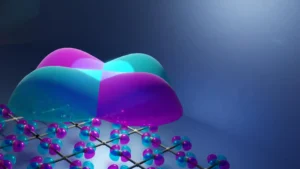
To appreciate the significance of this 100-fold increase in lifetime, one must first understand what magnons are and why they are considered a "holy grail" for miniaturized quantum technology. In the simplest terms, magnons are waves of magnetization that travel through magnetic materials. They are often described as ripples on a pond; just as a stone dropped into water creates a wave that carries energy across the surface, a disturbance in a magnetic field creates a magnon that carries information through a solid crystal.
Unlike photons, which are the basis for fiber-optic communication and travel through vacuums or glass at the speed of light, magnons are confined to magnetic solids. This confinement is actually a massive advantage for engineers. Because magnons have extremely short wavelengths—often shrinking to the nanometer scale—they can be manipulated within circuits that are significantly smaller than those required for light-based or electronic quantum systems. While current superconducting quantum computers require massive cooling units and sprawling wire configurations, a magnon-based processor could theoretically fit on a chip no larger than those found in modern smartphones.
Furthermore, magnons possess a unique ability to interact with a wide variety of other quasiparticles, such as phonons (vibrations in a crystal lattice) and photons. This "interactivity" makes them ideal candidates for hybrid quantum systems, where they can act as a bridge between different types of quantum hardware, such as a link between a stationary quantum memory and a mobile quantum communication signal.
The Technical Challenge: Overcoming Decoherence
The primary obstacle to the practical application of magnons has always been "decoherence"—the process by which quantum information is lost to the environment. In previous experiments, magnons were notoriously short-lived. Surviving for only a few hundred nanoseconds (billionths of a second), they would dissipate before they could perform meaningful logic gates or transfer data across a processor.
This rapid decay was long thought to be an inherent property of magnetic systems at the quantum level. If a signal disappears in less than a microsecond, it cannot be used for complex error-corrected quantum computing, which requires long "coherence times" to ensure the accuracy of the calculation. The research team, led by Professor Andrii Chumak at the University of Vienna, set out to challenge this assumption by investigating the specific mechanisms that cause magnons to lose energy.
Methodology: Extreme Cold and High-Purity Crystals
The breakthrough was achieved through a combination of sophisticated cryogenic engineering and a novel approach to magnon generation. The researchers utilized ultra-pure spheres of yttrium iron garnet (YIG), a synthetic magnetic material that has long been the "gold standard" in the study of magnetism due to its low signal loss.
The experiment was conducted in several key stages:
- Cryogenic Cooling: The YIG spheres were placed inside a mixed-phase cryostat, a device capable of reaching temperatures as low as 30 millikelvin. This is approximately -273.12 degrees Celsius, just a fraction of a degree above absolute zero. At these extreme temperatures, the thermal energy that usually causes atoms to vibrate and disrupt magnon signals is "frozen out," creating a pristine environment for quantum observation.
- Short-Wavelength Selection: Instead of using uniform magnons (where the entire magnetic sphere oscillates in unison), the team generated short-wavelength magnons. These specific waves are less susceptible to surface imperfections. In previous studies, even microscopic defects on the surface of a crystal could scatter a magnon, leading to its early demise. By focusing on shorter wavelengths that stay deeper within the bulk of the material, the researchers bypassed these surface-level traps.
- Comparative Purity Testing: The team tested three different YIG spheres with varying levels of chemical purity. This was the critical step in identifying the true bottleneck of magnon longevity.
A Paradigm Shift: Materials vs. Physics
The most profound insight from the study came from the comparison of the three YIG samples. The researchers observed a direct correlation: the purer the crystal, the longer the magnon survived. Even the sample with the lowest purity among the three outperformed all previous historical records for magnon lifetime.
This discovery effectively debunked the theory that magnons are fundamentally limited by "intrinsic" physical damping. Instead, it proved that the "extrinsic" factors—impurities in the crystal lattice and defects in the material—were the primary culprits for signal loss.
"We found that the lifespan is not limited by the laws of physics, but by the quality of the material," stated the researchers in the study. This is a highly optimistic finding for the industry. It suggests that as material science advances and techniques for growing ultra-pure crystals improve, the lifetime of magnons could potentially extend even further, perhaps into the millisecond range.
Chronology of Magnon Research and the Road to 18 Microseconds
The journey to this 18-microsecond milestone has been decades in the making.
- The 1950s-1960s: Yttrium Iron Garnet (YIG) was first synthesized and identified as a material with incredibly low magnetic damping. It became the foundation for microwave technology.
- The 2000s: The field of "magnonics" emerged, with scientists proposing that magnons could be used for data processing as an alternative to electrons (spintronics).
- The 2010s: Researchers began exploring magnons at the single-quantum level. However, lifetimes remained stuck in the nanosecond range, limiting their use to basic laboratory demonstrations.
- 2020-2023: Advances in dilution refrigerators allowed for more stable experiments at millikelvin temperatures. Researchers began to suspect that impurities were the main cause of decoherence.
- The Present Breakthrough: The University of Vienna team, through the work of doctoral researcher Rostyslav Serha, combined short-wavelength physics with ultra-pure materials to shatter the microsecond barrier.
Implications for the "Quantum Bus" and Scalability
One of the most exciting prospects of this research is the development of a "quantum bus." In a quantum computer, a bus is a communication pathway that connects multiple qubits (quantum bits). Currently, connecting more than a handful of qubits is a massive engineering challenge because the wires used to connect them often introduce noise and heat.
Because magnons can travel across a chip and interact with hundreds of qubits simultaneously, they could serve as a high-speed, low-loss highway for quantum data. An 18-microsecond lifetime is long enough for a magnon to travel several millimeters—a vast distance in the world of microchips—allowing it to link distant parts of a quantum processor.
Furthermore, the "universal translator" capability of magnons cannot be overstated. In a future quantum internet, different devices might use different quantum systems (e.g., one uses light, another uses superconducting circuits). Magnons can convert signals between these systems, acting as a crucial interface that allows disparate technologies to communicate.
Global Collaboration and Academic Contributions
The study was a truly international effort, reflecting the global nature of quantum research. While led by Andrii Chumak at the University of Vienna, the project involved significant contributions from the University of Colorado, Colorado Springs, as well as institutions in Germany, Ukraine, and the United States.
The inclusion of researchers from Ukraine, despite the ongoing geopolitical challenges in the region, highlights the resilience of the scientific community. Additionally, the project emphasized the training of the next generation of physicists. Co-author Kaitlin McAllister participated through the Vienna Doctoral School in Physics, an institution known for providing high-level internships to master’s students, ensuring that the expertise gained during this breakthrough is passed down to future innovators.
Analysis: The Future of Coin-Sized Quantum Computing
The ultimate goal of this research is the radical miniaturization of quantum hardware. Currently, leading quantum computers from companies like IBM and Google are the size of large refrigerators and require entire rooms of support equipment. The ability to use magnons—which operate at the nanometer scale—could change that.
If magnons can be reliably used for memory and logic, the cooling requirements and the physical footprint of the processor could shrink. While a 30-millikelvin environment is still necessary, the "active" part of the computer—the processor itself—could become as small as a 1-cent coin. This would allow for modular quantum systems where multiple small processors are linked together, rather than building one giant, unwieldy machine.
However, challenges remain. While 18 microseconds is a monumental leap, it is only the beginning. To compete with the most advanced superconducting qubits, which can sometimes reach coherence times of hundreds of microseconds, magnon purity must continue to improve. The next phase of research will likely focus on industrializing the production of "quantum-grade" YIG and integrating these magnetic spheres with existing qubit technologies.
Conclusion
The extension of magnon lifetimes to 18 microseconds marks a turning point in the field of quantum electronics. By proving that material purity is the key to unlocking quantum performance, the University of Vienna and its partners have provided a roadmap for the next decade of research. As the world moves closer to a practical quantum advantage, the humble magnon—once dismissed as too fleeting for serious work—may well become the backbone of the next generation of ultra-compact, high-efficiency quantum computers.