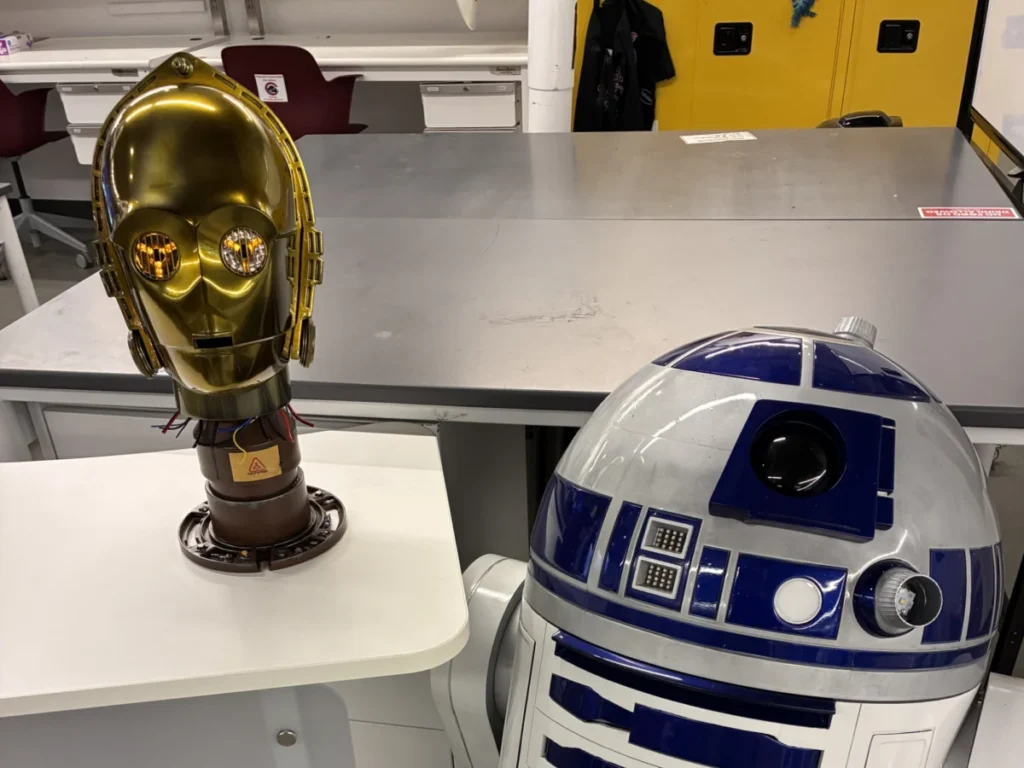
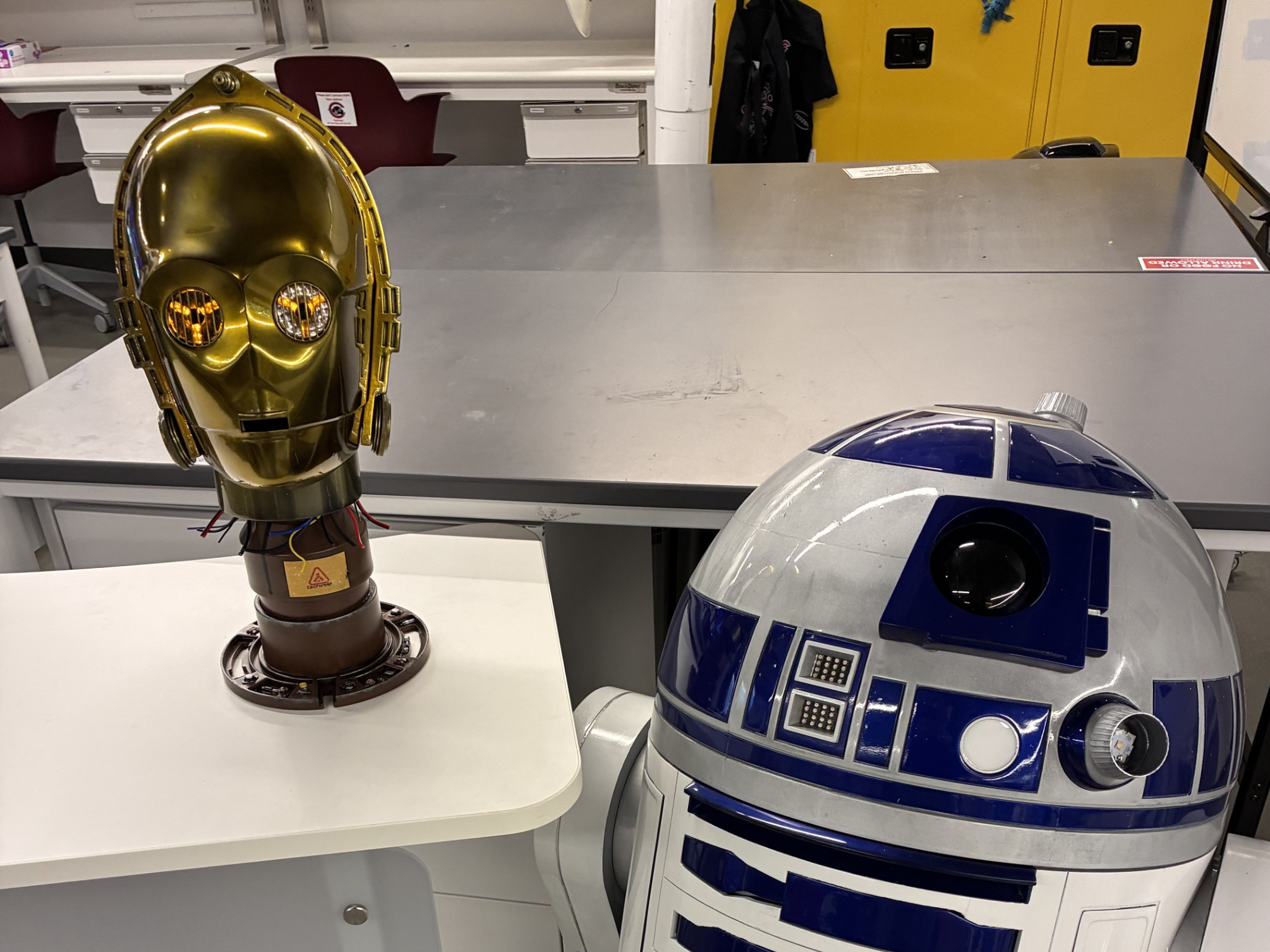
In an era saturated with digital chatbots, a student’s ambitious project is pushing the boundaries of human-AI interaction by bringing a beloved fictional character into tangible reality. Sam Potozkin, a student at Chapman University, has meticulously crafted a physical, conversational C-3PO head, dubbed "Threepio," that not only faithfully replicates the iconic Star Wars protocol droid’s appearance but also runs its AI chat stack locally on a Raspberry Pi 5. This endeavor transcends mere fandom, serving as a profound exploration into why embodied AI systems elicit different human responses compared to their purely digital counterparts, a subject Potozkin delves into in a dedicated research paper.
The Genesis of Threepio: Bridging Fiction and Reality
The inspiration for Potozkin’s Threepio project is, unsurprisingly, rooted in the enduring legacy of the 1977 film Star Wars: A New Hope. C-3PO, with his distinctive golden sheen, perpetual anxiety, and unparalleled mastery of "six million forms of communication," has captivated audiences for decades. His role as a protocol droid, designed to facilitate human-cyborg relations, makes him a particularly apt subject for exploring the complexities of human-AI interaction. Potozkin’s goal was not just to build a prop, but to replicate the experience of interacting with C-3PO, focusing on the nuanced psychological and communicative elements that define the character.
The project began with a fundamental question: what happens when conversational AI moves off the screen and into a physical, interactive system? This central inquiry guided every design and engineering decision. While AI chatbots are now commonplace, often residing as disembodied voices or text on a screen, Potozkin sought to imbue his AI with a physical presence, a distinct voice, and a recognizable personality that could be experienced in the real world. This emphasis on "embodiment" is a critical distinction, setting Threepio apart from the vast majority of AI applications available today.
Technical Architecture: A Localized AI Powerhouse
At the heart of Threepio’s intelligence lies a Raspberry Pi 5, a powerful single-board computer that enables the entire AI chat stack to run locally. This choice is significant, as it sidesteps the reliance on cloud-based AI services, offering greater privacy, lower latency, and demonstrating the increasing capability of edge computing for complex AI tasks. The Raspberry Pi 5, released in late 2023, boasts a substantial leap in processing power, making it a viable platform for running larger language models (LLMs) and intricate AI applications directly on the device. This local processing capability is crucial for achieving the responsive, fluid conversational experience that Potozkin envisioned.
Beyond the computational core, the audio output system received particular attention. Instead of a conventional speaker, Potozkin integrated an exciter, a device that vibrates surfaces to produce sound. By attaching the exciter to the 3D-printed head, the voice of Threepio appears to emanate from the entire structure, creating a more natural and immersive auditory experience. This detail is pivotal in selling the illusion of an animated, sentient being, as opposed to a simple speaker hidden within a shell. Significant time was dedicated to refining these audio effects, adjusting reverberation, pitch, and tone to perfectly capture C-3PO’s iconic vocal inflections, further enhancing the sense of interacting with the actual character.
The physical construction of the droid head itself is a testament to meticulous craftsmanship. Utilizing 3D printing, Potozkin fabricated the case, then undertook extensive post-processing to achieve a smooth, metallic finish. This involved numerous hours of sanding away layer lines, addressing issues like "orange peel" texture, and applying a gleaming gold coat that instantly evokes the original droid. Small "greeblies"—intricate, seemingly functional details often found on sci-fi props—were added to the display stand, further enhancing the project’s verisimilitude and aesthetic appeal. The journey was not without its challenges, including the need to learn soldering techniques, refine audio effects, and even recover from a dropped head during the delicate construction process, underscoring the ambitious nature of the endeavor.
The Philosophical Core: Exploring Human-AI Interaction
Potozkin’s project is more than just a sophisticated fan build; it is a research vehicle. Accompanying the physical creation, he authored a paper titled "Exploring Human-AI Interaction," which delves into the theoretical underpinnings of his work. The paper critically examines why human reactions to modern, screen-bound AI often differ dramatically from their responses to anthropomorphic, embodied figures, even those from decades-old fiction like C-3PO.
The core argument put forth in Potozkin’s paper is that embodiment plays a crucial role in shaping human perception and interaction with AI. When AI is given a physical form, a distinct voice, and a personality, it transcends its purely digital existence and enters the realm of "presence." This presence fosters a different kind of engagement, evoking empathy, familiarity, and a sense of shared space that screen-based interactions often lack. As Potozkin articulates in his paper: "This project explores the translation of a fictional character into a real-world, embodied AI system. Developing this system required translating and combining abstract concepts from both AI and communication theory into a functional, working architecture. The goal of the project was to explore what happens when conversational AI moves off the screen and into a physical, interactive system. Rather than treating AI as something purely digital, this build focuses on embodiment, giving the system a presence, voice, and personality that can be experienced in the real world."

This perspective resonates with broader research in human-robot interaction (HRI), a field dedicated to understanding, designing, and evaluating robotic systems for use by or with humans. HRI studies consistently demonstrate that robots with human-like features or personalities tend to be perceived as more trustworthy, engaging, and even capable, compared to their more abstract or purely functional counterparts. C-3PO, designed explicitly as a protocol droid to mediate between cultures, represents an ideal fictional model for this exploration. His built-in "personality" – his fussiness, politeness, and perpetual worry – makes him a compelling figure to test the boundaries of human-AI connection.
Broader Implications: The Rise of Embodied AI and Open-Source Innovation
Potozkin’s Threepio project sits at the confluence of several significant technological and cultural trends. The proliferation of AI chatbots has indeed made them a "dime a dozen," but the integration of AI into custom hardware, particularly with a focus on detailed embodiment, remains a less common but steadily growing niche. This project highlights the increasing accessibility of advanced AI capabilities to individual makers and researchers, driven by powerful, affordable hardware like the Raspberry Pi 5 and the availability of open-source AI models.
The open-source nature of the Threepio project is another critical aspect. Potozkin has made his code and build instructions available on GitHub, encouraging others to "customize and extend" his work. This commitment to open-source development is a cornerstone of the maker movement and the broader AI community, fostering collaborative innovation. It invites other enthusiasts to iterate on his design, perhaps adding the remaining "5,999,999 languages" C-3PO purportedly knows, or integrating new functionalities that further enhance the droid’s interactive capabilities. This collaborative spirit ensures that such pioneering projects can evolve beyond their initial scope, creating a ripple effect of learning and development.
This trend toward embodied AI is not confined to hobbyist projects. Major tech companies and research institutions are increasingly investing in physical AI systems, from companion robots to advanced industrial automatons. The insights gleaned from projects like Threepio contribute to a growing body of knowledge about how humans will interact with these future systems. Understanding the psychological impact of a robot’s physical form, its voice, and its simulated personality is paramount for designing AI that is not only functional but also socially acceptable, trustworthy, and beneficial.
Cultural Context: Star Wars Droids and the Maker Ethos

The Star Wars universe has long been a fertile ground for the maker community. Droids like R2-D2 and C-3PO are more than just background elements; they are characters with distinct personalities and integral roles in the saga. The thriving community of "droidsmiths" dedicated to building screen-accurate replicas of these droids, often sharing techniques and resources, underscores a deep cultural connection to these fictional machines. Projects like Potozkin’s Threepio are a natural extension of this ethos, blending traditional craftsmanship with cutting-edge technology.
Experienced R2-D2 builders often advise beginners to start with the dome, a challenging but manageable component that teaches many essential skills. Potozkin’s decision to focus on C-3PO’s head follows a similar logic, allowing him to concentrate on the complex interplay of visual fidelity, audio immersion, and AI processing without the added logistical challenges of a full bipedal robot. This focused approach enabled him to achieve a remarkable level of detail and functional depth within a more constrained scope.
Expert Perspectives and Future Outlook
While specific official reactions from Chapman University or AI experts were not provided in the original text, one can infer the significance of such a project within academic and technological circles. From an academic standpoint, Potozkin’s work, particularly his accompanying paper, offers valuable empirical and theoretical contributions to the fields of human-computer interaction, robotics, and communication studies. It provides a tangible case study for analyzing the efficacy of embodiment in fostering more natural and engaging AI interactions.
Looking ahead, projects like Threepio hint at a future where personalized, embodied AI companions could become more common. Imagine a household where AI assistants are not just smart speakers but interactive, physically present entities tailored to individual preferences. The ethical implications of such a future are vast, encompassing questions of data privacy, the potential for emotional manipulation, and the very definition of companionship. Potozkin’s work, by bringing a familiar, somewhat comforting, and explicitly "programmed" personality to life, offers a valuable starting point for these broader discussions. It reminds us that as AI advances, its integration into our physical world will require not just technological prowess but also a deep understanding of human psychology and a thoughtful consideration of the societal impact.
In conclusion, Sam Potozkin’s Threepio project stands as an impressive feat of engineering, design, and conceptual exploration. By leveraging modern AI and hardware to recreate a classic fictional character, he has not only paid homage to a cultural icon but also significantly contributed to the ongoing dialogue about the future of human-AI interaction. His open-source approach further solidifies its impact, ensuring that the exploration of embodied AI continues to evolve, inspiring the next generation of makers and researchers to build, innovate, and perhaps, eventually, master all six million forms of communication.