Designers, engineers, and hobbyists alike have embraced 3D printing as a transformative technology, enabling the rapid creation of everything from intricate movie props and functional prototypes to life-saving medical devices. A critical, yet often overlooked, aspect of this process is the accuracy of print previews. Traditionally, these digital simulations have prioritized functional feasibility, offering users a glimpse into how a design will be built layer by layer. However, this focus has frequently led to a disconnect between the digital render and the physical outcome, particularly concerning aesthetics. Discrepancies in color, texture, and surface finish can result in frustrating and costly iterations, consuming valuable time, effort, and precious material resources. Recognizing this pervasive challenge, a collaborative team of researchers from the Massachusetts Institute of Technology (MIT) and other leading institutions has developed VisiPrint, an innovative, artificial intelligence-powered preview tool that places aesthetic prediction at the forefront, promising to streamline the 3D printing workflow and significantly minimize waste.
The genesis of VisiPrint stems from a fundamental observation: while current 3D printing software excels at demonstrating how an object will be constructed, it falls short in accurately depicting how it will ultimately look. This aesthetic uncertainty is a primary driver of failed prints. Users might envision a smooth, matte finish, only to receive a glossy, slightly uneven surface due to the inherent characteristics of the chosen printing material and the fabrication process itself. Such mismatches can be particularly detrimental in fields where visual fidelity is paramount. For instance, in dentistry, temporary crowns and bridges must not only be functional but also aesthetically indistinguishable from a patient’s natural teeth. In architecture, the visual impact of scale models is crucial for client presentations and design validation. Without a reliable way to foresee these visual nuances, the iterative cycle of printing, evaluating, and reprinting becomes an unavoidable, and often wasteful, reality.
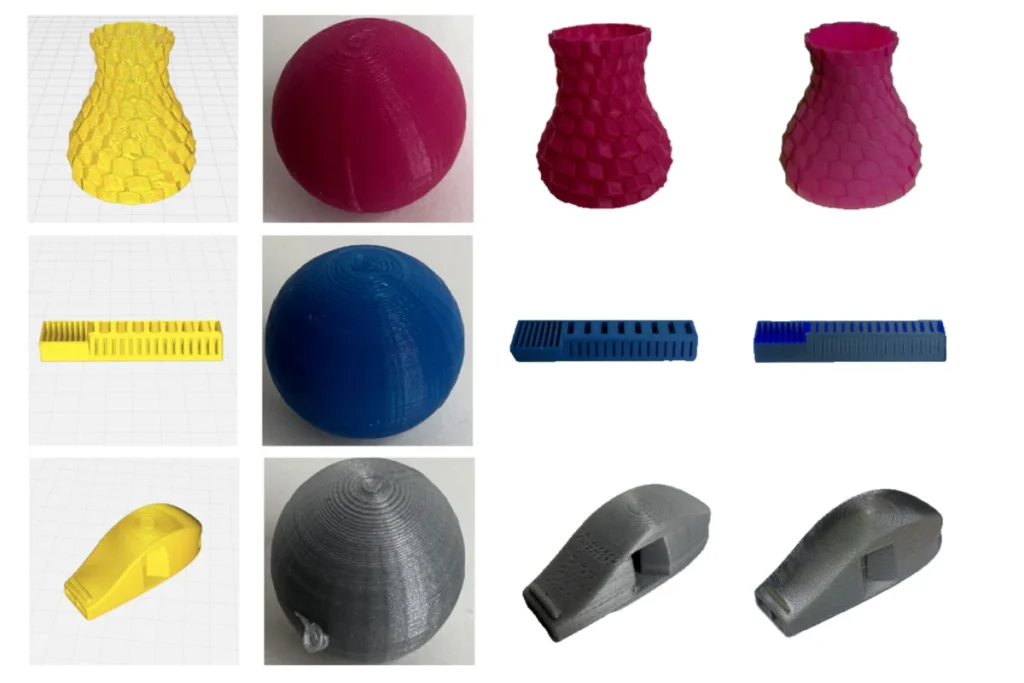
VisiPrint aims to bridge this critical gap by offering users an intuitive and powerful tool that predicts the visual appearance of a 3D printed object with remarkable accuracy. The system operates on a deceptively simple input mechanism: users upload a screenshot of their object as generated by their 3D printing software (often referred to as "slicer" software) and a single image of the intended print material. This material image can be sourced from online databases, product catalogs, or even a quick photograph of a physical sample. From these two inputs, VisiPrint’s sophisticated AI models work in concert to generate a realistic rendering of the final printed object, accounting for a comprehensive range of visual characteristics.
Beyond mere color replication, VisiPrint delves into the subtle complexities that define a material’s appearance. It meticulously analyzes and incorporates factors such as glossiness, translucency, and how the specific nuances of the 3D printing process—such as the extrusion path of the filament and the layer height—will influence the object’s surface finish and overall visual impact. This holistic approach is what sets VisiPrint apart from existing preview tools, which tend to offer a more generalized, functional representation.
The Genesis of VisiPrint: Addressing a Critical Workflow Bottleneck
The development of VisiPrint began in earnest over the past few years, driven by the increasing adoption of 3D printing across diverse industries and the persistent challenges associated with achieving desired aesthetic outcomes. Researchers at MIT, a hub for technological innovation, recognized the economic and environmental implications of the current inefficient preview process. Studies have indicated that a significant portion of 3D printed materials, sometimes estimated at up to one-third, ends up in landfills, largely due to discarded prototypes that fail to meet design expectations. This alarming statistic underscores the urgent need for solutions that promote sustainability and efficiency in additive manufacturing.
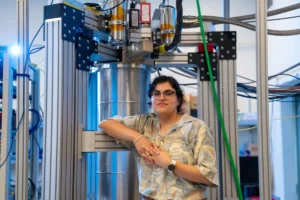
Maxine Perroni-Scharf, an electrical engineering and computer science (EECS) graduate student and the lead author of the research paper detailing VisiPrint, articulated the core motivation behind the project. "3D printing can be a very wasteful process," Perroni-Scharf stated. "Some studies estimate that as much as a third of the material used goes straight to the landfill, often from prototypes the user ends of discarding. To make 3D printing more sustainable, we want to reduce the number of tries it takes to get the prototype you want. The user shouldn’t have to try out every printing material they have before they settle on a design.” This sentiment highlights the dual focus of VisiPrint: empowering users to achieve their desired aesthetic while simultaneously contributing to a more environmentally responsible manufacturing ecosystem.
The research team, a formidable blend of graduate students, undergraduates, and seasoned professors, meticulously explored the underlying complexities of 3D printing’s aesthetic transformations. Their work, slated for presentation at the prestigious ACM CHI Conference on Human Factors in Computing Systems, represents a significant leap forward in bridging the digital-physical divide in 3D printing. The collaborative spirit, encompassing expertise from MIT’s Computer Science and Artificial Intelligence Laboratory (CSAIL) and the Gwangju Institute of Science and Technology, underscores the global effort to refine and advance additive manufacturing technologies.
Deconstructing the Technology: How VisiPrint Achieves Aesthetic Fidelity
At the heart of VisiPrint lies a sophisticated interplay of artificial intelligence models, specifically designed to overcome the challenges inherent in predicting the appearance of objects fabricated through Fused Deposition Modeling (FDM), the most prevalent form of 3D printing. In FDM, a thermoplastic filament is heated and extruded through a nozzle, building an object layer by layer. This process, while versatile, introduces variables that can subtly alter a material’s appearance. The melting and extrusion can change inherent properties like gloss, and the precise path of the nozzle, combined with the height of each deposited layer, can create unique surface textures and subtle shading effects.
VisiPrint employs a dual-AI model architecture to meticulously account for these variables. The first component is a computer vision model. Upon receiving the material sample image, this model intelligently extracts the salient visual features that are crucial for predicting the final appearance. This includes not just basic color information but also texture patterns, reflective qualities, and any subtle variations present in the material sample.
These extracted features are then fed into a generative AI model. This second model is responsible for synthesizing the final rendering. Crucially, it doesn’t just apply the material properties to a generic 3D model. Instead, it integrates the "slicing" pattern—the specific trajectory the print nozzle will follow as it deposits each layer of material—directly into its generation process. This allows VisiPrint to simulate how the extrusion path and layer stacking will influence the object’s surface geometry and the resulting light scattering, thereby affecting its perceived texture and shading.
A key innovation in VisiPrint’s approach is its "special conditioning method." This technique involves carefully fine-tuning the internal parameters of the generative AI model to ensure it adheres to the constraints of the 3D printing process. It guides the model to accurately follow the slicing pattern and respect the physical limitations of material deposition. The researchers achieved this by utilizing a depth map, which preserves the object’s overall shape and shading, and an edge map, which highlights internal contours and structural boundaries. The careful balance between these two maps is critical.
"If you don’t have the right balance of these two things, you could end up with bad geometry or an incorrect slicing pattern," explained Perroni-Scharf. "We had to be careful to combine them in the right way.” This intricate conditioning ensures that the generated preview is not only aesthetically plausible but also geometrically faithful to the intended print, incorporating the subtle surface effects that FDM printing introduces.
A User-Centric Design and Rigorous Evaluation
Beyond its sophisticated AI underpinnings, VisiPrint is designed with user-friendliness at its core. The team has developed an intuitive interface that simplifies the upload process and allows for easy evaluation of the generated previews. For advanced users, the interface offers granular control over various settings, enabling them to fine-tune the influence of specific colors or material properties on the final aesthetic. This adaptability caters to a wide spectrum of users, from beginners seeking a quick and accurate preview to seasoned makers looking to optimize every aspect of their design.
It is important to note that VisiPrint is designed to complement, not replace, the functional previews provided by slicer software. VisiPrint’s strength lies in its aesthetic prediction capabilities; it does not assess printability, mechanical feasibility, or the likelihood of print failure. This clear delineation of functionality ensures that users understand the scope of VisiPrint’s predictions, integrating it as a powerful tool within their existing 3D printing workflow.
To validate the efficacy of VisiPrint, the researchers conducted a comprehensive user study. Participants were tasked with comparing VisiPrint’s previews against those generated by other methods. The results were overwhelmingly positive. Nearly all participants reported that VisiPrint provided superior overall appearance and a more accurate textural similarity to actual printed objects. Furthermore, the preview generation process for VisiPrint was remarkably efficient, averaging approximately one minute per preview. This speed was more than double that of competing methods, significantly accelerating the design iteration cycle.
"VisiPrint really shined when compared to other AI interfaces," Perroni-Scharf remarked. "If you give a more general AI model the same screenshots, it might randomly change the shape or use the wrong slicing pattern because it had no direct conditioning.” This comparison highlights the targeted effectiveness of VisiPrint’s AI architecture, which is specifically trained and conditioned for the complexities of 3D printing aesthetics.
Future Directions and Broader Implications
The VisiPrint team is not resting on its laurels. They have identified several promising avenues for future development. One key area of focus is addressing artifacts that can arise when previewing objects with extremely fine details, ensuring that these intricate features are rendered with the highest fidelity. Additionally, the researchers aim to expand VisiPrint’s capabilities beyond color prediction, incorporating features that allow users to optimize other aspects of the printing process that influence appearance, such as infill patterns and support structures.
The broader implications of VisiPrint extend far beyond hobbyist applications. In professional settings, the ability to accurately predict aesthetic outcomes can lead to substantial cost savings and a reduction in material waste. For industries reliant on visual appeal, such as product design, consumer electronics, and even fashion, VisiPrint offers a powerful tool for rapid prototyping and client visualization.
The potential impact on fields like dentistry is particularly noteworthy. Imagine a dentist being able to show a patient a highly accurate visual preview of a temporary crown before it’s printed, ensuring it perfectly matches the surrounding teeth in terms of shade, translucency, and surface texture. This not only enhances patient satisfaction but also streamlines the clinical workflow. Similarly, architects can gain a more precise understanding of how material choices and printing techniques will affect the visual impact of their scale models, leading to more informed design decisions.
Perroni-Scharf concluded with a forward-looking statement that encapsulates the project’s ethos: "It is important to think about the way that we fabricate objects. We need to continue striving to develop methods that reduce waste. To that end, this marriage of AI with the physical making process is an exciting area of future work.”
Patrick Baudisch, a professor of computer science at the Hasso Plattner Institute, who was not involved in the research, offered a strong endorsement, drawing a parallel to the desktop publishing revolution of the 1980s. “’What you see is what you get’ has been the main thing that made desktop publishing ‘happen’ in the 1980s, as it allowed users to get what they wanted at first try. It is time to get WYSIWYG for 3D printing as well. VisiPrint is a great step in this direction,” Baudisch commented. This sentiment underscores the transformative potential of VisiPrint in bringing the "what you see is what you get" paradigm to the world of 3D printing, heralding a new era of efficiency, sustainability, and creative freedom in additive manufacturing.
This groundbreaking research was made possible through the generous support of various institutions, including an MIT Morningside Academy for Design Fellowship and an MIT MathWorks Fellowship, underscoring the commitment to fostering innovation in design and engineering.