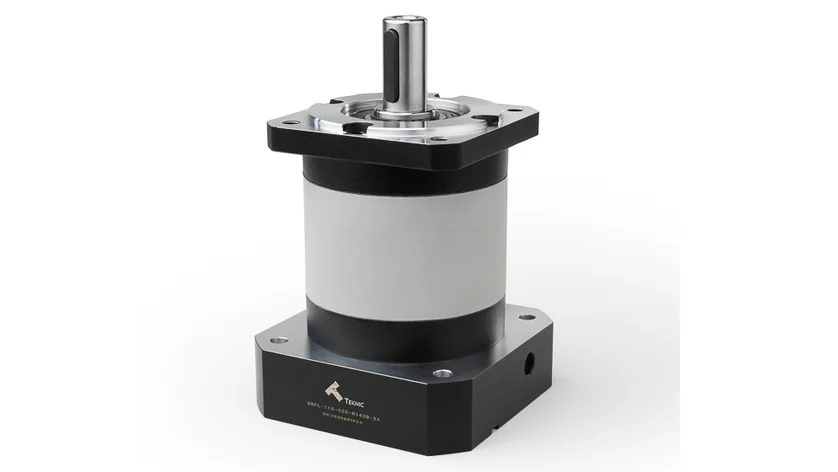
Teknic, a prominent innovator in the motion control industry, has significantly broadened its product offering by introducing new NEMA 56 and 143 input sizes to its established line of precision planetary gearboxes. This strategic expansion is designed to cater to a wider array of demanding industrial automation applications, specifically those requiring higher torque capabilities and robust mechanical integration. The newly introduced gearboxes feature a 115 mm output frame and are available in diverse configurations, encompassing multiple frame sizes, various gear ratios, distinct output flanges, and versatile body configurations, ensuring adaptability across a broad spectrum of motion control requirements. Recognizing the unique challenges faced by system integrators and original equipment manufacturers (OEMs), Teknic also provides custom configurations through its dedicated applications engineering team, underscoring its commitment to tailored solutions.
This product launch represents a critical enhancement to Teknic’s ecosystem of motion control components, solidifying its position as a comprehensive provider of integrated automation solutions. The new gearboxes are engineered for seamless compatibility with a range of servo and stepper motors, including Teknic’s own acclaimed ClearPath integrated servos and Hudson BLDC servo motors, as well as third-party motors conforming to NEMA 17, 23, 34, or 56/143 standards. To facilitate design and integration, comprehensive technical resources, including 3D models, 2D drawings, detailed specifications, pricing information, and critical torque and speed data, are readily accessible on the company’s official website.
The Foundational Role of Precision Planetary Gearboxes in Modern Automation
Precision planetary gearboxes are indispensable components in advanced motion control systems, serving as the mechanical interface between a motor and the load it drives. Their design, characterized by a central sun gear surrounded by multiple planet gears rotating within an outer ring gear, offers distinct advantages that are crucial for high-performance applications. These advantages include superior torque density, exceptionally low backlash, high efficiency, and a compact footprint, making them ideal for applications where space is at a premium and precise motion is paramount. Unlike traditional gearbox designs such such as worm or helical gearboxes, planetary configurations distribute the load across multiple gear teeth, resulting in higher stiffness, reduced wear, and extended operational lifespans.
The demand for precision gearboxes has surged in recent years, driven by the rapid proliferation of industrial automation, robotics, and advanced manufacturing processes. Industries such as packaging, material handling, medical devices, semiconductor manufacturing, and CNC machining rely heavily on these components to achieve precise positioning, smooth motion, and high throughput. The ability of planetary gearboxes to deliver high torque multiplication with minimal angular deflection (backlash) is particularly critical in applications like robotic arms, where cumulative errors can significantly impact accuracy, or in machine tools where micron-level precision is required for machining operations.
Understanding NEMA Standards and Their Importance
The integration of NEMA 56 and 143 input sizes into Teknic’s planetary gearbox line is a significant development, directly addressing the requirements of applications utilizing larger, more powerful motors. NEMA, or the National Electrical Manufacturers Association, establishes widely recognized standards for electrical equipment, including motor frame sizes. These standards ensure interchangeability and provide a common reference point for manufacturers and users alike.

NEMA motor frame sizes, such as 17, 23, 34, 56, and 143, denote specific mounting dimensions and shaft characteristics, allowing for consistent mechanical integration regardless of the motor manufacturer. Smaller NEMA sizes (e.g., 17, 23) typically correspond to lower-power motors used in lighter-duty applications, while larger sizes (e.g., 34, 56, 143) are associated with higher-power servo or stepper motors capable of driving heavier loads or requiring greater torque. By offering gearboxes compatible with NEMA 56 and 143 input sizes, Teknic is directly supporting applications that necessitate more robust power transmission, such as larger gantry systems, heavy-duty conveyor belts, and more powerful robotic manipulators. This standardization simplifies the design process for engineers, reduces component sourcing complexities, and ensures long-term compatibility and serviceability of automation systems.
Teknic’s Strategic Vision: Responding to Evolving Automation Demands
This expansion is not merely an incremental product update but a strategic move by Teknic to align its offerings with the ongoing evolution of industrial automation and Industry 4.0 paradigms. The global manufacturing landscape is increasingly characterized by a drive towards higher efficiency, greater flexibility, and enhanced connectivity. This necessitates motion control components that are not only precise and reliable but also versatile and easy to integrate into complex systems.
The decision to expand into NEMA 56 and 143 sizes indicates Teknic’s recognition of a growing market segment demanding higher torque and power capacity in their automation solutions. Many modern industrial applications, particularly in sectors like logistics, automotive manufacturing, and heavy machinery, are scaling up, requiring more substantial mechanical components to handle increased payloads, faster cycle times, and more strenuous operating conditions. By providing gearboxes that can pair with these larger motors, Teknic empowers its customers to tackle more ambitious automation projects without compromising on precision or reliability.
Furthermore, Teknic’s commitment to offering custom configurations through its applications engineering team highlights a customer-centric approach. In a highly specialized market, off-the-shelf solutions often fall short of meeting unique application requirements. The ability to tailor gear ratios, output flanges, and body configurations allows OEMs and system integrators to optimize their designs for specific performance metrics, such as maximizing speed, minimizing footprint, or achieving a particular stiffness requirement. This level of customization fosters innovation and enables the development of highly specialized machinery that can gain a competitive edge.
Technical Prowess and Performance Metrics
The performance of a precision planetary gearbox is defined by several critical technical specifications. Teknic’s new offerings are expected to uphold the company’s reputation for high-quality engineering. Key performance indicators include:
- Backlash: This refers to the angular play or lost motion between the input and output shafts of the gearbox. For precision applications, low backlash (typically measured in arc-minutes) is paramount to ensure accurate positioning and repeatability. High-precision gearboxes often feature backlash values of less than 3 arc-minutes, which is crucial for applications like robotic surgery or semiconductor etching.
- Torque Capacity: Gearboxes are rated for both continuous and peak torque. Continuous torque refers to the maximum torque the gearbox can transmit indefinitely without overheating or premature wear, while peak torque indicates the maximum momentary torque it can handle during acceleration or deceleration. The NEMA 56 and 143 compatible gearboxes will inherently offer higher torque capacities, suitable for heavier loads and more dynamic movements.
- Efficiency: The efficiency of a gearbox is the ratio of output power to input power, expressed as a percentage. High efficiency translates to less energy loss, reduced heat generation, and lower operating costs. Precision planetary gearboxes typically boast efficiencies upwards of 95%, contributing to overall system energy savings.
- Stiffness: Also known as torsional rigidity, stiffness measures the gearbox’s resistance to angular deflection under load. High stiffness is essential for maintaining positional accuracy, especially in dynamic applications where loads can change rapidly.
- Gear Ratios: The availability of multiple gear ratios (e.g., 3:1, 5:1, 10:1, up to 100:1 or more) allows engineers to optimize the motor-to-load speed and torque relationship. A higher gear ratio increases output torque while decreasing output speed, enabling smaller motors to drive larger loads or achieve finer motion control.
- Output Flanges and Body Configurations: The choice of output flanges (e.g., square, round, specific bolt patterns) and body configurations (e.g., inline, right-angle) provides mechanical flexibility for integration into diverse machine architectures.
The provision of detailed 3D models, 2D drawings, specifications, and performance data online significantly streamlines the design and prototyping phases for customers. This digital accessibility is a hallmark of modern engineering support, enabling faster product development cycles and reducing time-to-market for new automation solutions.
Inferred Statements and Industry Impact
While specific quotes from Teknic leadership were not part of the initial release, a company spokesperson, perhaps a Vice President of Product Development or the CEO, would likely emphasize the strategic importance of this expansion. Such a statement might highlight Teknic’s unwavering commitment to innovation and customer-centric development. For instance, a hypothetical statement could be: "This expansion of our precision planetary gearbox line with NEMA 56 and 143 input sizes is a direct response to the evolving needs of our customers in advanced industrial automation. We understand that as industries push the boundaries of productivity and precision, they require more robust and versatile motion control components. By offering these new sizes, along with our renowned customization options and comprehensive technical support, we are empowering engineers and integrators to design and deploy the next generation of high-performance machinery. This initiative reinforces Teknic’s dedication to providing a complete ecosystem of integrated motion solutions, ensuring seamless compatibility and unparalleled reliability for even the most demanding applications."
This product launch is poised to have several positive implications for the broader motion control market. For Teknic, it expands its addressable market, allowing it to penetrate segments requiring higher power applications where its smaller gearboxes might have been less suitable. It also strengthens its competitive standing against other established players in the precision gearbox domain by offering a more comprehensive range. For system integrators and OEMs, the expanded portfolio means greater flexibility in component selection, potentially reducing the need to source gearboxes from multiple vendors and simplifying supply chain management. The compatibility with Teknic’s own motors also promotes an integrated solution approach, which can lead to optimized system performance, easier commissioning, and consolidated support.
Broader Market Implications and Future Outlook
The expansion of Teknic’s planetary gearbox line is indicative of several overarching trends shaping the industrial automation sector. The global market for industrial automation is projected to continue its robust growth, driven by factors such as labor shortages, the push for higher manufacturing quality, and the increasing adoption of robotics and AI-driven processes. Within this growth, the demand for high-performance mechanical components like precision gearboxes is fundamental.
The emphasis on modularity and flexibility in modern manufacturing necessitates components that can be easily integrated and adapted. Teknic’s approach of offering multiple configurations and customization options directly supports this need, allowing manufacturers to build adaptable production lines that can quickly retool for different products or processes. This agility is crucial in today’s dynamic market environment.
Looking ahead, the evolution of motion control is likely to include even greater levels of intelligence and connectivity. While these gearboxes are mechanical components, their seamless integration into Teknic’s digital ecosystem (via online data and compatibility with smart motors) hints at a future where even mechanical components could incorporate sensors for predictive maintenance, performance monitoring, and real-time optimization. This expansion is a foundational step in enabling more sophisticated and interconnected automation systems.
In conclusion, Teknic’s introduction of NEMA 56 and 143 input size precision planetary gearboxes marks a significant milestone in its product development strategy. This move addresses a clear market need for higher torque and power capacity in industrial automation, while simultaneously reinforcing Teknic’s commitment to precision, versatility, and customer support. By providing advanced, customizable solutions and comprehensive technical resources, Teknic is well-positioned to continue enabling the development of cutting-edge machinery and contributing to the advancement of smart manufacturing worldwide.