LIBERTY, NC – Securing a position at Toyota Motor Corp.’s advanced battery manufacturing facility in Liberty, North Carolina, demands more than a compelling resume and polished interview skills. Aspiring employees are now required to demonstrate a precise blend of manual dexterity and keen hand-eye coordination through a series of unique physical assessments, most notably a viral rope challenge and a sophisticated "Flip and Place" exercise. These rigorous evaluations are designed to identify individuals capable of meeting the exacting standards of speed and precision inherent in modern, high-volume battery production.
The Intricate Rope Challenge: A Test of Precision Under Pressure
At the forefront of Toyota’s innovative screening process is the now-famous rope challenge. This seemingly straightforward task requires candidates to swiftly wrap a length of rope around a series of wall-mounted posts within a tight six-second window. While appearing deceptively simple to an observer, the test is engineered with specific complexities that mirror the demands of an actual assembly line. The posts are strategically placed at varying heights, necessitating dynamic body and arm movements. Crucially, the rope must be maneuvered in a precise, pre-determined sequence, and its orientation – the direction of the turn around each post – is also dictated. A single deviation from the sequence, an incorrect turn, or a moment of hesitation can lead to failure.
The underlying principle of the rope challenge is to simulate the critical need for speed and pinpoint accuracy on a production floor where a minor error can propagate, disrupting the entire assembly flow. This simulation is particularly relevant in battery manufacturing, where components are often delicate, and the assembly sequence is highly interdependent. The test gained significant public attention after a local television news crew featured it in a story on the new plant. Viewer reactions highlighted the striking contrast between the effortless execution by experienced Toyota employees, who navigate the challenge with fluid grace, and the struggles of many newcomers, who frequently become tangled or run out of time, underscoring the challenge’s surprising difficulty. This viral exposure not only showcased Toyota’s commitment to quality but also offered a rare glimpse into the specific skill sets valued in advanced manufacturing.
"Flip and Place": Assessing Bilateral Dexterity
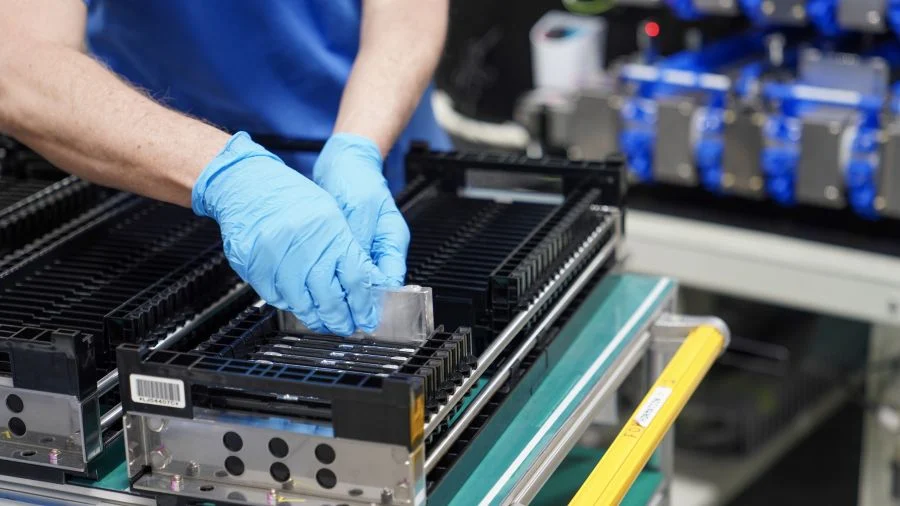
Beyond the rope challenge, prospective workers at the Liberty facility must also successfully complete another critical psychomotor evaluation known as "Flip and Place." This exercise is a derivative of the renowned Minnesota Dexterity Test, a standardized assessment widely used in fields requiring fine motor skills and hand-eye coordination. In the "Flip and Place" task, participants are instructed to use both hands simultaneously to flip and then place ten pairs of puck-shaped discs as rapidly as possible.
The dual-hand requirement of this test is particularly significant, as it evaluates bilateral coordination – the ability to use both hands together in a controlled and efficient manner. This skill is indispensable on a modern assembly line, where operators frequently manipulate components with both hands, often in symmetrical or complementary motions. Performance metrics from Toyota reveal a clear benchmark: while an average individual might complete the task in approximately 20 seconds, the average plant employee at the Liberty factory finishes it in a remarkable 14 seconds. This six-second differential highlights the level of innate or developed dexterity Toyota seeks in its workforce, ensuring that employees are not only capable but also highly efficient in the repetitive yet incredibly precise movements demanded by high-tech manufacturing processes. Both the rope challenge and "Flip and Place" are thus instrumental in preparing employees for the sustained, focused, and accurate actions required to produce high-quality lithium-ion batteries.
The Strategic Importance of Toyota’s Liberty Plant
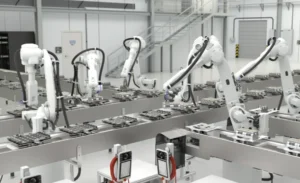
The Toyota Battery Manufacturing North Carolina (TBMNC) plant in Liberty represents a cornerstone of the automaker’s global electrification strategy. Having officially commenced operations in 2025, this sprawling facility is a monumental investment, projected to create employment for approximately 5,100 individuals as it scales up to full production capacity. The plant is equipped with 14 state-of-the-art assembly lines dedicated to the production of lithium-ion batteries, specifically designed to power hybrid electric vehicles (HEVs) and plug-in hybrid electric vehicles (PHEVs). This focus underscores Toyota’s multi-pathway approach to decarbonization, recognizing the diverse needs of global consumers and the varying stages of electric vehicle infrastructure development worldwide.
The establishment of such a large-scale battery production facility in North America is a critical strategic move for Toyota. It aims to localize a significant portion of its battery supply chain, reducing reliance on overseas imports, mitigating geopolitical risks, and enhancing supply chain resilience. This localization also aligns with increasing regulatory pressures and incentives in North America for electric vehicle components to be manufactured domestically. For the state of North Carolina, the Toyota plant signifies an enormous economic boon, bringing thousands of high-paying manufacturing jobs, stimulating local economies through direct and indirect employment, and fostering the growth of an advanced manufacturing ecosystem in the region. The sheer scale of the investment, which has incrementally grown to billions of dollars, reflects Toyota’s long-term commitment to North America as a vital hub for its electrified future.
Toyota Production System (TPS) and the Pursuit of Perfection
These unique hiring tests are not arbitrary; they are deeply rooted in Toyota’s renowned manufacturing philosophy, the Toyota Production System (TPS). TPS, developed over decades, is built on two core pillars: "Just-in-Time" (producing only what is needed, when it is needed, and in the amount needed) and "Jidoka" (automation with a human touch, meaning stopping production immediately when a problem arises). Underlying these pillars is the relentless pursuit of "Kaizen," or continuous improvement.
The psychomotor tests for prospective employees at Liberty directly support TPS principles. By ensuring that every worker possesses a high degree of manual dexterity, hand-eye coordination, and an intrinsic understanding of precision and efficiency from day one, Toyota minimizes the potential for defects and waste. A highly skilled workforce is less prone to making mistakes, which aligns perfectly with Jidoka’s emphasis on quality at the source. Furthermore, the ability to perform tasks quickly and accurately contributes to the seamless flow required for Just-in-Time production, preventing bottlenecks and ensuring components are assembled efficiently. In an era where automation is rapidly advancing, these tests underscore Toyota’s belief that human skill and ingenuity remain indispensable. The human operator, equipped with exceptional dexterity and problem-solving abilities, is still the ultimate safeguard of quality and efficiency, especially when interacting with sophisticated machinery or performing tasks that require adaptive precision.
Addressing the Manufacturing Skills Gap
Toyota’s innovative hiring approach also offers a compelling response to a widespread challenge in modern manufacturing: the persistent "skills gap." Across industrialized nations, manufacturers often struggle to find enough skilled workers to fill increasingly technical and demanding roles. The stereotype of manufacturing work as purely brute physical labor is outdated; today’s factories require employees with a sophisticated blend of technical acumen, problem-solving capabilities, and refined motor skills.
By implementing tests like the rope challenge and "Flip and Place," Toyota proactively addresses this gap. Instead of solely relying on traditional educational credentials or prior work experience, which may not always accurately reflect practical aptitude, these tests directly assess the core competencies vital for success on the assembly line. This approach helps identify candidates who may not have a conventional manufacturing background but possess the latent dexterity and coordination that can be further honed through training. It shifts the focus from "what you know" to "what you can do," which is increasingly relevant in a rapidly evolving technological landscape. Other industries, such as aerospace manufacturing, medical device assembly, and even certain high-precision electronics sectors, have long utilized similar psychomotor and dexterity assessments to ensure the quality and reliability of their workforces. Toyota’s public display of these tests provides a tangible example for the broader manufacturing sector on how to evaluate and cultivate a truly capable workforce for the future.
Inferred Perspectives: Voices on the New Standards
While no direct quotes were provided in the original content, it is possible to infer reactions and statements from various stakeholders regarding Toyota’s unique hiring practices.
A Toyota spokesperson might emphasize the company’s unwavering commitment to quality. "Our battery manufacturing facility in Liberty is at the cutting edge of automotive technology. To produce batteries that meet Toyota’s world-renowned standards for quality, reliability, and safety, we must ensure our workforce is equally exceptional," the spokesperson might state. "These assessments are not designed to be exclusionary, but rather to identify individuals who possess the inherent dexterity and focus necessary for precision manufacturing. They are predictive tools that help us prepare our employees for success on the production floor, ultimately benefiting our customers."
Local government officials in Liberty and the surrounding Randolph County would likely express enthusiasm for the plant’s contribution to the regional economy. "Toyota’s investment in Liberty is transformative for our community," a local mayor could be imagined saying. "Beyond the thousands of direct jobs, this facility is attracting new businesses and talent to the area. The high standards for employment reflect the caliber of this operation, and we are proud to host such an advanced manufacturing leader."
Workforce development experts might commend Toyota’s pragmatic approach. "In an age where theoretical knowledge often takes precedence, Toyota’s focus on practical, measurable skills is commendable," an industry analyst might observe. "These psychomotor tests provide an objective measure of an individual’s aptitude for hands-on, precision work, which is crucial in advanced manufacturing. It’s a smart strategy for building a highly competent workforce that can adapt to the complexities of modern factory environments."
For prospective employees, the initial encounter with such tests might elicit surprise, followed by understanding. A hypothetical candidate, reflecting on the experience, might comment, "At first, I thought, ‘a rope test?’ But once I tried it, I realized how much focus and precision it required. It definitely showed me what kind of work I’d be doing and why those skills are so important. It felt fair because it directly related to the job."
Broader Implications and the Future of Manufacturing Work
Toyota’s implementation of these rigorous dexterity and coordination tests at its Liberty battery plant carries significant implications, not just for the company, but for the broader manufacturing sector and the evolving nature of work itself.
For Toyota, these assessments are a strategic investment in human capital. By meticulously screening for specific aptitudes, the company ensures a highly capable workforce from the outset, which is crucial for maintaining its competitive edge in the rapidly expanding and fiercely competitive electric vehicle battery market. High employee proficiency directly translates to reduced errors, higher production yields, and ultimately, lower manufacturing costs and superior product quality. This proactive approach to talent acquisition positions Toyota to meet the aggressive production targets necessary to support its global electrification goals.
For the manufacturing sector, Toyota’s methods could serve as a model for workforce development. As factories become increasingly automated and sophisticated, the demand for purely physical strength diminishes, while the need for precision, problem-solving, and adaptability intensifies. Companies may increasingly look beyond traditional qualifications to practical, hands-on assessments that predict success in a high-tech manufacturing environment. This could lead to a re-evaluation of educational and training programs, emphasizing the development of fine motor skills, spatial reasoning, and cognitive flexibility alongside technical knowledge.
Moreover, these tests highlight the symbiotic relationship between humans and machines in advanced manufacturing. While robots handle repetitive heavy lifting and complex programming, human operators are still essential for intricate assembly, quality inspection, troubleshooting, and continuous improvement. The skills tested by Toyota are precisely those that complement automation, enabling seamless human-machine collaboration.
In conclusion, Toyota’s innovative hiring practices at its Liberty, North Carolina, battery manufacturing plant are more than just a quirky set of challenges. They represent a meticulously designed system to identify, assess, and cultivate a highly skilled workforce perfectly aligned with the demands of precision battery production and the core tenets of the Toyota Production System. By prioritizing innate dexterity, hand-eye coordination, and the ability to perform under pressure, Toyota is not only securing its future in the electric vehicle market but also setting a new benchmark for how manufacturers can effectively recruit and prepare employees for the complex, high-tech factories of tomorrow.