A team at the University of Hong Kong (HKU) has developed a new type of stainless steel, designated Stainless Steel for Hydrogen (SS-H₂), that could overcome a major limitation of conventional stainless steel and potentially lower the cost of producing green hydrogen. This breakthrough material, spearheaded by Professor Mingxin Huang of HKU’s Department of Mechanical Engineering, is engineered to resist severe corrosion under conditions that ordinary stainless steel cannot withstand, particularly in the aggressive environments encountered during seawater electrolysis.
The innovation marks the latest achievement from Professor Huang’s ongoing "Super Steel" Project, a research initiative that has consistently pushed the boundaries of materials science. Previous successes from the team include the development of exceptionally strong and tough forms of Super Steel in 2017 and 2020, followed by stainless steel with anti-COVID properties in 2021. The current advancement with SS-H₂ directly addresses a critical bottleneck in the global transition towards sustainable energy, specifically the cost-effective and efficient production of green hydrogen.
The Imperative for Green Hydrogen and its Material Challenges
Green hydrogen, produced through the electrolysis of water using electricity derived from renewable sources, is widely recognized as a cornerstone of future decarbonized economies. It offers a versatile solution for energy storage, industrial feedstock, and clean fuel, crucial for sectors hard to abate like heavy industry, shipping, and aviation. The global market for green hydrogen is projected to grow exponentially, with estimates suggesting it could reach trillions of dollars by mid-century. However, scaling up green hydrogen production faces significant hurdles, with material costs and durability being paramount.
Electrolysis, the process of splitting water (H₂O) into hydrogen (H₂) and oxygen (O₂), requires specialized equipment capable of withstanding demanding chemical and electrical conditions. When seawater is used as the feedstock—an abundant and readily available resource—the challenges are compounded by the presence of highly corrosive chloride ions. Current industrial electrolyzers, particularly those using proton exchange membrane (PEM) technology, often rely on expensive and scarce materials like titanium, frequently coated with platinum or gold, for structural components that come into contact with the electrolyte. These noble metals, while highly corrosion-resistant, contribute substantially to the capital expenditure of electrolysis systems, thereby hindering the widespread adoption of green hydrogen.
SS-H₂: A Game-Changing Material for Seawater Electrolysis
The promise of SS-H₂ lies in its unprecedented resistance to corrosion, enabling its use in seawater electrolyzers where conventional stainless steels fail. In rigorous testing, SS-H₂ demonstrated performance comparable to the high-cost titanium structural components currently employed in systems producing hydrogen from desalinated seawater or acidic solutions. The crucial distinction, however, is the significant cost advantage: SS-H₂ is considerably less expensive to produce and implement. This economic viability positions SS-H₂ as a potential disruptor in the green hydrogen sector, offering a more sustainable and affordable pathway to scale production.
The findings detailing this groundbreaking material and its innovative corrosion resistance mechanism were published in the prestigious journal Materials Today, under the study titled "A sequential dual-passivation strategy for designing stainless steel used above water oxidation." Recognizing the immense potential of their discovery, the HKU researchers have already applied for patents covering the technology in several countries, with two patents already authorized, paving the way for future industrial deployment.
Unpacking the Limitations of Conventional Stainless Steel
To fully appreciate the innovation behind SS-H₂, it is essential to understand the inherent limitations of conventional stainless steel. For roughly a century, stainless steel has been a material of choice for applications where corrosion resistance is critical, owing much of its durability to the element chromium. When chromium (Cr) within the steel reacts with its environment, it forms a thin, protective passive film on the surface, primarily composed of chromium oxide (Cr₂O₃). This stable layer acts as a barrier, preventing further corrosion of the underlying metal.
However, this protective mechanism has a critical weakness under high electrical potentials, particularly those required for water oxidation during electrolysis. At potentials around ~1000 mV (saturated calomel electrode, SCE), the chromium oxide (Cr₂O₃) can undergo further oxidation. This process leads to the formation of soluble Cr(VI) species, causing the passive layer to degrade. This form of degradation is known as transpassive corrosion, and once it occurs, the steel’s resistance to corrosion significantly diminishes.
The challenge for green hydrogen production is that water oxidation, an essential electrochemical reaction during electrolysis, requires a substantially higher potential, typically around ~1600 mV. This significant mismatch between the transpassive potential of conventional stainless steels and the operating potential for water oxidation has historically prevented the effective use of stainless steel in high-voltage electrochemical applications. Even advanced alloys, such as 254SMO super stainless steel—regarded as a benchmark chromium-based corrosion-resistant alloy with excellent resistance to pitting in seawater—succumb to this problem, exhibiting decreased corrosion resistance when the electrical potential becomes sufficiently high. This material incompatibility has been a major barrier to developing cost-effective electrolyzers for seawater.
The "Sequential Dual-Passivation" Strategy: A Paradigm Shift
Professor Huang’s group circumvented this long-standing limitation through an ingenious approach they term "sequential dual-passivation." Instead of relying solely on the traditional chromium oxide layer for protection, SS-H₂ is engineered to develop a second, distinct protective layer on top of the initial Cr₂O₃ film. This novel secondary layer is based on manganese (Mn), a metal traditionally considered detrimental to the corrosion resistance of stainless steel. This manganese-based layer begins forming at a potential of approximately ~720 mV, significantly below the critical transpassive potential of chromium.
The synergistic action of these two protective layers—the underlying chromium oxide and the outer manganese-based layer—enables SS-H₂ to resist corrosion effectively in highly aggressive chloride-containing environments, even at electrical potentials reaching an impressive 1700 mV. This capability is paramount, as chlorides, abundant in seawater, are notoriously aggressive toward most metals and can induce severe localized corrosion. Crucially, reaching 1700 mV means the material can operate reliably beyond the 1600 mV threshold required for efficient water oxidation, positioning SS-H₂ as a fundamental advance over conventional stainless steel.
The discovery of manganese’s beneficial role in this context was particularly striking and initially met with skepticism within the research team. Dr. Kaiping Yu, the first author of the study and a PhD student supervised by Professor Huang, articulated this surprise: "Initially, we did not believe it because the prevailing view is that Mn impairs the corrosion resistance of stainless steel. Mn-based passivation is a counter-intuitive discovery, which cannot be explained by current knowledge in corrosion science. However, when numerous atomic-level results were presented, we were convinced. Beyond being surprised, we cannot wait to exploit the mechanism." This statement underscores the paradigm-shifting nature of the finding, challenging established tenets in corrosion science and opening new avenues for alloy design. The depth of the research involved extensive atomic-level analysis to fully comprehend the unexpected behavior of manganese, solidifying the team’s understanding of this novel passivation mechanism.
A Six-Year Odyssey: From Discovery to Patent
The development of SS-H₂ was the culmination of nearly six years of intensive research. This extensive timeline highlights the complex and iterative nature of advanced materials science, spanning from the initial, serendipitous discovery of the unusual steel’s properties to meticulous efforts aimed at understanding its behavior at an atomic level. The journey then progressed through rigorous testing, validation, publication in a top-tier scientific journal, and ultimately, the pursuit of intellectual property protection through international patent applications.
Throughout this period, Professor Huang’s research group distinguished itself by focusing on a less-explored frontier in corrosion science. While much of the corrosion community concentrates on material resistance at "natural potentials" (i.e., open circuit potentials or potentials near equilibrium), Huang’s team strategically pivoted to developing alloys that remain stable and resistant at much higher electrical potentials. This strategic focus proved instrumental in overcoming the fundamental limitations of existing materials for electrochemical applications. "Different from the current corrosion community, which mainly focuses on the resistance at natural potentials, we specializes in developing high-potential-resistant alloys," Professor Huang explained. "Our strategy overcame the fundamental limitation of conventional stainless steel and established a paradigm for alloy development applicable at high potentials. This breakthrough is exciting and brings new applications." This forward-thinking approach has not only yielded a revolutionary material but also established a new framework for designing alloys for demanding high-potential environments.
Profound Economic Implications: A 40-Fold Cost Reduction Potential
The economic implications of SS-H₂ are substantial and could significantly accelerate the commercial viability of green hydrogen. Electrolyzers, particularly the PEM type, currently rely on expensive titanium components, which are often further coated with precious metals like gold or platinum to enhance corrosion resistance and catalytic activity. These high-cost materials represent a significant portion of the overall capital expenditure for an electrolysis system.
According to the HKU researchers, a 10-megawatt (MW) PEM electrolysis tank system, a common scale for industrial hydrogen production, currently costs approximately HK$17.8 million (approximately US$2.28 million). A staggering 53% of this total system cost can be attributed to structural components, primarily due to the necessity of using materials like titanium.
The advent of SS-H₂ offers a compelling alternative. By replacing these expensive titanium and noble-metal-coated components with a far more economical stainless steel, the researchers estimate that the cost of structural materials could be reduced by an astounding 40 times. This dramatic cost reduction could transform the economic landscape of industrial green hydrogen production. To put this into perspective, titanium, while strong and corrosion-resistant, is significantly more expensive per kilogram than high-grade stainless steel. Furthermore, the global supply chains for titanium and especially platinum group metals (PGMs) are often concentrated and subject to price volatility, adding to the cost and risk profile of electrolyzer manufacturing. SS-H₂ offers a pathway to mitigate these material-related economic barriers, making green hydrogen more competitive with fossil fuel-derived hydrogen (grey hydrogen) and other low-carbon alternatives.
From Laboratory Bench to Industrial Scale: The Road Ahead
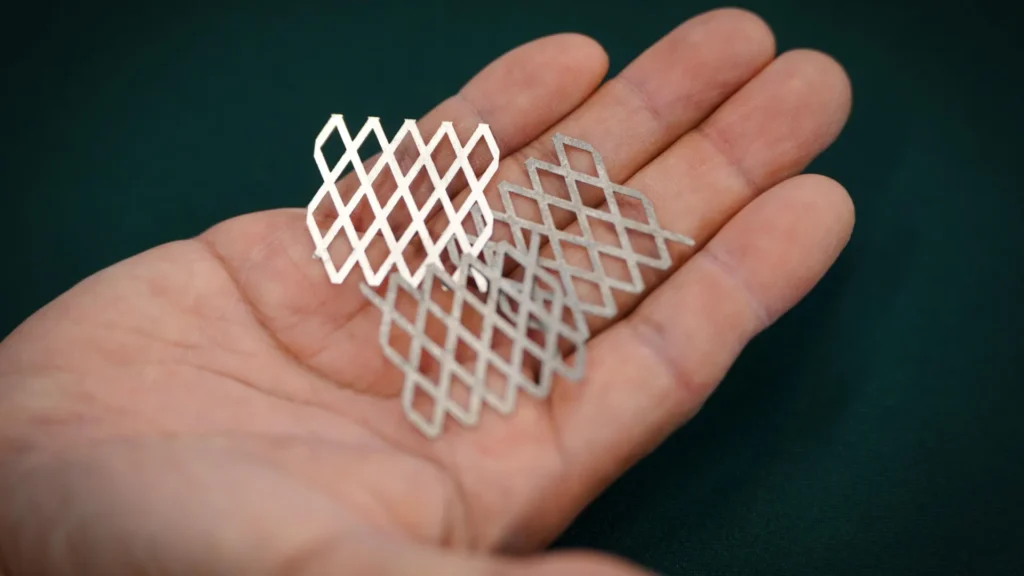
While the laboratory performance of SS-H₂ has been unequivocally demonstrated, the transition from experimental material to widespread industrial deployment still involves important engineering challenges. Electrolyzers require components in various practical forms, such as metal meshes and foams, which need to be manufactured reliably and cost-effectively at scale. The material’s long-term durability and performance in continuous industrial operation must also be rigorously validated.
Despite these challenges, the HKU team has already made significant strides in moving SS-H₂ toward large-scale production. Professor Huang confirmed active collaboration with a factory in mainland China, which has already produced "tons of SS-H₂-based wire." This crucial step signifies progress beyond laboratory-scale samples, demonstrating the material’s manufacturability and laying the groundwork for broader industrial adoption. "From experimental materials to real products, such as meshes and foams, for water electrolyzers, there are still challenging tasks at hand," Professor Huang acknowledged. "Currently, we have made a big step toward industrialization. Tons of SS-H₂-based wire has been produced in collaboration with a factory from the Mainland. We are moving forward in applying the more economical SS-H₂ in hydrogen production from renewable sources." This proactive approach to industrialization underscores the team’s commitment to translating their scientific discovery into tangible societal and economic benefits.
The successful commercialization of SS-H₂ could have far-reaching implications. For electrolyzer manufacturers, it promises a significant reduction in input costs, enabling them to produce more affordable and competitive systems. For renewable energy project developers, it means lower capital expenditure for hydrogen production facilities, potentially accelerating investment in green hydrogen projects globally. Environmental advocates would welcome the reduced reliance on scarce and often environmentally intensive noble metals, while national energy security strategists would see it as a step towards energy independence through domestic green hydrogen production.
In conclusion, the combination of SS-H₂’s high corrosion resistance and drastically lower material costs positions it as a potentially transformative technology. If this innovative material successfully makes the transition from experimental steel to robust, commercially viable industrial components, it could provide a cheaper, more sustainable, and more accessible route to producing green hydrogen from renewable energy and the world’s most abundant resource: seawater. This HKU breakthrough not only reinforces Hong Kong’s standing as a hub for advanced materials research but also offers a beacon of hope for accelerating the global clean energy transition.