In the rapidly evolving landscape of quantum science, the ability to harness and manipulate the intricate connections between subatomic particles remains the ultimate frontier. Quantum entanglement—a state where particles become so inextricably linked that the condition of one instantaneously influences the other, regardless of distance—serves as the fundamental engine for next-generation technologies. From ultra-secure communication networks to sensors capable of detecting the faintest gravitational ripples, the potential applications are vast. However, the path to generating these complex entangled states has historically been paved with extreme technical difficulties, requiring bespoke hardware and nearly impossible levels of environmental isolation.
A research team at the University of Chicago Pritzker School of Molecular Engineering (UChicago PME) has recently challenged this status quo. In a study published in the prestigious journal Physical Review X, the researchers proposed a theoretical framework that allows for the creation and control of a wide array of entangled quantum states using surprisingly simple tools. By utilizing components already found in most standard quantum physics laboratories, the team has provided a blueprint for democratizing high-level quantum experimentation, potentially accelerating the transition of quantum technologies from the theoretical realm to practical application.
The Evolution of Cavity Quantum Electrodynamics
To understand the significance of the UChicago PME breakthrough, one must first look at the traditional methods used to study light-matter interactions. The cornerstone of this field is Cavity Quantum Electrodynamics, or Cavity QED. In a typical Cavity QED experiment, researchers place atoms or other quantum emitters inside a microscopic chamber bounded by two highly reflective mirrors. These mirrors trap photons, forcing them to bounce back and forth millions of times, which creates an environment where the light and the atoms interact with extreme intensity.
For decades, Cavity QED has been a workhorse of quantum physics, earning Nobel Prizes and providing a window into the behavior of single atoms and photons. However, the system has inherent limitations when it comes to complexity. In most existing setups, every atom in the cavity interacts with the trapped light in the exact same way. This uniformity, while useful for basic observations, creates a high degree of symmetry that restricts the variety of quantum states the system can produce.
Professor Aashish Clerk, a senior author of the study and a prominent figure at UChicago PME, noted that the very simplicity that made Cavity QED successful was also its "bottleneck." Because the atoms are effectively indistinguishable to the light field, they act as a single collective unit rather than a complex network. To move toward advanced quantum computing and sensing, scientists needed a way to "break" this symmetry without making the system so chaotic that it became uncontrollable.
Breaking Symmetry Through "Minimalist" Intervention
The innovation proposed by Clerk and his team, including first author and postdoctoral researcher Anjun Chu, involves a clever modification of the energy levels within the atomic ensemble. In a standard setup, each atom possesses a ground state and an excited state, separated by a specific energy gap. When a laser drives the system, all atoms respond in unison because their energy gaps are identical.
The UChicago researchers discovered that by introducing additional lasers or magnetic fields—tools that are already standard in any quantum optics lab—they could subtly shift the energy levels of different groups of atoms. Specifically, they proposed arranging the atoms into pairs or groups where one atom’s energy level is shifted upward by a certain amount, while its partner’s energy level is shifted downward by the same amount.
This "equal but opposite" energy offset effectively breaks the symmetry of the system. While the atoms are still being driven by the same primary laser, they no longer respond identically. This creates a "structured" environment where the light mediates interactions between atoms in a much more complex and nuanced fashion.
"The challenge has always been that these systems have too much symmetry," Clerk explained. "By simply adjusting the lasers, we can access kinds of entangled states that no one had thought about before."
The beauty of this approach lies in its "driven-dissipative" nature. Instead of requiring a series of perfectly timed, high-precision pulses to "kick" the atoms into an entangled state—a process that is highly prone to error—the UChicago method allows the system to naturally settle into the desired state. Once the external lasers are turned on, the system undergoes a process of stabilization, eventually "cooling" into a highly entangled quantum state that remains stable as long as the lasers are active.
Implications for Ultra-Precise Quantum Sensing
One of the most immediate and impactful applications of this research is in the field of quantum sensing. Modern sensors, such as those used in MRI machines or GPS satellites, are limited by the laws of classical physics. Quantum sensors, by contrast, use entanglement to surpass these limits, achieving levels of sensitivity that can detect the magnetic signature of a single neuron or minute changes in Earth’s gravitational field.
However, the primary enemy of quantum sensing is "noise"—environmental interference from heat, vibration, or electromagnetic radiation that destroys entanglement. Traditionally, the more sensitive a quantum state is to a signal, the more vulnerable it is to noise.
The UChicago team demonstrated that their proposed system could create a state specifically designed for "gradient sensing." By placing two groups of atoms in different locations, the system can be tuned to be exquisitely sensitive to the difference in the magnetic or gravitational field between those two spots. Crucially, because of the specific way the atoms are entangled, the system naturally ignores "common-mode noise"—disturbances that affect both locations equally.
This creates a rare "best of both worlds" scenario. "You’re able to do two things that are normally not compatible with one another: Use entanglement to build an exquisitely sensitive sensor but also have robustness to arbitrarily large amounts of noise," Clerk stated. This resilience could be a game-changer for deploying quantum sensors in "dirty" real-world environments outside of shielded laboratory basements.
Furthermore, the researchers pointed out that the data from these sensors can be retrieved using Ramsey interferometry. This is a well-established measurement technique used in atomic clocks, meaning that laboratories would not need to develop entirely new measurement protocols to utilize this new form of entanglement.
Exploring Fundamental Physics: The AKLT State
Beyond practical sensing applications, the theoretical framework provides a new playground for condensed matter physicists. The team showed that their Cavity QED setup could be used to generate the AKLT (Affleck-Kennedy-Lieb-Tasaki) state.
First proposed in 1987, the AKLT state is a theoretical model used to describe unique magnetic properties in one-dimensional chains of atoms. It is a landmark concept in "many-body" physics, helping scientists understand how collective behavior emerges from simple local interactions. Despite its importance, creating a stable AKLT state in a controlled experimental environment has been notoriously difficult.
The fact that a relatively simple arrangement of lasers and mirrors can stabilize such a complex many-body state is a significant finding. It suggests that Cavity QED systems could serve as "simulators" for complex materials, allowing scientists to study exotic phases of matter that are impossible to observe in nature. There is also growing evidence that states like AKLT could serve as resources for measurement-based quantum computing, where the computation is performed by making a sequence of measurements on a highly entangled initial state.
Institutional Support and the Path to Experimental Validation
The research was conducted under the auspices of Q-NEXT, one of five U.S. Department of Energy (DOE) National Quantum Information Science Research Centers. Led by Argonne National Laboratory, Q-NEXT is a collaborative hub involving world-class universities and industry leaders aimed at developing the next generation of quantum interconnects and sensors.
The involvement of Q-NEXT highlights the strategic importance of this work. As the United States and other global powers invest billions into the National Quantum Initiative, the focus is shifting from "proof of concept" experiments to scalable, reliable technologies. By finding ways to use existing hardware more effectively, the UChicago team is helping to lower the barrier to entry for quantum innovation.
While the current findings are theoretical, they are grounded in the realities of experimental physics. The parameters used in the study—such as laser frequencies, cavity decay rates, and atomic coupling strengths—were chosen to match the capabilities of existing platforms, such as those using neutral atoms or superconducting circuits.
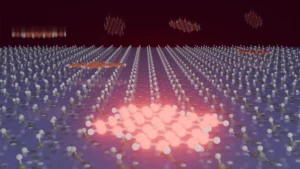
The team is already in discussions with experimental groups to put their theory to the test. These future experiments will likely involve trapping arrays of atoms using "optical tweezers"—focused beams of light that can hold and move individual atoms with nanometer precision—and placing them inside high-finesse optical cavities.
Chronology of Progress in Quantum Control
To appreciate the timeline of this discovery, one must look at the progression of quantum control over the last two decades:
- Early 2000s: Researchers mastered the control of single quantum bits (qubits) in isolation.
- 2010s: The focus shifted to "scaling up," attempting to link multiple qubits together. However, the complexity of the wiring and the fragility of the states limited these systems to a handful of particles.
- 2018–2022: The rise of "dissipative engineering," where researchers began to view environmental interaction not just as a problem (noise) but as a tool to drive systems into desired states.
- 2024: The UChicago PME proposal integrates these concepts, showing that "breaking symmetry" through simple external fields can unlock the same level of complexity previously reserved for massive, dedicated quantum computers.
A New Paradigm for Quantum Research
The work of Clerk, Chu, and their colleagues represents a paradigm shift in how physicists approach entanglement. Instead of viewing complexity as something that must be built piece-by-piece with increasingly expensive hardware, they have shown that complexity can be "engineered" through the clever application of simple forces.
"The fact that such simple ingredients can generate such complex and useful quantum states gives us hope," Clerk said. He noted that while the world is still waiting for a "general-purpose" quantum computer capable of cracking encryption or simulating new drugs, the tools described in this study could allow for "quantum advantage" in sensing and physics research much sooner.
As the scientific community moves toward testing these theories, the implications for the industry are clear: the next big leap in quantum technology might not require a new type of computer, but rather a more sophisticated way of using the tools we already have. By rethinking the symmetry of the atom-light interaction, the UChicago PME team has opened a new door to the quantum world, making the "impossible" connections of entanglement a little more accessible to all.