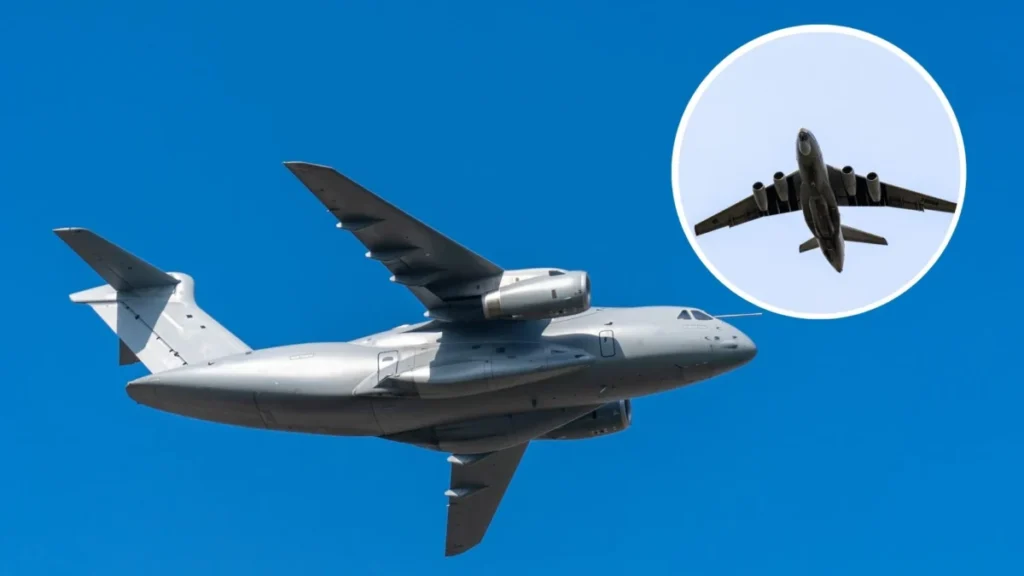
Recent revelations from a Chinese military documentary have shed light on the Y-20B transport aircraft, indicating that it is being developed with a mission profile far exceeding that of a conventional military airlifter. This strategic pivot suggests the aircraft is designed for a broad spectrum of roles, potentially encompassing aerial refueling, electronic warfare (EW), airborne early warning and control (AEW&C), and other specialized missions. This development marks a significant leap in China’s military aviation capabilities, aligning with a broader global trend towards flexible, multi-role aircraft platforms that enhance operational efficiency and strategic reach.
The Evolution of a Strategic Asset: From Airlifter to Adaptable Platform
The Y-20 Kunpeng, China’s first domestically developed heavy military transport aircraft, has been a cornerstone of the People’s Liberation Army Air Force’s (PLAAF) modernization efforts since its maiden flight in 2013. Initially designed to address China’s long-standing deficit in strategic airlift capacity, the Y-20 program aimed to provide the logistical backbone necessary for projecting power and responding to contingencies both domestically and internationally. Early versions, designated Y-20A, were powered by Russian-made D-30KP-2 turbofan engines, highlighting China’s historical reliance on foreign propulsion technology for its larger aircraft.
The emergence of the Y-20B variant, however, signifies a profound shift. The "B" designation is widely understood to indicate the integration of China’s indigenous WS-20 high-bypass turbofan engines, a crucial development that not only enhances the aircraft’s performance but also underpins its newfound versatility. Chinese military personnel, as suggested in official media and documentaries, have indicated that the Y-20 platform’s design inherently supports rapid adaptation. This modular approach allows for its transformation from a pure transport aircraft into various specialized configurations through the installation of specific equipment packages. This paradigm shift from dedicated single-role aircraft to a common, adaptable platform is a defining characteristic of modern military aerospace development, offering substantial advantages in terms of procurement, maintenance, and operational flexibility.
The Heart of the Y-20B: Indigenous WS-20 Turbofan Engine
The domestically produced WS-20 high-bypass turbofan engine is undeniably the "Chinese heart" of the Y-20B, as described by Chinese official media. Its introduction is a watershed moment for China’s aerospace industry, which has historically struggled to produce powerful, reliable, and fuel-efficient engines for large aircraft platforms. For decades, this technological gap forced China to rely on imports, primarily from Russia, for critical components like the D-30KP-2 engines used in the initial Y-20A models and Il-76 transports.
The WS-20’s development represents the culmination of years of intensive research and investment in indigenous propulsion technology. Compared to the D-30KP-2, the WS-20 is reported to offer significantly improved performance metrics, including greater thrust, enhanced fuel efficiency, and a longer operational lifespan. These improvements are critical for a large transport aircraft, enabling it to carry heavier payloads over longer distances, operate from shorter runways, and perform more efficiently at various altitudes. A higher bypass ratio, characteristic of modern turbofans like the WS-20, contributes to better fuel economy and reduced noise, both important factors for strategic airlift and extended-duration missions. The successful integration and mass production of the WS-20 engine not only address a critical vulnerability in China’s defense industrial base but also unlock the full potential of the Y-20 platform, expanding the scope of missions it can undertake without compromise.
Unlocking New Horizons: Aerial Refueling and Power Projection
Perhaps the most immediately impactful capability highlighted by the Y-20B’s modular design is its potential role as an aerial refueling aircraft. Aerial tankers are an indispensable asset for any modern air force aspiring to project power beyond its immediate borders. They serve as force multipliers, allowing fighter aircraft, bombers, and other surveillance platforms to remain airborne for extended periods, significantly increasing their operational range and endurance. For a country like China, which is actively expanding the reach and capabilities of its military, robust tanker capacity is almost as strategically important as the number of combat aircraft themselves.
Historically, the PLAAF’s aerial refueling capabilities have been limited. Its fleet primarily consisted of a small number of converted H-6U bombers and a handful of Russian-supplied Il-78 tankers. While the Y-20 family already includes the purpose-built YU-20 tanker variant, the reported ability of the Y-20B platform to be rapidly configured for refueling missions adds a crucial layer of operational flexibility. This modularity means that a larger proportion of the Y-20 fleet could, in theory, be pressed into service as tankers when needed, blurring the lines between dedicated transport and tanker fleets. This is particularly relevant for long-distance power projection, sustained air operations in contested environments, and humanitarian aid/disaster relief (HADR) missions that require continuous air support over vast distances. The ability to refuel aircraft such as the J-20 stealth fighter, J-16 multi-role fighter, and H-6K bomber vastly extends their reach into the Western Pacific, Indian Ocean, and potentially other strategic areas, fundamentally altering the PLAAF’s operational footprint and enhancing its ability to conduct complex, multi-layered missions far from mainland bases.
Beyond Fuel: Electronic Warfare, Surveillance, and Strategic Reconnaissance
The most intriguing aspect of the Y-20B’s development is not merely its capacity for aerial refueling, but the broader concept of modularity that promises to transform it into a highly adaptable platform for a myriad of specialized functions. According to reports and inferences from official Chinese sources, different equipment packages could theoretically allow the aircraft to perform roles traditionally assigned to highly specialized and often single-purpose platforms.
For instance, the integration of sophisticated electronic equipment could transform the Y-20B into a formidable electronic warfare (EW) platform. Such an aircraft would be capable of jamming enemy radar and communications, collecting signals intelligence (SIGINT), and providing electronic support measures (ESM) to friendly forces, thereby disrupting adversary operations and enhancing the survivability of Chinese assets in a contested electromagnetic spectrum. Similarly, with more extensive modifications, including the addition of advanced radar domes and command and control suites, the Y-20B could potentially evolve into an airborne early warning and control (AEW&C) aircraft. These platforms are crucial for battlefield management, providing long-range detection of air and surface targets, and coordinating friendly air assets.
While a "bomber" role for a transport aircraft might seem unconventional, it could imply specialized missions such as stand-off missile launch platforms, or perhaps highly specialized intelligence, surveillance, and reconnaissance (ISR) roles that involve deploying various sensors and communication relays. The flexibility offered by a large, stable airframe like the Y-20B, combined with its indigenous powerful engines, makes it an attractive candidate for such adaptations. This modular approach echoes strategies employed by other major military powers, where platforms like the Lockheed Martin C-130 Hercules have been adapted into gunships, special operations aircraft, aerial refueling tankers, and reconnaissance platforms, demonstrating the immense value of a versatile airframe.
China’s Drive for Self-Reliance and Military Modernization
The Y-20B’s development is a powerful testament to China’s overarching strategy of military modernization and its relentless pursuit of self-reliance in critical defense technologies. Under the leadership of President Xi Jinping, China has set ambitious goals to build a "world-class military" by 2049, capable of defending its national interests and projecting power globally. A key pillar of this strategy is the reduction of dependency on foreign suppliers for advanced military hardware, particularly in areas like aerospace propulsion, avionics, and specialized mission systems.
The successful development and integration of the WS-20 engine symbolize China’s breakthroughs in overcoming technological bottlenecks that once hindered its aerospace ambitions. This indigenous capability provides strategic autonomy, insulating China from potential embargoes or supply chain disruptions in times of geopolitical tension. Moreover, the modular design philosophy embedded in the Y-20B reflects a sophisticated approach to defense procurement and logistics. By developing a common airframe that can be reconfigured for multiple roles, China can achieve economies of scale, simplify maintenance and training regimens, and streamline its logistical footprint compared to maintaining separate, specialized fleets for each function. This strategic approach maximizes efficiency and operational readiness, further enhancing the PLAAF’s capabilities as a modern, integrated fighting force.
Regional and Global Implications
The emergence of the Y-20B as a multi-role platform carries significant regional and global implications. In the Indo-Pacific, its enhanced capabilities for aerial refueling and strategic airlift will directly impact the balance of power. A PLAAF with extended range and endurance can sustain operations further from mainland China, particularly in contested areas like the South China Sea, the East China Sea, and across the First and Second Island Chains. This expanded reach enables China to more effectively project power over its maritime claims, support expeditionary forces, and conduct sophisticated air operations that were previously constrained by logistical limitations.
Beyond military applications, the Y-20B’s versatility also enhances China’s capacity for humanitarian aid and disaster relief (HADR) missions on a global scale. A large, adaptable transport aircraft capable of long-distance flights and rapid reconfiguration can be invaluable in delivering aid, evacuating personnel, and supporting recovery efforts in remote or disaster-stricken regions. This capability not only aligns with China’s broader diplomatic goals but also showcases its growing capacity to act as a significant global actor in humanitarian efforts.
International defense analysts are likely to view the Y-20B’s multi-role capabilities with a mixture of concern and careful observation. While China frames these developments as necessary for national defense and modernization, other nations in the region and beyond will analyze the implications for regional stability and the broader strategic landscape. The Y-20B symbolizes a maturation of China’s aerospace industry and a strategic shift in how the PLAAF intends to operate, moving towards a more flexible, self-reliant, and globally capable force.
Challenges and Future Outlook
While the Y-20B represents a significant advancement, the full realization of its multi-role potential will undoubtedly face challenges. Integrating diverse mission systems, developing robust training programs for multi-skilled crews, and establishing efficient logistical chains for modular equipment packages are complex undertakings. The operationalization of these capabilities will require continuous investment in research and development, as well as rigorous testing and evaluation.
Nevertheless, the trajectory is clear. The Y-20B is more than just an aircraft; it is a symbol of China’s determined march towards aerospace self-sufficiency and military modernization. Its modular design philosophy positions it as a versatile strategic asset, capable of adapting to evolving threats and mission requirements. As China continues to refine and expand the Y-20 platform’s capabilities, it will undoubtedly solidify its position as a major player in global military aviation, with profound implications for regional security and the future of air power.