The battery is, by a significant margin, the most crucial component of any electric car, representing the heart of its propulsion system and the key determinant of its performance, range, and overall user experience. Despite its central role, the technology itself is remarkably young in its commercial application. While the fundamental principles of electrochemical energy storage were first explored in the 1800s, the advent of the commercially viable lithium-ion battery, the very technology powering today’s electric vehicles (EVs), only occurred in 1991, pioneered by Sony. This relatively recent emergence, coupled with the proliferation of specialized terminology, often leads to confusion among consumers and even industry observers alike. When confronted with terms like "lithium-iron-phosphate" (LFP) or "nickel-manganese-cobalt" (NMC), a pertinent question arises: how distinct are these battery chemistries, and are they fundamentally different from the ubiquitous lithium-ion label?
At their core, all these designations refer to variations within the broader lithium-ion battery family. The underlying principle of operation remains consistent across these different formulations. They all function on the same fundamental electrochemical mechanism and share a common set of essential components. The complexity and variety arise not from a departure from the lithium-ion paradigm, but from the specific chemical composition and arrangement of these core elements, particularly within the battery cell’s cathode.
The Building Blocks of an EV Battery
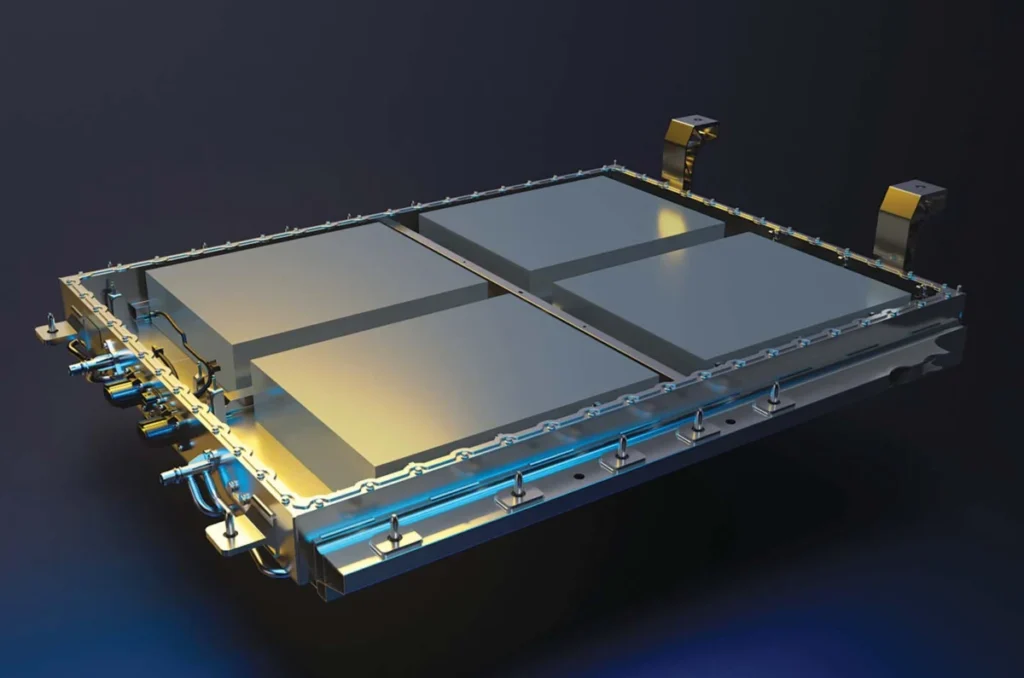
An EV battery pack is not a monolithic entity but rather a sophisticated assembly of hundreds, or even thousands, of individual battery cells. Each of these cells, when acting independently, produces a relatively small voltage, typically in the range of 3 to 4 volts. These individual cells are then meticulously arranged and interconnected within a protective casing to create a larger, more powerful unit capable of delivering the substantial energy required to propel an electric vehicle.
Within each individual battery cell lie the fundamental components that enable its energy storage and discharge capabilities. These include two electrodes: a positively charged cathode and a negatively charged anode. Separating these two electrodes is a crucial, non-conductive barrier, often made from plastic or ceramic materials. This separator prevents direct electrical contact between the anode and cathode, which would lead to a short circuit, while still allowing for the passage of ions. Finally, a thin layer of liquid electrolyte permeates the cell, facilitating the movement of lithium ions between the electrodes.
The physical form factor of these cells can vary. They can be designed as thin and flat, resembling oversized rectangular tablets, or they can be rolled into cylindrical or prismatic shapes. Regardless of their external configuration, the internal composition – cathode, anode, separator, and electrolyte – remains constant. The key differentiator, and the source of the varied terminology, lies in the specific chemical formulation of the cathode.
Cathode Chemistry: The Differentiator
The cathode is where the most significant variations occur within lithium-ion battery technology for electric vehicles. The two most prevalent types encountered in modern EVs are Nickel-Manganese-Cobalt (NMC) and Lithium-Iron-Phosphate (LFP). The "F" in LFP specifically denotes "ferrous," referencing iron. Both NMC and LFP are names that directly describe the primary metallic elements used in the composition of their respective cathodes. In contrast, the anode is almost universally carbon-based, with graphite being the most common material employed.
The process of creating these battery cathodes can be analogized to baking, though with significantly fewer ingredients than a complex culinary creation. The chosen cathode chemicals are meticulously mixed into a paste. This paste is then thinly spread onto a conductive foil, typically aluminum for the cathode, and subsequently dried. Similarly, the carbon anode is formed by spreading a graphite paste onto a copper foil. The precise proportions and combinations of these chemical ingredients are what impart distinct characteristics and performance attributes to each battery type.
NMC vs. LFP: A Comparative Analysis
Nickel-Manganese-Cobalt (NMC) Batteries: These batteries are favored for their ability to store a higher energy density. This translates directly into longer driving ranges for electric vehicles, a critical factor for consumer adoption. The inclusion of cobalt, in particular, is beneficial for power density, meaning they can deliver more power when needed, contributing to quicker acceleration. However, NMC batteries come with certain drawbacks. Nickel is a relatively expensive material, and cobalt mining has faced scrutiny due to ethical and environmental concerns.
Lithium-Iron-Phosphate (LFP) Batteries: In contrast, LFP batteries offer a compelling alternative, particularly from a cost and sustainability perspective. They entirely forgo the use of expensive nickel and the controversial cobalt. This makes them a more economically viable option for manufacturers and, potentially, for consumers. Beyond cost, LFP batteries are inherently more stable, contributing to enhanced safety profiles. While they may not offer the same peak energy density as some NMC variants, advancements in LFP technology are steadily closing this gap. Their longer cycle life, meaning they can endure more charge and discharge cycles before significant degradation, also presents a significant advantage in terms of longevity and overall cost of ownership.
The Underlying Mechanism: Lithium Ion Movement
Despite the chemical differences in their cathodes, the fundamental operational principle of all lithium-ion batteries remains the same. During the charging process, lithium ions are drawn from the cathode and migrate through the electrolyte and the separator to the carbon-based anode, where they are stored. When the battery is in use – discharging – this process is reversed. The lithium ions travel back from the anode, through the electrolyte and separator, to the cathode. This cyclical movement of lithium ions is the engine of electrochemical energy storage and release.
Implications for Consumers and the Industry
For the average EV buyer, the specific chemistry of the battery might not be the primary concern. What matters most are the tangible performance metrics: the vehicle’s range on a single charge, its charging speed, its overall power output, and its reliability. However, for those who prioritize sustainability and ethical sourcing, the choice of battery chemistry can be a significant factor. Batteries that eliminate or reduce reliance on heavy metals like nickel and cobalt, such as LFP batteries, arguably possess superior environmental credentials. The reduced demand for ethically sourced cobalt and the avoidance of nickel, whose extraction can be environmentally intensive, contribute to a more sustainable EV ecosystem.
The evolving landscape of battery technology is not merely an academic pursuit; it has profound implications for the automotive industry and the broader transition to sustainable transportation. Manufacturers are continuously investing in research and development to optimize battery performance, reduce costs, and enhance safety. The choice between NMC and LFP, or indeed emerging chemistries, is a strategic decision that influences vehicle design, pricing, and target markets.
For instance, the increasing adoption of LFP batteries by some major automakers in their more affordable models signifies a deliberate strategy to lower the entry barrier for EV ownership. This move acknowledges that while ultimate range is important, for many daily commutes and urban driving scenarios, the slightly lower energy density of LFP is a worthwhile trade-off for its cost-effectiveness and enhanced durability. Conversely, performance-oriented EVs or those designed for long-distance touring may continue to leverage the higher energy density capabilities of advanced NMC chemistries.
The Timeline of Battery Innovation
The journey from the initial conception of electrochemical energy storage to the sophisticated lithium-ion batteries of today is a testament to decades of scientific endeavor.
- Mid-19th Century: Early theoretical work on electrochemical cells lays the groundwork for battery technology.
- Late 19th Century: Initial prototypes of rechargeable batteries, such as the lead-acid battery, emerge.
- 1970s: Research into lithium-based batteries intensifies, driven by the need for lighter and more energy-dense power sources, particularly for portable electronics.
- 1980s: Early versions of lithium-ion batteries are developed, but face challenges with safety and stability.
- 1991: Sony commercializes the first lithium-ion battery, marking a pivotal moment in portable electronics and, eventually, electric mobility.
- Late 1990s – Early 2000s: Lithium-ion battery technology sees rapid improvements in energy density, lifespan, and safety, paving the way for its integration into a wider range of applications, including early electric vehicles.
- 2010s: The EV market begins to gain significant traction, fueled by advancements in lithium-ion battery technology, increased production capacity, and growing environmental awareness. LFP batteries start to gain traction in specific markets and applications due to their cost advantages and safety.
- 2020s: Continued innovation focuses on solid-state batteries, improved LFP formulations, and sustainable sourcing and recycling practices for battery materials. The industry grapples with supply chain challenges and the imperative to reduce reliance on critical minerals.
Broader Impact and Future Outlook
The evolution of EV battery technology is intrinsically linked to the broader goals of decarbonization and sustainable transportation. As battery costs continue to decline and performance metrics improve, electric vehicles are becoming increasingly competitive with their internal combustion engine counterparts. This trend is expected to accelerate, with projections indicating that EVs will constitute a significant majority of new vehicle sales within the next decade.
Furthermore, the battery industry is not just about powering cars. Advancements in battery technology are also crucial for grid-scale energy storage, enabling the integration of intermittent renewable energy sources like solar and wind power. This dual application highlights the transformative potential of battery innovation across multiple sectors.
The challenges ahead are not insignificant. Ensuring a secure and ethical supply chain for battery materials, developing efficient and scalable battery recycling processes, and managing the end-of-life of battery packs are critical considerations. The industry’s ability to address these challenges will be paramount in realizing the full environmental and economic benefits of the electric revolution.
In conclusion, while the terminology surrounding EV batteries can appear complex, understanding the fundamental principles of lithium-ion technology and the distinct characteristics of different cathode chemistries like NMC and LFP provides valuable insight into the future of transportation. The ongoing innovation in this field promises not only to make electric cars more accessible and capable but also to play a pivotal role in shaping a more sustainable energy future.