Published: July 29th, 2026
Dodge has officially ignited speculation surrounding the revival of its iconic Super Bee moniker, a nameplate deeply etched in the annals of American performance automotive history. A cryptic yet compelling viral video, disseminated across social media platforms, provides a strong, albeit unsubtle, hint at the impending return of this legendary model. The short clip, featuring a stylized swarm of bees converging on a drag strip under the pulsating soundtrack of Wiz Khalifa’s "Black and Yellow," leaves little room for interpretation. This visual and auditory narrative clearly heralds the resurrection of the Super Bee, a model that is widely anticipated to embrace a color scheme that directly references its namesake.
Industry insiders and dedicated enthusiasts have been privy to persistent rumors about the Super Bee’s comeback for several months. This latest announcement from Dodge, a brand under the Stellantis umbrella, suggests a strategic recalibration of its product development philosophy, particularly concerning the preferences of the North American market for high-performance vehicles. While the precise specifications remain under wraps, early indications point towards the new Super Bee being built upon the current Charger platform. It is expected to feature a dedicated drag package, distinctive graphic treatments, and potentially, the most potent iteration of the brand’s Hurricane engine to date. This move, even if it signifies a departure from the V8 dominance of past Super Bees, underscores a renewed focus on delivering an exhilarating driving experience.
A Legacy of Boldness: The Evolution of Dodge’s Performance Heritage
To fully appreciate the significance of the Super Bee’s potential return, one must delve into the rich and often audacious history of Dodge and its Mopar brethren. During the golden era of the muscle car, Dodge and Plymouth were not merely participants in the performance automotive landscape; they were pioneers of excess and unapologetic showmanship. While competitors from Ford and General Motors also offered potent machines with eye-catching paint schemes and substantial engines, Chrysler’s performance divisions often pushed the boundaries further. They embraced a distinct brand of exuberance, frequently incorporating playful and memorable cartoon mascots directly onto their vehicles, a characteristic that set them apart.
This distinctive approach to performance branding was evident across various Mopar models. The Dodge Dart, for instance, was famously offered in the "Demon" trim, characterized by significantly enhanced power output and vibrant paint jobs that often featured a stylized devil mascot. Similarly, the Plymouth Duster adopted a cartoon tornado as its graphic signature. However, perhaps the most direct antecedent to the Super Bee’s playful yet potent persona can be found in the Plymouth Road Runner. This model famously adopted the Warner Bros. cartoon character of the same name as its spiritual guide, even going so far as to equip its horn with a sound that mimicked the character’s signature "meep-meep."
Further pushing the envelope of automotive design and performance, Plymouth, along with Dodge, introduced the Superbird and Dodge Daytona, respectively. These models were conceived with NASCAR racing in mind, aiming to enhance aerodynamic efficiency. Consequently, production versions sported an undeniably radical front-end design and a colossal rear wing, cementing their status as automotive icons.
The Super Bee: A Recurring Icon of Mopar Performance
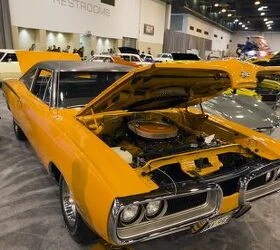
The Super Bee itself has a storied lineage, originating on the Dodge Coronet chassis before migrating to the Charger. Regardless of its platform, the Super Bee’s formula remained consistent: take a popular B-body vehicle, equip it with the most powerful engines available, and adorn it with the most visually striking paint schemes, often featuring a cartoon bee in a racing helmet. The advent of stringent emissions regulations and fuel crises in the 1970s led to the discontinuation of these halo performance cars. However, the spirit of Mopar performance endured, and the late 2000s saw a resurgence.
Dodge reintroduced the Super Bee as a special edition of the Charger SRT8, built on the LX platform. Initially, this iteration was powered by the formidable 6.1-liter Hemi V8, producing a robust 425 horsepower. It was available for a limited run from 2007 to 2009. Production resumed on the LD platform in 2012, this time featuring the larger 6.4-liter Hemi V8, and continued until 2014. The Super Bee’s chapter seemed to close with a "Last Call" edition in 2023, as Dodge signaled a pivot towards electrification under new Stellantis management. This shift, however, proved to be a complex transition, with the brand ultimately acknowledging the enduring demand for V8 power and the distinct preferences of its North American customer base.
Anticipating the Next Generation: Power, Performance, and Price
The recent resumption of V8 engine production and Dodge’s proactive teasing of new muscle car variants suggest a significant course correction. While details regarding the next-generation Super Bee are still emerging, past rumors had pointed towards another all-electric model. However, the timing of the assumed reveal, coinciding with the Road Kill Nights event on August 7th, aligns with Stellantis’s intention to showcase the most powerful gasoline-powered Charger Sixpack variant.
The current pinnacle of the twin-turbocharged 3.0-liter inline-six Hurricane engine delivers 550 horsepower. It is highly probable that the upgraded powerplant destined for the new Super Bee will see this output increase by at least 50 horsepower, pushing it closer to the legendary V8 performance figures of yesteryear. This enhanced engine is expected to find its home within the engine bay of the next-generation Charger, forming the heart of the reborn Super Bee.
Historically, Mopar has sometimes opted to reduce luxury features in favor of performance enhancements on select models like the Road Runner and Super Bee to manage costs. However, in the modern automotive era, this strategy has largely been supplanted by a trend towards integrating comprehensive luxury and technology features, thereby increasing the Manufacturer’s Suggested Retail Price (MSRP). Based on the current Charger lineup, it is projected that the new Super Bee will command a premium starting price, likely not falling below $65,000. Depending on the extent of performance enhancements and feature integration, the final price could significantly exceed this figure.
A Strategic Pivot: Stellantis Responds to Market Demands
The narrative surrounding the potential return of the Super Bee is more than just a revival of a beloved nameplate; it represents a crucial strategic pivot for Stellantis in the North American market. The company’s initial foray into widespread electrification, while ambitious, faced significant headwinds. Consumer adoption rates and the inherent appeal of electric powertrains for traditional muscle car enthusiasts proved to be less enthusiastic than anticipated. This realization appears to have prompted a more nuanced approach, one that acknowledges the enduring passion for internal combustion engines, particularly the V8, within Dodge’s core demographic.
The emphasis on a more powerful iteration of the Hurricane inline-six engine, rather than an immediate all-electric Super Bee, signals a pragmatic response to market realities. It suggests that Dodge is not abandoning its electrification goals but is instead prioritizing the immediate satisfaction of its existing customer base while concurrently developing future technologies. The Road Kill Nights event, a celebration of automotive performance and customization, provides an ideal platform to unveil such a vehicle, connecting directly with the enthusiasts who have long championed the brand.
Broader Implications for the Muscle Car Segment
The potential resurrection of the Super Bee, alongside the unveiling of a potent Charger Sixpack, has significant implications for the broader muscle car segment. It signals a renewed commitment from a major automaker to the segment that has historically been a cornerstone of American automotive culture. In an era where emissions regulations are becoming increasingly stringent and the automotive industry is in a state of rapid technological flux, Dodge’s apparent willingness to invest in and evolve its performance offerings is noteworthy.
This strategic recalibration by Stellantis could embolden other manufacturers to reconsider their own electrification strategies and potentially re-evaluate the role of gasoline-powered performance vehicles in their future portfolios. The success of these new Mopar offerings will likely be closely watched, not only by enthusiasts but also by industry analysts and competitors, as they will undoubtedly influence the trajectory of performance car development in the coming years. The return of the Super Bee, if it delivers on the promise of exhilarating performance and iconic styling, could serve as a powerful testament to the enduring appeal of the American muscle car and a catalyst for its continued evolution.
All will become clear in August when Dodge is expected to fully unveil its latest performance creations.