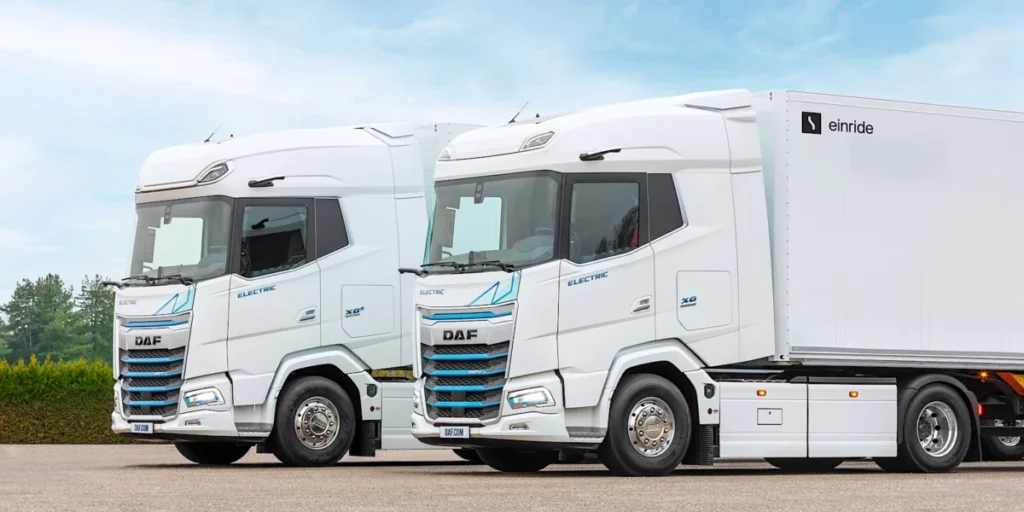
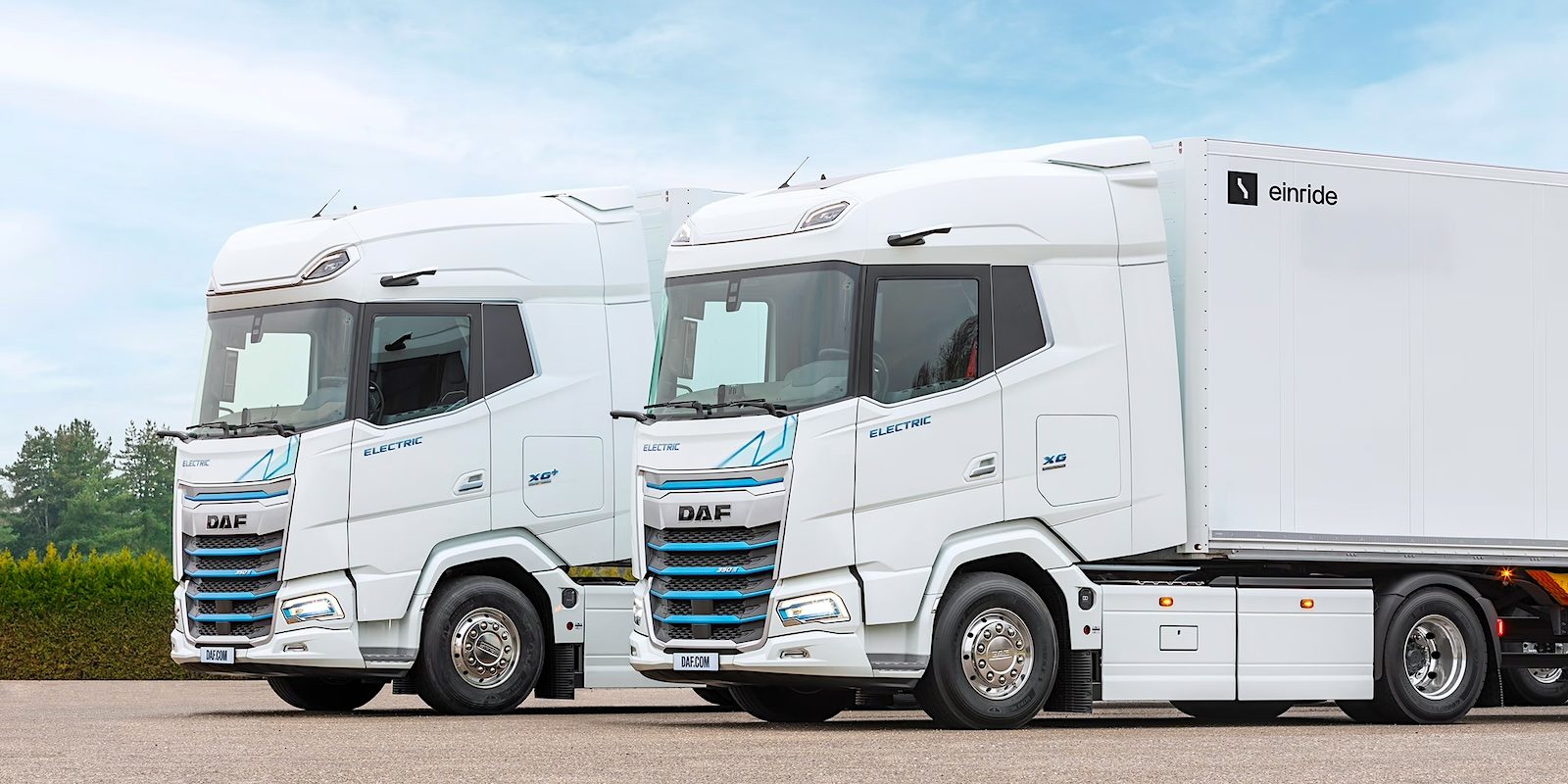
In a significant move poised to redefine the landscape of commercial transportation, autonomous logistics leader Einride has announced a strategic partnership with DAF Trucks, a prominent European manufacturer of heavy-duty vehicles. This collaboration aims to accelerate the integration and deployment of Einride’s advanced Level 4 autonomous driving technology onto DAF’s premium electric truck platforms. The union addresses critical industry challenges, including persistent driver shortages and escalating fuel costs, by offering a compelling vision for more predictable, efficient, and sustainable freight operations.
The logistics sector is currently grappling with a confluence of factors that are compelling a rapid evolution in how goods are transported. The chronic shortage of qualified drivers, exacerbated by an aging workforce and demanding working conditions, poses a significant operational hurdle for many companies. Simultaneously, the volatility of diesel prices injects an element of uncertainty into operational budgets, making long-term financial planning increasingly difficult. Against this backdrop, the promise of electric vehicles, with their more stable and often lower charging costs, coupled with the unwavering availability of autonomous driving systems, presents a powerful solution. Einride’s technology, known as Einride Driver, is designed to achieve Level 4 autonomy, meaning it can operate without human intervention within specific geofenced areas or under defined operational design domains. Integrating this sophisticated system into DAF’s established and robust electric truck range is expected to unlock new levels of operational efficiency and safety.

DAF Trucks, a subsidiary of PACCAR Inc., which also owns iconic American truck brands Kenworth and Peterbilt, brings a wealth of manufacturing expertise and a significant market presence to this partnership. The company already boasts a diverse portfolio of fully electric heavy-duty trucks, catering to a wide spectrum of logistical needs. This includes the agile XB Electric model, suitable for urban distribution and often referred to as a Class 7 truck in the United States, up to the more powerful XG and XG+ Electric variants designed for longer-haul applications. By opening its premium truck platforms to Einride’s autonomous technology, DAF is signaling a proactive approach to embracing the future of freight transportation.
Jeroen van den Oetelaar, DAF Trucks’ Chief Engineer and a member of its board, articulated the strategic importance of this alliance. "This collaboration is a testament to DAF’s commitment to innovation and future-proofing the logistics sector," van den Oetelaar stated. "By combining our premium truck platform with leading autonomous technology, we are actively shaping a more efficient, safer, and sustainable freight ecosystem." This statement underscores DAF’s recognition of the transformative potential of autonomous electric vehicles and its commitment to being at the forefront of this shift.
A Foundation Built on Innovation and Deployment
Einride has a well-established track record in pioneering autonomous electric freight solutions. The company has already achieved significant milestones, notably becoming the first to successfully deploy Level 4 autonomous trucks on public roads in Europe, operating within the demanding environment of the Port of Antwerp-Bruges in Belgium. This groundbreaking operation demonstrated the practical application of their technology in a real-world, high-traffic logistics hub. Furthermore, Einride has extended its operational reach to private roads in Ohio, United States, further validating its capabilities across different regulatory and operational contexts.
These early successes have been underpinned by a strategic focus on building the necessary infrastructure to support large-scale autonomous operations. Recognizing that the efficacy of autonomous vehicles is intrinsically linked to their ability to be charged efficiently and reliably, Einride has been actively forging partnerships to ensure access to a robust DC fast-charging network. This proactive approach to infrastructure development is crucial for enabling the widespread adoption of their autonomous fleet solutions.
The partnership with DAF signifies a critical inflection point for Einride. While the company has demonstrated its technological prowess and operational expertise, securing a manufacturing partner with the scale and capacity of DAF is essential for transitioning from pilot programs to mass production. Einride’s strategic approach has been deliberately vehicle-agnostic, allowing them to integrate their autonomous driving system across various truck manufacturers. This flexibility is a key differentiator, enabling them to adapt their technology to different vehicle platforms and market needs.
Henrik Green, Chief Technology Officer at Einride, highlighted the synergistic benefits of this collaboration. "By leveraging DAF’s decades of manufacturing excellence and market strength, we can expedite the global scale-up of Einride’s autonomous technology," Green explained. "This collaboration validates our vehicle-agnostic approach to autonomy and brings us one step closer to deploying safe, scalable Level 4 autonomy at commercial scale." The emphasis on "commercial scale" is particularly noteworthy, signaling a clear intention to move beyond niche applications and establish autonomous freight as a mainstream logistics solution.

The Broader Context: Industry Trends and Future Implications
The Einride-DAF partnership arrives at a time when the global logistics industry is undergoing a profound transformation. Several key trends are converging to drive the adoption of autonomous and electric technologies:
- Sustainability Imperatives: Growing environmental awareness and stricter regulations worldwide are pushing companies to reduce their carbon footprint. Electric trucks offer a zero-emission alternative to traditional diesel vehicles, aligning with corporate sustainability goals and governmental mandates. The International Energy Agency (IEA) has projected significant growth in the electric truck market, with a substantial portion of new truck sales expected to be electric in the coming decades.
- Operational Efficiency Gains: Autonomous driving systems have the potential to revolutionize operational efficiency. By eliminating the need for human drivers on certain routes or during specific operational phases, companies can achieve greater asset utilization. Autonomous trucks can operate for longer hours, potentially 24/7, and their precise driving patterns can lead to reduced fuel consumption and wear and tear on vehicles.
- Safety Enhancements: Human error is a leading cause of road accidents. Advanced autonomous driving systems, equipped with sophisticated sensors, AI, and redundant safety features, can potentially reduce accident rates. Level 4 autonomy, in particular, aims to provide a high level of safety within its defined operational parameters.
- Technological Maturation: The underlying technologies for autonomous driving, including AI, sensor technology, and high-definition mapping, have matured significantly. While challenges remain, particularly regarding edge cases and regulatory frameworks, the technology is demonstrably capable of performing complex driving tasks.
- Data-Driven Logistics: Autonomous electric trucks generate vast amounts of data related to vehicle performance, route optimization, and operational efficiency. This data can be leveraged to further refine logistics operations, improve supply chain visibility, and enhance overall business intelligence.
Looking Ahead: Challenges and Opportunities
While the partnership between Einride and DAF represents a significant step forward, the path to widespread commercial deployment of Level 4 autonomous trucks is not without its challenges. Regulatory frameworks for autonomous vehicles are still evolving in many regions, requiring careful navigation and collaboration with authorities. Public perception and acceptance of autonomous trucks on public roads also remain important considerations.
Furthermore, the development and maintenance of the sophisticated software and hardware required for Level 4 autonomy demand substantial ongoing investment. The integration of these systems into existing manufacturing processes and supply chains will also require careful planning and execution.

However, the potential rewards are substantial. Successful implementation of this partnership could lead to:
- Reduced Logistics Costs: Increased efficiency and reduced reliance on human drivers could lead to significant cost savings for logistics companies.
- Improved Supply Chain Resilience: Autonomous fleets can help mitigate the impact of driver shortages and ensure a more consistent flow of goods.
- Enhanced Road Safety: A reduction in accidents involving heavy-duty trucks would have profound benefits for public safety.
- Accelerated Transition to Sustainable Transport: The widespread adoption of electric autonomous trucks would significantly contribute to decarbonizing the transportation sector.
Einride’s strategic focus on building a comprehensive ecosystem, encompassing not only the vehicles but also the charging infrastructure and operational management software, positions them favorably for this transition. The collaboration with DAF, a manufacturer with a deep understanding of the heavy-duty truck market and a strong commitment to electrification, provides the essential manufacturing muscle and market access needed to scale these innovations effectively.
As the industry moves towards a future where autonomous electric vehicles play a central role in freight transportation, the partnership between Einride and DAF serves as a compelling example of how innovation, manufacturing prowess, and strategic foresight can converge to address some of the most pressing challenges facing the global logistics sector. The coming years will likely see a significant acceleration in the deployment of these advanced freight solutions, reshaping the way goods are moved across continents and contributing to a more sustainable and efficient future for transportation.