The rapid integration of artificial intelligence into the fabric of modern society has moved beyond the realms of science fiction and computer science laboratories, becoming a ubiquitous presence in the daily lives of young people worldwide. From the sophisticated recommendation algorithms governing social media feeds to the emergence of generative AI tools that assist with homework and creative projects, the youth of today are the first generation to grow up in an AI-saturated environment. Recognizing that this technological shift requires a fundamental update to global educational frameworks, the Raspberry Pi Foundation, in collaboration with Google DeepMind and Digital Moment, has unveiled a comprehensive suite of free, themed "Experience AI" resources. This initiative marks a significant departure from traditional educational models by positioning AI literacy not as a niche technical subject, but as a cross-curricular necessity essential for students aged 8 to 16.
The launch of these resources comes at a critical juncture in global education. As governments and school boards grapple with the implications of large language models and automated decision-making systems, there is a growing consensus that waiting until secondary school or university to introduce AI concepts is no longer sufficient. The new "Experience AI" collection is specifically designed to dismantle the barriers that have historically kept AI education confined to STEM (Science, Technology, Engineering, and Mathematics) classrooms. By organizing materials around broad, relatable themes such as the environment, critical thinking, and ethics, the partnership aims to empower educators across all disciplines—including geography, art, and the humanities—to integrate AI literacy into their existing lesson plans without requiring prior expertise in coding or machine learning.
The Evolution of AI Literacy in the Modern Curriculum
The development of the Experience AI resources was informed by extensive consultations with educators and pedagogical experts globally. Initial research conducted by the Raspberry Pi Foundation suggested that while teachers recognized the importance of AI, many felt overwhelmed by the technical complexity of the subject. Furthermore, the rigid structure of national curricula often left little room for entirely new subjects. To address these challenges, the foundation pivoted from a subject-specific approach to a flexible, theme-based model. This strategy acknowledges that AI technology rarely fits into a single academic box; a discussion on facial recognition, for instance, simultaneously touches upon computer vision (science), privacy rights (civics), and mathematical probability.
The partnership between the Raspberry Pi Foundation and Google DeepMind brings together two powerhouses of technology and education. Google DeepMind, a world leader in artificial intelligence research, provides the technical depth and foresight into where the technology is heading, while the Raspberry Pi Foundation contributes its deep understanding of classroom dynamics and teacher support. This collaboration ensures that the resources are not only scientifically accurate but also pedagogically sound and engaging for a younger audience. Additionally, the involvement of Digital Moment, a Canadian-based non-profit focused on digital skills, provided a vital testing ground for the resources in North American classrooms, ensuring the materials are adaptable to diverse educational landscapes.
A Chronology of Development and Global Testing
The journey toward the current launch began with the identification of a significant "literacy gap." While students were active users of AI, they lacked a conceptual understanding of how these systems functioned or the ethical implications of their use. Throughout 2023 and early 2024, the Raspberry Pi Foundation worked on developing modular units that could be "plugged" into various subjects.
In the spring of 2024, a pilot program was launched in Canada in partnership with Digital Moment. This phase was crucial for refining the materials based on real-world classroom feedback. Educators like Sandra Theobald, a Grade 8 teacher, and Colin McKenzie, who teaches Grades 7 and 8, were among the first to implement the "AI and Social Media" unit. The results of these trials demonstrated that when students were given the tools to look "under the hood" of the platforms they use daily, their engagement levels spiked. The testing phase revealed that students were not just passive recipients of information; they were eager to understand the relationship between their data, their online behavior, and the algorithmic outputs they encountered.
Following the success of the Canadian trials, the resources were finalized and made available globally. The current collection includes lesson plans, interactive simulations, and video content designed to be accessible to teachers who may have no prior experience with artificial intelligence.
Deep Dive into the Themed Resource Pillars
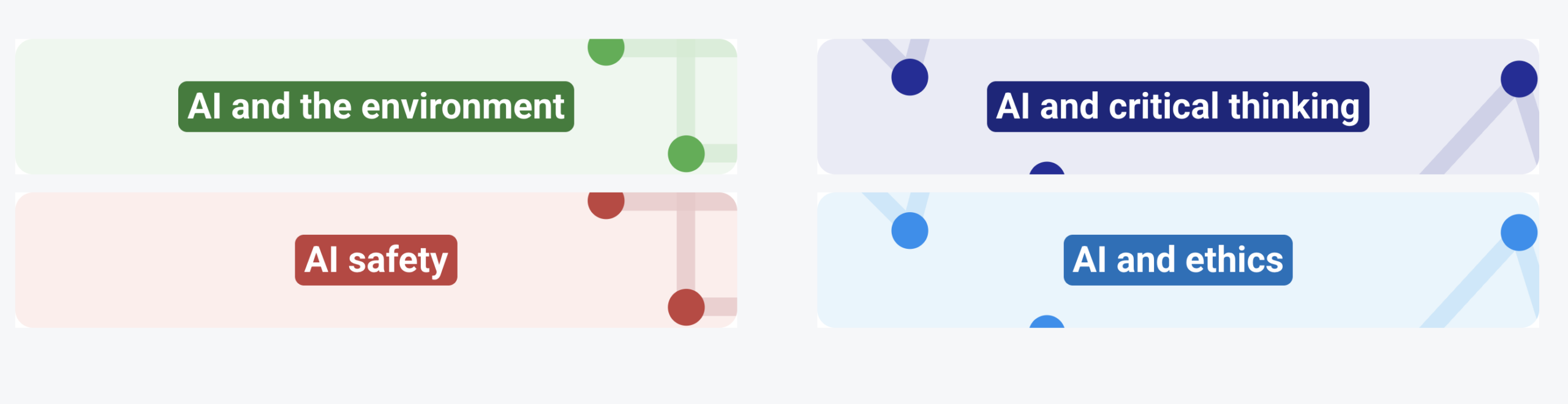
The "Experience AI" collection is structured around three primary pillars, each designed to foster a different aspect of AI literacy:
1. The Environment and Sustainability:
This theme explores how AI is being utilized to solve some of the planet’s most pressing challenges. Students learn about the role of machine learning in forecasting natural disasters, such as floods and wildfires, and how AI-powered sensors monitor biodiversity in remote ecosystems. By connecting AI to geography and environmental science, the curriculum demonstrates that technology is a tool for global stewardship, moving the conversation beyond the screen and into the physical world.
2. Critical Thinking and Media Literacy:
Perhaps the most urgent area of study, this pillar focuses on the mechanics of social media and the "attention economy." Using a closed social media simulation called "Somekone," students can experiment with creating accounts and observing how their likes, shares, and browsing habits influence the content recommended to them. This hands-on approach demystifies the "black box" of algorithms and equips students with the skepticism needed to navigate a world of deepfakes and automated misinformation.
3. Ethics, Bias, and Society:
The ethical pillar encourages students to ask the "why" and "should" questions. It addresses the inherent biases that can be baked into AI systems if the training data is not representative. Through art and humanities-based activities, students explore the cultural impact of AI, discussing who benefits from these technologies and who might be left behind. This section emphasizes that AI is a human creation and, therefore, subject to human values and flaws.

Expert Perspectives on Interdisciplinary Learning
The shift toward a cross-curricular approach has been met with enthusiasm from academic and professional bodies. Dr. Becky Kitchen, Head of Professional Development at the Geographical Association, emphasized that AI literacy is now a fundamental component of geographical knowledge. "Pupils are increasingly coming into contact with AI, and it’s vital they are taught how to harness its power in an effective and critical way," Kitchen stated. She noted that the new resources allow students to explore the concrete role AI plays in modern mapping and climate modeling, making the subject matter both relevant and rigorous.
From the perspective of the arts, Professor Geoff Cox of London South Bank University argues that excluding the humanities from AI education would be a grave error. "If AI literacy is left solely to STEM subjects, we lose the opportunity to ask deeper human, cultural, and ethical questions—questions that art is uniquely equipped to explore," Cox observed. He praised the resources for moving between visual analysis and practical activity, noting that a holistic understanding of AI requires both technical and reflective skills.
Indra Kubicek, CEO of Digital Moment, highlighted the role of the educator in this transition. According to Kubicek, the goal is to build a generation of "creators, builders, and innovators" who will shape the future of AI. This begins by providing teachers with the confidence to lead these conversations, regardless of their primary subject area.
Supporting Data and the Digital Divide
The necessity for these free resources is underscored by data regarding the "digital divide" in education. According to recent UNESCO reports, while AI integration in schools is accelerating in high-income countries, there is a significant risk that students in under-resourced areas will be left behind, not just in terms of access to technology, but in terms of "algorithmic literacy." By providing these resources for free, the Raspberry Pi Foundation and Google DeepMind are attempting to democratize AI education.

Furthermore, a 2023 survey of educators indicated that over 60% of teachers felt their students knew more about AI than they did, leading to a "confidence gap" in the classroom. The Experience AI resources address this by providing "supporting roles" for teachers, allowing them to learn alongside their students. The feedback from the Canadian trials showed that when teachers were relieved of the pressure to be "experts," they were more likely to introduce the topic and facilitate meaningful discussions.
Broader Impact and the Future of Digital Citizenship
The long-term implications of this initiative extend far beyond the classroom. As AI continues to automate tasks and reshape the global labor market, the definition of "workplace readiness" is evolving. The World Economic Forum’s Future of Jobs Report consistently ranks analytical thinking, curiosity, and technological literacy as top skills for the next decade. By embedding AI literacy into the curriculum now, the Experience AI program is essentially preparing students for a workforce where AI will be a collaborator in almost every field.
Moreover, the initiative serves a vital function in the development of digital citizenship. In an era where AI-driven platforms can influence public opinion and social cohesion, a citizenry that understands the underlying mechanics of these systems is essential for a healthy democracy. The ability to distinguish between AI-generated and human-generated content, to understand the risks of algorithmic bias, and to use AI ethically are no longer "optional" skills—they are requirements for modern life.
The Raspberry Pi Foundation has signaled that this is only the beginning. As AI technology continues to evolve at a breakneck pace, the foundation plans to update and expand the Experience AI collection, ensuring that the resources remain current. The ultimate goal is to create an educational environment where AI is treated with the same foundational importance as literacy and numeracy—a tool that, when understood and used correctly, has the potential to empower the next generation to solve the world’s most complex problems. For educators ready to take the first step, the message from their peers is clear: start small, use trusted resources, and embrace the journey of learning alongside the students who will eventually lead the AI-driven world of tomorrow.