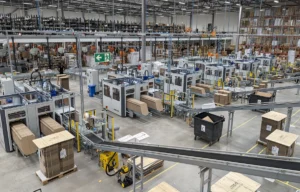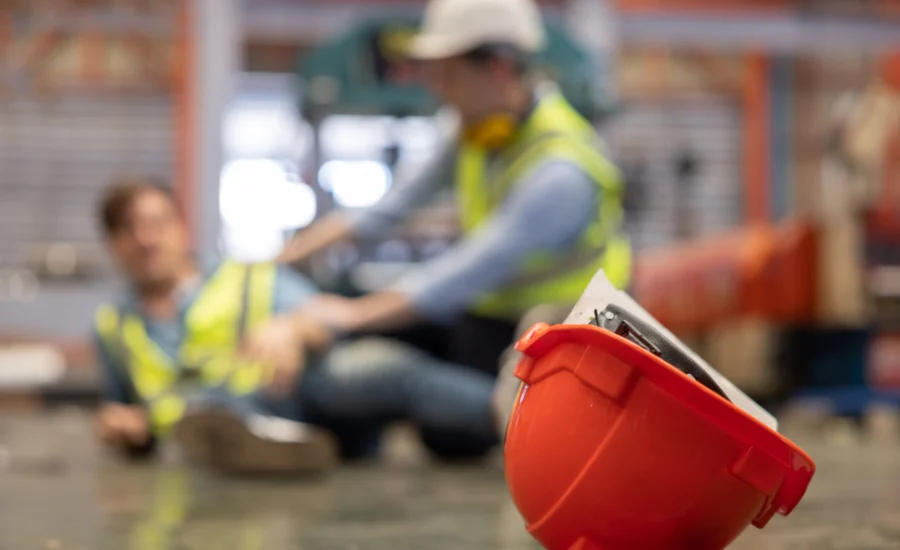
BIRMINGHAM, Mich. – Facilities dedicated to the manufacturing of adhesives and sealants, despite their design for precision and controlled environments, inherently present dynamic and often hazardous walking conditions that significantly elevate the risk of slips and falls among employees. The very nature of the production process, involving a constant interplay of materials and processes, transforms seemingly innocuous surfaces into potential slip hazards, posing a persistent challenge to workplace safety.
The operational rhythm of formulation plants dictates a routine oscillation between dry and wet surfaces. This dynamic shift is a direct consequence of material transfers, the rigorous cleaning of mixing vessels, and the frequent washdown procedures for production equipment. These fluctuating conditions are not exclusive to the point of manufacture; they extend to end-user facilities where adhesives and sealants are dispensed, cured, and subsequently cleaned from machinery as an integral part of their own production cycles.
Scott Sargent, Vice President of Sales and Marketing at SlipNOT, emphasizes that it is precisely these changing conditions, rather than merely the presence of wet floors, that constitute the most significant hazard. "Slips and falls happen because of a change," Sargent explains. "When you’re walking on a surface that’s got good traction and then you step on [a surface that’s like] ice, your brain doesn’t process those changes quickly enough. A fall happens, and often serious injury occurs because of it." This cognitive lag, where the brain fails to rapidly adapt to abrupt changes in surface friction, is a critical factor in the mechanics of workplace accidents.
The Pervasive Nature of Slip Hazards in Specialized Facilities
Adhesive and sealant manufacturing plants are replete with zones where these dangerous transitions in surface conditions are commonplace. Critical areas include mixing operations, where raw materials are combined; blending stations, essential for achieving product uniformity; filling lines, where products are packaged; and washdown zones, crucial for hygiene and equipment maintenance. Each of these areas introduces unique elements that can compromise floor traction. Similarly, end-user manufacturers face analogous risks around adhesive dispensing stations, assembly cells where products are joined, curing areas where chemical reactions solidify materials, and equipment-cleaning operations. In these environments, overspray, accidental spills, and routine maintenance activities can rapidly and unpredictably alter the walking surface, creating immediate slip hazards.
Beyond the immediate production floor, loading docks represent another high-risk area. Employees and forklifts frequently traverse diverse surfaces—concrete, metal dock plates, and trailer floors—which are susceptible to becoming slick due to weather conditions or operational spills. The transition between these varied materials, each with differing coefficients of friction, further compounds the risk. Sargent succinctly summarizes the broader impact: "Those changes in the environment lead to slips and falls, and they also lead to a lack of productivity." The ramifications extend beyond direct injury, impacting operational efficiency and overall output.
The Economic and Human Toll of Slips, Trips, and Falls (STFs)
The financial burden imposed by slips, trips, and falls (STFs) in industrial settings is substantial. According to data from the National Safety Council (NSC) and the Occupational Safety and Health Administration (OSHA), STFs are among the leading causes of workplace injuries and fatalities. Annually, STFs result in millions of non-fatal injuries requiring medical attention and thousands of fatalities across various industries. While specific figures for the adhesive and sealant sector are often aggregated, manufacturing, in general, sees a significant share of these incidents. The average cost of a slip and fall injury can range from tens of thousands to hundreds of thousands of dollars, encompassing direct costs such as medical expenses, workers’ compensation claims, and lost wages, as well as indirect costs like lost productivity, investigation time, retraining new employees, and potential legal fees.
A study by Liberty Mutual Insurance estimates that serious non-fatal workplace injuries cost U.S. businesses more than $1 billion per week. STFs frequently contribute a significant portion of this total. Beyond the immediate financial impact, there is the immeasurable human cost: pain and suffering for the injured employee, emotional distress for their families, and a potential decline in morale among colleagues. A workplace perceived as unsafe can also lead to higher employee turnover and difficulty in attracting skilled labor.
Critiquing Common Anti-Slip Solutions
While many facilities attempt to mitigate these risks using readily available solutions such as diamond plate, grip strut, anti-slip tape, or textured coatings, Sargent cautions that these products frequently underperform under the demanding conditions of process manufacturing. His critique is pointed: "Diamond plate was never designed for a wet traction surface. In fact, it’s slipperier when it has water or some sort of liquid on it because you have less contact points." The raised pattern of diamond plate, while offering some grip in dry conditions, actually reduces the contact area between footwear and the surface when liquid is present, thereby diminishing friction and increasing slipperiness.
Temporary anti-slip products, while offering an immediate response to an identified hazard, often become part of a recurring, resource-intensive maintenance cycle. Anti-slip tapes can peel at the edges, particularly in high-traffic areas or environments with chemical exposure. Coatings wear down over time, especially under abrasive conditions or heavy loads, gradually losing their effectiveness. This constant need for repair and replacement creates a "problem you thought you took care of – and you didn’t because it wore out," as Sargent puts it. Such temporary fixes offer a false sense of security and divert valuable maintenance resources that could otherwise be allocated to more permanent improvements.
The Imperative for Permanent and Proactive Solutions
The emphasis, therefore, must shift towards permanent, durable anti-slip solutions. These solutions, often involving specialized metal gratings or highly engineered flooring systems with embedded abrasive particles, are designed to maintain their high-traction properties even in the presence of liquids, oils, or chemicals. A "permanent solution," Sargent notes, "gives you peace of mind." This peace of mind stems from the knowledge that the safety measure will consistently perform as intended, reducing the likelihood of incidents and freeing up maintenance teams from repetitive, short-term fixes.
Beyond the direct prevention of injuries, Sargent argues that robust slip prevention strategies directly influence production efficiency and overall uptime. When employees feel secure and confident in their footing, they can navigate their workspace more efficiently and focus on their tasks without the subconscious distraction of potential hazards. This enhanced comfort and confidence translate into improved operational flow and reduced hesitation, contributing to higher productivity. Moreover, by investing in permanent solutions, manufacturers can significantly reduce the maintenance time spent on replacing worn temporary materials, allowing maintenance staff to focus on critical equipment upkeep and preventative maintenance, further boosting uptime. "If you’re comfortable and you’re confident, you’re going to be working much more efficiently," Sargent asserts, highlighting the often-overlooked ROI aspect of safety investments.
Integrating Safety from Inception: A Shift Towards Proactive Design
A crucial aspect of modern workplace safety philosophy is the integration of safety considerations at the earliest stages of facility design and equipment procurement, rather than treating it as an afterthought or a reactive measure following an incident. Sargent strongly advocates for this proactive approach, urging manufacturers to address walking surfaces during facility design rather than waiting for an injury to occur. This paradigm shift from reactive problem-solving to proactive hazard elimination is gaining traction across the industry.
Increasingly, plant operations, engineering teams, and safety professionals are collaborating much earlier in new projects. This cross-functional collaboration allows for a comprehensive evaluation of walking surfaces, potential slip hazards, and appropriate mitigation strategies before production commences. "The facilities that perform best are usually the ones that design safety in from day one," Sargent observes. "Designing it up front to be a permanent solution or to be a highly durable solution is really the key." This approach not only ensures a safer work environment from the outset but also proves more cost-effective in the long run, as retrofitting safety solutions into an operational facility is often more expensive and disruptive than integrating them during the initial design and construction phases.
Regulatory Framework and Best Practices
Regulatory bodies like OSHA in the United States mandate employers to provide a workplace free from recognized hazards likely to cause death or serious physical harm. This includes addressing slip and fall risks. OSHA standards, such as those found in 29 CFR 1910.22 (Walking/Working Surfaces), provide general requirements for maintaining safe floor conditions, but specific industries often develop their own best practices to address unique challenges.
For adhesive and sealant manufacturers, adopting best practices involves:
- Hazard Identification and Risk Assessment: Regularly auditing all walking surfaces, especially in areas prone to spills, moisture, or chemical exposure, to identify and assess slip hazards.
- Engineering Controls: Prioritizing permanent engineering solutions such as specialized anti-slip flooring materials, effective drainage systems, and design layouts that minimize material transfer across walking paths.
- Administrative Controls: Implementing robust spill response protocols, routine cleaning schedules, and clear signage to alert employees to potential hazards.
- Personal Protective Equipment (PPE): Ensuring employees are provided with and trained to use appropriate slip-resistant footwear, though this should always be the last line of defense after engineering and administrative controls.
- Employee Training and Engagement: Educating employees on slip and fall prevention, encouraging hazard reporting, and fostering a culture where safety is a shared responsibility.
- Continuous Improvement: Regularly reviewing incident data, near-miss reports, and employee feedback to continuously refine safety protocols and solutions.
Conclusion: A Holistic Approach to Workplace Safety
The challenge of preventing slips and falls in adhesive and sealant manufacturing facilities is multifaceted, demanding a comprehensive and proactive approach. It transcends the simplistic notion of merely "cleaning up spills" and delves into the nuanced understanding of how changing surface conditions, material properties, and human cognitive responses interact to create hazards. By embracing durable, permanent anti-slip solutions and integrating safety considerations into the foundational design of facilities and processes, manufacturers can not only significantly reduce the incidence of debilitating injuries but also unlock substantial benefits in terms of operational efficiency, employee morale, and long-term cost savings. The ultimate goal is to cultivate a workplace where safety is not merely a compliance checkbox but an inherent value, enabling every employee to perform their duties confidently and without undue risk. This proactive stance ensures that the precision inherent in the manufacturing process extends to the precision of safety, safeguarding both personnel and productivity.