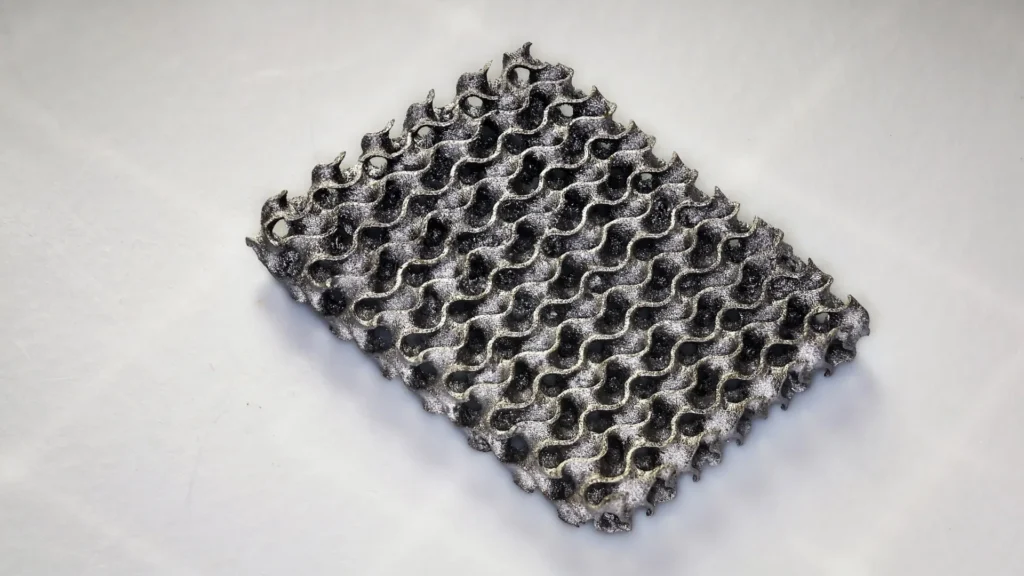
A groundbreaking innovation from the Swiss Federal Institute of Technology Lausanne (EPFL) is poised to redefine the landscape of additive manufacturing, offering a transformative method for producing high-quality, robust metal and ceramic components using a surprisingly accessible 3D printing process. This new technique, developed by a team led by Daryl Yee at EPFL’s School of Engineering, overcomes significant limitations of existing vat photopolymerization methods, promising a future where complex, strong, and lightweight materials can be manufactured with unprecedented precision and versatility.
Vat photopolymerization, a prevalent form of 3D printing, typically involves immersing a build platform in a liquid resin that is selectively cured by a laser or ultraviolet light, layer by layer, to form a three-dimensional object. While this method excels at creating intricate polymer structures, its utility in producing functional metal or ceramic parts has historically been hampered by a critical constraint: it is inherently limited to light-sensitive polymers. The subsequent conversion of these printed polymers into denser materials like metals and ceramics often involves significant compromises.
Addressing the Limitations of Conventional Conversion Methods
Previous research efforts have explored pathways to transform 3D-printed polymer precursors into advanced materials. These often involve infiltrating the printed polymer structure with metal or ceramic compounds and then subjecting the entire object to high temperatures, a process known as sintering, to consolidate the material and remove the polymer scaffold. However, as Daryl Yee, head of the Laboratory for the Chemistry of Materials and Manufacturing at EPFL, points out, these conventional approaches suffer from severe drawbacks.
"These materials tend to be porous, which significantly reduces their strength, and the parts suffer from excessive shrinkage, which causes warping," Yee stated in a press release detailing the findings. The porosity arises from incomplete filling of the polymer matrix by the inorganic precursors and the voids left behind after the polymer burns out. This porosity directly compromises the mechanical integrity of the final object, making it unsuitable for applications demanding high structural performance. Furthermore, the significant shrinkage, often exceeding 60-90%, leads to dimensional inaccuracies and deformation, rendering the precise geometries created by 3D printing largely useless.
A Paradigm Shift: Post-Printing Material Infiltration
The EPFL team’s novel approach, detailed in a recent publication in the prestigious journal Advanced Materials, elegantly sidesteps these persistent challenges by fundamentally altering the order of operations. Instead of attempting to mix metal compounds directly into a light-curable resin – a process fraught with difficulties in achieving uniform dispersion and preventing premature reactions – the researchers first 3D print a temporary structural framework. This framework is meticulously constructed from a simple, biocompatible water-based gel known as a hydrogel.
Hydrogels are three-dimensional networks of hydrophilic polymers capable of absorbing large amounts of water. Their inherent biocompatibility and tunable properties make them attractive for a variety of applications, including drug delivery, tissue engineering, and now, as a versatile printing material for advanced manufacturing. The EPFL team leverages the gel’s porous structure to its advantage.
Following the 3D printing of the hydrogel template, the "blank" structure is then submerged in a solution containing metal salts. Through a carefully controlled chemical process, these metal salts are converted into minute, metal-containing nanoparticles. These nanoparticles then infiltrate and deposit throughout the intricate network of the hydrogel. This process is not a one-off event; it is a cyclical "growth" procedure. By repeating the soaking and conversion steps multiple times, the researchers can achieve exceptionally high concentrations of metal within the hydrogel matrix, creating dense composite materials.
"After 5–10 of these ‘growth cycles,’ the remaining hydrogel is removed through heating, leaving behind a dense metal or ceramic object that precisely matches the shape of the original printed gel," explained Yee. The heating process effectively vaporizes or decomposes the hydrogel, leaving behind the consolidated metal or ceramic structure. A critical advantage of this post-printing infiltration strategy is its remarkable versatility. Since the metal salts are introduced only after the hydrogel framework has been printed, the same hydrogel template can be used as a blueprint for fabricating a diverse array of materials. This means that a single intricately designed hydrogel structure could potentially be converted into iron, silver, copper, or various ceramic compounds, offering unparalleled flexibility in material selection for a given design.
Achieving Unprecedented Strength and Dimensional Stability
The impact of this innovative approach is most strikingly evident in the enhanced mechanical properties and dimensional accuracy of the resulting components. To validate their findings, the EPFL team fabricated complex, mathematically defined lattice structures known as gyroids. Gyroids are renowned for their high surface area-to-volume ratio and unique mechanical properties, making them ideal for applications requiring both strength and lightness. The researchers produced these gyroid structures from iron, silver, and copper, showcasing the broad applicability of their technique across different metallic elements.
The strength of these newly fabricated gyroids was rigorously tested using a universal testing machine, a standard instrument for measuring the mechanical properties of materials. The results were nothing short of remarkable. "Our materials could withstand 20 times more pressure compared to those produced with previous methods, while exhibiting only 20% shrinkage versus 60-90%," stated Yiming Ji, a PhD student and the first author of the study. This dramatic improvement in strength—a twentyfold increase—directly addresses the porosity issue inherent in older conversion techniques. The drastically reduced shrinkage (20% compared to the prohibitive 60-90%) ensures that the printed designs maintain their intended dimensions, opening doors for high-precision engineering applications.
Enabling Advanced 3D Architectures for High-Impact Industries
The implications of this breakthrough extend far beyond academic curiosity. The ability to fabricate strong, lightweight, and complex 3D architectures with such fidelity is of immense interest to a wide range of advanced industries. Potential applications include the manufacturing of sophisticated sensors that require intricate internal structures for optimal performance, highly specialized biomedical devices where precise geometry and biocompatibility are paramount, and cutting-edge devices for energy conversion and storage.
For instance, metal catalysts play a crucial role in numerous industrial processes, including the conversion of chemical energy into electricity within fuel cells. The high surface area and precisely controlled porosity achievable with the EPFL method could lead to the development of more efficient and durable catalysts. Similarly, advanced cooling technologies for energy systems often rely on materials with exceptional heat dissipation capabilities, which can be achieved through the design of complex, high-surface-area metal structures.
A New Paradigm in Additive Manufacturing
Daryl Yee summarized the significance of their work, stating, "Our work not only enables the fabrication of high-quality metals and ceramics with an accessible, low-cost 3D printing process; it also highlights a new paradigm in additive manufacturing where material selection occurs after 3D printing, rather than before." This shift in perspective is profound. Traditionally, the material dictates the printing process. In this new paradigm, the design and printing process are decoupled from the final material composition, offering an unprecedented level of design freedom.
Future Directions and Industrial Integration
While the current achievements are substantial, the EPFL team is actively pursuing further advancements to facilitate broader industrial adoption. A primary focus is on further increasing the density of the materials, which would translate to even greater strength and performance. Another critical area of development is speed. The repeated infusion steps, while essential for achieving high material density, currently make the process more time-consuming compared to some other 3D printing techniques.
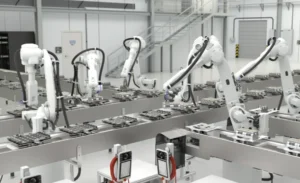
"We are already working on bringing the total processing time down by using a robot to automate these steps," Yee confirmed. Automation of the growth cycles is expected to significantly accelerate the manufacturing process, making it more competitive with established industrial production methods. The team’s commitment to refining their technique underscores their ambition to see this technology transition from the laboratory to real-world applications.
The successful development of this hydrogel-based 3D printing method represents a significant leap forward in additive manufacturing. By providing a robust, versatile, and scalable pathway to high-quality metal and ceramic components, EPFL’s innovation is set to empower engineers and designers to create the next generation of advanced materials and devices, pushing the boundaries of what is possible in fields ranging from aerospace and automotive to healthcare and renewable energy. The ability to precisely control material composition after printing, combined with the inherent advantages of 3D printing, promises a future where complex, high-performance components can be manufactured more efficiently and sustainably than ever before.