In a landmark study that challenges established boundaries in condensed matter physics, a research team at the University of Illinois Urbana-Champaign’s Grainger College of Engineering has identified a rare and elusive quantum state within the material uranium ditelluride ($UTe_2$). The discovery provides the first direct experimental evidence of "pair density waves" (PDWs) that persist even after a material’s primary superconducting state has dissolved. This phenomenon, likened by researchers to the lingering "Cheshire Cat’s grin," suggests that the fundamental building blocks of superconductivity—Cooper pairs—can organize into complex, non-uniform patterns that survive at temperatures and magnetic field strengths previously thought to be destructive to such quantum coherence.
The study, published in the Proceedings of the National Academy of Sciences (PNAS), represents a significant leap in our understanding of unconventional superconductors. By utilizing advanced scanning tunneling microscopy (STM) and high-purity crystal samples, the team, led by physics professors Eduardo Fradkin and Vidya Madhavan, has confirmed a theoretical prediction made nearly two decades ago. The findings not only shed light on the internal mechanics of $UTe_2$ but also offer a new framework for studying the transition between different phases of matter in quantum systems.
The Evolution of Superconductivity Theory
To understand the significance of the Illinois team’s discovery, one must look back at the history of superconductivity, a field that has fascinated scientists since Heike Kamerlingh Onnes first observed zero electrical resistance in mercury in 1911. For decades, the phenomenon remained a mystery until 1957, when University of Illinois physicists John Bardeen, Leon Cooper, and Robert Schrieffer proposed the BCS theory. This Nobel Prize-winning model explained that at extremely low temperatures, electrons—which are fermions and naturally repel one another—can overcome their repulsion through interactions with the metal’s atomic lattice.
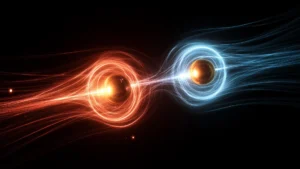
These electrons form "Cooper pairs," which behave as bosons. Unlike individual fermions, bosons can occupy the same quantum state, allowing them to condense into a single coherent wave that moves through the lattice without scattering. This "superfluid" of electron pairs is what enables electricity to flow with zero resistance. However, BCS theory primarily described "conventional" superconductors. In 1986, the discovery of high-temperature cuprate superconductors revealed materials that achieved superconductivity through mechanisms that BCS theory could not fully explain. These "unconventional" superconductors have since become the frontier of condensed matter research, often exhibiting complex phases like charge density waves (CDWs) and, as now confirmed, pair density waves.
The Enigma of the Pair Density Wave
While charge density waves (CDWs) involve a periodic modulation of the electron density itself, pair density waves (PDWs) are far more subtle. In a standard superconductor, the "order parameter"—the mathematical description of the superconducting state—is uniform throughout the material. In a PDW state, however, this order parameter oscillates in space. This means that the density of Cooper pairs is not constant; instead, it forms a repeating pattern of peaks and troughs.
Professor Eduardo Fradkin first theorized the existence of the PDW phase in 2007. At the time, the proposal was considered speculative. The theory suggested that PDWs could exist as a "vestigial" phase—a state where the underlying symmetry of the superconductor is broken, but the macroscopic zero-resistance state has not yet been achieved or has already been lost.
"Pair density waves are the Cheshire Cat’s grin of superconductivity," Fradkin explained. "They are the vestige that remains once the phase itself has disappeared. In conventional superconductors, Cooper pairs form when the full phase transition occurs, but, in this system, their observation in PDWs above the transition point shows that they are formed beforehand in a different state."
Uranium Ditelluride: A Unique Quantum Laboratory
The material at the center of this discovery, uranium ditelluride ($UTe_2$), was long dismissed as a mundane metallic compound. Its status changed dramatically in 2019 when researchers discovered it becomes superconducting at temperatures below 2 Kelvin. What makes $UTe_2$ particularly intriguing is its potential as a "triplet-pair" superconductor.
In most superconductors, Cooper pairs consist of electrons with opposite spins (singlet pairing), resulting in a net magnetic moment of zero. In triplet superconductors, the electrons pair with parallel spins, giving the pair a magnetic moment. This makes the superconducting state highly resilient to magnetic fields. The only widely accepted example of triplet pairing prior to the $UTe_2$ era was superfluid helium-3, a system famously studied by the late Illinois physicist and Nobel laureate Anthony Leggett.
The consensus among physicists today is that $UTe_2$ is a solid-state analogue to helium-3. Because of its unique spin properties, $UTe_2$ is a leading candidate for topological superconductivity, a state of matter that could host Majorana fermions—quasiparticles that are their own antiparticles. These are of immense interest for the development of fault-tolerant quantum computers.
Experimental Breakthroughs and Vector Magnetic Fields
The detection of PDWs in $UTe_2$ required a level of precision that was previously unattainable. Initial attempts to study the material were hampered by impurities in the crystal lattice, which obscured the delicate quantum signals. "It would have been like trying to spot a light in a cloud of fog," noted Professor Vidya Madhavan.
The breakthrough came through a two-pronged approach: superior material synthesis and advanced instrumentation. Collaborating teams utilized a new "molten flux growth" method to produce high-quality, single-crystal samples of $UTe_2$ with minimal defects. These "clean" samples allowed the intrinsic electronic properties of the material to emerge.
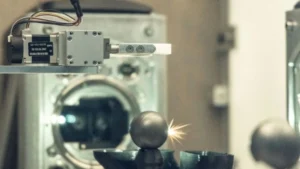
The Illinois team then employed a vector magnetic field scanning tunneling microscope (STM). STM works by hovering a sharp metallic tip just atoms away from the material’s surface and measuring the "tunneling current" of electrons. This provides a map of the electronic states at the atomic level. The vector magnetic field capability allowed the researchers to apply magnetic fields in multiple directions, a crucial feature given that $UTe_2$ is anisotropic—meaning its physical properties vary depending on the direction of the crystal axis.
Zhen Zhu, a postdoctoral research associate who conducted the experiments, highlighted the importance of this technology. "By systematically varying both the magnitude and direction of the field, together with temperature, we could track how these modes evolved and build confidence that the behavior we observed was intrinsic."
Observations and Implications
The team’s measurements revealed that the charge density waves in $UTe_2$ responded to magnetic fields in a highly unusual manner. Typically, a CDW is an arrangement of charge that should be indifferent to magnetic fields. However, in $UTe_2$, the researchers found that magnetic fields could actually suppress or destroy these waves.
This anomalous behavior led the experimentalists to Fradkin’s theoretical group. The only consistent explanation was that the observed waves were not simple CDWs, but were inextricably linked to pair density waves. Most importantly, the researchers observed that these spectral signatures persisted even as the temperature was raised above the critical point where superconductivity vanishes.
Julian May-Mann, a former graduate student who worked on the theoretical analysis, emphasized the robustness of this conclusion. "There are foundational principles in condensed matter physics that constrain how different phases can appear and disappear. Any explanation that only relies on a CDW is at odds with these principles. The PDW-based explanation, on the other hand, provides a satisfactory and consistent explanation."
The fact that Cooper pairs can exist in a structured, non-superconducting "ordinary" phase suggests that the precursor to superconductivity in $UTe_2$ is far more complex than in conventional metals. This "pre-pairing" of electrons into PDWs before they condense into a full superconductor could be the key to understanding other unconventional superconductors, including the high-temperature cuprates that have puzzled scientists for nearly 40 years.
Future Horizons in Quantum Materials
While the UIUC study focused on the surface of the material—a limitation inherent to STM technology—the consistency of the data across varying temperatures and magnetic fields suggests that the PDW state is a fundamental property of $UTe_2$.
The implications of this discovery extend beyond basic science. If $UTe_2$ is indeed a triplet-pair topological superconductor hosting PDWs, it provides a stable platform for exploring quantum braiding and other phenomena essential for topological quantum computing. Unlike current quantum bits (qubits) which are extremely sensitive to environmental noise, topological qubits would be protected by the very nature of their spatial organization.
The research at the Grainger College of Engineering underscores the University of Illinois’ continued legacy as a global leader in superconductivity research. From the foundations laid by Bardeen, Cooper, and Schrieffer to the modern explorations of Fradkin and Madhavan, the quest to decode the quantum behavior of electrons continues to push the boundaries of what is possible in materials science.
As researchers continue to probe the "Cheshire Cat’s grin" of $UTe_2$, they move closer to a unified theory of unconventional superconductivity. Such a breakthrough could eventually lead to the design of materials that operate at room temperature, revolutionizing energy grids, transportation, and the future of global technology. For now, the discovery of persistent pair density waves stands as a profound reminder that even when a state of matter seems to disappear, its "grin" remains, holding the secrets to the next generation of physics.