The European Space Agency (ESA), in a long-standing partnership with the Raspberry Pi Foundation, has officially opened applications for the 2026/27 European Astro Pi Challenge. Launched on September 14, 2026, this annual educational initiative provides a rare and prestigious opportunity for students and young enthusiasts to have their computer code executed in the unique environment of the International Space Station (ISS). By bridging the gap between classroom learning and real-world orbital science, the program aims to inspire the next generation of engineers, data scientists, and space explorers across ESA Member States and Canada.
The 2026/27 edition of the challenge arrives at a pivotal moment for European space education, as the demand for digital literacy and high-level programming skills continues to outpace supply in the global aerospace sector. The program is structured into two distinct tiers—Mission Zero and Mission Space Lab—designed to accommodate participants ranging from absolute beginners to advanced student research teams. Every successful submission that meets the technical requirements is guaranteed to run on the Astro Pi units currently orbiting Earth at approximately 28,000 kilometers per hour.
A Legacy of Orbital Innovation: The Evolution of Astro Pi
The Astro Pi program began over a decade ago, gaining significant international attention during ESA astronaut Tim Peake’s "Principia" mission in 2015. Since its inception, the hardware has undergone significant upgrades to keep pace with modern computing standards. The current Astro Pi units, known as "Ed" and "Izzy," are based on Raspberry Pi 4 technology, equipped with high-quality cameras—including infrared capabilities—and a suite of sensors known as the Sense HAT. These sensors allow the computers to measure humidity, temperature, pressure, and orientation (gyroscope, accelerometer, and magnetometer).
The 2026/27 cycle marks a period of refined educational resources. This year, the organizers have introduced enhanced project guides and expanded data sets from previous years to help students better understand the parameters of space-based computing. The collaboration between ESA Education and the Raspberry Pi Foundation is implemented at a national level through European Space Education Resource Offices (ESEROs), ensuring that local curriculum standards are met while maintaining a unified international goal.
Mission Zero: Democratizing Coding Through Digital Art
Mission Zero is specifically tailored for participants aged 9 to 16. It serves as a non-competitive entry point into the world of Python programming, requiring no prior experience. The primary objective is for teams to create a piece of pixel art that will be displayed on the Astro Pi’s 8×8 LED matrix for the astronauts to see as they work aboard the ISS.
This year’s Mission Zero has been enriched with new creative tools. Participants utilize a web-based code editor, which simulates the Astro Pi environment, allowing them to capture live light readings from the station’s interior to influence their artwork. For instance, a program could be designed to change the colors of a digital "space flower" based on the intensity of the ambient light in the Columbus module.
To further support educators, the 2026/27 project guide includes "worked examples" based on successful entries from the previous season. These include scripts for static images and two-frame animations. Upon completion, every participant receives a certificate that serves as a permanent record of their achievement, featuring the exact time their code was executed and the orbital coordinates of the ISS at that moment.
Mission Space Lab: Conduct Real Science in Low Earth Orbit
For older students aged 12 to 19, Mission Space Lab offers a more rigorous scientific challenge. This tier requires teams of two to six people to design and program a scientific experiment that addresses one of two themes: Life on Earth or Life in Space.
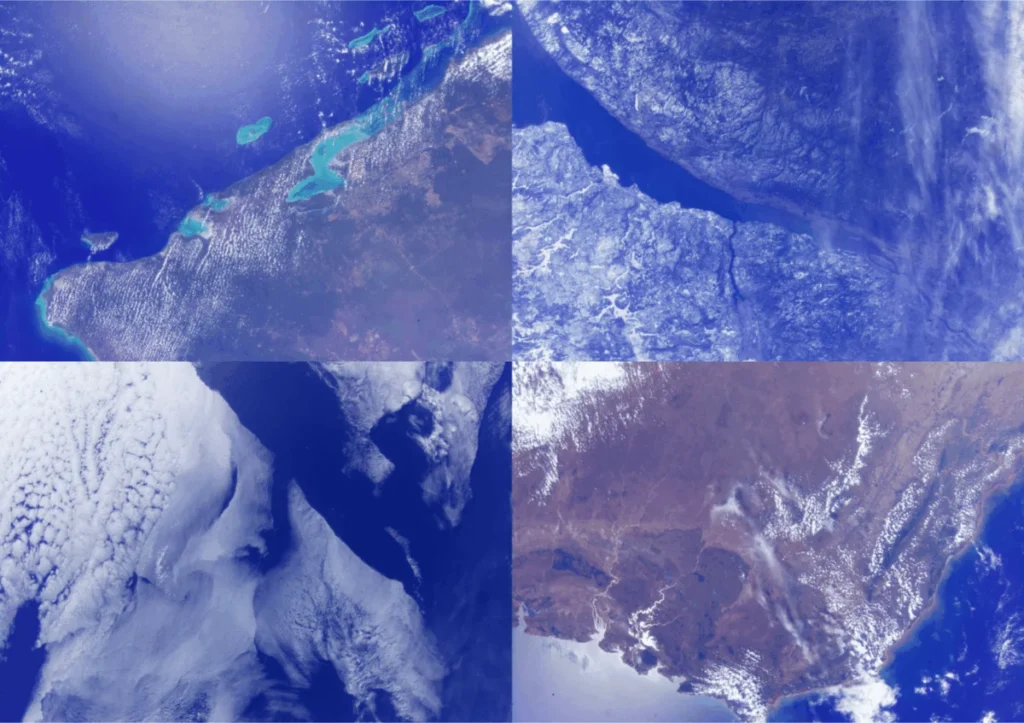
In the "Life on Earth" category, teams typically utilize the Astro Pi’s Near-Infrared (NIR) camera to conduct Earth observation. A common application is the calculation of the Normalized Difference Vegetation Index (NDVI), a graphical indicator used by scientists to analyze remote sensing measurements and assess whether a target contains live green vegetation. In the "Life in Space" category, teams might use the Sense HAT sensors to study the internal environment of the ISS or use the camera to track the station’s velocity via image processing algorithms.
The 2026/27 Mission Space Lab introduces a new "Creator Guide" featuring a template for basic data capture. This allows teams to focus more on the logic of their experiment and the subsequent analysis of the data, rather than the initial overhead of writing boilerplate code. Each eligible program is granted a ten-minute flight slot, during which it collects the data necessary for the team’s final report.
The Role of Thomas Pesquet: An Experienced Hand at the Helm
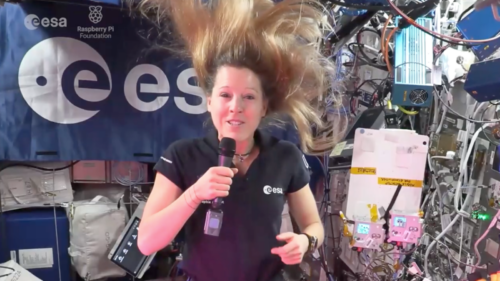
The 2026/27 challenge is bolstered by the appointment of ESA astronaut Thomas Pesquet as the official ambassador. Pesquet, a veteran of two long-duration missions to the ISS (Proxima and Alpha), brings a wealth of experience to the role. Having previously served as the Astro Pi ambassador during the 2016/17 and 2020/21 editions, his return signals the program’s enduring importance to the European astronaut corps.
Pesquet’s involvement is particularly timely as he prepares for a planned private astronaut mission in 2027, which he is slated to command. "Scientific experimentation is the heartbeat of the International Space Station," Pesquet noted in a statement regarding the launch. "The Astro Pi challenge allows young people to move beyond being mere consumers of technology to becoming creators of it, using the same tools we use in orbit to solve problems."
Supporting Data and Educational Impact
Data from previous cycles suggests that the Astro Pi Challenge has a profound impact on STEM (Science, Technology, Engineering, and Mathematics) engagement. Internal reviews from ESERO networks indicate that over 80% of participating students report an increased interest in pursuing careers in computer science or aerospace after completing the challenge. Furthermore, the program has successfully narrowed the gender gap in technical participation, with female involvement in Mission Zero consistently rising year-over-year.
The 2026/27 season is expected to see record participation, with estimates suggesting over 30,000 young people will participate across both missions. The inclusion of Canada, through a cooperation agreement with ESA, further expands the geographical and cultural diversity of the cohort, fostering international collaboration among students.
Chronology of the 2026/27 Challenge
The timeline for this year’s challenge is structured to align with the academic calendar:
- September 14, 2026: Official launch and opening of registrations for both Mission Zero and Mission Space Lab.
- Late 2026: Deadline for Mission Space Lab experiment ideas and initial code submissions.
- Early 2027: Technical review and "flight-readiness" testing of Mission Space Lab programs.
- Spring 2027: Deployment of code to the ISS via scheduled resupply missions or digital uplink.
- May – June 2027: Execution of programs in orbit and return of data/images to the participating teams.
- June 2027: Issuance of official certificates and final report submissions for Mission Space Lab.
Broader Implications for the European Space Sector
The European Astro Pi Challenge is more than a classroom activity; it is a strategic investment in the European space ecosystem. As the European Space Agency looks toward future lunar exploration via the Artemis program and the development of the Lunar Gateway, the need for advanced software engineering is paramount. Spacecraft today are increasingly software-defined, and the ability to write efficient, bug-free code in languages like Python is a foundational skill.
By providing a platform where a 12-year-old’s code can actually influence a device in space, ESA and the Raspberry Pi Foundation are demystifying the space industry. This "democratization of orbit" shifts the perception of space from an unreachable frontier to a tangible laboratory.
Furthermore, the data collected by Mission Space Lab teams often mirrors professional research. Previous teams have successfully identified changes in coastal erosion, monitored the health of rainforests, and even detected anomalies in the ISS’s magnetic field. While the primary goal is educational, the rigor of the process prepares students for the methodology of academic research and industrial development.
Conclusion and Call to Action
The Astro Pi Mission Control team has emphasized its commitment to accessibility this year. In addition to the online guides, the team will host a series of interactive support sessions and livestreams throughout the year to troubleshoot code and discuss scientific concepts with participants.
As the ISS continues its mission as a symbol of international cooperation, the 2026/27 Astro Pi Challenge invites the youth of Europe and Canada to join that mission. Educators and youth group leaders are encouraged to register their teams early to take full advantage of the support resources available. The journey to the stars no longer requires a rocket; for thousands of students this year, it begins with a single line of code.